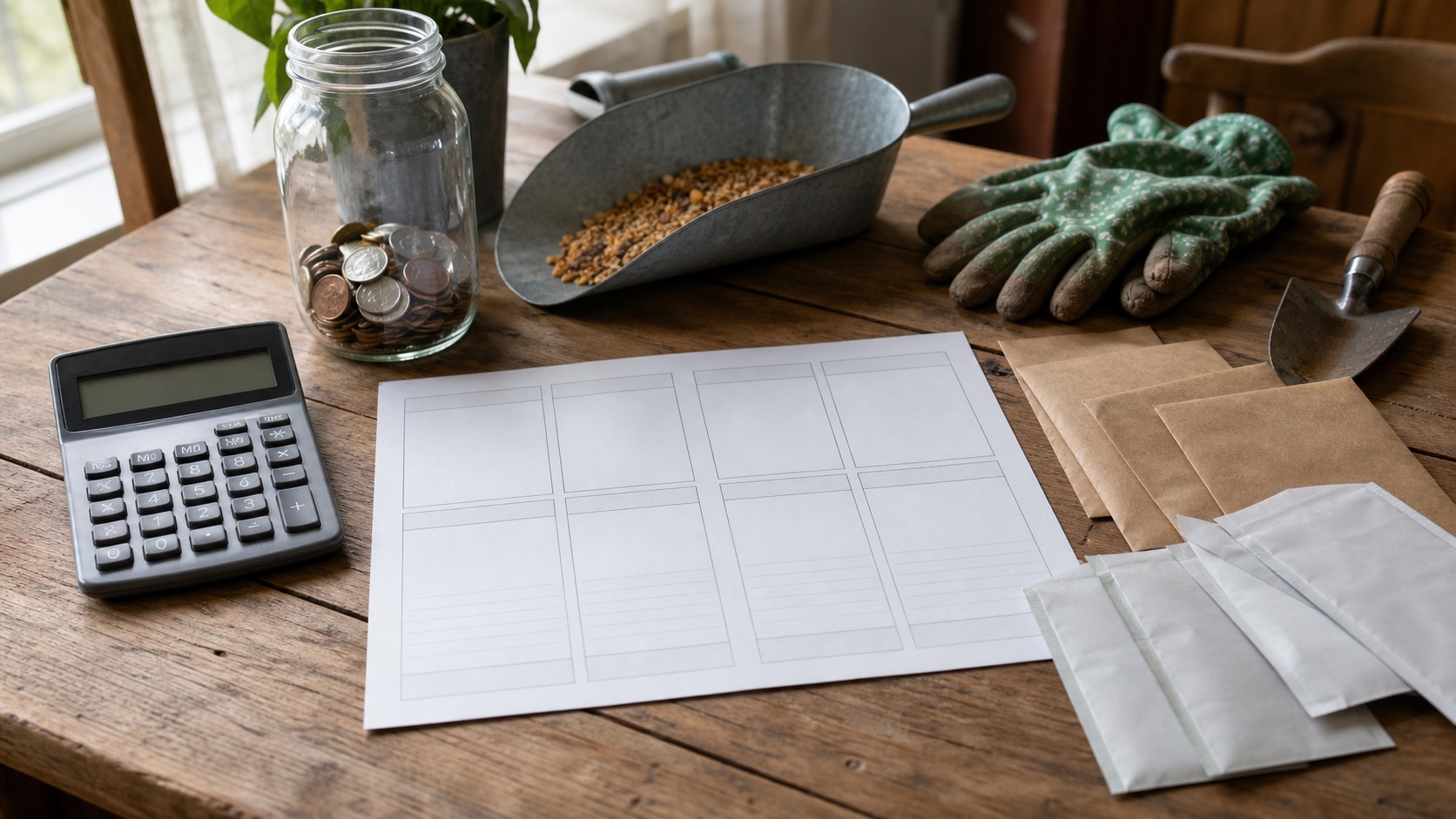
A realistic first-year homestead budget is not a wish list with nicer headings. It is a way to keep one exciting project from quietly stealing money from the rest of the household.
I get nervous around budget advice that starts with a big universal number. Some families already own tools. Some are starting with nothing. Some have land, a barn, and bad fencing. Some have a suburban yard, two raised beds, and a garage shelf. The number matters, but the categories matter first because categories show where the pressure will actually land.
The real first-year budget decision
The real decision is not whether homesteading costs money. It does. The real decision is whether the first year will be organized around one or two systems you can actually maintain, or around the feeling that every useful skill has to be funded immediately.
After a layoff, I became much more sensitive to this. A purchase can feel like progress because it makes the future look more concrete. A stack of seed packets, a new feeder, or a tool on the wall can calm the part of your mind that wants proof you are moving. But proof and progress are not always the same thing. A budget helps separate the two.
First-year homestead budget categories
Use these categories as lanes. You can adjust the dollar amounts, but I would not delete the lanes too quickly. Most budget surprises happen because a real category was left unnamed and then showed up anyway.
A realistic beginner scenario
Imagine a family with enough margin to make progress, but not enough to treat the first year like a shopping season. They want a small garden, six chickens someday, better food storage, and a few tools that do not break the first time they are used.
The risky version funds all four at once. A little goes to lumber, a little to seed starting, a little to poultry supplies, a little to canning equipment, and somehow the budget is gone before any one system is calm. The steadier version chooses one active system, writes the recurring costs first, and gives every other idea a named waiting place.
Separate one-time costs from recurring costs
This is where a lot of first-year budgets get too rosy. A coop, raised bed, waterer, hose, seed tray, or shelf may be a one-time purchase. Feed, bedding, mulch, compost, seed starting mix, replacement parts, pest pressure, and mistakes are not one-time events.
I would rather see a beginner build a smaller version and fully fund the recurring side than build the pretty version and resent it every month. Resentment is expensive. It makes the whole project feel like another demand instead of a steadier way to live.
Where tools actually help
I do think a few simple planning tools can earn their place, but only if they make the budget visible. A planner, envelope binder, or receipt folder will not fix an overcommitted plan. What they can do is slow the decision down long enough for you to see whether the purchase belongs in this month, later, or not at all.
Recommendations
Useful tools and resources for this decision
Optional helper
Simple budget planner or ledger notebook
Useful if one paper page helps you review feed, garden, tool, and repair spending before the next purchase.
Best for: Beginners who need the budget somewhere visible
Check current priceCategory control
Cash envelope binder
Helpful for households that need category limits to feel concrete instead of theoretical.
Best for: Feed, seeds, project cash, and small repair reserves
Check current priceKeep evidence
Receipt organizer folder
A simple place to keep feed store, hardware, seed, and supply receipts until review day.
Best for: Tracking what the first year really costs
Check current priceFree resource
CFPB budget worksheet resources
A free outside reference for mapping income, bills, spending, and goals before adding new homestead categories.
Best for: A non-shopping budget check
View resourceWhat can wait until year two
Waiting is not the same as quitting. Waiting is how a beginner protects the work that is already alive. The first year should teach you what your household actually repeats, what the property actually needs, and what kind of work still feels worth doing after the novelty wears off.
How to review the budget each month
A first-year budget should be reviewed often enough to catch drift, but not so often that it becomes another guilt ritual. Monthly is enough for most households. I would make the review boring on purpose: receipts, recurring costs, one active system, wait list, next month.
That last step matters. Browsing before deciding makes everything look equally reasonable. Deciding first gives you a way to say no without turning every no into a moral debate.
A final budget reality check
Before money moves, separate the useful purchase from the feeling the purchase is trying to create. Some homestead spending is really an attempt to feel secure, capable, or closer to a better future. I understand that impulse. I also think it can empty a budget faster than almost anything else.
A steadier first-year budget funds the system you are actually building, keeps recurring costs visible, and gives future-you a written waiting place. That is less dramatic than buying the whole dream at once. It is also much more likely to survive a normal week.
Best Next Step
Put the numbers on paper before the next purchase.
The worksheet helps you decide what deserves money now, what can wait, and what should stay off the list completely.
Use the budget worksheetRecommended next reads
Read the next guide that supports this decision
These are the next pieces I would read if you are trying to keep the first year useful, honest, and financially calmer.
Budgeting
Homesteading on a Budget: What to Buy First and What Can Wait
If money is tight, the smartest homestead purchases are the ones that reduce friction quickly and keep you from rebuying the same lesson twice.

Budgeting
How to Build a $100-a-Month Homestead Budget Without Burning Out
A realistic way to make slow homestead progress on a modest monthly budget without turning every week into deprivation or guesswork.

Budgeting
What to Stop Buying When You’re Funding a Homestead
A practical budgeting guide for households trying to free up money for homestead goals without turning daily life into punishment.
Frequently asked questions
How much should I budget for the first year of homesteading?
There is no single honest number because land, household income, existing tools, local prices, and first-year goals vary so much. A better first move is to set category ceilings for household margin, one active food system, tools, storage, repairs, learning, and recurring costs before buying project supplies.
What homestead budget category should be funded first?
Protect household stability first, then fund the recurring costs and safety basics for one active system. A garden, chickens, or pantry project should not eat the money needed for normal bills, repairs, feed, bedding, soil, storage, or a small surprise reserve.
What first-year homestead purchases can usually wait?
Premium tools, decorative upgrades, large livestock equipment, major preservation gear, and supplies for projects you have not started can usually wait until the basic routine proves itself.
Should I buy a budget planner for homesteading?
Only if it will actually stay in reach and get used. A simple notebook, clipboard, printable worksheet, or envelope system is enough if it helps you see recurring costs and stop future-project spending from draining current margin.
Recommendations
Useful tools and resources for this decision
These are included only where they reduce repeated friction, clarify a next step, or help you avoid buying the wrong thing first.
Optional helper
Simple budget planner or ledger notebook
Useful if a paper page helps you see recurring feed, garden, tool, and repair costs before they blur together.
Best for: Beginners who plan better on paper than in scattered phone notes
Check current priceCategory control
Cash envelope binder
A simple envelope system can make category limits more visible for feed, seeds, repair money, and project cash.
Best for: Households that overspend when categories stay abstract
Check current priceTrack the real cost
Receipt organizer folder
A small folder or accordion file keeps feed store, hardware, seed, and supply receipts from disappearing before review day.
Best for: Beginners who want real cost notes instead of guessing later
Check current priceRecommended next reads
Read next if it helps the decision
Move into the next guide only if it clarifies the next practical step.
Budgeting
Homesteading on a Budget: What to Buy First and What Can Wait
If money is tight, the smartest homestead purchases are the ones that reduce friction quickly and keep you from rebuying the same lesson twice.
Budgeting
How to Build a $100-a-Month Homestead Budget Without Burning Out
A realistic way to make slow homestead progress on a modest monthly budget without turning every week into deprivation or guesswork.
Budgeting
What to Stop Buying When You’re Funding a Homestead
A practical budgeting guide for households trying to free up money for homestead goals without turning daily life into punishment.
Budget support
Get the budget worksheet before the next purchase.
Use the worksheet to sort purchases into buy now, borrow first, batch later, or skip for now while the first season is still taking shape.
Best for: Households trying to align purchases with this season's actual money, time, and attention.
- A spending-cap worksheet
- A buy, borrow, batch-later filter
- A quick review page for next-month decisions
Budget-first notes, honest tradeoffs, and the worksheet first.
After signup, the download will unlock right here so you can save or print it.
About the author
William Mock
Founder, writer, and beginner homesteader
William writes from the beginner side of rebuilding after a layoff: homestead plans, family systems, budgets, tools, and the decisions that make a home feel less fragile.
Read why this site existsRelated Guides
Keep building context
Budgeting
Homesteading on a Budget: What to Buy First and What Can Wait
If money is tight, the smartest homestead purchases are the ones that reduce friction quickly and keep you from rebuying the same lesson twice.
Budgeting
How to Build a $100-a-Month Homestead Budget Without Burning Out
A realistic way to make slow homestead progress on a modest monthly budget without turning every week into deprivation or guesswork.
Budgeting
What to Stop Buying When You’re Funding a Homestead
A practical budgeting guide for households trying to free up money for homestead goals without turning daily life into punishment.