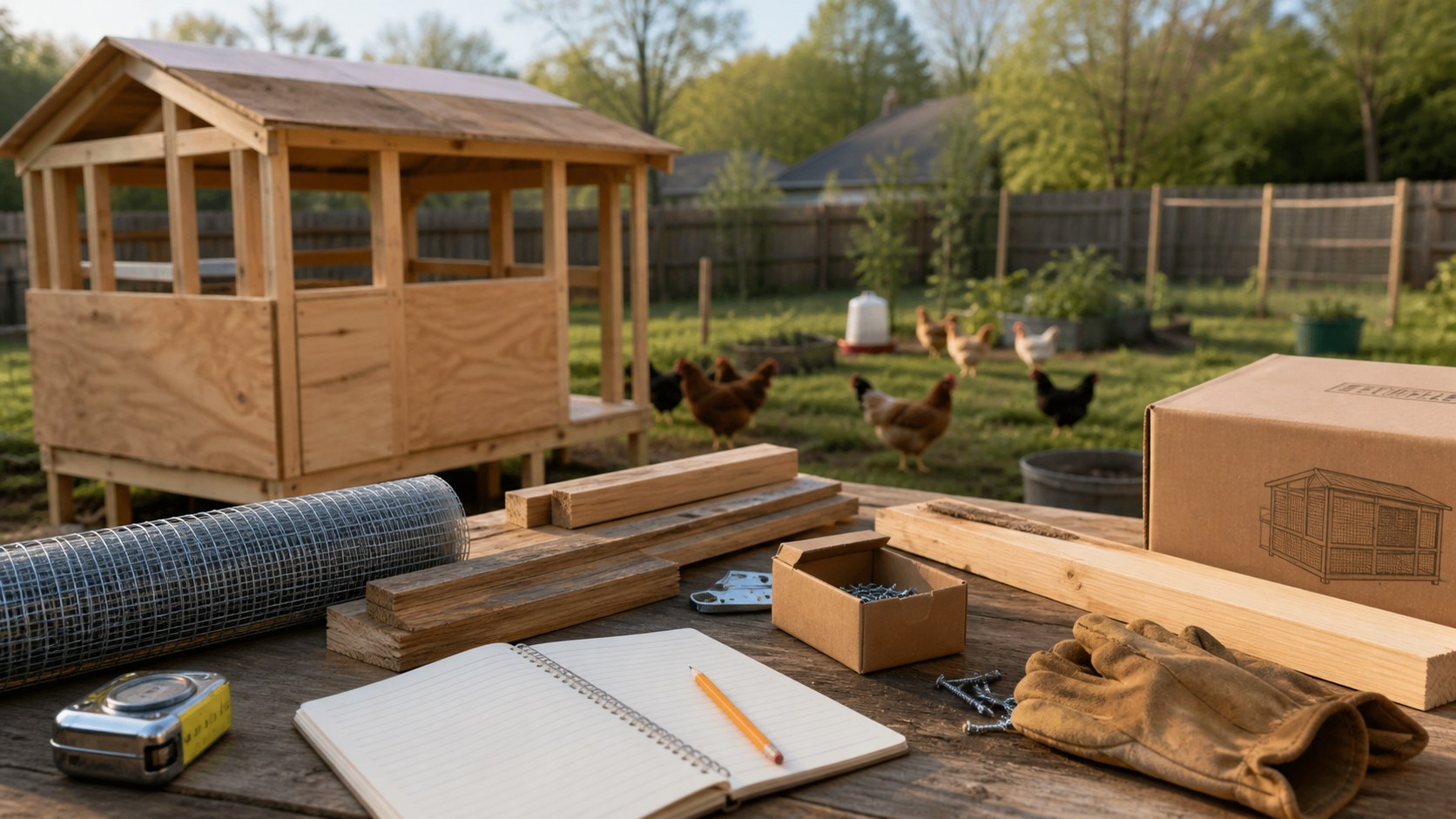
Build the coop if you have enough time, basic tools, a simple plan, and the discipline to finish the safety parts before chickens need it. Buy one first if time, carpentry, weather, or family capacity make an unfinished coop likely. The right answer is not the cheapest sticker price. It is the option most likely to give the birds secure, dry, ventilated housing on time.
I understand the pull to build. It feels more self-reliant. It can save money. It teaches repair skills. It also has a way of becoming a half-finished structure in the yard if the week is already full and every missing hinge, latch, roofing panel, and hardware cloth cut turns into another trip to the store.
Buying has its own trap. A prefab coop can look finished online and still be too small, too flimsy, hard to clean, poorly ventilated, or easy for a predator to test. A bought coop is not automatically safer. A built coop is not automatically cheaper. This decision deserves a stricter filter than charm.
The Real Decision Is Risk
The question is not only, "Can I build this?" It is, "Can I build this safely, completely, and soon enough without stealing too much money or energy from the rest of the household?" That is a different question. A coop is not a decorative weekend project. It is animal-safety infrastructure.
Penn State Extension's poultry housing guidance frames the basics plainly: poultry housing needs to protect birds from weather, predators, injury, and damp conditions while allowing ventilation and access for cleaning and daily care. That is the bar. Anything beyond that is secondary.
When Building Makes Sense
Building makes sense when the project is simple enough to finish, not when the plans are impressive. If you already own basic tools, can follow a straightforward design, have a clear materials list, and can block the time before the birds are ready to move outside, building can be the better first-year choice.
The advantage is not just cost. When you build, you learn where the weak points are. You know how the doors are hung, how the hardware cloth is attached, where water might collect, and which part will need improvement later. That repair knowledge matters on a working homestead.
When Buying Makes Sense
Buying makes sense when the deadline is real and the build would become one more open loop. There is no virtue in proving you can build if the birds end up in a rushed, weak, leaky shelter. Sometimes the humble move is buying the basic structure and spending your energy reinforcing it well.
The mistake is trusting the product photo more than the measurements. Many small coops advertise optimistic bird counts. For a beginner, the safer approach is to judge the coop by usable floor space, roost space, access, ventilation, cleanout design, and how it will connect to a protected run.
A Realistic Beginner Scenario
Imagine the chicks are growing faster than the coop project is moving. The lumber is bought. The first weekend went well. Then rain shows up, one tool is missing, a family commitment takes Saturday, and the hardware cloth takes longer than expected. Now the brooder is crowded and the coop still does not have secure doors.
That is where the decision gets honest. If the build can be finished safely in the next work block, keep going. If the work is sliding and the birds are close to needing housing, it may be smarter to buy a basic structure, reinforce it, and treat the unfinished build as the second version instead of forcing it to become the first.
The Real-Cost Test
Do not compare a prefab price against a lumber estimate scribbled on the back of an envelope. Compare finished safe coop against finished safe coop. That means hardware cloth, locks, hinges, roofing, fasteners, paint or sealant if needed, skids or foundation material, run connection, bedding access, and any tools you do not already own.
What Can Wait
The first coop does not need decorative trim, a complicated roofline, a perfect paint scheme, automated doors, custom nest-box luxuries, or a design built around a flock you do not have yet. Those things can come later if the first season proves the setup deserves them.
What should not wait is the boring safety work. Cover weak openings. Use stronger material where predators will test it. Make doors close securely. Keep the coop dry. Make cleaning possible. A plain safe coop beats a pretty weak coop every time.
My Beginner Answer
If I had the tools, a simple plan, and two honest weekends before the birds needed it, I would lean toward building a plain first coop because the repair knowledge is valuable. If the timeline were tight or the household were already overloaded, I would buy a sturdy basic shell, reinforce the weak points, and save the custom build for the next version.
That answer is less romantic than "always build" and less convenient than "just buy one." It is also closer to the way beginner homesteading actually works. The best first choice is the one that protects the animals, respects the budget, and does not pretend your calendar has more space than it does.
Best next step
Price the whole chicken setup before choosing the coop.
The real chicken startup cost guide helps you see housing, feed, brooder gear, bedding, storage, and recurring costs together before the coop decision eats the whole budget.
Read the chicken cost guideRecommended next reads
Read next if this clarified the decision
These guides connect the coop choice to the bigger chicken budget, beginner building limits, and the buy-first filter.

Chickens
The Real Cost of Getting Started With Backyard Chickens
Backyard chickens can be a strong first step into homesteading, but the startup costs and recurring work deserve an honest look.
Chickens
Building a Chicken Tractor With Limited Carpentry Skills
Chicken tractors look simple from a distance. In practice, the details that matter most are movement, weather, and whether the build actually fits your skill level.
Budgeting
Homesteading on a Budget: What to Buy First and What Can Wait
If money is tight, the smartest homestead purchases are the ones that reduce friction quickly and keep you from rebuying the same lesson twice.
Frequently asked questions
Is it cheaper to build a chicken coop or buy one?
Building can be cheaper if you already have tools, time, a simple plan, and some usable materials. Buying can be cheaper in real life if a build would stall, require new tools, or force rushed fixes before the chickens need safe housing.
What should beginners check before buying a prefab coop?
Check the actual usable floor space, roost space, ventilation, cleanout access, roof quality, door latches, predator resistance, and whether the advertised bird count is realistic for your flock size.
What matters most in a first chicken coop?
Predator protection, dry shelter, ventilation without drafts on roosting birds, enough space, easy cleaning, and daily access matter more than style, paint, decorations, or a complicated layout.
What if my coop build is running behind?
Do not move birds into weak housing just to stay on schedule. Reduce flock size, delay bringing birds home, buy a safe interim setup, or get help finishing the security-critical parts.
Recommendations
Useful tools and resources for this decision
These are included only where they reduce repeated friction, clarify a next step, or help you avoid buying the wrong thing first.
Extension resource
Penn State Extension small-scale poultry housing guide
A practical extension resource on poultry housing basics, including protection, ventilation, dry shelter, nests, cleaning access, and predator concerns.
Best for: Checking the safety basics before choosing a build plan or prefab coop
View resourceRecommended next reads
Read next if it helps the decision
Move into the next guide only if it clarifies the next practical step.
Chickens
The Real Cost of Getting Started With Backyard Chickens
Backyard chickens can be a strong first step into homesteading, but the startup costs and recurring work deserve an honest look.
Chickens
Building a Chicken Tractor With Limited Carpentry Skills
Chicken tractors look simple from a distance. In practice, the details that matter most are movement, weather, and whether the build actually fits your skill level.
Budgeting
Homesteading on a Budget: What to Buy First and What Can Wait
If money is tight, the smartest homestead purchases are the ones that reduce friction quickly and keep you from rebuying the same lesson twice.
Budget support
Get the budget worksheet before the next purchase.
Use the worksheet to sort purchases into buy now, borrow first, batch later, or skip for now while the first season is still taking shape.
Best for: Households trying to align purchases with this season's actual money, time, and attention.
- A spending-cap worksheet
- A buy, borrow, batch-later filter
- A quick review page for next-month decisions
Budget-first notes, honest tradeoffs, and the worksheet first.
After signup, the download will unlock right here so you can save or print it.
About the author
William Mock
Founder, writer, and beginner homesteader
William writes from the beginner side of rebuilding after a layoff: homestead plans, family systems, budgets, tools, and the decisions that make a home feel less fragile.
Read why this site existsRelated Guides
Keep building context
Chickens
The Real Cost of Getting Started With Backyard Chickens
Backyard chickens can be a strong first step into homesteading, but the startup costs and recurring work deserve an honest look.
Chickens
Building a Chicken Tractor With Limited Carpentry Skills
Chicken tractors look simple from a distance. In practice, the details that matter most are movement, weather, and whether the build actually fits your skill level.
Budgeting
Homesteading on a Budget: What to Buy First and What Can Wait
If money is tight, the smartest homestead purchases are the ones that reduce friction quickly and keep you from rebuying the same lesson twice.