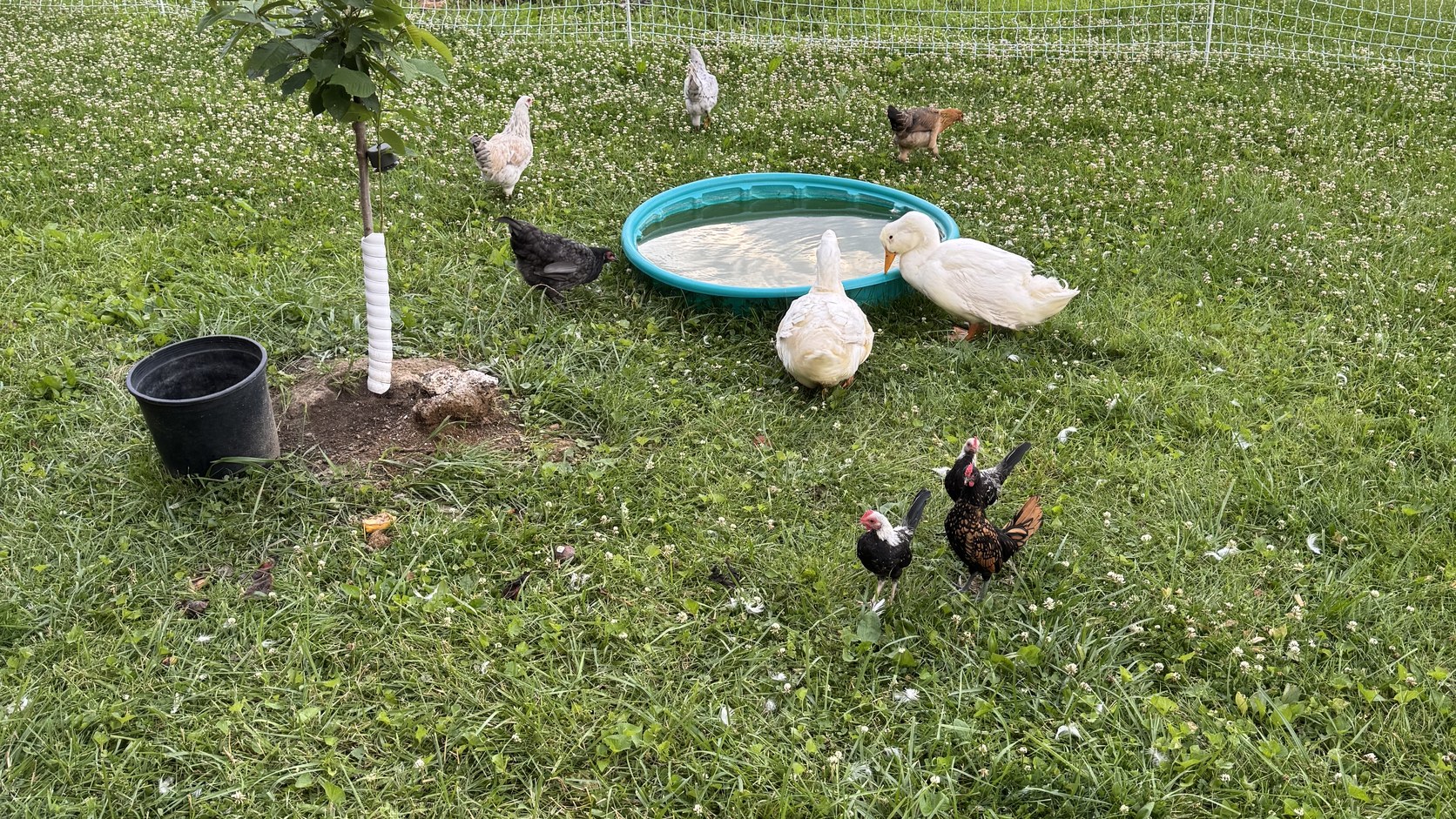
A new homestead does not need every good idea in year one. It needs enough working order that year two can be built from evidence instead of adrenaline.
That distinction matters to me because a fresh start can make everything feel urgent. After a layoff, I understood the pull toward visible progress. A big project gives you something to point at. It says, look, we are becoming the kind of people who do this. But a homestead is not held together by the projects that photograph well. It is held together by water, chores, storage, money, maintenance, weather, and whether the household can repeat the work on an ordinary week.
The real decision
The real decision is not whether those bigger projects are good. Many of them are. The decision is whether they are supported yet. A good year-two project usually has year-one evidence behind it: you know where water stands, what animals or pests show up, where the sun and shade actually fall, how far you are willing to carry feed or tools, and which chores still make sense when life is busy.
Without that evidence, beginners tend to buy for an imagined property instead of the property they actually have. That is how a person ends up with supplies for three future systems while the current system still needs a latch, a dry shelf, or a workable evening routine.
What can wait until year two
The list below is not a rule for every property. If there is a safety problem, animal welfare issue, legal requirement, or urgent repair, handle that first. I am talking about elective expansion: the projects that sound useful but depend on assumptions you have not tested yet.
A realistic beginner scenario
Picture a family in the first spring on a new place. They want chickens, a garden, fruit trees, compost, pantry shelves, a better tool setup, and maybe goats someday. None of those are ridiculous goals. The trouble starts when all of them become year-one purchases.
A steadier version chooses one primary food system, one household support system, and one observation habit. Maybe that means a smaller garden, basic poultry care, and a notebook where water, pests, chores, feed costs, and repair surprises get written down. It may look less impressive from the road. It also leaves fewer unfinished loops.
The small tools that help you wait
This is where monetization can get weird if you let it. An article about waiting should not become an excuse to buy a cart full of consolation gear. The useful purchases are small, boring, and tied to observation or organization. They help you make a better decision later; they do not replace the decision.
Recommendations
Useful tools and resources for this decision
Observe first
Weather-resistant field notebook
Use it for water notes, repair surprises, animal observations, project ideas, and the items you are intentionally delaying.
Best for: Collecting year-one evidence before spending year-two money
Check current priceTemporary first
Utility marking flags
A cheap way to test possible fence lines, garden edges, tree spacing, drainage paths, and future build sites before making them permanent.
Best for: Trying a layout before buying lumber, fencing, or equipment
Check current priceCurrent system only
Heavy-duty storage tote
One tote can keep the active project contained without turning storage into permission to buy supplies for every future project.
Best for: Current-season supplies, repair parts, and project notes
Check current priceHow to know a project is ready
A project is probably ready when it solves a repeated problem, fits the real weekly rhythm, has a visible maintenance plan, and does not require stealing margin from household stability. That is a higher bar than excitement, but it is not an impossible bar.
I especially like that last test. Some projects create clarity. Others create dependencies. If the next step requires three more purchases, a new routine, a new skill, and a corner of the property you have not watched through a storm yet, that is not a no forever. It is probably a not yet.
What not to delay
Delay is not a blanket excuse to ignore the boring essentials. If something affects safety, animal care, water, structural damage, legal compliance, sanitation, or basic household stability, do not hide behind a year-two list. Fixing the thing that keeps the current system safe is different from expanding into a new system.
Build a real year-two list
A year-two list should not be a graveyard for dreams. It should be a holding pen with conditions. Instead of writing "greenhouse," write "greenhouse after one full garden season, watering notes, seed-starting rhythm, and proof that protected growing space solves a real problem." Instead of "goats," write "goats after fencing, shelter, feed budget, daily chore backup, and local rules are understood."
That kind of list gives the future a place without letting the future run the present. It also makes the second year more honest. You are not starting from a fantasy board. You are starting from notes.
A final reality check
Before buying the next big thing, ask whether the purchase is solving a real problem or trying to make the fresh start feel more real. I do not say that as a scold. I say it because I know how understandable that feeling is. When life has been disrupted, visible progress can feel like proof that the story is turning.
But the better proof is steadiness: chores that repeat, money that still has margin, a garden that gets watered, animals that are cared for calmly, tools that have a place, and a family that is not being dragged behind the dream. Let year one build that. Year two will be stronger for it.
Best Next Step
Turn the year-two list into one calmer next move.
Use the Start Here path to narrow the next decision instead of carrying ten half-started projects at once.
Go to Start HereRecommended next reads
Read the next guide that supports this decision
These are the pieces I would read next if you are trying to protect year-one momentum while still building toward something bigger.
Homesteading
Our First-Year Homestead Priorities: What We’re Doing Now and Why
A first year goes better when priorities are chosen, not inherited. These are the systems and projects we are focusing on now and the reasons behind them.
Homesteading
Beginner Homesteading: Where to Start When You Feel Overwhelmed
If homesteading feels meaningful but overwhelming, start with a simpler order of operations instead of trying to do everything at once.
Budgeting
Homesteading on a Budget: What to Buy First and What Can Wait
If money is tight, the smartest homestead purchases are the ones that reduce friction quickly and keep you from rebuying the same lesson twice.
Frequently asked questions
What should wait until year two on a new homestead?
Large livestock, major outbuildings, permanent orchards, expensive preservation equipment, complex irrigation, specialty machinery, and cosmetic upgrades can often wait until year two unless a safety issue or real property need makes them urgent.
What should a beginner homesteader focus on in year one?
Year one should prove household margin, water access, storage, basic tools, one food system, daily chores, seasonal notes, and family capacity. Those basics make year-two expansion less speculative.
Is waiting until year two the same as giving up?
No. Waiting is a sequencing tool. A good wait list protects money, attention, and family energy while you collect the evidence needed to make a better second-year decision.
What is worth buying in year one?
Buy the small things that make observation, storage, safety, and repeated chores easier. A notebook, marking flags, a basic measuring tape, or one lidded project tote can be more useful than gear for a future system you have not proven yet.
Recommendations
Useful tools and resources for this decision
These are included only where they reduce repeated friction, clarify a next step, or help you avoid buying the wrong thing first.
Observe first
Weather-resistant field notebook
Useful for recording water problems, predator pressure, seasonal timing, repair notes, and the ideas you are intentionally delaying.
Best for: Beginners who need year-one evidence before making year-two purchases
Check current priceTemporary first
Utility marking flags
Low-cost markers for testing garden edges, fence lines, tree spacing, drainage paths, and future build locations before making them permanent.
Best for: Mapping possible projects without committing lumber, fencing, or equipment money yet
Check current priceCurrent system only
Heavy-duty storage tote
One lidded tote can hold current project supplies, repair parts, or seasonal notes without becoming permission to buy for every future project.
Best for: Keeping the active project organized while year-two supplies stay off the shopping list
Check current priceRecommended next reads
Read next if it helps the decision
Move into the next guide only if it clarifies the next practical step.
Homesteading
Our First-Year Homestead Priorities: What We’re Doing Now and Why
A first year goes better when priorities are chosen, not inherited. These are the systems and projects we are focusing on now and the reasons behind them.
Homesteading
Beginner Homesteading: Where to Start When You Feel Overwhelmed
If homesteading feels meaningful but overwhelming, start with a simpler order of operations instead of trying to do everything at once.
Budgeting
Homesteading on a Budget: What to Buy First and What Can Wait
If money is tight, the smartest homestead purchases are the ones that reduce friction quickly and keep you from rebuying the same lesson twice.
First-Step Support
Get the first-step checklist before the bigger idea turns into too many projects.
A practical worksheet for choosing one system, setting a first-stage budget, and narrowing the next move while the picture is still forming.
Best for: Beginners who need a first-season plan with limits, not more tabs or more gear.
- A first-season decision checklist
- A one-system starter plan
- A buy-now versus wait-later filter
Beginner-friendly notes, useful guides, and the checklist first.
After signup, the download will unlock right here so you can save or print it.
About the author
William Mock
Founder, writer, and beginner homesteader
William writes from the beginner side of rebuilding after a layoff: homestead plans, family systems, budgets, tools, and the decisions that make a home feel less fragile.
Read why this site existsRelated Guides
Keep building context
Homesteading
Our First-Year Homestead Priorities: What We’re Doing Now and Why
A first year goes better when priorities are chosen, not inherited. These are the systems and projects we are focusing on now and the reasons behind them.
Homesteading
Beginner Homesteading: Where to Start When You Feel Overwhelmed
If homesteading feels meaningful but overwhelming, start with a simpler order of operations instead of trying to do everything at once.
Budgeting
Homesteading on a Budget: What to Buy First and What Can Wait
If money is tight, the smartest homestead purchases are the ones that reduce friction quickly and keep you from rebuying the same lesson twice.