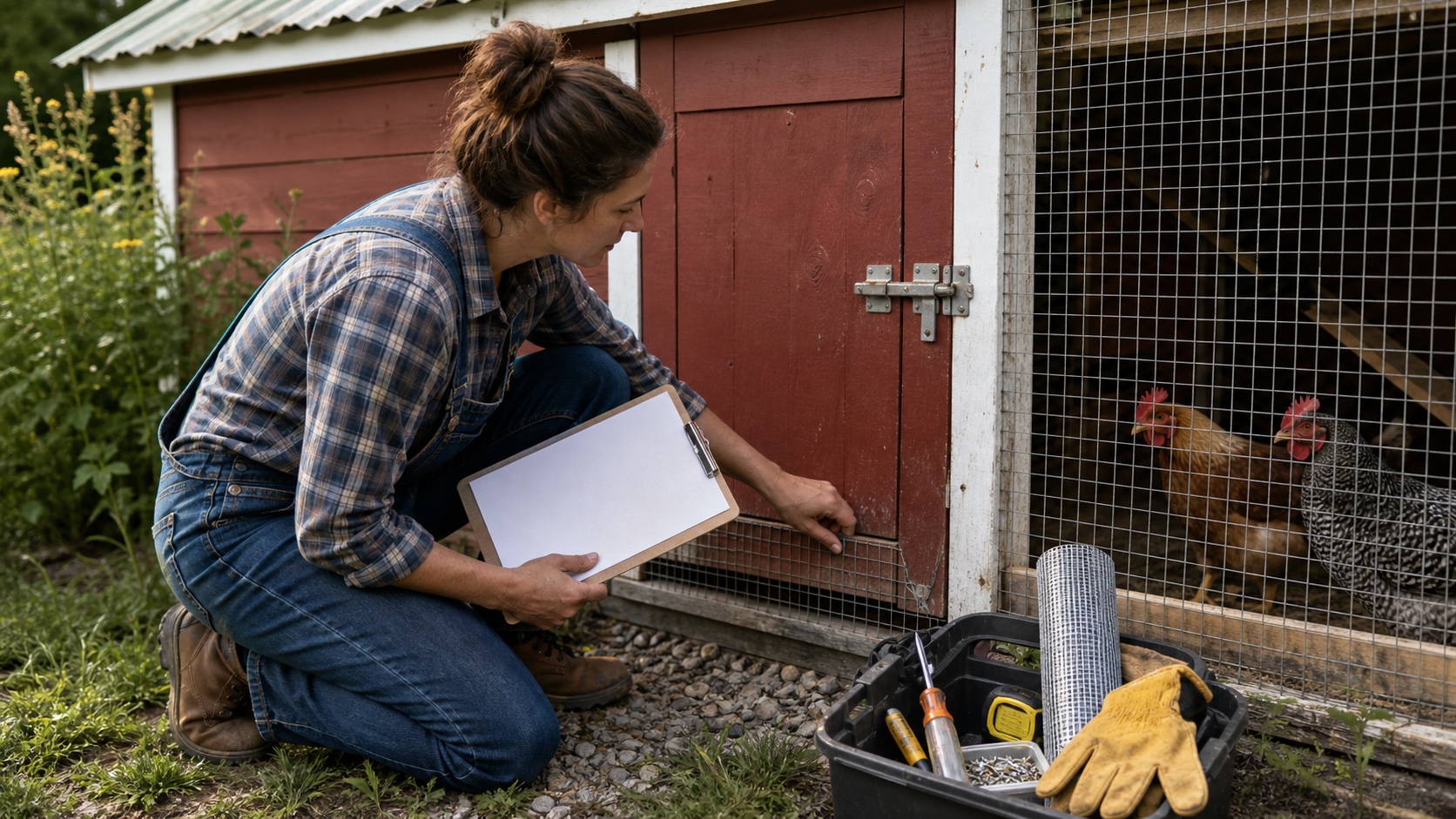
Chicken coop maintenance does not have one reliable national annual cost. A sound small coop in a mild, dry location may need only minor hardware and weatherproofing work, while an older prefab in wet weather can consume repair money and still remain weak. The honest way to budget is to inspect your own roof, siding, floor, doors, latches, hinges, mesh, fasteners, drainage, ventilation, roosts, and nest boxes, then save monthly for the parts most likely to fail.
See the whole flock budget
Start with the real cost of backyard chickens
Put housing maintenance beside chicks, brooder gear, feed, bedding, storage, water, and predator protection before deciding what the flock can afford.
Read the chicken startup cost guideThe project was paid for, but ownership was not finished
After the layoff, one idea changed the way I looked at almost every household and homestead purchase: paid for is not the same thing as finished costing money. When income had felt predictable, it was easy to treat a completed project like a closed line in the budget. Once that predictability disappeared, replacement and repair stopped looking like distant details.
A coop makes that lesson concrete. The walls can be standing and the original receipt can be old, but rain keeps testing the roof. Daily use keeps working the hinges. Predators keep testing the boundary. Moisture keeps looking for the low spot. One screw backs out, one mesh edge loosens, one latch stops closing cleanly, and suddenly an object that was already 'paid for' is asking the household for another decision.
That does not make the coop a bad investment. It makes maintenance part of ownership. I would rather give those small future costs a quiet place in the budget than act surprised, delay a safety repair, or turn every hardware-store trip into an emergency. The lesson for me is not to fear repairs. It is to stop pretending durable means free forever.
Decide what counts as coop maintenance
A useful annual number starts with clean categories. Feed belongs in the monthly chicken budget. Routine bedding and ordinary cleaning supplies belong in flock care. A new automatic door is an upgrade unless it replaces a failed essential door. Structural maintenance is the work that keeps the existing housing secure, dry, ventilated, stable, and practical to clean.
This separation matters because bedding can make the coop category look expensive even when the structure is sound, while a neglected roof or latch can disappear inside a general chicken total. Track both. Just do not blur them so completely that you cannot tell whether the housing itself is becoming more expensive to own.
Inspect before you pick a number
Walk the coop slowly enough to touch the parts that move and see the parts that weather. Penn State Extension emphasizes protection from weather, predators, injury, and damp conditions, along with ventilation and access for cleaning and daily care. Those functions are a better maintenance checklist than appearance alone.
Turn the inspection into an annual budget
Do not multiply a random internet estimate by your flock size. Coop maintenance follows the structure more than the bird count. Start with the repair list, price the correct materials locally, estimate which work requires a professional, and spread the likely amount across the months before the repair season arrives.
That $180 is an example of how to assign a reserve, not a claim that every small coop costs $180 a year. A new, well-built coop may carry most of it forward. An older or undersized coop may need far more. If the inspection already found rot, roof failure, unstable framing, or a major predator weakness, price that known project separately instead of hiding it inside a small monthly allowance.
What a small repair trip costs right now
A dated retail snapshot helps show why a repair reserve matters, but it should not become a permanent price promise. On August 14, 2026, Home Depot listed a 2-by-10-foot roll of YARDGARD 1/2-inch, 19-gauge galvanized hardware cloth at $18.96, a one-pound box of Deckmate exterior screws at $10.97, and an Everbilt galvanized gate latch at $6.65. Tractor Supply listed one 8-cubic-foot package of its flake pine shavings at $5.99. Those four items total $42.57 before tax, travel, tools, washers, roofing, coating, lumber, or labor.
That is not a recommended universal repair kit. Mesh gauge, opening size, fastener type, treatment compatibility, latch design, bedding material, and dimensions must fit the existing coop and the actual problem. It is simply evidence that several ordinary-looking purchases can use a meaningful part of a small annual reserve before a major repair appears. Check current local prices and qualified guidance when you are ready to buy.
Repair now, price soon, or watch
The budget should follow consequence, not appearance. A peeling patch of cosmetic paint may wait. A weak latch cannot. A stained roof panel needs investigation because old staining and an active leak are different problems. A small amount of surface rust may call for cleaning and monitoring; wire that is thin, broken, sharp, or pulling away calls for a real repair.
Protect the weak boundary first
Use the predator-proofing guide before patching the run
Check doors, mesh, overlaps, digging edges, roof connections, and nighttime routine before assuming one roll of wire solves the whole boundary.
Review beginner predator-proofingWhen to stop repairing and replace
Cheap repairs become expensive when they keep preserving the wrong structure. If water repeatedly enters from several places, framing or floors are broadly soft, the coop is too small to manage moisture, cleanout access makes sanitation unrealistic, or each security patch exposes another weak panel, compare replacement against another season of repairs.
Use the build-or-buy coop guide to compare finished safe housing against finished safe housing. Do not compare a complete replacement with a repair estimate that excludes tools, labor, disposal, temporary housing, and the next weak section.
Repair or replace
Revisit the build-versus-buy decision with evidence
Compare a complete repair against a secure, dry, ventilated replacement before another small patch becomes the default plan.
Compare building and buying a coopWhat can wait
Decorative trim, a new color, automatic doors, upgraded nest-box curtains, matching containers, and expansion for imaginary future birds can wait. A full shelf of repair materials can wait too. Buy for the measured problem in front of you, keep a modest amount of compatible hardware only when you actually use it, and do not let a maintenance article turn into permission to shop for a second coop.
What matters first is much less exciting: the roof stays dry, the air can exchange, the floor and roosts stay stable, sharp edges are removed, doors close securely, predators cannot exploit a gap, water drains away, and cleaning remains possible. That is what the annual budget is protecting.
The useful number is the one that stays ready
A good coop-maintenance budget will look boring during a quiet year. Money sits there. The inspection produces a short list. A loose hinge gets corrected before it damages the door. Unused reserve rolls forward instead of turning into an upgrade. That is not wasted money. It is a small system refusing to become a household emergency.
Start with the inspection, not the dollar amount. Price the parts that fit your coop. Choose one monthly transfer the household can sustain. Then let the next season show whether the reserve is too small, too large, or finally honest. Ownership is never completely finished, but it can be planned well enough that the next repair does not get to decide the whole month.
Recommended next reads
Keep the chicken budget honest
These guides connect annual housing maintenance to startup costs, predator protection, the build-or-buy decision, and emergency margin.

Chickens
The Real Cost of Getting Started With Backyard Chickens
Backyard chickens can be a strong first step into homesteading, but the startup costs and recurring work deserve an honest look.
Chickens
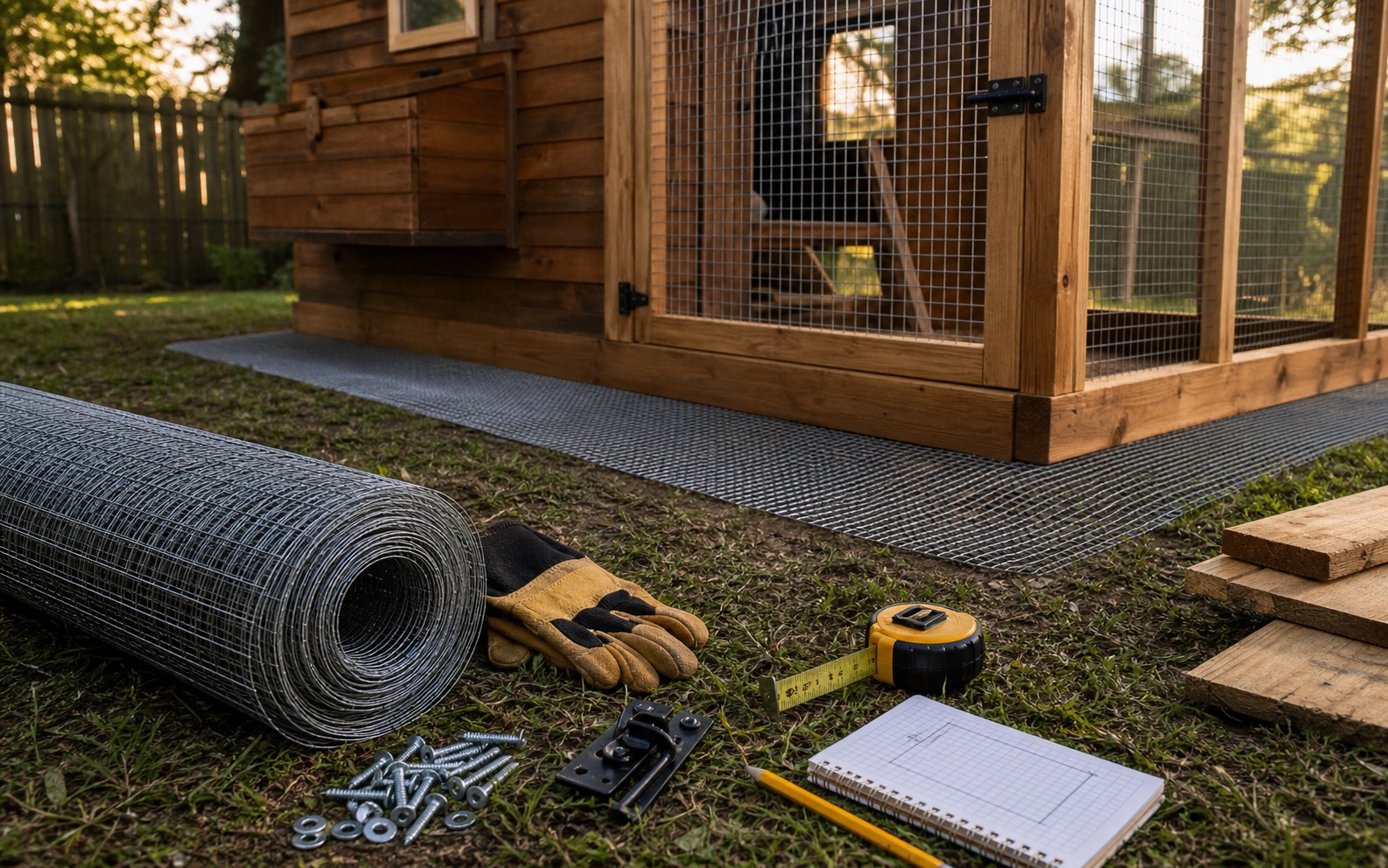
Predator-Proof Chicken Coop for Beginners
A practical beginner guide to predator-proofing a chicken coop and run before birds arrive, with the security layers that matter most and the upgrades that can wait.
Budgeting
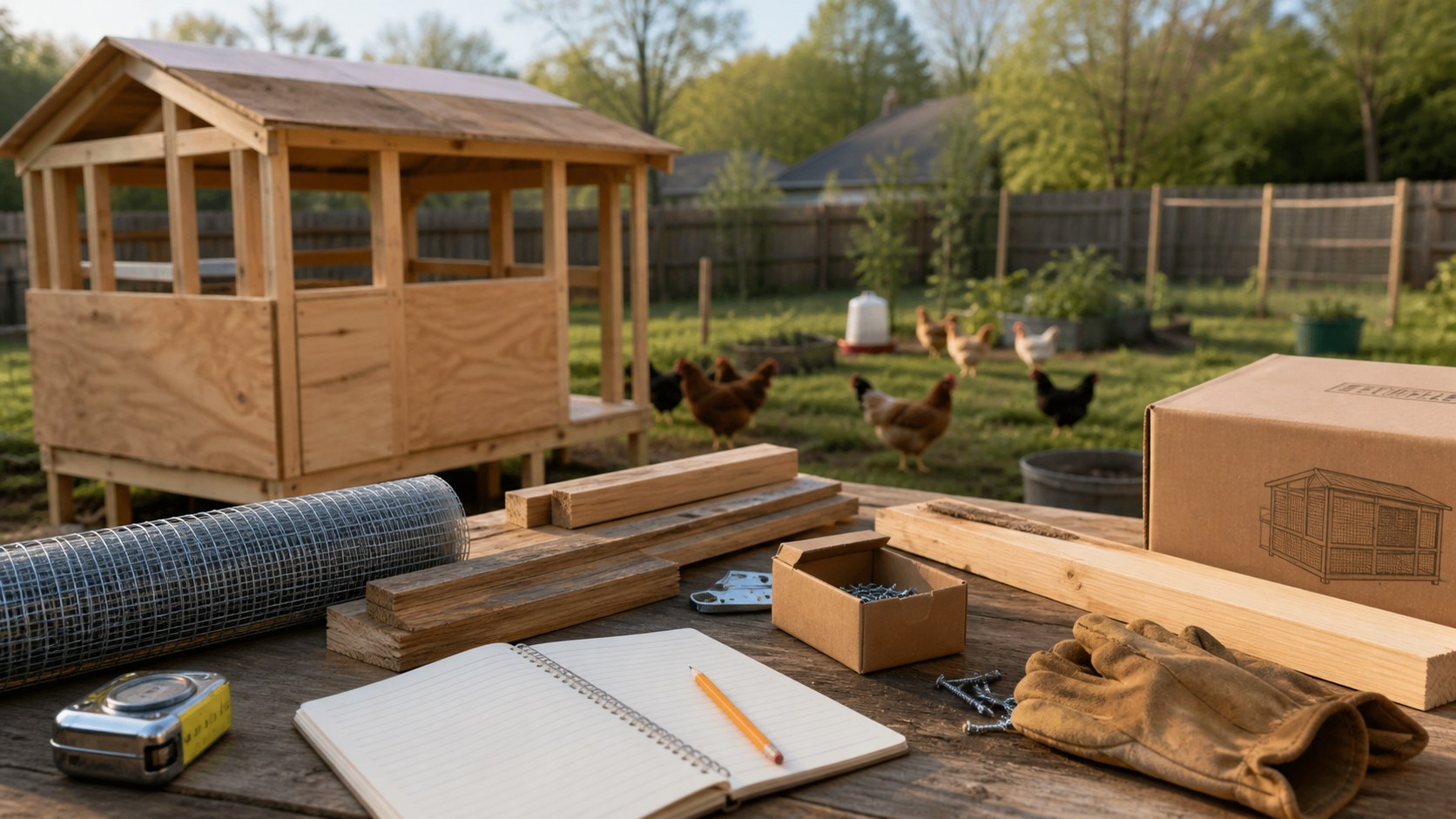
Should You Build a Coop or Buy One First?
A practical guide to deciding whether to build a chicken coop or buy one first, with the real tradeoffs around time, tools, safety, durability, and first-year budget.
Frequently asked questions
How much should I budget for chicken coop maintenance each year?
There is no honest universal amount because coop size, age, material, climate, predator pressure, and current condition change the number. Price the exposed parts on your own coop, then fund a monthly reserve. A small-coop example in this guide sets aside $15 a month, or $180 a year, but that is a planning example rather than a national average.
Does chicken coop maintenance include bedding and feed?
Keep feed outside the coop-maintenance category. Track routine bedding and cleaning supplies as recurring flock-care costs, then track latches, hinges, mesh, fasteners, roof and siding repairs, coatings, drainage work, and damaged roost or nest-box parts as coop maintenance. Separating them makes the true housing cost easier to see.
What chicken coop repairs should never wait?
Do not delay a failed latch, predator-sized opening, sharp wire or fastener, active roof leak, unstable floor or ramp, dangerous electrical problem, blocked ventilation, or damage that leaves birds exposed to weather or injury. Move the birds to secure temporary housing and use qualified help when a repair is beyond your tools or experience.
How often should I inspect a chicken coop?
Notice latches, feed and water areas, leaks, odors, moisture, and obvious damage during normal care. Do a deliberate hands-on inspection at least seasonally and after severe weather, then perform a deeper annual review of the roof, siding, floor, framing, mesh, fasteners, doors, drainage, ventilation, roosts, and nest boxes. Climate and coop condition may require more frequent checks.
Is it worth repairing a cheap prefab chicken coop?
Repair it when the structure is fundamentally sound and a limited fix can restore secure, dry, ventilated, cleanable housing. Stop feeding money into it when rot, weak framing, chronic leaks, poor access, undersizing, or repeated predator vulnerabilities make replacement or a different housing plan safer and more economical.
Recommendations
Useful tools and resources for this decision
These are included only where they reduce repeated friction, clarify a next step, or help you avoid buying the wrong thing first.
Housing source
Penn State Extension small-scale poultry housing guide
Current poultry-housing guidance covering weather protection, predators, injury prevention, drainage, ventilation, storage, and cleaning access.
Best for: Checking whether a repair restores the functions a coop actually needs
View resourceSanitation source
University of Minnesota Extension chicken sanitation guide
Small-flock guidance on sanitation, regular cleaning, annual deep cleaning, bedding, dust precautions, and coop conditions.
Best for: Separating recurring sanitation work from structural repairs
View resourceSeasonal inspection source
University of Minnesota Extension cold-weather coop guidance
Practical guidance on inspecting cracks, managing drafts without blocking ventilation, controlling moisture, and using professional electrical help.
Best for: A fall inspection before cold and wet weather expose weak points
View resourcePrice reference
Home Depot YARDGARD 308227B hardware cloth listing
A dated retail reference for one 2-by-10-foot roll of 1/2-inch, 19-gauge galvanized hardware cloth used in the price snapshot.
Best for: Understanding the exact product behind one example price, not treating it as a universal coop specification
View resourcePrice reference
Home Depot Deckmate 114DMT1 exterior screw listing
The dated retail reference for the one-pound box of 1-1/4-inch exterior wood screws used in the price snapshot.
Best for: Verifying the exact size and package behind the example price
View resourcePrice reference
Home Depot Everbilt 13557 gate latch listing
The dated retail reference for the galvanized self-latching gate hardware used in the price snapshot.
Best for: Seeing the exact latch behind the example, not assuming it fits every coop door
View resourcePrice reference
Tractor Supply flake pine shavings listing
The dated retail reference for the 8-cubic-foot pine-shavings package used to show why routine bedding should stay visible but separate from structural maintenance.
Best for: Understanding the package behind one local-price example
View resourceRecommended next reads
Read next if it helps the decision
Move into the next guide only if it clarifies the next practical step.
Chickens
The Real Cost of Getting Started With Backyard Chickens
Backyard chickens can be a strong first step into homesteading, but the startup costs and recurring work deserve an honest look.
Budgeting
Should You Build a Coop or Buy One First?
A practical guide to deciding whether to build a chicken coop or buy one first, with the real tradeoffs around time, tools, safety, durability, and first-year budget.
Chickens
Predator-Proof Chicken Coop for Beginners
A practical beginner guide to predator-proofing a chicken coop and run before birds arrive, with the security layers that matter most and the upgrades that can wait.
Budget support
Get the budget worksheet before the next purchase.
Use the worksheet to sort purchases into buy now, borrow first, batch later, or skip for now while the first season is still taking shape.
Best for: Households trying to align purchases with this season's actual money, time, and attention.
- A spending-cap worksheet
- A buy, borrow, batch-later filter
- A quick review page for next-month decisions
Budget-first notes, honest tradeoffs, and the worksheet first.
After signup, the download will unlock right here so you can save or print it.
About the author
William Mock
Founder, writer, and beginner homesteader
William writes from the beginner side of rebuilding after a layoff: homestead plans, family systems, budgets, tools, and the decisions that make a home feel less fragile.
Read why this site existsRelated Guides
Keep building context
Chickens
The Real Cost of Getting Started With Backyard Chickens
Backyard chickens can be a strong first step into homesteading, but the startup costs and recurring work deserve an honest look.
Budgeting
Should You Build a Coop or Buy One First?
A practical guide to deciding whether to build a chicken coop or buy one first, with the real tradeoffs around time, tools, safety, durability, and first-year budget.
Chickens
Predator-Proof Chicken Coop for Beginners
A practical beginner guide to predator-proofing a chicken coop and run before birds arrive, with the security layers that matter most and the upgrades that can wait.