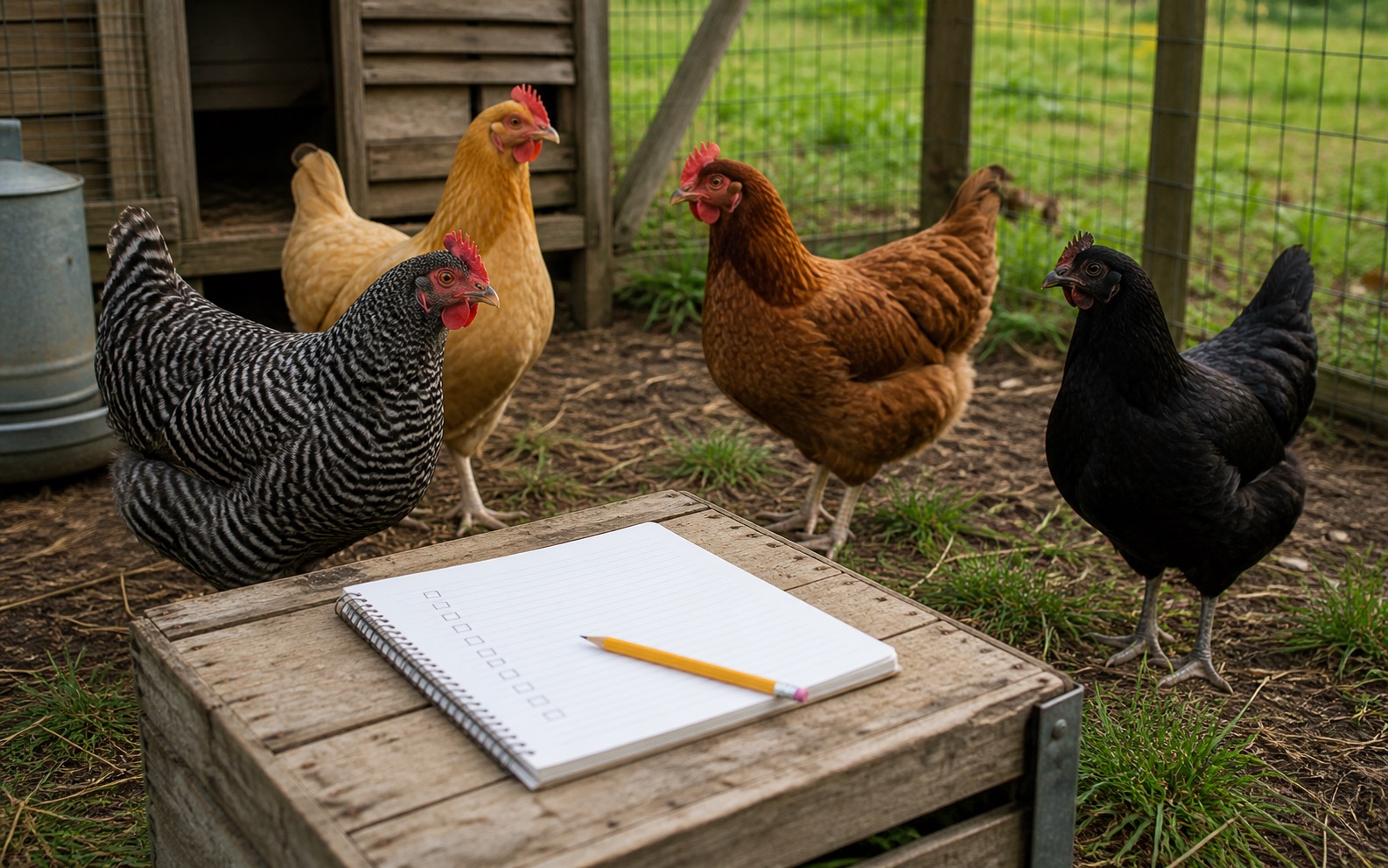
The best chicken breeds for beginners are not the rarest, prettiest, or most exciting breeds in the hatchery catalog. A good first breed is calm enough to manage, hardy enough for your climate, common enough to learn from, and matched to the size and routine your household can actually carry.
I understand why breed choice gets emotional fast. Egg colors are fun. Fluffy breeds are charming. A mixed flock looks like the beginning of the homestead dream. But if this is your first flock, the better question is not what looks most interesting. It is which birds make daily care easier while you learn.
What makes a chicken breed beginner-friendly
Beginner-friendly does not mean perfect. Individual birds vary inside every breed. Hatchery strain, handling, age, predator pressure, space, heat, cold, and flock dynamics all matter. Breed gives you a starting expectation, not a guarantee.
University of Maryland Extension frames the breed decision around the reason you are raising poultry in the first place: eggs, meat, showing, insect control, or breed preservation. For a normal backyard beginner, that usually means eggs, learning, and a manageable daily routine. That keeps the decision simpler.
Chicken breeds beginners often consider
This is not a promise that every bird in these breeds will behave the same way. It is a practical shortlist of common breed types many beginners compare because they tend to be easier to source, easier to research, and easier to fit into a small flock than specialty choices.
Climate fit matters more than egg color
A breed that looks perfect online may not be the right bird for your summers or winters. Maryland Extension notes that some classes of birds tend to handle warm, humid climates better, while many American and English breeds tend to be better suited to cooler climates. Comb size matters too: larger combs can help birds release heat, but they can also be more vulnerable to frostbite in cold weather.
This is why I would not choose a first flock from a pretty egg chart alone. Blue, green, dark brown, and speckled eggs are fun. They are not a substitute for shade, ventilation, winter planning, predator protection, water reliability, and enough room for the birds you picked.
The egg-color trap
Egg color is one of the easiest ways to overcomplicate a first flock. Penn State Extension notes that eggshell color is determined by breed and does not affect nutritional value or taste. That is a helpful reality check. A colorful egg basket is enjoyable, but it should not outrank temperament, climate, health, sourcing, and daily care.
If you want color, choose one or two birds that add variety after the main flock still makes sense. Do not build the whole first flock around novelty. It is better to have four ordinary hens in a setup you can manage than eight interesting birds in a system that is already too loud, too crowded, or too expensive.
What I would avoid in a first flock
A realistic beginner scenario
Imagine a family planning a first flock of four to six hens. They want eggs, a manageable routine, and a little variety. The tempting version is one bird from every exciting hatchery photo: a blue egg layer, a dark brown egg layer, a fluffy bird, a rare bird, a heavy bird, and maybe a rooster because it feels more farm-like.
The steadier version starts with the real constraints: local rules allow hens only, the coop fits four comfortably, summers are hot, the family is new to daily animal care, and the budget is already carrying feed, bedding, predator protection, and brooder supplies. Suddenly the first flock gets simpler. Two or three common steady layers plus maybe one variety bird is plenty to learn from.
Where breed choice meets budget
Breed choice changes the budget more than beginners expect. Larger birds eat more. Specialty chicks may cost more up front. Rare birds can be harder to replace. Heavy or feather-footed birds may change how you think about mud, roost height, bedding, and run conditions. A strong breed choice is not just the chick price. It is the care system that comes with the bird.
My honest filter
If I were choosing a first flock from scratch, I would rather have boringly suitable hens than a catalog-perfect mix. That is not because breed variety is bad. It is because the first season is already full of learning: brooder heat, feed storage, water, bedding, predator protection, coop access, manure, weather, and the everyday rhythm of not forgetting living animals.
A good beginner breed is the bird that lets you learn those lessons without adding drama for no reason. Once the system is steady, there is room to get more particular. The first flock does not have to express every future dream. It just has to teach you well.
Recommendations
Trusted resources for choosing breeds
Extension resource
University of Maryland Extension poultry breed guide
A practical guide to choosing poultry breeds by purpose, class, egg production, temperament, foraging ability, broodiness, and climate.
Best for: Comparing breed traits without relying only on hatchery copy
View resourceSmall-flock basics
Penn State Extension small laying flock guide
A practical small-flock overview covering local rules, roosters, egg color, daily care, feed, water, and realistic egg production.
Best for: Connecting breed choice to the daily management a beginner actually has to repeat
View resourceChicken Hub
Keep the first flock decision in order.
Use the backyard chickens hub to connect breed choice with flock size, brooder setup, coop costs, space, feed, and predator protection.
Open the chicken hubRecommended next reads
Read these before ordering chicks
Breed choice is easier when flock size, chicken type, and first-year costs are already honest.
Chickens
How Many Chickens Should a Beginner Start With?
A practical, beginner-first guide to choosing a first flock size without overcommitting on coop space, feed, chores, or your actual week.

Chickens
Broilers vs Layers for Beginners
Choosing broilers or layers depends less on trend and more on your goals, budget, space, and appetite for daily routine.

Chickens
The Real Cost of Getting Started With Backyard Chickens
Backyard chickens can be a strong first step into homesteading, but the startup costs and recurring work deserve an honest look.
Frequently asked questions
What chicken breed is best for beginners?
There is no single best breed for every beginner. Calm, common, hardy breeds such as Plymouth Rocks, Rhode Island Reds, Orpingtons, Wyandottes, Australorps, and sex-link layers are often easier starting points than rare or fussy birds, but climate, local rules, space, and care capacity matter more than breed name alone.
Should beginners start with rare chicken breeds?
Usually no. Rare breeds can be wonderful later, but a first flock is easier when birds are common enough to source, replace, learn about, and manage without turning breed preservation into the first learning curve.
Do different egg colors taste different?
No. Eggshell color is determined by breed and does not change the nutritional value or taste of the egg. Choose birds for fit, health, climate, temperament, and care needs before choosing shell color.
Are roosters necessary for backyard eggs?
No. Hens do not need a rooster to lay eggs. Beginners should check local rules carefully because many backyard ordinances restrict or prohibit roosters.
Recommendations
Useful tools and resources for this decision
These are included only where they reduce repeated friction, clarify a next step, or help you avoid buying the wrong thing first.
Extension resource
University of Maryland Extension poultry breed guide
A practical breed-selection resource covering goals, breed classes, egg production, temperament, climate considerations, and dual-purpose birds.
Best for: Beginners comparing breed traits without relying on hatchery marketing alone
View resourceSmall-flock basics
Penn State Extension small laying flock guide
A small-flock guide with practical notes on local rules, daily care, roosters, egg color, feed, water, and realistic egg production.
Best for: Readers who want the breed decision connected to daily flock management
View resourceRecommended next reads
Read next if it helps the decision
Move into the next guide only if it clarifies the next practical step.
Chickens
How Many Chickens Should a Beginner Start With?
A practical, beginner-first guide to choosing a first flock size without overcommitting on coop space, feed, chores, or your actual week.
Chickens
Broilers vs Layers for Beginners
Choosing broilers or layers depends less on trend and more on your goals, budget, space, and appetite for daily routine.
Chickens
The Real Cost of Getting Started With Backyard Chickens
Backyard chickens can be a strong first step into homesteading, but the startup costs and recurring work deserve an honest look.
Chicken setup support
Get the chicken setup checklist before you buy more flock gear.
Use the first-year checklist to price the flock honestly, cover the starter essentials, and delay the upgrades that can wait.
Best for: Readers trying to price a first flock honestly and avoid a scattered chicken setup.
- A pre-chick setup checklist
- A recurring-cost planning section
- A simple weekly flock-care rhythm
Chicken setup notes, beginner flock lessons, and the checklist first.
After signup, the download will unlock right here so you can save or print it.
About the author
William Mock
Founder, writer, and beginner homesteader
William writes from the beginner side of rebuilding after a layoff: homestead plans, family systems, budgets, tools, and the decisions that make a home feel less fragile.
Read why this site existsRelated Guides
Keep building context
Chickens
How Many Chickens Should a Beginner Start With?
A practical, beginner-first guide to choosing a first flock size without overcommitting on coop space, feed, chores, or your actual week.
Chickens
The Real Cost of Getting Started With Backyard Chickens
Backyard chickens can be a strong first step into homesteading, but the startup costs and recurring work deserve an honest look.
Chickens
Broilers vs Layers for Beginners
Choosing broilers or layers depends less on trend and more on your goals, budget, space, and appetite for daily routine.