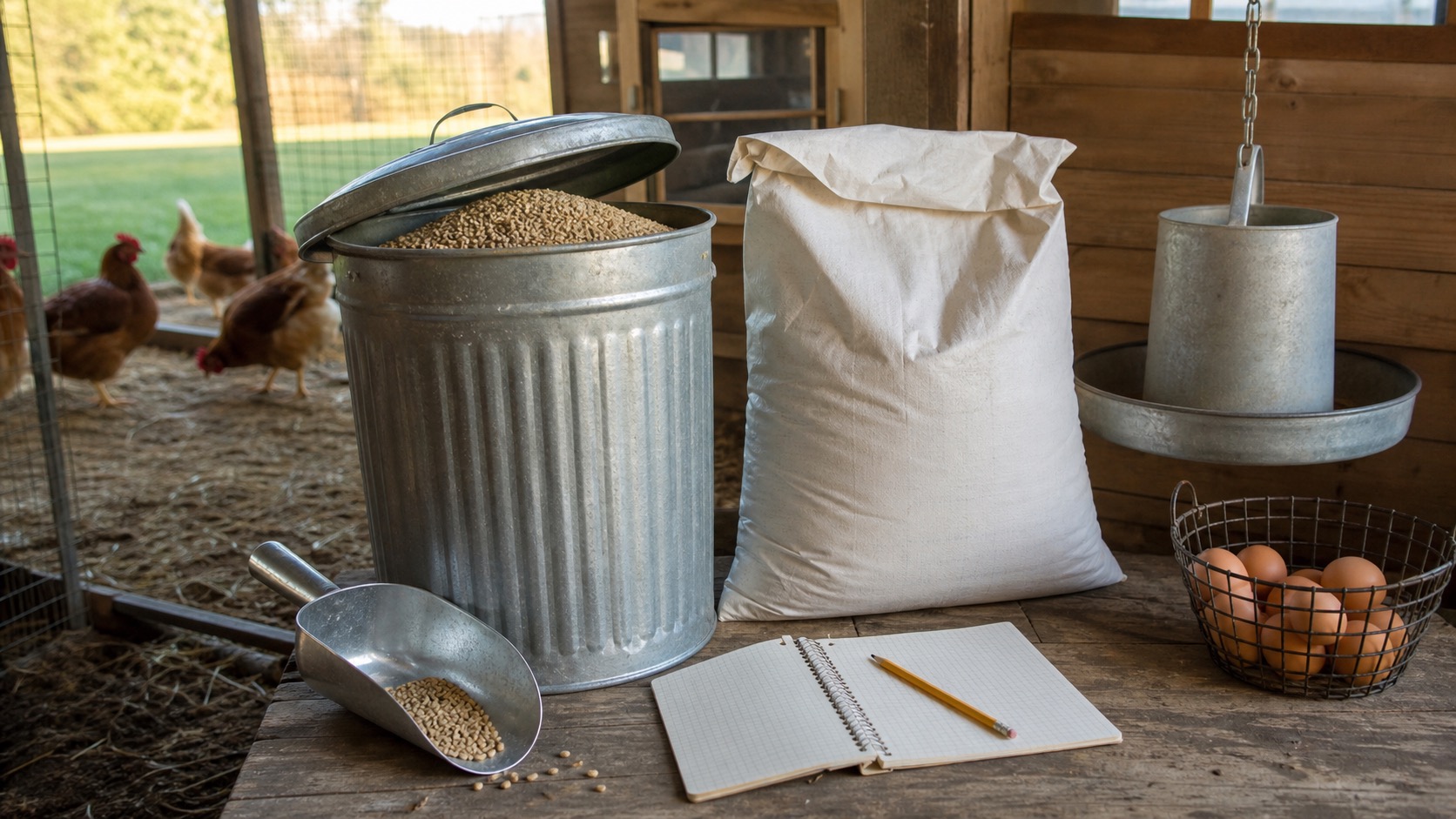
Chicken feed is where the egg dream gets honest. Chicks are cheap enough to make a beginner feel brave. Feed is different. Feed comes back every month, whether the weather is bad, the hens are molting, egg production slows, or the family is tired of chicken chores.
That is why I would rather see a beginner do feed math before buying birds than after the first bag disappears. A flock can still be worth it. But it should be worth it with the real recurring cost on the table, not with grocery-store egg math doing all the emotional work.
The real decision
The real decision is not whether chickens can produce eggs. They can. The real decision is whether your household can carry the monthly feed cost, feed storage, daily chore rhythm, and waste control without turning a simple flock into a background subscription you forgot to budget for.
This is one reason I keep coming back to small, honest systems. After a layoff, I started thinking differently about food and security. But a steadier life is not built by pretending recurring costs do not count. It is built by seeing them clearly enough to choose the right size first.
Simple chicken feed math
Mississippi State Extension gives a useful planning range: an average laying hen may eat about 1/4 to 1/3 pound of feed per day, depending on weather, bird size, and productivity. Alabama Extension uses similar math, noting that 10 hens eating about 1/4 pound per day will go through a 50-pound bag in about 20 days.
For beginner budgeting, I would start with the lower end only if the setup is tidy and the feeder is not wasting much. If the birds are scattering feed, wild birds can reach it, the bag sits open, or the run gets wet, use the higher end until the system proves itself.
Turn bag price into monthly cost
The cleanest way to budget is to turn your local bag price into a price per pound. If a 50-pound bag costs $20, the feed is $0.40 per pound. If it costs $25, the feed is $0.50 per pound. If it costs $32, the feed is $0.64 per pound. Your local number may be higher or lower, and organic or specialty feed can change the math quickly.
Those numbers are not promises. They are a way to keep the conversation honest. A beginner flock with poor storage, a bad feeder, rodents, wet feed, or too many treats can cost more. A tidy setup with the right flock size may stay closer to the estimate.
Feed is not the place to improvise
Oregon State Extension explains that manufactured feeds are formulated for specific ages and production stages. Starter feed, grower feed, developer feed, and layer feed exist for a reason. Maryland Extension also notes that scratch grains are not necessary when birds receive a complete diet and that scratch should stay limited.
The beginner translation is plain: scraps, scratch, and treats are not a budget strategy. They can be part of flock management, but they should not become a way to avoid buying complete feed. If the feed bill only works when you imagine the hens living mostly on leftovers, the flock plan is probably too optimistic.
Where feed budgets leak
Feed waste is one of the quietest costs in backyard chickens. It rarely feels dramatic in the moment. A little spilled feed under the feeder. A torn bag in the shed. Rain blowing into a poorly placed feeder. Wild birds helping themselves. Mice finding the feed corner. A few handfuls of scratch because it feels fun.
What to buy and what can wait
This is where a few product recommendations make sense, but only if they protect the monthly system. I would not buy clever chicken gear just because it looks efficient. I would buy the plain things that keep feed dry, visible, measurable, and harder to waste.
Recommendations
Feed-cost tools that can earn their place
Protect the feed
Gamma2 Vittles Vault stackable feed container, 40 lb
A sealed container for opened feed bags when moisture, pests, and torn bags are realistic risks.
Best for: Small flocks where a full bag needs a clean, dry place to live
Check current priceReduce waste
Harris Farms galvanized hanging poultry feeder, 30 lb
A simple hanging feeder to price once your flock size and layout are clear.
Best for: Flocks where scattered feed is turning into a recurring cost
Check current priceMeasure first
Galvanized feed scoop
A basic scoop makes feed use easier to repeat and record.
Best for: Beginners tracking how fast a bag really disappears
Check current priceFree resource
Oregon State Extension laying hen feed guide
A free source-backed guide to complete feed, feed stages, scratch, oyster shell, grit, and water.
Best for: Checking feeding basics before changing the ration
View resourceA realistic beginner scenario
Picture a family planning four hens. The local 50-pound bag of layer feed is $25. Four hens eating about 1/4 pound each per day use around 30 pounds per month, so the clean math says about $15 per month. But the first month has extra waste while the feeder height gets adjusted, a little feed gets wet during a storm, and the storage container has not been bought yet.
That family should not budget only $15 and feel surprised. A steadier first number might be $20 to $25 until the routine is proven. Once the feeder, storage, and flock rhythm settle, the number can be adjusted from real notes instead of hopeful math.
The useful next step
Before adding birds, write one feed line in the monthly budget. Bird count, daily feed estimate, local bag price, storage plan, and waste margin. If the number feels irritating before the chickens arrive, listen to that. It may be telling you to start with fewer hens.
A smaller flock with a boring feed plan is not a weak start. It is a sturdier one. The goal is not to prove that chickens are cheap. The goal is to build a flock your household can care for honestly, month after month, without the feed bill quietly turning into resentment.
Best Next Step
Use the chicken checklist before you buy more flock gear.
The chicken checklist helps you price the first year, plan the recurring feed rhythm, and delay upgrades that have not earned their place yet.
Get the chicken checklistRecommended next reads
Read the next guide that supports this decision
These guides help put feed costs in context before the flock size or feeder choice gets locked in.

Chickens
The Real Cost of Getting Started With Backyard Chickens
Backyard chickens can be a strong first step into homesteading, but the startup costs and recurring work deserve an honest look.
Chickens
How Many Chickens Should a Beginner Start With?
A practical, beginner-first guide to choosing a first flock size without overcommitting on coop space, feed, chores, or your actual week.
Chickens
Best Chicken Feeder for Beginners
The best chicken feeder for beginners is usually the one that stays boring: low mess, enough capacity, weather-tolerant, and easy to refill without becoming another daily irritation.
Frequently asked questions
How much feed does a laying hen eat per day?
A practical beginner planning range is about 1/4 to 1/3 pound of feed per laying hen per day. Breed, age, weather, production, waste, and access to forage can change the real number.
How much does chicken feed cost per month for beginners?
For a small flock, multiply hens by daily feed intake, then multiply by your local price per pound. Four hens eating about 1/4 pound each per day use about 30 pounds per month, before waste.
Can kitchen scraps replace chicken feed?
No. Scraps and treats should not replace a complete feed. Extension guidance consistently points beginners back to age-appropriate complete rations, with scratch and treats kept limited.
What makes chicken feed costs higher than expected?
Feed waste, poor storage, pests, buying the wrong feed phase, treat-heavy feeding, wet feed, and starting with too many birds can all make the monthly number climb.
Recommendations
Useful tools and resources for this decision
These are included only where they reduce repeated friction, clarify a next step, or help you avoid buying the wrong thing first.
Protect the feed
Gamma2 Vittles Vault stackable feed container, 40 lb
A sealed feed container helps keep an opened bag drier, tidier, and less exposed to pests once you are buying full bags.
Best for: Small flocks where loose bags would sit open in a garage, shed, or feed corner
Check current priceReduce waste
Harris Farms galvanized hanging poultry feeder, 30 lb
A simple hanging feeder can reduce floor mess and make feed levels easier to see once the flock size is set.
Best for: Beginner flocks where scattered feed is becoming a real monthly cost
Check current priceTrack the rhythm
Galvanized feed scoop
A plain scoop makes feed use easier to measure and repeat instead of guessing from an open bag.
Best for: Tracking feed use for the first few months
Check current priceFree resource
Oregon State Extension laying hen feed guide
Use Extension guidance to keep feed decisions tied to age, production stage, water, calcium, scratch, and complete ration basics.
Best for: Checking feeding basics before changing rations or relying on scraps
View resourceRecommended next reads
Read next if it helps the decision
Move into the next guide only if it clarifies the next practical step.
Chickens
The Real Cost of Getting Started With Backyard Chickens
Backyard chickens can be a strong first step into homesteading, but the startup costs and recurring work deserve an honest look.
Chickens
How Many Chickens Should a Beginner Start With?
A practical, beginner-first guide to choosing a first flock size without overcommitting on coop space, feed, chores, or your actual week.
Chickens
Best Chicken Feeder for Beginners
The best chicken feeder for beginners is usually the one that stays boring: low mess, enough capacity, weather-tolerant, and easy to refill without becoming another daily irritation.
Chicken setup support
Get the chicken setup checklist before you buy more flock gear.
Use the first-year checklist to price the flock honestly, cover the starter essentials, and delay the upgrades that can wait.
Best for: Readers trying to price a first flock honestly and avoid a scattered chicken setup.
- A pre-chick setup checklist
- A recurring-cost planning section
- A simple weekly flock-care rhythm
Chicken setup notes, beginner flock lessons, and the checklist first.
After signup, the download will unlock right here so you can save or print it.
About the author
William Mock
Founder, writer, and beginner homesteader
William writes from the beginner side of rebuilding after a layoff: homestead plans, family systems, budgets, tools, and the decisions that make a home feel less fragile.
Read why this site existsRelated Guides
Keep building context
Chickens
The Real Cost of Getting Started With Backyard Chickens
Backyard chickens can be a strong first step into homesteading, but the startup costs and recurring work deserve an honest look.
Chickens
How Many Chickens Should a Beginner Start With?
A practical, beginner-first guide to choosing a first flock size without overcommitting on coop space, feed, chores, or your actual week.
Chickens
Best Chicken Feeder for Beginners
The best chicken feeder for beginners is usually the one that stays boring: low mess, enough capacity, weather-tolerant, and easy to refill without becoming another daily irritation.