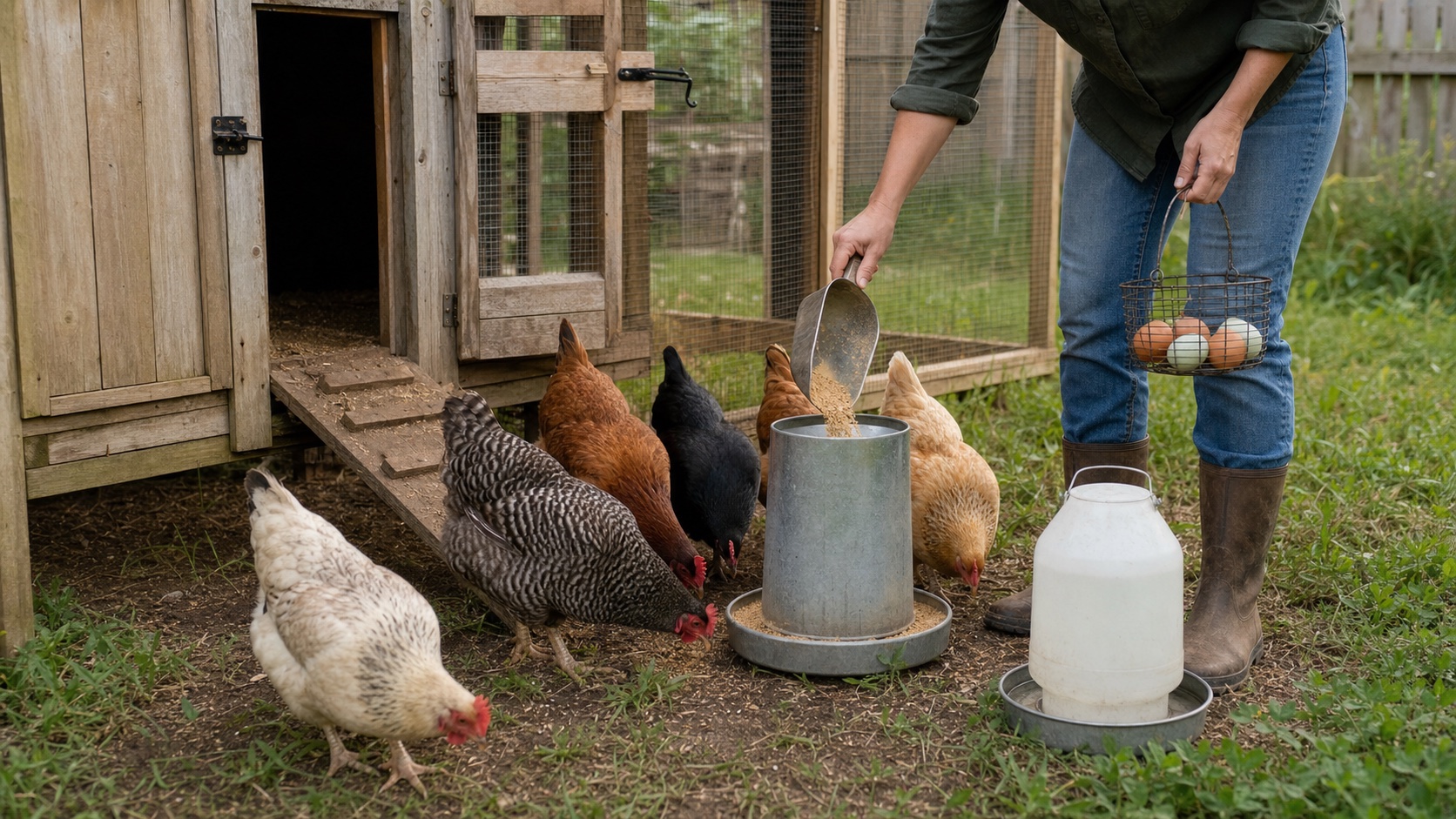
A workable daily chicken-care routine has two anchors: a complete morning check for water, feed, flock behavior, eggs, and the physical setup, followed by a shorter evening close that accounts for the birds and secures the coop. Busy families do not need a complicated schedule. They need a routine clear enough that another responsible person can follow it on a hard day.
The goal is not to complete chicken chores in a record number of minutes. The goal is to notice the small problem while it is still a tipped waterer, a loose latch, a wet patch, or one hen acting differently. A fast routine is useful only when it remains observant.
The blue egg and the boring checklist
One of my favorite chicken photos is not dramatic. It is a hand holding a few fresh eggs outside: brown eggs, blue eggs, ordinary proof that the flock produced something useful that day. That is the part people naturally want to photograph. I understand why. The egg feels like the result.
What the photo does not show is the route that came before it. Feed level. Water condition. The gate. The latch. Bedding under the roost. A glance at each bird instead of only looking at the group. The egg is memorable because the work around it became normal enough to disappear from the frame.
That changed how I think about a good chicken routine. The routine should not make the family feel impressive. It should make the flock's basic needs difficult to overlook. The cool part is not building a complicated chore chart. It is reaching the egg basket knowing the boring checks behind it were actually done.
Build two daily anchors, not a day full of reminders
For most family schedules, morning and evening are the cleanest anchors. The morning pass handles the highest-priority needs and gives you a baseline for the day. The evening pass confirms the birds are in, the structure is secure, and nothing changed enough to require action.
Weather, age, health, predators, and equipment can require additional checks. Hot weather may demand more water attention. Freezing conditions can turn a normal drinker into the day's main problem. Chicks, a recently integrated bird, an injured hen, or an unreliable automatic door all need closer observation than a stable adult flock in mild weather.
The morning route: water, birds, feed, eggs, structure
I would keep the morning route in the same order. Repetition lowers the mental load and makes changes easier to notice. Start with water because it is essential and because a tipped, frozen, dirty, leaking, or empty waterer can change the whole day.
The evening close should end with your hand on the latch
The evening routine is shorter, but it carries the security responsibility. Do not judge the coop door from the kitchen window or assume an automatic door completed its cycle. Walk out, count or account for the birds, close the coop, and touch each latch after it reaches its locked position.
This is also the moment to notice the hen that did not roost, the bird standing apart, the gate that dragged instead of closing cleanly, or the waterer that will not make it through the next weather change. The routine is not complete because the sun went down. It is complete when the flock and structure have been checked.
The minimum version for a genuinely overloaded day
Some days will collapse. Work runs late, a child needs attention, dinner is behind, and the weather changes the plan. A reduced routine is better than an imaginary perfect one, but the essentials cannot be postponed just because the day is inconvenient.
Deep cleaning can move to the next planned block. Reorganizing supplies can wait. Coop decor never mattered. The short version should preserve life, health, sanitation, and security. Everything else returns to the weekly list.
Divide chores without dividing awareness
Families often divide chicken work, which is sensible. The problem begins when one person fills water, another person collects eggs, and everybody assumes somebody else closed the coop. Shared work needs one visible definition of done.
Biosecurity belongs in the ordinary routine
USDA's Defend the Flock resources emphasize everyday biosecurity rather than waiting for a disease problem. For a small family flock, that means treating shoes, tools, visitors, wild birds, rodents, new birds, and contact with other poultry as part of management.
Equipment should protect the routine, not replace it
A larger feeder, higher-capacity waterer, or automatic door can create useful margin. None of them can tell you that a hen is limping, a seal is leaking, the water is dirty, feed is wet, or a predator tested the corner overnight. Convenience equipment should reduce repeated friction while keeping the flock easy to inspect.
Recommendations
Tools and references for a steadier routine
Feed routine
Simple hanging poultry feeder
A moderate-capacity feeder that keeps feed visible and can reduce some floor waste.
Best for: Small flocks with a proven refill or feed-waste problem
Check current priceWater routine
Easy-clean poultry waterer
A stable drinker with enough capacity and an opening that can actually be scrubbed.
Best for: Families whose current water setup tips, fouls, or empties too quickly
Check current priceEvening security
Two-step locking gate latch
A positive-locking latch for a coop door or run gate with a weak closing point.
Best for: Replacing an easy-to-bump hook or ambiguous latch
Check current priceExtension resource
University of Minnesota Extension chicken guide
Source-backed guidance on the larger housing, feeding, equipment, health, and egg-care system.
Best for: Checking a beginner routine against established flock-care guidance
View resourceBiosecurity resource
USDA Defend the Flock biosecurity resources
Everyday poultry biosecurity guidance and checklists from USDA APHIS.
Best for: Adding disease-prevention habits to ordinary family flock care
View resourceKeep weekly work out of the daily checklist
A daily routine becomes hard to sustain when it quietly absorbs every chicken task. Schedule the longer bedding refresh, droppings-board cleaning, feeder scrub, waterer scrub, supply inventory, fence walk, pest check, and repair block separately. Daily chores should catch urgent issues and keep the flock stable. Weekly work should restore the system.
A chicken routine has to work in real life
The best routine is not the shortest one or the most detailed one. It is the routine your household can repeat, hand off, and still trust when work is heavy, the weather turns, or the person who usually remembers everything is unavailable.
Start with water. Look at the birds. Check feed. Collect eggs. Notice the setup. Return at evening, account for the flock, and put your hand on the latch. That sequence is ordinary on purpose. Those are the quiet actions that make the egg in your hand possible.
Backyard Chickens
Make sure the flock size fits the routine.
Use the real startup-cost guide to connect daily care with coop space, feed, bedding, equipment, predator protection, and the monthly responsibility behind a first flock.
Read the real chicken-cost guideRecommended next reads
Keep building the chicken-care system
These guides help connect the daily route to flock size, feed equipment, costs, and nighttime security.

Chickens
The Real Cost of Getting Started With Backyard Chickens
Backyard chickens can be a strong first step into homesteading, but the startup costs and recurring work deserve an honest look.
Chickens
Best Chicken Feeder for Beginners
The best chicken feeder for beginners is usually the one that stays boring: low mess, enough capacity, weather-tolerant, and easy to refill without becoming another daily irritation.
Chickens
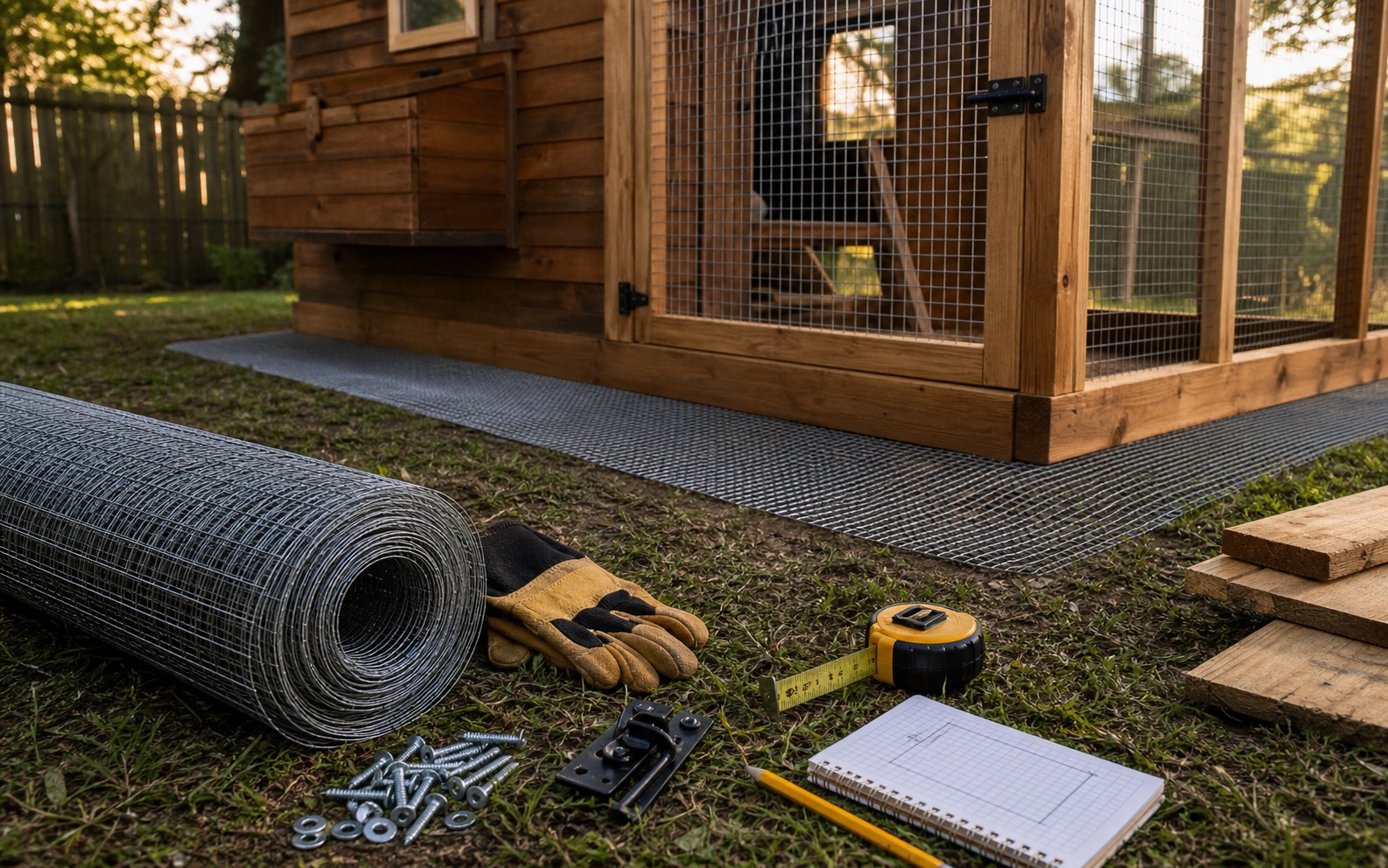
Predator-Proof Chicken Coop for Beginners
A practical beginner guide to predator-proofing a chicken coop and run before birds arrive, with the security layers that matter most and the upgrades that can wait.
Frequently asked questions
What daily care do backyard chickens need?
Backyard chickens need reliable access to appropriate feed and clean fresh water, a quick health and behavior check, egg collection, attention to wet or unsafe areas, and a predator-secure coop and run. Weather and flock conditions may add extra checks.
How long should a daily chicken-care routine take?
A small, well-designed flock setup can often be checked efficiently, but there is no safe universal time promise. The routine should be long enough to confirm water, feed, bird behavior, eggs, sanitation, and security rather than racing a timer.
Can I leave chickens alone for a full day?
Equipment capacity does not replace daily observation. Chickens still need dependable care, weather-aware checks, and someone prepared to respond to spilled water, feed problems, injury, illness, predators, or a failed door or latch.
What should I check when closing the chicken coop at night?
Confirm the flock is accounted for, the coop door is fully closed, every latch is positively secured, feed is protected as appropriate for the setup, ventilation remains open and predator-resistant, and no bird is isolated, injured, or trapped.
Recommendations
Useful tools and resources for this decision
These are included only where they reduce repeated friction, clarify a next step, or help you avoid buying the wrong thing first.
Solve feed friction
Simple hanging poultry feeder
A correctly sized hanging or gravity feeder can make feed levels visible and reduce some floor mess without turning the routine into a complicated system.
Best for: Families refilling too often or repeatedly sweeping up feed from an open container
Check current priceProtect the essential
Easy-clean poultry waterer
A stable waterer with enough capacity for the flock and weather can reduce refill pressure while remaining simple to inspect and scrub.
Best for: Setups where the current drinker tips, fouls quickly, or runs dry between normal checks
Check current priceUpgrade the weak point
Two-step locking gate latch
A sturdy latch that requires more than a simple push or lift can strengthen the evening close when the current run or coop latch is easy to bump open.
Best for: Coop doors and run gates with a weak, ambiguous, or easy-to-open latch
Check current priceExtension resource
University of Minnesota Extension chicken guide
A practical overview of raising chickens for eggs, including housing, equipment, feeding, egg handling, health, and flock care.
Best for: Beginners who want a source-backed overview behind the daily routine
View resourceBiosecurity resource
USDA Defend the Flock biosecurity resources
USDA APHIS guidance and checklists for everyday biosecurity practices that help reduce disease risk around poultry.
Best for: Families building footwear, visitor, cleaning, wild-bird, and new-bird habits into flock care
View resourceRecommended next reads
Read next if it helps the decision
Move into the next guide only if it clarifies the next practical step.
Chickens
The Real Cost of Getting Started With Backyard Chickens
Backyard chickens can be a strong first step into homesteading, but the startup costs and recurring work deserve an honest look.
Chickens
Best Chicken Feeder for Beginners
The best chicken feeder for beginners is usually the one that stays boring: low mess, enough capacity, weather-tolerant, and easy to refill without becoming another daily irritation.
Chickens
Predator-Proof Chicken Coop for Beginners
A practical beginner guide to predator-proofing a chicken coop and run before birds arrive, with the security layers that matter most and the upgrades that can wait.
Chicken setup support
Get the chicken setup checklist before you buy more flock gear.
Use the first-year checklist to price the flock honestly, cover the starter essentials, and delay the upgrades that can wait.
Best for: Readers trying to price a first flock honestly and avoid a scattered chicken setup.
- A pre-chick setup checklist
- A recurring-cost planning section
- A simple weekly flock-care rhythm
Chicken setup notes, beginner flock lessons, and the checklist first.
After signup, the download will unlock right here so you can save or print it.
About the author
William Mock
Founder, writer, and beginner homesteader
William writes from the beginner side of rebuilding after a layoff: homestead plans, family systems, budgets, tools, and the decisions that make a home feel less fragile.
Read why this site existsRelated Guides
Keep building context
Chickens
The Real Cost of Getting Started With Backyard Chickens
Backyard chickens can be a strong first step into homesteading, but the startup costs and recurring work deserve an honest look.
Chickens
How Many Chickens Should a Beginner Start With?
A practical, beginner-first guide to choosing a first flock size without overcommitting on coop space, feed, chores, or your actual week.
Chickens
Best Chicken Feeder for Beginners
The best chicken feeder for beginners is usually the one that stays boring: low mess, enough capacity, weather-tolerant, and easy to refill without becoming another daily irritation.