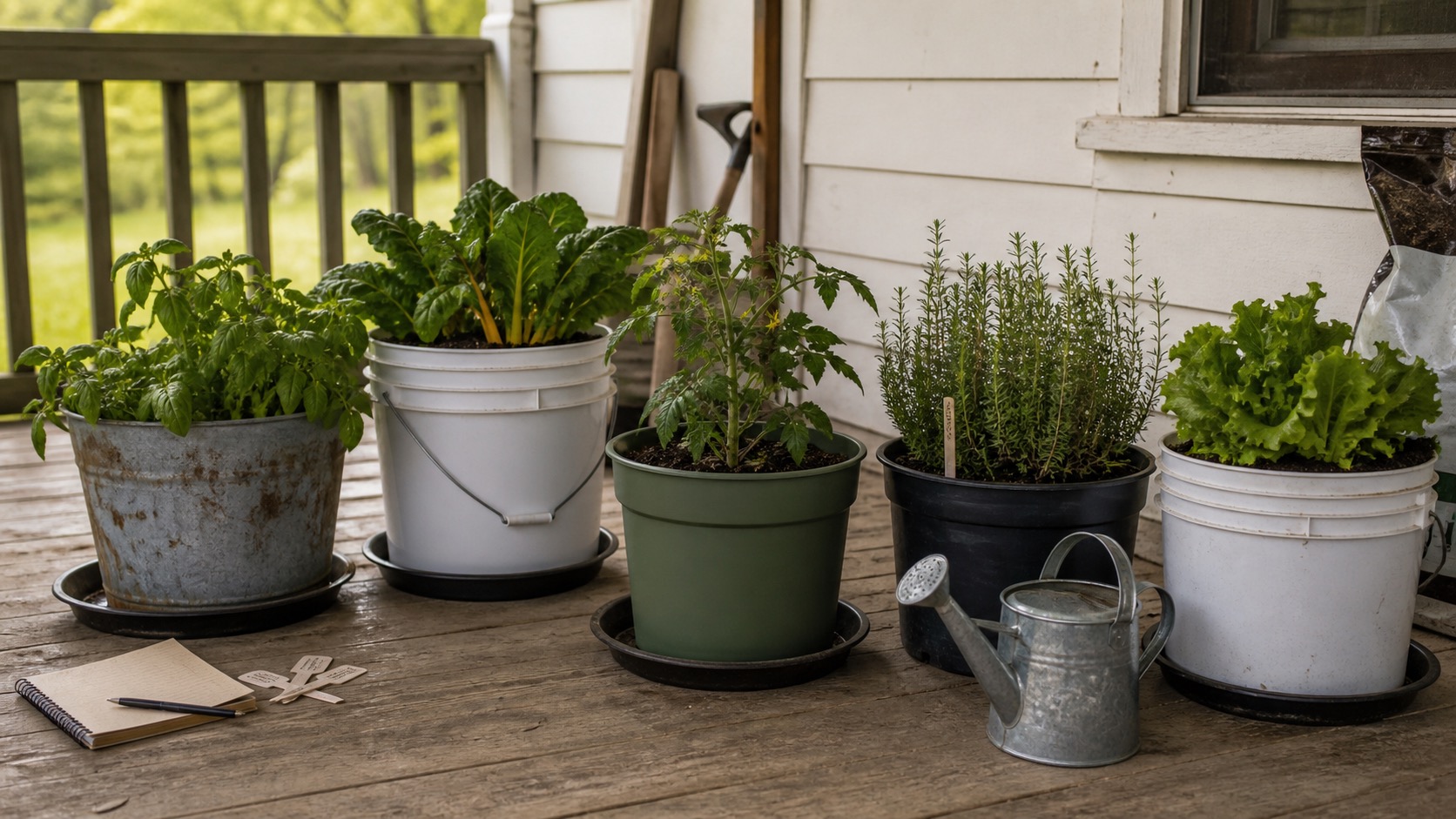
Container gardening is not a pretend version of homesteading. For a future homesteader, it can be the smallest honest classroom you have: sunlight, water, drainage, soil mix, crop choice, feeding, pests, harvest timing, and the discipline of checking living things when the week is already full.
That matters to me because the fresh-start pull can make everything feel urgent. After a layoff, I understand the desire to make visible progress fast. A bigger garden, a better property, a row of raised beds, a tool order, a whole new identity. But the durable version of this life is built in layers. A few containers on a porch can teach more useful truth than a large garden started before your routines are ready.
The porch container that made the future garden more honest
A container can humble a big plan in a helpful way. One porch pot will tell you whether the spot gets enough sun, whether the hose reaches, whether you remember to water after a long day, and whether the crop you imagined actually makes it into dinner.
That is useful information before land. If a container dries out faster than expected or gets ignored during a busy week, that is not failure. It is a low-cost lesson about rhythm, placement, and attention before those same mistakes are spread across a larger garden.
The real decision
The real decision is not whether containers count. They do. The real decision is whether you will use them as decoration, impulse purchases, or a small food system that gives you feedback.
A future homesteader should judge a container garden by what it teaches. Which side of the porch gets enough sun? How fast does a five-gallon bucket dry out in July? Which crops make it into meals? Which tasks do you avoid? Which setup survives a busy week without becoming another guilt project?
What containers teach before you have more land
Containers compress the learning curve. In a big garden, a beginner can miss cause and effect because there are too many variables at once. In containers, the feedback is blunt. A small pot dries out. A tomato without enough sun sulks. Lettuce bolts when heat arrives. Basil tells you quickly whether you are harvesting often enough.
A realistic first setup
If I were starting this from scratch on a patio, porch, driveway edge, rental yard, or temporary season, I would not start with twenty pots. I would start with three to five containers and make each one answer a different question.
That setup is not impressive in a social-media sense. That is partly the point. A small container garden can be checked quickly, watered without drama, and understood clearly. If it fails, you can usually tell why. If it works, you have earned better questions for the next season.
Container size, soil, and drainage
University Extension guidance is consistent on the basics: containers need drainage, container-appropriate growing media, regular water, and fertility attention. Oregon State Extension advises using commercial potting soil rather than soil dug from the ground. University of Maryland Extension warns against adding gravel, rocks, or pot shards to the bottom because they take up root space and can worsen drainage. University of Minnesota Extension notes that repeated watering can leach nutrients over time.
The beginner translation is simple: do not make the plant fight a bad container before it ever has a chance. A bucket with drainage holes, enough volume, and decent potting mix is more useful than a pretty pot with compacted soil and no plan for water.
What to buy and what to skip
This is where monetization has to stay honest. Container gardening can turn into a cart full of matching planters, decorative stands, clever gadgets, and soil amendments before a single watering habit exists. I would rather recommend a few boring items that protect the system than push gear that makes the setup look finished before it is proven.
Recommendations
Beginner container supplies that can earn their place
Flexible start
Fabric grow bags
A flexible first container for herbs, greens, peppers, potatoes, or compact tomatoes when you are still testing sun and space.
Best for: Future homesteaders who need movable practice before permanent beds
Check current priceDaily care
Gentle watering wand
Useful for hand-watering containers without flattening seedlings or blasting potting mix out of shallow pots.
Best for: Porch and patio gardens where watering by hand is still realistic
Check current priceKeep evidence
Garden notebook
Track planting dates, watering problems, what dried out first, harvests, pests, and the crops you would repeat.
Best for: Building a better second season from actual evidence
Check current priceFree resource
Extension container gardening basics
Use university guidance to check container size, drainage, potting mix, fertilizer, watering, and crop fit before buying more supplies.
Best for: Separating fundamentals from product marketing
View resourceThe weekly rhythm
A container garden does not need a complicated management system. It needs a visible routine. During hot weather, that may mean a quick water check every morning or evening. Once a week, it means looking closer: leaves, stems, soil moisture, pests, yellowing, flowers, fruit set, harvest size, and whether any plant needs support.
That last sentence is the part most people skip, and it is also the part that makes the work compound. You do not need a perfect garden journal. You need enough evidence that next year is not a total restart.
How to know it is working
The container garden is working if it makes your next decision clearer. Maybe you learn that herbs near the kitchen get used constantly, but greens need a cooler spot. Maybe you learn that five-gallon buckets dry out faster than your schedule can support. Maybe you learn that peppers are worth repeating and tomatoes need more sun than your patio offers.
The useful next step
Choose three containers, three crops, one watering routine, and one note-taking habit. Keep the first version plain enough that you can actually finish the loop.
If you are hoping for land someday, this is not wasted time. It is the beginning of your garden literacy. The future homestead will ask for the same skills at a larger scale: attention, restraint, maintenance, observation, and the humility to let one season teach the next.
Best Next Step
Turn this into one calmer garden plan.
Use the beginner garden guide next so your containers support a real first-season path instead of becoming another scattered project.
Plan your first gardenRecommended next reads
Read the next guide that supports this decision
These are the next pieces most likely to help you turn container practice into a stronger first garden.
Gardening
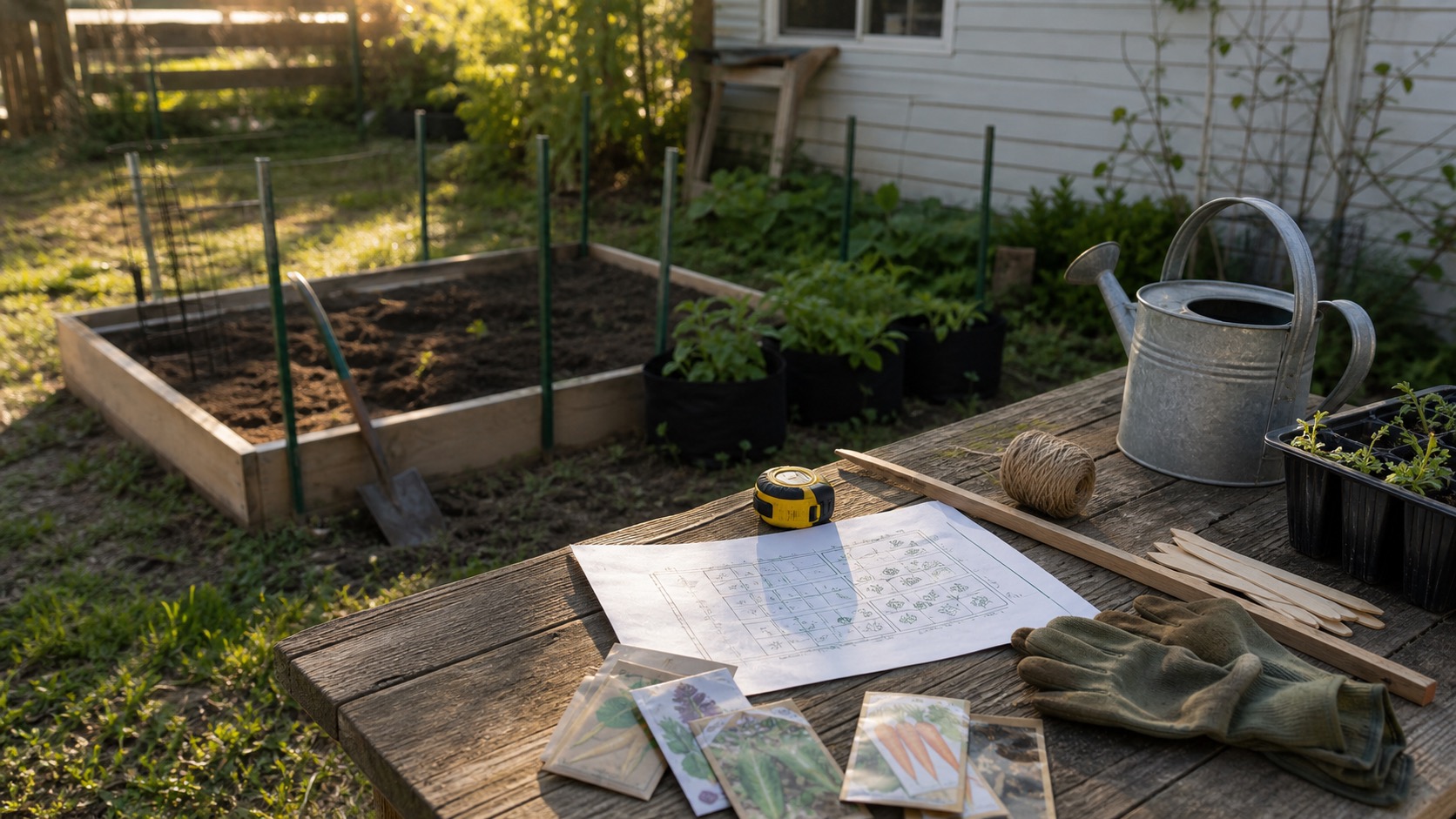
How to Plan Your First Homestead Garden Without Doing Too Much
A successful first garden is smaller, clearer, and less romantic than many beginners expect. That is a good thing.
Gardening
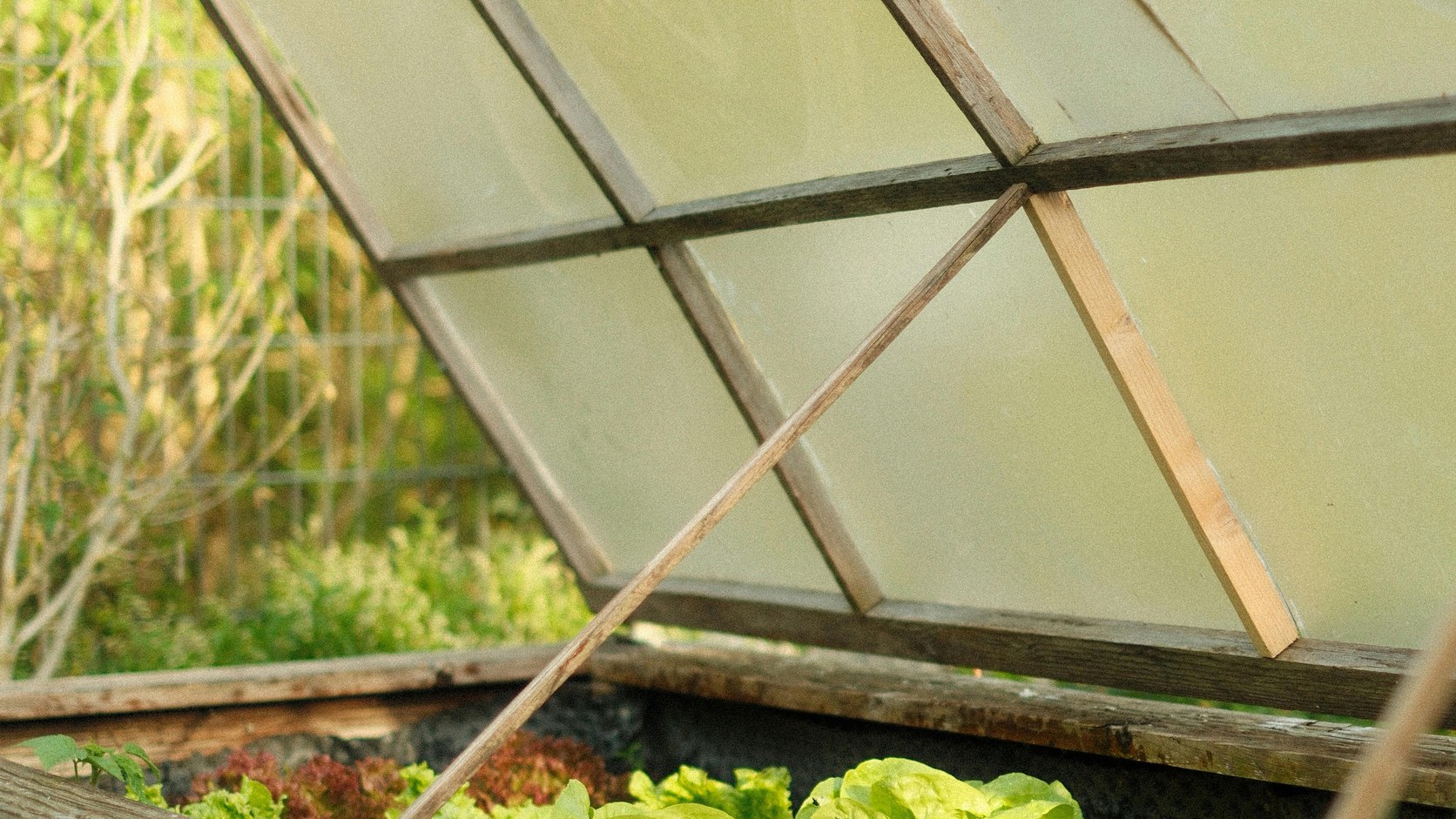
How Big Should a Beginner Vegetable Garden Be?
A practical guide to choosing a beginner vegetable garden size your time, watering routine, harvest goals, and actual meals can support.

Gardening
What to Plant First in a Beginner Homestead Garden
A practical crop-selection guide for first gardens: what to plant first, what to skip for now, and how to choose crops that teach useful skills without overwhelming the week.
Frequently asked questions
Is container gardening worth it if I want a real homestead someday?
Yes. Containers teach the habits that bigger gardens require: watering, crop choice, sunlight observation, soil management, pest checks, harvest timing, and honest note-taking.
What should a future homesteader grow in containers first?
Start with herbs, greens, peppers, compact tomatoes, bush beans, or other crops your household already eats. The best first container crops teach quickly and make it to the kitchen.
What container gardening supplies should probably wait?
Matching decorative pots, elaborate vertical systems, expensive self-watering setups, and huge crop lists can usually wait until a small container garden proves your water routine and crop choices.
Can I use garden soil in containers?
Most beginners should use potting mix, not heavy garden soil. Extension container-gardening guidance consistently points to drainage, aeration, and container-appropriate growing media as core success factors.
Recommendations
Useful tools and resources for this decision
These are included only where they reduce repeated friction, clarify a next step, or help you avoid buying the wrong thing first.
Flexible start
Fabric grow bags
A practical way to test tomatoes, peppers, potatoes, herbs, or greens without building permanent beds.
Best for: Renters, patio gardeners, and future homesteaders testing crop habits before building beds
Check current priceDaily care
Gentle watering wand
Useful when containers need frequent watering but seedlings and shallow-rooted greens should not be blasted with hose pressure.
Best for: Small porch, patio, and driveway container gardens watered by hand
Check current priceKeep evidence
Garden notebook
Use it to track watering frequency, crop notes, pest pressure, harvest dates, and what you would change next season.
Best for: Turning one small container season into a smarter first in-ground garden
Check current priceFree resource
University Extension container guidance
Use local and university Extension resources to check potting mix, drainage, watering, fertilizing, and crop-size guidance before scaling up.
Best for: Verifying the basics before buying more containers or soil
View resourceRecommended next reads
Read next if it helps the decision
Move into the next guide only if it clarifies the next practical step.
Gardening
How to Plan Your First Homestead Garden Without Doing Too Much
A successful first garden is smaller, clearer, and less romantic than many beginners expect. That is a good thing.
Gardening
How Big Should a Beginner Vegetable Garden Be?
A practical guide to choosing a beginner vegetable garden size your time, watering routine, harvest goals, and actual meals can support.
Gardening
What to Plant First in a Beginner Homestead Garden
A practical crop-selection guide for first gardens: what to plant first, what to skip for now, and how to choose crops that teach useful skills without overwhelming the week.
Garden gear support
Get the buy-first guide before the first garden collects too much gear.
Use the guide to decide which early garden purchases earn money now, which ones can be borrowed, and which ones can wait until the routine proves itself.
Best for: Beginners who keep seeing useful things online and need a disciplined way to decide what actually earns a place.
- A buy now, borrow, wait, or skip framework
- Starter category shortlists
- A three-question purchase test
Garden planning notes, restrained gear decisions, and the guide first.
After signup, the download will unlock right here so you can save or print it.
About the author
William Mock
Founder, writer, and beginner homesteader
William writes from the beginner side of rebuilding after a layoff: homestead plans, family systems, budgets, tools, and the decisions that make a home feel less fragile.
Read why this site existsRelated Guides
Keep building context
Gardening
How to Plan Your First Homestead Garden Without Doing Too Much
A successful first garden is smaller, clearer, and less romantic than many beginners expect. That is a good thing.
Gardening
How Big Should a Beginner Vegetable Garden Be?
A practical guide to choosing a beginner vegetable garden size your time, watering routine, harvest goals, and actual meals can support.
Gardening
What to Plant First in a Beginner Homestead Garden
A practical crop-selection guide for first gardens: what to plant first, what to skip for now, and how to choose crops that teach useful skills without overwhelming the week.