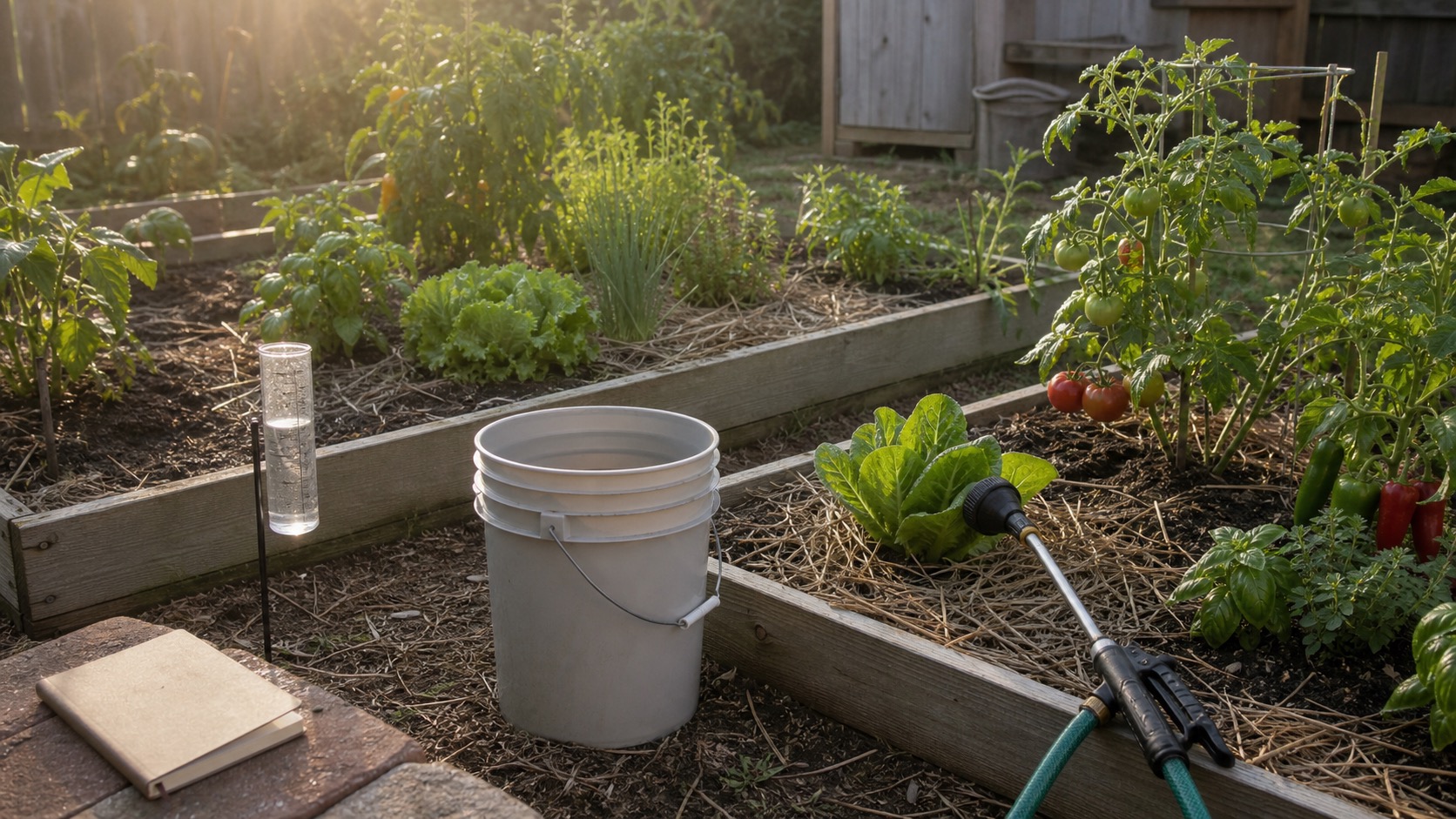
Watering a beginner vegetable garden gets easier when you stop asking, “Did I water today?” and start asking, “Is the root zone actually dry?” That one shift prevents a lot of nervous evening sprinkling.
I understand the urge to hover over a first garden. You put money into beds, soil, seedlings, mulch, and maybe a hose setup, and then the weather turns hot. Suddenly every droopy leaf feels like a verdict on whether you know what you are doing. Most of the time, the answer is calmer than that: check the soil, water deeply when it needs it, protect the surface with mulch, and stop guessing from the porch.
Why garden watering feels confusing at first
Watering advice sounds simple until real life shows up. One person says water every morning. Another says never water every day. A seedling tray dries out by lunch, while a mulched raised bed still feels damp two inches down. A container tomato wilts in the afternoon, but the in-ground peppers beside it look fine.
That is because a watering routine is not just about the calendar. Soil texture, organic matter, mulch, wind, heat, plant size, root depth, containers, and recent rain all matter. University of Minnesota Extension recommends using the soil itself as the check: if the soil is dry two inches below the surface, it is time to water.
What one inch of water actually means
The usual vegetable-garden baseline is about one inch of water per week, including rain. Minnesota Extension puts real numbers behind that: one inch of water over 100 square feet equals about 62 gallons. That does not mean every beginner needs to measure every gallon forever. It means one inch is more water than a quick pass with the hose.
For a small 4-by-8 raised bed, one inch of water is roughly 20 gallons across the whole bed for the week if rain does not supply it. For a 10-by-10 garden, it is roughly 62 gallons. That number explains why a garden can look watered on top while the deeper root zone is still dry.
The soil check that keeps you from guessing
Before you drag the hose out, push a finger, trowel, or soil probe about two inches into the bed near the plant root zone. Do not judge only by the crusty top layer. Mulch and sun can make the surface look dry while the soil below is still fine.
A realistic beginner scenario
Picture a first garden with two 4-by-8 raised beds, tomatoes on one end, peppers in the middle, lettuce and herbs tucked where there is space, and straw mulch added after the soil warmed. The family watered every evening for the first week because that felt responsible. By week three, some plants looked yellow, the top stayed damp, and the gardener still felt unsure.
The better routine is less dramatic. Check the soil in the morning. If the bed is dry two inches down, water slowly until the root zone is damp, not just the surface. If the bed still has moisture, skip it. Check containers separately. Watch transplants more closely for a few days. Keep a note of rain and heat, not because you need a perfect log, but because memory gets unreliable when life is busy.
What needs different treatment
Not every part of the garden should be treated the same. Oregon State Extension notes that plants need the most water during the first weeks of growth, right after transplanting, and during flower and fruit development. That matches what beginners see: new starts and fruiting plants complain faster than established leafy plants in protected soil.
What I would stop doing first
If watering has become one more source of anxiety, remove the habits that create confusion. Do not water only because the top half-inch looks dry. Do not mist the leaves and call the bed watered. Do not let a rain forecast two days from now keep you from watering a garden that is dry today. Do not assume a wilting plant always needs water without checking the soil, because heat wilt and dry soil are not always the same thing.
My honest filter for garden watering
A first garden does not need a complicated irrigation system to be legitimate. It needs enough attention to keep plants alive and enough restraint to avoid turning every leaf into a crisis. A hose, a watering wand, mulch, a rain gauge, and the habit of checking soil can carry a small garden a long way.
If the garden is too big to water calmly, that is not a character problem. It is a design signal. Start smaller next season, group plants with similar water needs, mulch earlier, and build the water routine before adding more beds. The goal is food and skill, not a nightly guilt loop.
Recommendations
Source-backed watering references
Extension guide
University of Minnesota Extension vegetable watering guide
Use this for practical soil checks, rain-gauge thinking, weekly water estimates, and mulch guidance.
Best for: A simple beginner baseline for small vegetable gardens
View resourceWatering reference
Oregon State Extension vegetable gardening water guidance
Use this for deeper context on critical watering periods, seedlings, transplants, fruiting crops, and ground-level watering.
Best for: Understanding why different crops and growth stages need different attention
View resourceGardening
Keep the garden small enough to manage.
Use the gardening hub to connect watering, bed size, planting choices, containers, and first-season garden decisions before adding another row.
Open the gardening hubRecommended next reads
Build the garden around the routine
Watering is easier when the garden size, bed choice, and crop list are honest about your week.
Gardening
How Big Should a Beginner Vegetable Garden Be?
A practical guide to choosing a beginner vegetable garden size your time, watering routine, harvest goals, and actual meals can support.

Gardening
Raised Beds vs In-Ground Gardening for Beginners
A practical comparison of raised beds and in-ground gardening for beginners who care about budget, effort, and staying consistent.

Gardening
What to Plant First in a Beginner Homestead Garden
A practical crop-selection guide for first gardens: what to plant first, what to skip for now, and how to choose crops that teach useful skills without overwhelming the week.
Frequently asked questions
How often should a beginner vegetable garden be watered?
Most beginner vegetable gardens need about an inch of water per week from rain or irrigation, but soil type, mulch, heat, wind, plant size, and containers can change that. Check the soil two inches down before watering on autopilot.
Is it better to water a vegetable garden every day or deeply a few times a week?
For established in-ground or raised-bed vegetables, deeper watering less often is usually better than a shallow sprinkle every day. Seedlings, transplants, and containers may need more frequent checks because their root zones dry faster.
What time of day is best for watering vegetables?
Early morning is usually best because water reaches the root zone before the hottest part of the day and leaves have time to dry. If plants are wilting badly or soil is truly dry, do not wait until tomorrow just because the timing is not perfect.
How do I know if I am overwatering my garden?
Warning signs include constantly soggy soil, yellowing plants, weak growth, algae on the soil surface, and roots that never get air. The better test is to check soil moisture below the surface instead of judging only by how the top looks.
Recommendations
Useful tools and resources for this decision
These are included only where they reduce repeated friction, clarify a next step, or help you avoid buying the wrong thing first.
Extension resource
University of Minnesota Extension vegetable watering guide
A clear Extension guide on watering vegetable gardens, including soil checks, weekly water amounts, mulch, rain gauges, and dry-weather decisions.
Best for: Beginners who want a simple source-backed watering baseline
View resourceGarden watering
Oregon State Extension vegetable gardening water guidance
A vegetable-gardening resource with useful guidance on weekly water needs, critical watering periods, and ground-level watering methods.
Best for: Readers comparing hand watering, soaker hoses, and deeper weekly watering
View resourceRecommended next reads
Read next if it helps the decision
Move into the next guide only if it clarifies the next practical step.
Gardening
How Big Should a Beginner Vegetable Garden Be?
A practical guide to choosing a beginner vegetable garden size your time, watering routine, harvest goals, and actual meals can support.
Gardening
Raised Beds vs In-Ground Gardening for Beginners
A practical comparison of raised beds and in-ground gardening for beginners who care about budget, effort, and staying consistent.
Gardening
What to Plant First in a Beginner Homestead Garden
A practical crop-selection guide for first gardens: what to plant first, what to skip for now, and how to choose crops that teach useful skills without overwhelming the week.
Garden gear support
Get the buy-first guide before the first garden collects too much gear.
Use the guide to decide which early garden purchases earn money now, which ones can be borrowed, and which ones can wait until the routine proves itself.
Best for: Beginners who keep seeing useful things online and need a disciplined way to decide what actually earns a place.
- A buy now, borrow, wait, or skip framework
- Starter category shortlists
- A three-question purchase test
Garden planning notes, restrained gear decisions, and the guide first.
After signup, the download will unlock right here so you can save or print it.
About the author
William Mock
Founder, writer, and beginner homesteader
William writes from the beginner side of rebuilding after a layoff: homestead plans, family systems, budgets, tools, and the decisions that make a home feel less fragile.
Read why this site existsRelated Guides
Keep building context
Gardening
How Big Should a Beginner Vegetable Garden Be?
A practical guide to choosing a beginner vegetable garden size your time, watering routine, harvest goals, and actual meals can support.
Gardening
Raised Beds vs In-Ground Gardening for Beginners
A practical comparison of raised beds and in-ground gardening for beginners who care about budget, effort, and staying consistent.
Gardening
What to Plant First in a Beginner Homestead Garden
A practical crop-selection guide for first gardens: what to plant first, what to skip for now, and how to choose crops that teach useful skills without overwhelming the week.