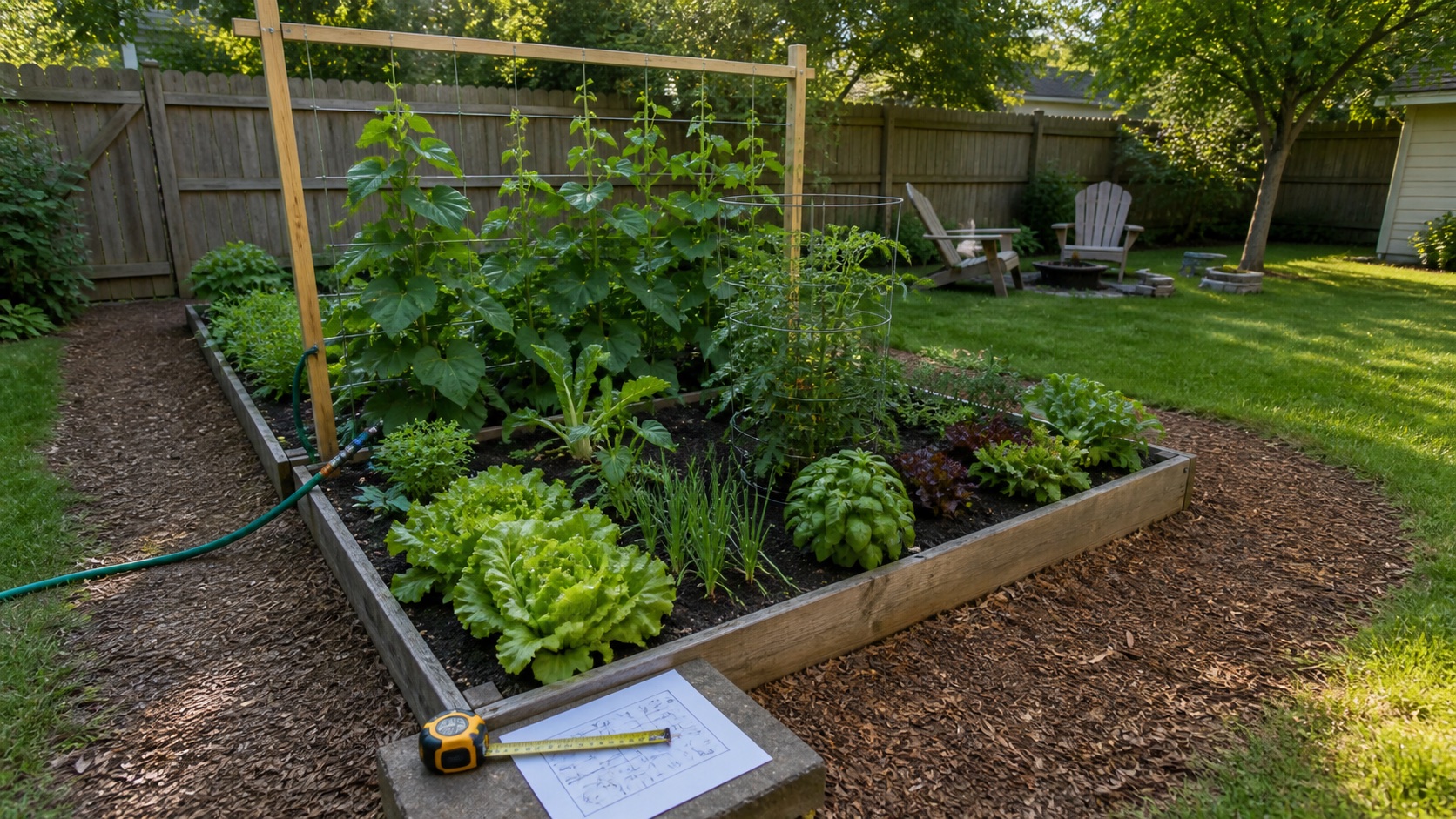
The best small vegetable garden layout for a beginner is one bed you can reach without stepping into it, with clear access to water, a usable path, tall crops placed where they will not overwhelm shorter plants, and only four to six crops your household will actually eat.
A 4-by-8-foot bed is a useful example, not a requirement. Narrow it if you cannot reach the center comfortably. Shorten it if the hose, gate, family walking path, or weekly schedule says the garden needs to be smaller. A well-placed 3-by-6 bed can teach more than an ambitious layout that becomes difficult to water and weed by July.
Plan the layout in the right order
Beginners often start with a crop list and then try to make the yard obey it. A stronger layout starts with the fixed conditions: useful sunlight, water access, existing traffic, drainage, reach, and time. Crops come after those constraints because plants cannot negotiate with a shady fence or a hose that stops ten feet short.
The blank space that made the plan work
When I started translating the bigger homestead idea into an ordinary backyard, the paper version wanted to use everything. A sunny strip looked like food. A fence looked like vertical growing space. Every open corner looked like proof that we were moving toward the life we had been talking about after the layoff.
The plan changed when I stopped looking only at the places where plants could go and started paying attention to the blank space between them. The gate still had to open. The hose needed a route that did not become a trip line. The family needed to cross the yard. A chair, a table, drainage, and a little open ground were not evidence that we had failed to use the space.
That was the useful surprise: the empty-looking parts were infrastructure. Once I treated paths and ordinary family movement as part of the garden, the growing area got smaller and the layout got better. It was easier to imagine maintaining on a tired weekday, which is a more honest test than how much it could hold on paper.
Start with sun and water, not lumber
Vegetable gardens generally perform best in strong direct sun, especially when you want fruiting crops such as tomatoes, peppers, cucumbers, and beans. Leafy crops can be more tolerant of some shade, but a dim corner should not be expected to behave like an open sunny bed. Observe the proposed site more than once before committing permanent materials.
Water deserves equal attention because it is repeated work. Walk the hose to the proposed bed. Turn it on. Check whether it kinks at the corner, blocks a gate, crosses a play area, or barely reaches. If you will use a watering can, fill it and carry it. A garden layout should be tested with the real chore, not only measured from a map.
Choose a bed width you can actually reach
Four feet is a common raised-bed width because many adults can reach about two feet from either long side. It is not a rule. If the bed sits against a fence and can only be accessed from one side, four feet may be too wide. If children will help, or mobility and balance matter, a narrower bed may make the garden substantially easier to use.
Do the reach test before building. Mark the proposed edges with string, scrap wood, a hose, or cardboard. Stand outside the line and reach toward the center without leaning hard, twisting, or stepping into the bed. Good layout protects the soil from compaction and protects your back from a design decision.
Paths are part of the garden
A path needs to do more than look tidy in a photograph. You may kneel beside the bed, carry compost, turn with a harvest basket, pull a hose, or bring in a wheelbarrow. The right width depends on the person and the equipment, but the path should be tested before the bed walls make the decision permanent.
Lay down two boards, garden hoses, or lines of string to represent the path. Walk it carrying the widest ordinary item you expect to use. Kneel and stand back up. Open the nearby gate. If two beds face each other, make sure working at one does not block access to the other.
Place tall crops and supports first
Tomatoes, pole beans, cucumbers on a trellis, and other tall crops shape the light and movement around them. Put their supports on the plan before filling the bed with shorter crops. In many gardens, placing tall crops toward the north side reduces the shade they cast across shorter plants, but nearby buildings, fences, trees, and the actual path of the sun can change that choice.
Vertical growing is useful when it solves a real problem. It can make fruit easier to see, keep vines out of paths, and use less ground area. It also creates shade, catches wind, needs secure support, and adds tying or training work. One trellis for one climbing crop is a better beginner experiment than surrounding the bed with structures.
A simple 4-by-8 vegetable garden layout
Picture the bed divided into three working zones rather than dozens of tiny squares. The back zone holds one supported crop. The middle zone holds productive medium-height plants. The front edge holds quick or frequently harvested crops. This keeps the layout understandable when plants are full-size, not only when they are seedlings.
This is a layout framework, not a universal planting prescription. Plant spacing, timing, and crop performance vary by variety and location. Use the seed packet and a local Extension planting calendar for final spacing and dates. The layout's job is to make access and plant roles clear before those local details are added.
Choose fewer crops and give them a real job
A small garden cannot hold every interesting seed packet well. Choose crops by household use, freshness value, space requirement, and how much attention they need. A family that eats herbs, salad greens, beans, cucumbers, and tomatoes every week has a clearer layout than a garden built around twenty unrelated experiments.
What can wait until the layout proves itself
Permanent edging, multiple matching beds, an irrigation controller, arches, decorative gravel, and a full collection of crop supports can wait. Run one bed through heat, rain, weeds, harvest, and an ordinary family week first. The first season will show whether the problem is water, shade, reach, soil, crop choice, or time.
What I would buy and what I would borrow
I would borrow or use an existing tape measure, mark the bed with string or a garden hose, and test the layout before spending on materials. I would use the hose or watering can already available until the repeated watering friction was clear. A scrap-paper plan is enough; it does not need to become a design project.
I would buy a sturdy trellis when one climbing crop had a named place and the support could be anchored safely. I would consider a short soaker hose after the bed location and watering rhythm were proven. Those purchases belong to a functioning layout. They should not be used to make an uncertain layout feel finished.
Recommendations
Layout tools that can earn their place
Use what you own first
25-foot locking tape measure
Useful for confirming the full bed, path, gate, and hose footprint.
Best for: A yard with several competing uses
Check current priceCrop first, trellis second
Simple vegetable garden trellis
Supports one climbing crop while protecting path space.
Best for: Pole beans, peas, or cucumbers in a small footprint
Check current priceWait until needed
Soaker hose for a small raised bed
Can simplify slow watering in a permanent compact bed.
Best for: A bed with a nearby faucet and repeated hand-watering friction
Check current priceFree planning reference
University of Minnesota Extension vegetable garden guide
Free, evidence-based planning guidance for a home vegetable garden.
Best for: Checking the planning fundamentals before adapting locally
View resourceUse the tired-Tuesday test
Before building, imagine the garden on a hot Tuesday when dinner is late and nobody wants another project. Can you reach the faucet, water the bed, pull a few weeds, tie one plant, harvest what is ready, and get back inside without moving furniture or hunting for equipment?
That is the layout worth building. It may not use every sunny foot. It may leave a path wider than a garden photograph would. It may grow five useful crops instead of fifteen interesting ones. But it has a real chance of staying alive, teaching you something, and becoming a stronger second-season garden.
Recommended next reads
Build the first garden in the right order
Use these guides to confirm the overall plan, choose a manageable size, and create a watering rhythm that fits the layout.
Gardening
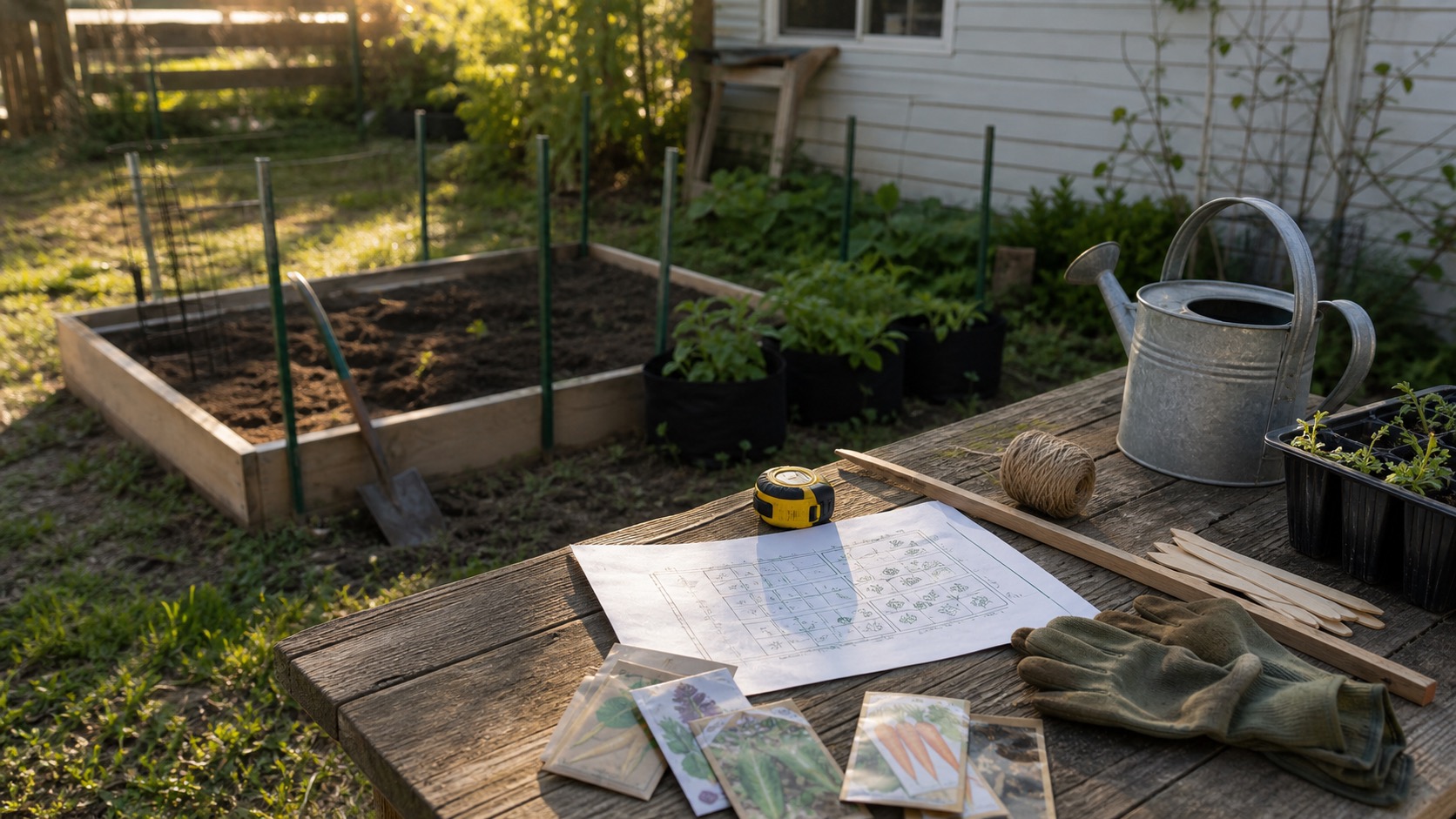
How to Plan Your First Homestead Garden Without Doing Too Much
A successful first garden is smaller, clearer, and less romantic than many beginners expect. That is a good thing.
Gardening
How Big Should a Beginner Vegetable Garden Be?
A practical guide to choosing a beginner vegetable garden size your time, watering routine, harvest goals, and actual meals can support.
Gardening
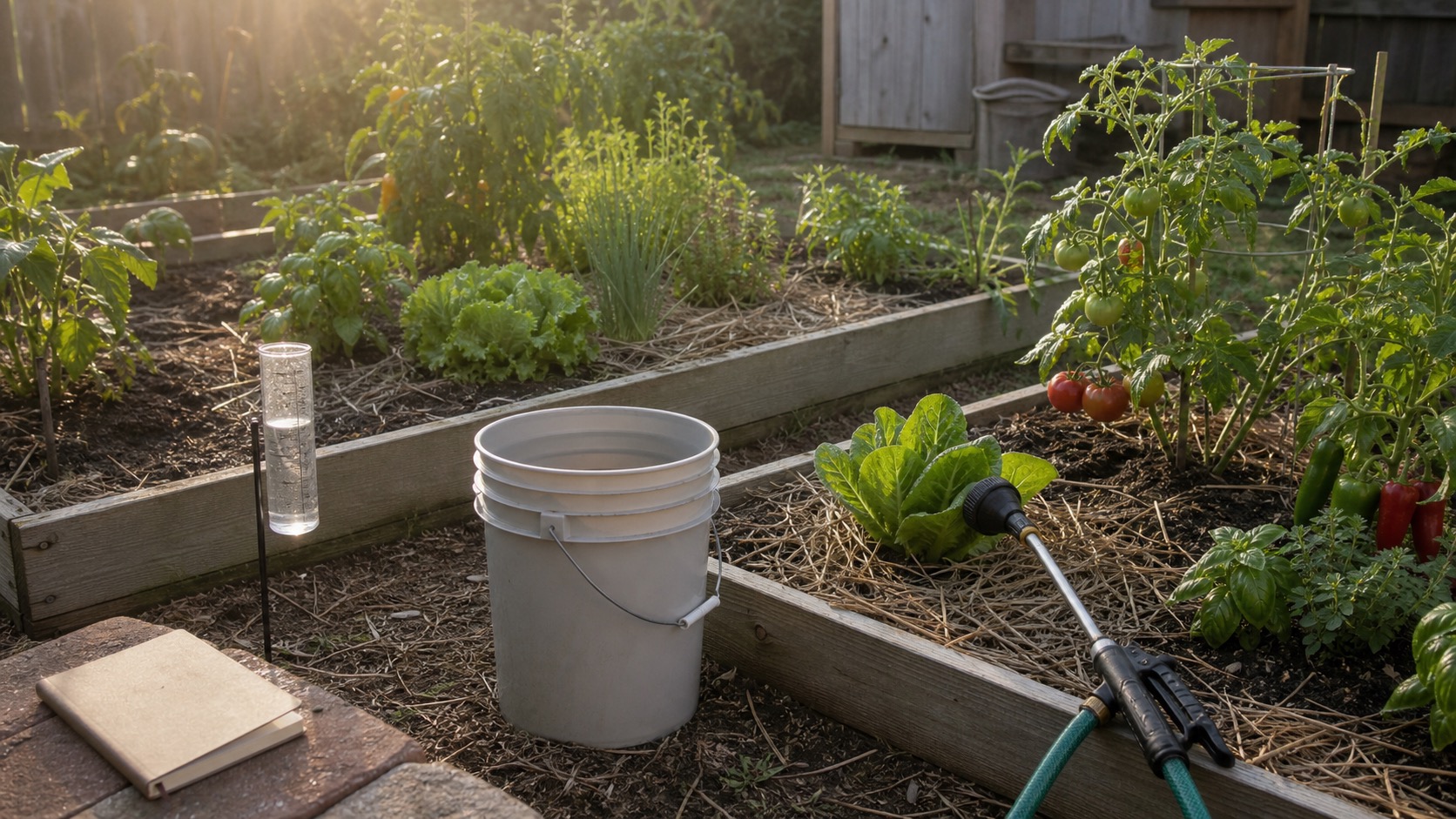
How to Water a Beginner Vegetable Garden Without Guessing
A practical beginner watering guide for small vegetable gardens: how much water plants need, how to check soil moisture, when to water, and what to stop doing.
Keep it practical
Plan a first garden you can actually maintain
Get the beginner homestead checklist and practical weekly guidance for choosing smaller, clearer first steps.
Practical notes from the work in progress. Low-noise and easy to leave.
Frequently asked questions
What is the best small vegetable garden layout for a beginner?
Start with one bed you can reach without stepping into it, a clear path on at least two sides, a nearby water source, tall crops on the side least likely to shade shorter crops, and only four to six vegetables your household will actually eat.
Is a 4-by-8 garden big enough for a beginner?
A 4-by-8-foot bed can teach planting, watering, support, weeding, harvesting, and succession planting without creating an oversized first-season workload. If you cannot comfortably reach the center from both long sides, make the bed narrower.
Should garden rows run north to south or east to west?
North-to-south rows can help distribute sunlight more evenly in many open gardens, but buildings, fences, trees, slopes, and your local sun path matter more than a universal compass rule. Put tall crops where they will cast the least harmful shade and observe the site before building.
How many vegetables should I plant in a small garden?
Four to six crop types are enough for a useful first small garden. Choose crops your family eats, give each one enough room, and repeat successful plantings rather than buying one packet of everything.
Recommendations
Useful tools and resources for this decision
These are included only where they reduce repeated friction, clarify a next step, or help you avoid buying the wrong thing first.
Use what you own first
25-foot locking tape measure
A basic tape measure helps confirm bed width, path clearance, hose reach, and the actual footprint before materials are purchased.
Best for: Beginners planning around a normal backyard, fence, patio, or narrow side yard
Check current priceAdd for a named crop
Simple vegetable garden trellis
A sturdy vertical support can move cucumbers, pole beans, or peas upward while keeping the harvest visible and the path clearer.
Best for: Small gardens where one climbing crop has already earned space
Check current priceWait until watering is the friction
Soaker hose for a small raised bed
A simple soaker hose can water a compact bed slowly without repeatedly spraying foliage or dragging a wand between tightly spaced plants.
Best for: A permanent bed with a reliable nearby faucet and a proven watering schedule
Check current priceFree planning reference
University of Minnesota Extension vegetable garden guide
A free planning reference covering site selection, crop choice, planting, soil, sunlight, and common beginner garden decisions.
Best for: Gardeners checking general planning guidance before adapting dates and crops locally
View resourceRecommended next reads
Read next if it helps the decision
Move into the next guide only if it clarifies the next practical step.
Gardening
How to Plan Your First Homestead Garden Without Doing Too Much
A successful first garden is smaller, clearer, and less romantic than many beginners expect. That is a good thing.
Gardening
How Big Should a Beginner Vegetable Garden Be?
A practical guide to choosing a beginner vegetable garden size your time, watering routine, harvest goals, and actual meals can support.
Gardening
How to Water a Beginner Vegetable Garden Without Guessing
A practical beginner watering guide for small vegetable gardens: how much water plants need, how to check soil moisture, when to water, and what to stop doing.
Garden gear support
Get the buy-first guide before the first garden collects too much gear.
Use the guide to decide which early garden purchases earn money now, which ones can be borrowed, and which ones can wait until the routine proves itself.
Best for: Beginners who keep seeing useful things online and need a disciplined way to decide what actually earns a place.
- A buy now, borrow, wait, or skip framework
- Starter category shortlists
- A three-question purchase test
Garden planning notes, restrained gear decisions, and the guide first.
After signup, the download will unlock right here so you can save or print it.
About the author
William Mock
Founder, writer, and beginner homesteader
William writes from the beginner side of rebuilding after a layoff: homestead plans, family systems, budgets, tools, and the decisions that make a home feel less fragile.
Read why this site existsRelated Guides
Keep building context
Gardening
How to Plan Your First Homestead Garden Without Doing Too Much
A successful first garden is smaller, clearer, and less romantic than many beginners expect. That is a good thing.
Gardening
How Big Should a Beginner Vegetable Garden Be?
A practical guide to choosing a beginner vegetable garden size your time, watering routine, harvest goals, and actual meals can support.

Gardening
Raised Beds vs In-Ground Gardening for Beginners
A practical comparison of raised beds and in-ground gardening for beginners who care about budget, effort, and staying consistent.