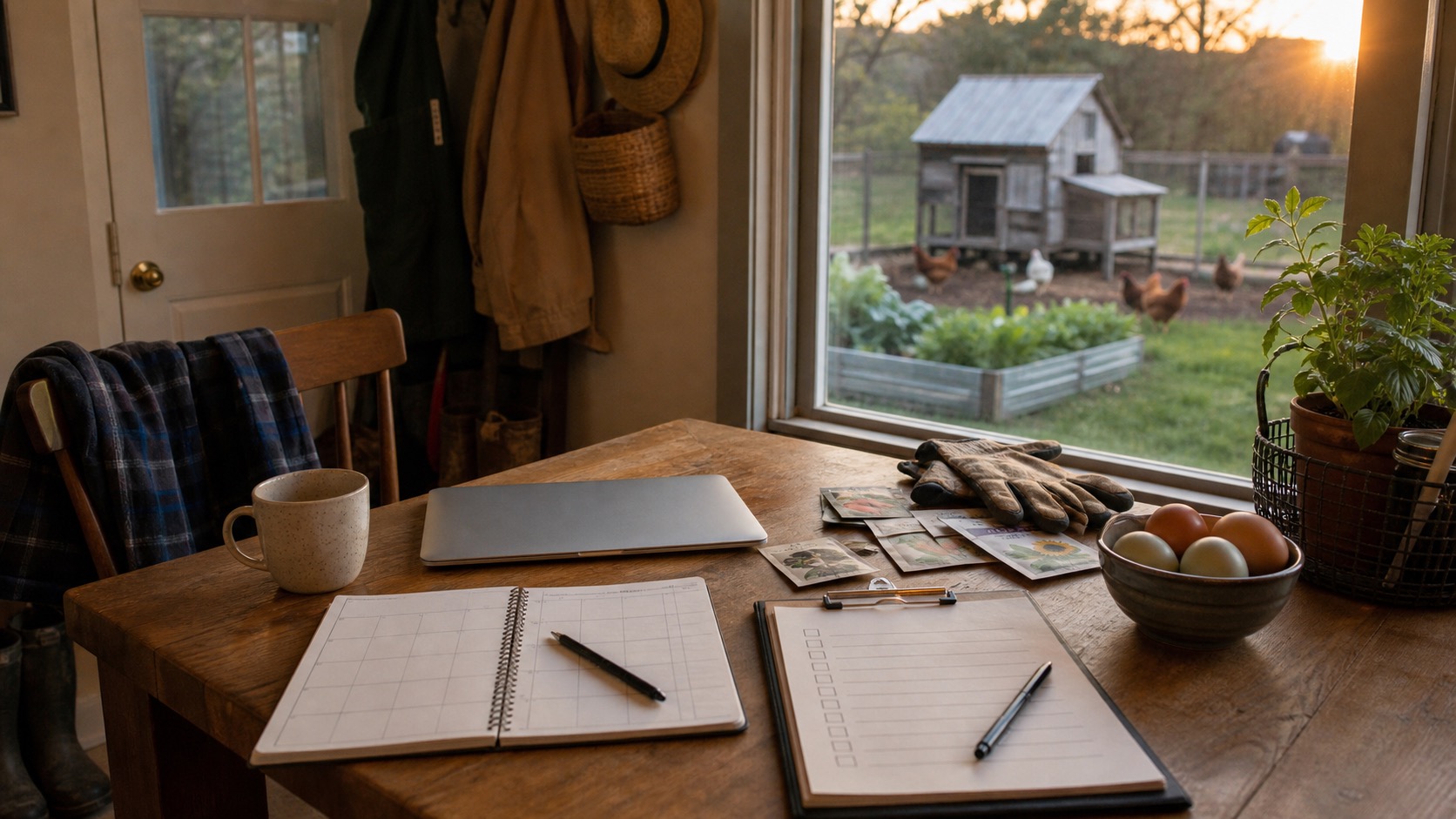
You can start homesteading while working full time, but you cannot start the fantasy version. The first year has to fit inside real evenings, real weekends, family needs, paychecks, weather, tired bodies, and the fact that some weeks are already full before the homestead dream gets a vote.
That does not make the dream smaller. It makes the first steps more honest. I would rather build one useful food system that survives a hard workweek than start five impressive projects that make home feel like a second job. Fresh starts need margin. Homesteading does too.
The laptop closed and the evening still needed a boundary
The danger after a full workday is pretending the evening has another whole shift hidden inside it. I have had that feeling after closing the laptop: a part of me wants to prove the dream is still moving, so I start looking for a task big enough to feel meaningful.
The better move is usually smaller. Water the container. Check the feed bin. Move one load of compost. Write tomorrow's first step. Then stop before homesteading becomes another job the family has to recover from. A full-time schedule needs proof of repeatability more than proof of intensity.
Start with capacity, not acreage
A lot of beginner homesteading advice starts with land, animals, gardens, tools, and big seasonal plans. I think a full-time worker has to start one layer earlier: capacity. How many evenings can you protect? What can happen before work? What must wait until Saturday? Who else in the house is affected when the plan gets bigger?
This matters because capacity is the difference between a skill that becomes part of your life and a project that makes everyone tense. If your workdays already leave you with 45 good minutes at night, then the best first project is not the one that looks most homestead-like. It is the one that can fit those 45 minutes without stealing every evening.
Choose one first food system
The fastest way to overwhelm a full-time schedule is to start a garden, chickens, preserving, composting, pantry storage, and tool buying at the same time. Each one sounds reasonable by itself. Together, they create a second calendar.
If you are early, choose one food system first. Pantry depth is usually the lowest-daily-maintenance option. A small garden teaches soil, water, timing, and harvest habits. Chickens teach animal care, daily chores, feed budgeting, and coop systems. All three are useful. You do not need all three in the same season.
Build the week before you build more projects
A full-time homestead plan needs a weekly rhythm more than it needs a big promise. I would rather see a boring repeatable schedule than a beautiful list no one can maintain. The weekly rhythm is what keeps small chores from becoming a weekend punishment.
What belongs before work, after work, and on weekends
Not every task belongs in the same part of the day. Before work is for quick checks, not complicated repairs. After work is for small maintenance, not major decisions. Weekends are for setup, cleanup, and work that needs daylight or a clear head.
Protect family life from the project list
One of the easiest mistakes is treating family time as the buffer that absorbs every unfinished homestead task. That works for a week or two. Then the thing that was supposed to create a calmer life starts eating the life you were trying to build.
This is where the Fresh Start angle matters. The goal is not proving you can grind harder at home after grinding all day at work. The goal is a steadier household with more practical resilience. If a project makes everyone resentful, it needs to be smaller, slower, or delayed.
A realistic beginner scenario
Imagine a couple with full-time jobs, kids' schedules, and a small backyard. They want chickens, a raised-bed garden, a freezer plan, compost, rain barrels, and a bigger pantry. All of those ideas are good. Starting all of them at once would make the house feel crowded before anything had a chance to work.
A better first season might be one 4-by-8 garden bed, a pantry rotation shelf, and a Sunday reset. The garden gets watered before work or after dinner. The pantry gets updated once a week. The chicken plan becomes research and budgeting, not an immediate purchase. That is still homesteading. It is just homesteading with a calendar honest enough to last.
What can wait when you work full time
Some things belong in year two or later, especially if work is still demanding or the family rhythm is still recovering from a hard season. Large livestock can wait. Major fencing can wait. A giant garden can wait. Complicated preserving goals can wait. Buying land equipment can definitely wait until you understand the land and the work.
My honest filter for full-time homesteading
If a homestead plan only works when work is calm, kids are easy, weather cooperates, and everyone has extra energy, it is not a plan yet. It is a wish. A real plan has room for normal disruption.
That does not mean you move slowly forever. It means you earn the next layer by making the current layer boring and repeatable. One small garden that gets watered. One pantry shelf that rotates. One flock plan that includes heat, predators, feed, cleanup, and backup chores before birds arrive. One weekly rhythm that does not make home feel fragile. That is how a full-time worker starts building something durable.
Recommendations
Useful next guides for a full-time homestead plan
Start here
Start Here: the beginner homestead path
Use this when the whole idea feels too wide and you need one first direction.
Best for: Choosing a first step without starting everything
Read the guideWeekly rhythm
A Weekly Chore Rhythm for Families Starting Homestead Life
Use this to turn a broad goal into a weekly maintenance pattern.
Best for: Building a week that can carry the work
Read the guideFood system
The Best First Food System for Beginners
Use this before deciding whether pantry, garden, or chickens should come first.
Best for: Choosing one food system instead of three
Read the guideStart Here
Build the first layer before the next one.
Use the Start Here path to narrow the next move, set a spending boundary, and choose one practical food or household system that fits the week you actually live.
Start the beginner pathRecommended next reads
Keep the plan realistic
These guides help you choose one skill, one food system, and one family rhythm before the work gets too wide.

Homesteading
How to Choose Your First Homestead Skill When Everything Feels Important
A calm decision framework for choosing the first homestead skill to learn based on real pressure, repeatability, cost, and your current season of life.

Homesteading
The Best First Food System for Beginners: Garden, Chickens, or Pantry?
A practical comparison of three strong first food systems for beginners: pantry depth, a modest garden, or a small flock.
Systems
How to Keep Homestead Projects from Taking Over Family Life
A practical guide to keeping homestead goals from swallowing evenings, weekends, and the people you are trying to build the life with.
Frequently asked questions
Can you start homesteading while working full time?
Yes, but the first year needs to be designed around your real schedule. Start with one food system, one weekly maintenance rhythm, and one spending boundary instead of trying to build a full homestead after work.
What is the best first homestead project for someone with a full-time job?
The best first project is usually the one you can maintain on a tired week. For many beginners that means pantry depth, a small garden, container herbs, compost, or a modest chicken plan only after the daily chores are realistic.
How many hours a week should beginner homesteading take?
For a first year with a full-time job, start with a small rhythm you can repeat: a few short weekday checks and one longer weekend block. If the project requires daily attention you cannot reliably give, shrink it before adding more.
What should wait if I work full time and want a homestead?
Large livestock, major fencing, big gardens, orchard expansion, complicated preserving goals, and major infrastructure can usually wait. Build water, food, budget, tool, and household rhythms first.
Recommendations
Useful tools and resources for this decision
These are included only where they reduce repeated friction, clarify a next step, or help you avoid buying the wrong thing first.
Start here
Start Here: the beginner homestead path
The site’s first-step path for narrowing your next move before the homestead idea turns into ten parallel projects.
Best for: Readers who need a simple first plan before choosing a project
Read the guideSystems guide
A Weekly Chore Rhythm for Families Starting Homestead Life
A practical guide to building a repeatable weekly rhythm around chores, family life, and beginner homestead work.
Best for: Full-time workers who need the week to carry the plan
Read the guideFirst food system
The Best First Food System for Beginners
A comparison of pantry depth, a modest garden, and chickens so beginners can choose one first food system instead of starting all three.
Best for: Choosing the first project that fits your time and budget
Read the guideRecommended next reads
Read next if it helps the decision
Move into the next guide only if it clarifies the next practical step.
Homesteading
How to Choose Your First Homestead Skill When Everything Feels Important
A calm decision framework for choosing the first homestead skill to learn based on real pressure, repeatability, cost, and your current season of life.
Homesteading
The Best First Food System for Beginners: Garden, Chickens, or Pantry?
A practical comparison of three strong first food systems for beginners: pantry depth, a modest garden, or a small flock.
Systems
How to Keep Homestead Projects from Taking Over Family Life
A practical guide to keeping homestead goals from swallowing evenings, weekends, and the people you are trying to build the life with.
First-Step Support
Get the first-step checklist before the bigger idea turns into too many projects.
A practical worksheet for choosing one system, setting a first-stage budget, and narrowing the next move while the picture is still forming.
Best for: Beginners who need a first-season plan with limits, not more tabs or more gear.
- A first-season decision checklist
- A one-system starter plan
- A buy-now versus wait-later filter
Beginner-friendly notes, useful guides, and the checklist first.
After signup, the download will unlock right here so you can save or print it.
About the author
William Mock
Founder, writer, and beginner homesteader
William writes from the beginner side of rebuilding after a layoff: homestead plans, family systems, budgets, tools, and the decisions that make a home feel less fragile.
Read why this site existsRelated Guides
Keep building context
Homesteading
How to Choose Your First Homestead Skill When Everything Feels Important
A calm decision framework for choosing the first homestead skill to learn based on real pressure, repeatability, cost, and your current season of life.
Homesteading
The Best First Food System for Beginners: Garden, Chickens, or Pantry?
A practical comparison of three strong first food systems for beginners: pantry depth, a modest garden, or a small flock.
Systems
How to Keep Homestead Projects from Taking Over Family Life
A practical guide to keeping homestead goals from swallowing evenings, weekends, and the people you are trying to build the life with.