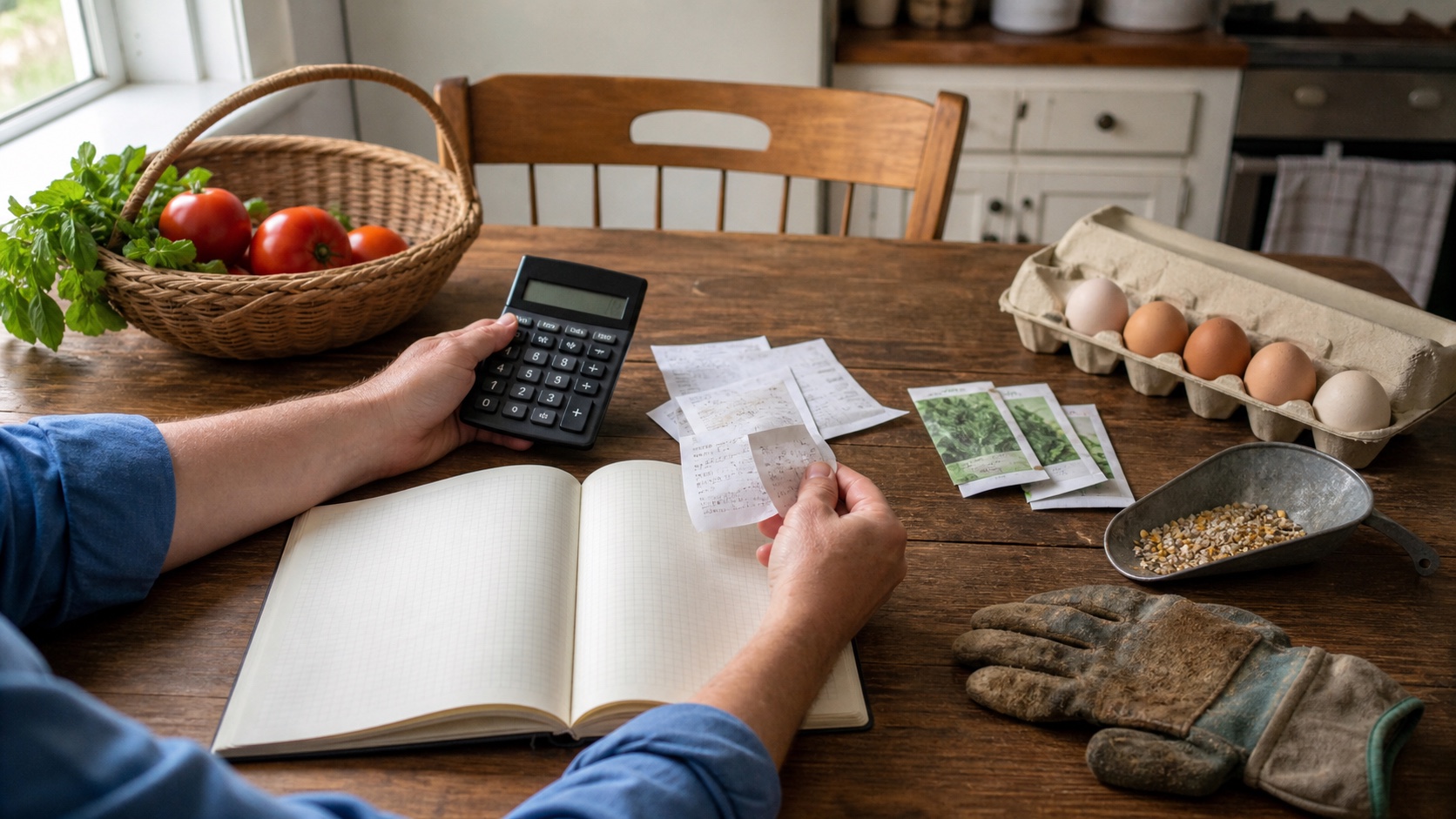
Homesteading can save money, but the word can is doing important work. A garden, flock, pantry, or do-it-yourself habit only creates cash savings when the purchases it replaces are worth more than the recurring inputs, annual share of setup costs, and food or materials that go unused. Some systems reach that point. Some provide a different kind of value. Some simply cost more.
Start with the full budget
Put every first-year category on one page
The first-year homestead budget guide separates household margin, one-time projects, recurring inputs, repairs, tools, and the ideas that can wait.
Build a realistic first-year budgetThe question behind our homestead plan
After the layoff, I wanted homesteading to do two jobs at once. I wanted our home to feel less fragile, and I wanted more of our monthly spending to turn into something useful and repeatable. Those goals fit together, but they are not identical. I had to learn that before every seed packet, feeder, shelf, and tool started wearing the word investment like a free pass.
In those early plans, I could see how easy it was to count future harvests before we had grown them and future eggs before we had paid for the system around the hens. On paper, the story was easy: grow food, buy less food, save money. The part that needed more attention was the middle, where soil, fencing, feed, storage, mistakes, and ordinary family weeks all live.
That did not make me want this life less. It made me want a more honest scoreboard. A calmer home, practical skills, better food, and the ability to handle a disruption are valuable even when they do not beat a store receipt this month. Once I stopped forcing every benefit into the savings column, I could make better decisions about which projects deserved money now.
Use the full-cost formula, not the harvest value
Avoided purchase cost means what you truly would have bought, not the highest price you can find for a similar item. If your family normally buys basic eggs, do not value every backyard egg at the price of a premium specialty carton just to make the flock win. If nobody in the house buys fresh herbs, a basket of herbs is not automatically grocery savings. It may be useful and enjoyable, but it did not replace an existing purchase.
Annualizing setup costs keeps durable equipment from disappearing from the math. If a 300-dollar setup should reasonably serve for five years, count 60 dollars per year before repairs. The estimate will never be perfect. It only needs to be honest enough to compare one decision with another.
Which homestead systems are most likely to save money first?
This is why the pantry often deserves attention before the pasture. EPA guidance puts planning, shopping from a list, checking food already in the house, proper storage, and using leftovers among the practical ways households can prevent wasted food. Those are not glamorous homestead projects, but they begin with very little infrastructure and affect food you are already paying for.
Gardens can save money, especially when crop choice and spending stay disciplined. Oregon State Extension recommends setting a garden budget and points to lower-cost strategies such as starting from seed, reusing sound materials, making compost, swapping plants, and sharing bulk deliveries. The useful lesson is not that every tomato is profit. It is that input control belongs beside crop choice. Read our full breakdown of the real cost of a small beginner garden before building bigger.
Chickens deserve the same honesty. Penn State Extension notes that buying commercially produced eggs may be cheaper than producing them in a small backyard flock. That does not make chickens a bad decision. It means the real cost of backyard chickens should include the whole system, while eggs, manure, learning, enjoyment, and resilience can each keep their proper name.
Three illustrative savings examples
These are teaching examples, not price promises. Replace every number with local receipts and your household's actual buying habits. Their only job is to show how the same project can look different once the full cost appears.
Keep four homestead ledgers
I do not want the cash calculation to flatten the whole reason for homesteading. I want it to stop carrying benefits it cannot prove. Keeping four simple ledgers lets the money answer stay honest while the rest of the value remains visible.
A project does not have to win all four ledgers. Our family may decide that a system is worth a modest cost because the resilience and learning are unusually valuable. The discipline is simply to say that clearly. It protects the household budget and keeps a meaningful choice from depending on pretend savings.
Run a 90-day homestead savings audit
What matters now, and what can wait
Recommendations
What I would use for the audit
Start here
The free first-year budget worksheet
Use the spending-cap and review pages to put setup costs, recurring inputs, and wait-later decisions in one place.
Read the guideOptional helper
A reused envelope or simple receipt file
An envelope is enough. If loose receipts repeatedly disappear, a small accordion file can earn its place without turning tracking into another expensive project.
Affiliate link. Buy only if the free version is not staying in use.
Check current priceThe best money-saving homestead system is not the one with the prettiest theoretical return. It is the modest system your household uses, maintains, and improves without draining the margin it was supposed to protect. Start where spending already leaks, measure one season honestly, and let the next decision earn its turn.
Budget support
Put the honest numbers on paper
Get the free First-Year Homestead Budget Worksheet for spending caps, buy-now versus wait decisions, and a calmer review of what each system is costing.
Best for: Households trying to align purchases with this season's actual money, time, and attention.
- A spending-cap worksheet
- A buy, borrow, batch-later filter
- A quick review page for next-month decisions
Budget-first notes, honest tradeoffs, and the worksheet first.
After signup, the download will unlock right here so you can save or print it.
Recommended next reads
Build the next decision from real numbers
Use the cornerstone buying guide next, then move into the cost breakdown for the system you are actually considering.
Budgeting
Homesteading on a Budget: What to Buy First and What Can Wait
If money is tight, the smartest homestead purchases are the ones that reduce friction quickly and keep you from rebuying the same lesson twice.

Budgeting
How Much Does a Small Beginner Garden Really Cost?
A practical starter-budget breakdown for a small beginner garden, including where the money really goes and what can wait.

Chickens
The Real Cost of Getting Started With Backyard Chickens
Backyard chickens can be a strong first step into homesteading, but the startup costs and recurring work deserve an honest look.
Frequently asked questions
Does homesteading actually save money?
It can, but not automatically. A homestead system creates cash savings only when the purchases it replaces are worth more than its recurring inputs, annual share of setup costs, and losses. Pantry management, cooking from what you have, and carefully chosen high-use crops can show savings sooner than projects with expensive housing, equipment, or feed.
Do backyard chickens save money on eggs?
A small backyard flock often does not beat the shelf price of basic commercial eggs after you count housing, predator protection, feed, bedding, replacement equipment, and lower-production periods. Chickens can still provide fresher eggs, manure, learning, enjoyment, and some food resilience, but those benefits should not be mislabeled as guaranteed cash savings.
Does growing a vegetable garden save money?
A garden is more likely to save money when you grow produce your household already buys and eats, keep setup modest, use the space well, and harvest before food is lost. Expensive beds, excess plants, unused harvests, and repeated soil or pest purchases can delay or erase the savings.
How long does it take a homestead project to break even?
Divide the setup cost by the average net savings per month or season, then keep updating the estimate with your own records. A system with a 300-dollar setup and 25 dollars in true monthly savings needs about 12 productive months to recover the setup cost. Seasonal systems may take several years because they only produce during part of each year.
What homestead activity usually saves money first?
For many beginners, the fastest savings come from low-cost household systems: planning meals around what is already on hand, reducing food waste, cooking repeatable staples, storing food well, and growing a few expensive or frequently used crops. These require less infrastructure than a new livestock system or large garden.
Recommendations
Useful tools and resources for this decision
These are included only where they reduce repeated friction, clarify a next step, or help you avoid buying the wrong thing first.
Free worksheet
First-Year Homestead Budget Worksheet
A free worksheet for setting category limits, separating buy-now decisions from wait-later ideas, and reviewing what a project actually costs.
Best for: Beginners who want to run the 90-day savings audit on paper
Read the guideOptional, not required
Simple receipt organizer
An inexpensive accordion file can keep feed-store, seed, hardware, and grocery receipts together until review day.
Best for: Households whose paper receipts disappear before costs get recorded
Check current priceAuthoritative source
EPA guide to preventing wasted food at home
Current federal guidance on meal planning, storage, shopping, and using food before it is wasted.
Best for: Households looking for the lowest-infrastructure place to reduce food spending
View resourceExtension source
Oregon State Extension guide to gardening frugally
Practical ways to control garden spending through seeds, reuse, compost, swaps, smaller plants, and shared materials.
Best for: Gardeners who want to protect the savings side before expanding
View resourceExtension source
Penn State Extension backyard poultry guidance
Small-flock guidance that plainly notes commercially produced eggs may cost less than eggs from a backyard flock.
Best for: Beginners comparing a first flock with grocery-store egg costs
View resourceRecommended next reads
Read next if it helps the decision
Move into the next guide only if it clarifies the next practical step.
Budgeting
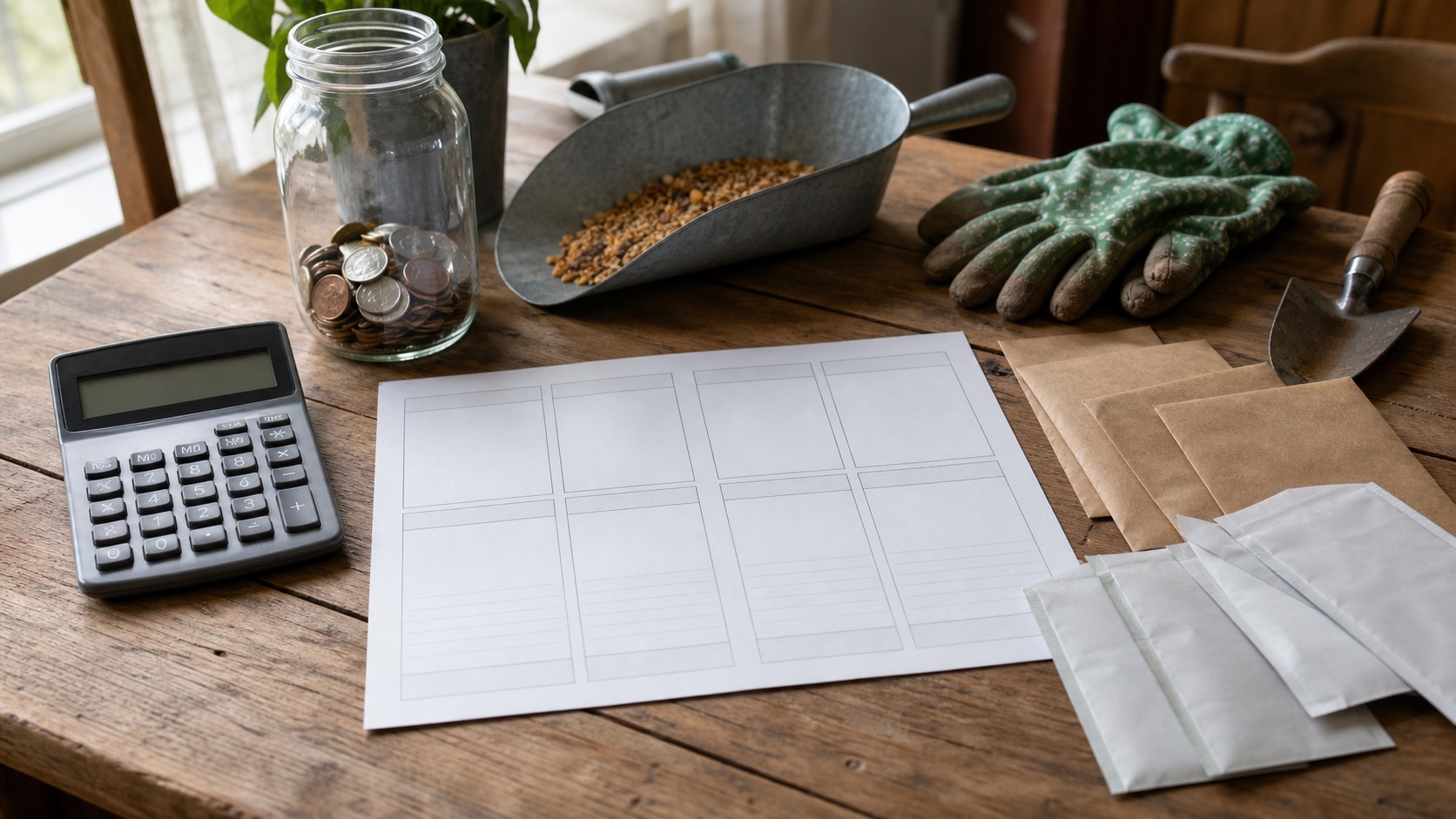
A Realistic First-Year Homestead Budget by Category
A realistic first-year homestead budget by category, with a practical order for garden, chickens, tools, storage, repairs, learning, and what can wait.
Budgeting
Homesteading on a Budget: What to Buy First and What Can Wait
If money is tight, the smartest homestead purchases are the ones that reduce friction quickly and keep you from rebuying the same lesson twice.
Budgeting
How Much Does a Small Beginner Garden Really Cost?
A practical starter-budget breakdown for a small beginner garden, including where the money really goes and what can wait.
Budget support
Get the budget worksheet before the next purchase.
Use the worksheet to sort purchases into buy now, borrow first, batch later, or skip for now while the first season is still taking shape.
Best for: Households trying to align purchases with this season's actual money, time, and attention.
- A spending-cap worksheet
- A buy, borrow, batch-later filter
- A quick review page for next-month decisions
Budget-first notes, honest tradeoffs, and the worksheet first.
After signup, the download will unlock right here so you can save or print it.
About the author
William Mock
Founder, writer, and beginner homesteader
William writes from the beginner side of rebuilding after a layoff: homestead plans, family systems, budgets, tools, and the decisions that make a home feel less fragile.
Read why this site existsRelated Guides
Keep building context
Budgeting
Homesteading on a Budget: What to Buy First and What Can Wait
If money is tight, the smartest homestead purchases are the ones that reduce friction quickly and keep you from rebuying the same lesson twice.
Budgeting
A Realistic First-Year Homestead Budget by Category
A realistic first-year homestead budget by category, with a practical order for garden, chickens, tools, storage, repairs, learning, and what can wait.
Budgeting
How Much Does a Small Beginner Garden Really Cost?
A practical starter-budget breakdown for a small beginner garden, including where the money really goes and what can wait.