A beginner homestead emergency fund should protect two things in the right order: the household that makes the homestead possible, then the active systems that cannot simply wait when something breaks. There is no honest universal dollar amount because a family with two raised beds has different exposure than a family with chickens, fencing, a well, outbuildings, and an older vehicle.
The useful first goal is not a giant number that makes you feel behind. It is enough margin to keep the most likely urgent problem from going on a credit card or forcing a rushed sale, skipped repair, or bad care decision.
The budget that looked fine until three small things happened
The emergency-fund lesson did not arrive for me as one dramatic disaster. It looked more ordinary than that. A repair part was needed sooner than expected. A household expense moved forward on the calendar. Then one more small cost showed up before the first two had stopped being annoying.
None of the expenses was large enough to sound like a crisis by itself. Together, they exposed the weak spot. The budget had categories for the things we hoped to do, but not enough margin for the things that could not politely wait their turn.
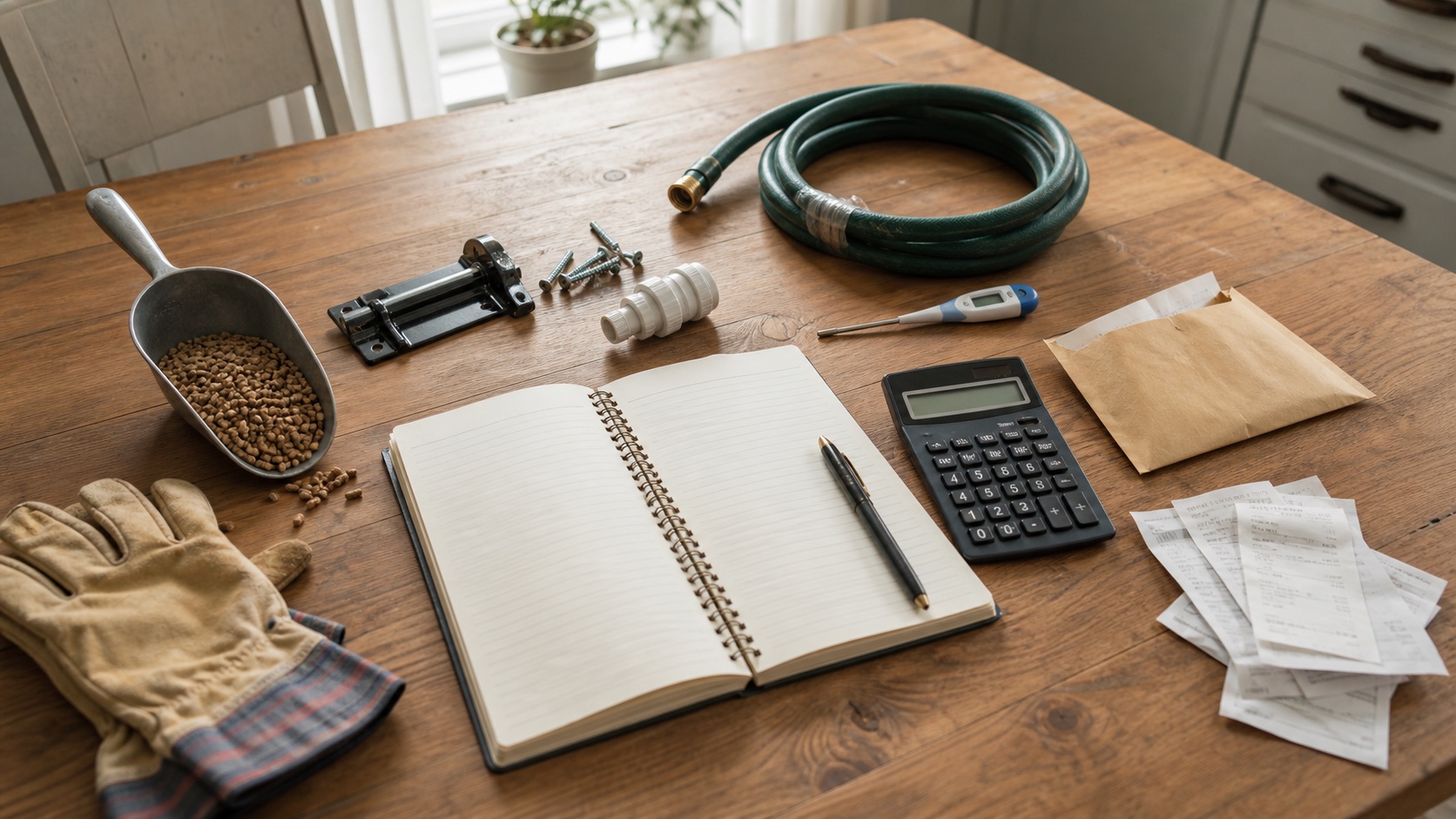
That changed the way I think about homestead money. A reserve is not pessimism and it is not money sitting around doing nothing. It is what keeps a broken latch, a feed problem, a hose failure, a vehicle repair, or an urgent household bill from deciding the next month for us.
The household emergency fund comes first
A homestead is not financially separate from the family living on it. Income loss, a medical bill, a broken furnace, a vehicle repair, or an essential home problem can destabilize the whole plan faster than a garden setback. That is why household emergency savings comes before expanding the homestead.
The Consumer Financial Protection Bureau defines an emergency fund as cash set aside for unplanned expenses and financial emergencies. Its guidance is deliberately practical: even a small amount can provide security, and the right first target depends on the kinds of unexpected expenses you have experienced and what would help you recover.
That is a better starting point than arguing over one perfect number. If the household has no reserve, begin there. A new flock, greenhouse, machine, or major garden expansion can wait while the first layer of financial breathing room is built.
What makes the homestead reserve different
Once the household has some emergency margin, look at the systems already operating. The homestead reserve is for problems where delay creates harm, waste, safety risk, animal-care risk, or a more expensive repair.
The fund is not there to make every setback disappear. It is there to buy time and preserve good judgment. When an animal is involved, a gate will not close, or water is unavailable, the cheapest option is not always the responsible option. Margin makes it easier to choose based on the problem instead of the account balance that morning.
Do not call planned costs emergencies
A predictable expense can still be painful, but that does not make it an emergency. Feed, routine bedding, seeds, annual maintenance, winter preparation, normal veterinary prevention, insurance, taxes, and known replacement cycles belong in the operating budget or a sinking fund.
A three-layer emergency-fund target
Instead of jumping straight to several months of expenses and feeling defeated, build three useful layers. This is a planning framework, not a universal financial prescription.
For Layer 2, do not guess from a generic homestead number. Price your own exposure. What would an urgent gate repair cost? How much feed do you need to keep on hand? What is the veterinary or transport reality in your area? What water-system part is most likely to fail? Which repair would create the most harm if it waited two weeks?
Choose the largest realistic near-term problem and make that the first homestead reserve target. When you add a new system, update the number. Bringing home chickens changes the exposure. Installing a well pump changes it. Buying equipment changes it. A two-bed garden may barely change it at all.
A realistic beginner scenario
Imagine a household with a small garden and six hens. The normal monthly budget already covers feed, bedding, seeds, and ordinary repairs. The most likely urgent problems are a damaged coop latch and run panel after a storm, a failed waterer during hot weather, or an animal-care expense that needs a same-day decision.
Their first homestead reserve does not need to cover a future tractor, barn roof, orchard, and every veterinary possibility. It needs to cover the systems that exist now. They can price the likely repair materials, keep a little feed margin, identify local care options, and choose a first reserve target that would let them handle one meaningful problem without raiding grocery money.
That is a more honest number than copying the reserve of someone with livestock, acreage, machinery, and infrastructure the beginner does not own.
How to find your first number
You do not automatically add every number together. Use them to see the shape of the risk. The first target should cover a meaningful interruption. The longer-term target should reflect how many problems could overlap and how long income would take to recover.
If the number is larger than the budget can handle quickly, do not use that as a reason to give up. Break it into milestones. The CFPB specifically notes that even small savings can help people recover more quickly from unplanned expenses. A partial reserve is still more useful than a perfect target that never gets started.
Where to keep the money
Emergency savings should be safe, accessible when needed, and separate enough that ordinary spending does not quietly consume it. The CFPB suggests considering a dedicated bank or credit-union account and notes that cash kept at home can be lost, stolen, or destroyed.
For many families, a dedicated savings account at an insured institution is simpler than envelopes of physical cash. Labeling the account can help clarify its job. The exact account type, interest rate, tax implications, and insurance details are personal-finance decisions worth checking with the institution or a qualified professional.
How to build it without stalling everything
An emergency fund does not have to shut down every useful homestead purchase. It does need a place in the order. Protect current systems before expanding them. If the $100 monthly homestead budget is already tight, assign a portion to reserve until the first milestone is reached.
What can wait while you build the reserve
Organize the paper side too
Financial readiness is not only the account balance. Ready.gov's Emergency Financial First Aid Kit is designed to help households organize critical financial, medical, household, and contact information. That matters after a serious disruption because finding policy numbers, records, account details, and inventories can become part of the recovery work.
Keep secure copies of the records that would help you document property, animals, equipment, insurance, and household obligations. Follow appropriate security practices for sensitive information. A binder on an open shelf is not the right home for passwords, full account numbers, or identity documents.
Recommendations
Free official resources
Free official guidance
Consumer Financial Protection Bureau emergency-fund guide
Use the CFPB guide to define an emergency, choose a first savings goal, and build a repeatable savings habit without waiting for a perfect budget.
Best for: Building the household savings layer underneath the homestead reserve
View resourceFree preparedness resource
Ready.gov Emergency Financial First Aid Kit
Use the free kit to organize account, insurance, property, household, and contact information before an emergency makes those details harder to find.
Best for: Households that need financial records and recovery information organized alongside savings
View resourceThe bottom line
A beginner homestead emergency fund should grow with the systems you actually own. Protect the household first. Then save enough to cover one urgent homestead failure that could not responsibly wait. Keep recurring expenses and future projects in their own categories.
The goal is not to predict every bad day. It is to keep one bad day from becoming three bad months because the budget had no room to respond.
Next Budget Step
Put the reserve beside the rest of the first-year budget.
Use the first-year category guide to separate household margin, recurring costs, repairs, tools, animals, garden spending, and projects that can wait.
Build the first-year budgetRecommended next reads
Keep going
These guides help place emergency savings inside a realistic beginner budget.

Budgeting
Homesteading on a Budget: What to Buy First and What Can Wait
If money is tight, the smartest homestead purchases are the ones that reduce friction quickly and keep you from rebuying the same lesson twice.
Budgeting
A Realistic First-Year Homestead Budget by Category
A realistic first-year homestead budget by category, with a practical order for garden, chickens, tools, storage, repairs, learning, and what can wait.

Budgeting
What to Stop Buying When You’re Funding a Homestead
A practical budgeting guide for households trying to free up money for homestead goals without turning daily life into punishment.
Frequently asked questions
How much emergency fund should a beginner homesteader have?
Start by protecting the household with an initial emergency-savings milestone, then add a separate homestead reserve based on the urgent systems you already maintain. A useful first homestead target is enough to cover the largest likely repair or care problem that could not wait for the next paycheck.
Is a homestead emergency fund separate from regular emergency savings?
It can be tracked separately, but household stability comes first. Do not fund future animals, equipment, or garden expansion while the household has no margin for income loss, medical costs, vehicle problems, or essential home repairs.
What should a homestead emergency fund cover?
It should cover urgent feed, water, fencing, shelter, veterinary, repair, replacement, and weather-related problems tied to systems you already operate. Planned upgrades and exciting new projects belong in sinking funds, not the emergency fund.
Where should emergency savings be kept?
The Consumer Financial Protection Bureau recommends keeping emergency savings somewhere safe, accessible, and less tempting to spend on non-emergencies. For many households, that means a dedicated savings account at an insured financial institution rather than cash stored around the property.
Recommendations
Useful tools and resources for this decision
These are included only where they reduce repeated friction, clarify a next step, or help you avoid buying the wrong thing first.
Free official guidance
Consumer Financial Protection Bureau emergency-fund guide
Use the CFPB guide to define an emergency, choose a first savings goal, and build a repeatable savings habit without waiting for a perfect budget.
Best for: Building the household savings layer underneath the homestead reserve
View resourceFree preparedness resource
Ready.gov Emergency Financial First Aid Kit
Use the free kit to organize account, insurance, property, household, and contact information before an emergency makes those details harder to find.
Best for: Households that need financial records and recovery information organized alongside savings
View resourceRecommended next reads
Read next if it helps the decision
Move into the next guide only if it clarifies the next practical step.
Budgeting
Homesteading on a Budget: What to Buy First and What Can Wait
If money is tight, the smartest homestead purchases are the ones that reduce friction quickly and keep you from rebuying the same lesson twice.
Budgeting
A Realistic First-Year Homestead Budget by Category
A realistic first-year homestead budget by category, with a practical order for garden, chickens, tools, storage, repairs, learning, and what can wait.
Budgeting
What to Stop Buying When You’re Funding a Homestead
A practical budgeting guide for households trying to free up money for homestead goals without turning daily life into punishment.
Budget support
Get the budget worksheet before the next purchase.
Use the worksheet to sort purchases into buy now, borrow first, batch later, or skip for now while the first season is still taking shape.
Best for: Households trying to align purchases with this season's actual money, time, and attention.
- A spending-cap worksheet
- A buy, borrow, batch-later filter
- A quick review page for next-month decisions
Budget-first notes, honest tradeoffs, and the worksheet first.
After signup, the download will unlock right here so you can save or print it.
About the author
William Mock
Founder, writer, and beginner homesteader
William writes from the beginner side of rebuilding after a layoff: homestead plans, family systems, budgets, tools, and the decisions that make a home feel less fragile.
Read why this site existsRelated Guides
Keep building context
Budgeting
Homesteading on a Budget: What to Buy First and What Can Wait
If money is tight, the smartest homestead purchases are the ones that reduce friction quickly and keep you from rebuying the same lesson twice.
Budgeting
A Realistic First-Year Homestead Budget by Category
A realistic first-year homestead budget by category, with a practical order for garden, chickens, tools, storage, repairs, learning, and what can wait.

Budgeting
How to Build a $100-a-Month Homestead Budget Without Burning Out
A realistic way to make slow homestead progress on a modest monthly budget without turning every week into deprivation or guesswork.