A beginner chicken yard does not need to look polished. It needs to work. Before you worry about cute signs, matching feeders, or the perfect little farm scene, the run has to answer a few plain questions: where do the birds get shade, where do they drink clean water, where do they scratch without destroying everything, and how do you reach the daily chores without fighting the setup?
That is the real purpose of a chicken yard. It is not just open space beside the coop. It is the daily-use area where chickens spend hours eating, drinking, dust bathing, exploring, cooling off, and testing every weak point you forgot to think through.
The yard that taught me to stop designing from photos
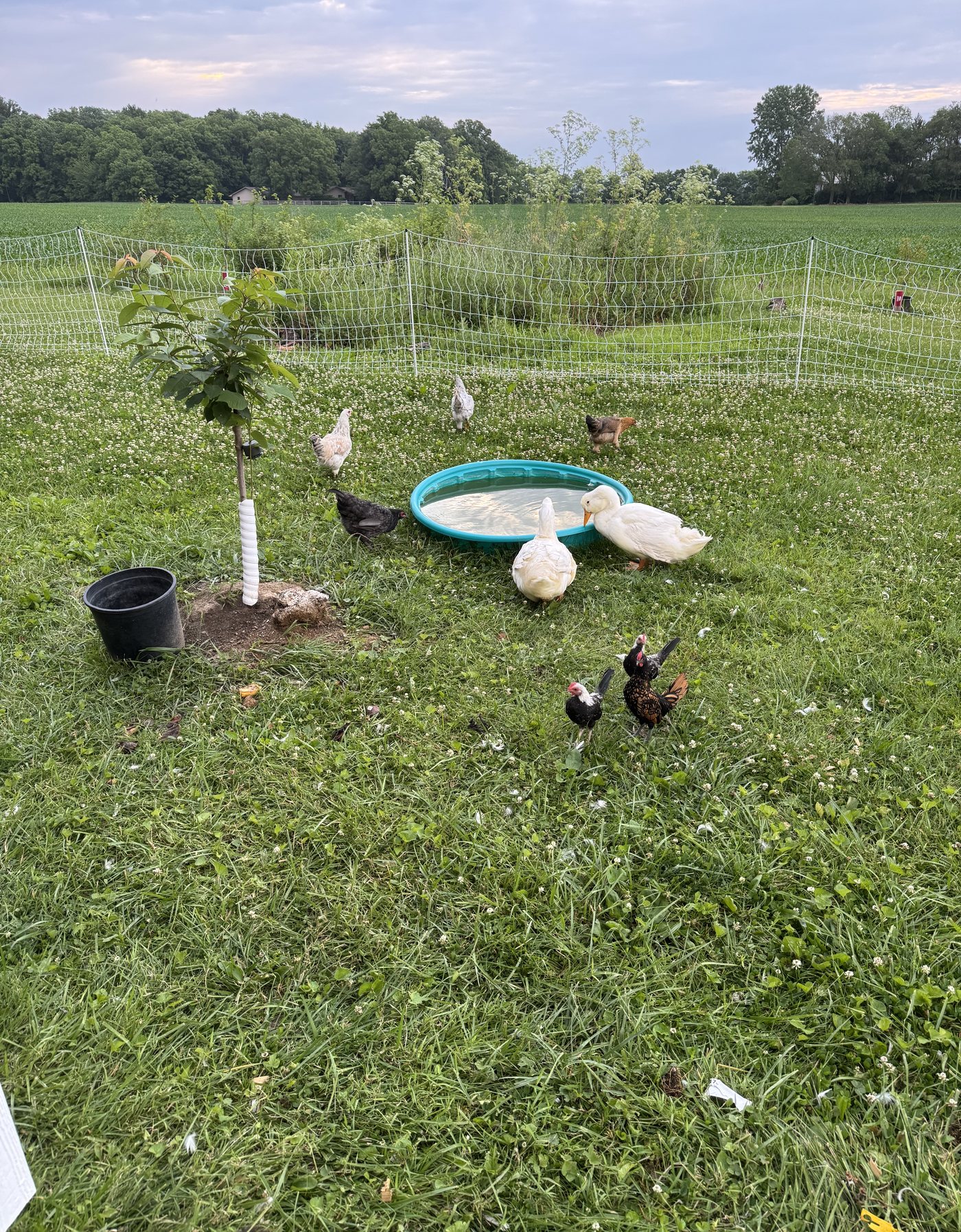
The first time I looked at our chickens scattered across a real yard, I noticed how different the scene felt from the neat pictures beginners usually study. There was a small tree trying to become shade, poultry netting that needed to sit right, grass that was not going to stay perfect, birds wandering toward the spot I did not expect, and water that suddenly felt more important than every decorative idea I had saved.
That kind of moment is useful because it humbles the plan. The birds do not care whether the setup matches the picture in your head. They care about where the shade lands at 3 p.m., whether the water is clean, whether the ground turns muddy, whether they have room to move away from each other, and whether the boundary holds when curiosity or pressure hits it.
That is where I think beginners should start. Not with the prettiest run. Not with the biggest wish list. Start with the work the yard has to do every single day.
Start with boundaries and night safety
The chicken yard and the chicken coop are related, but they are not the same job. A yard or run gives the flock daytime working space. The coop gives protected night shelter. Portable netting, welded wire, a fenced yard, or a covered run can all be useful, but beginners should not confuse daytime boundaries with full predator protection.
This matters because many predators work hardest when you are not watching. A loose daytime setup may be acceptable only if the flock is supervised and locked into a stronger coop at night. If predators are heavy in your area, or if the birds will be unsupervised for long stretches, the yard plan needs stronger containment, better latches, and fewer assumptions.
Put water where it stays useful
Water is one of the least glamorous parts of a chicken yard and one of the first things to get wrong. A waterer that tips, fills with bedding, sits in full sun all afternoon, or turns the main walkway into mud will make the whole setup feel harder than it needs to be.
The best water spot is easy for birds to reach, easy for you to refill, shaded when possible, and placed where spills drain away from the main traffic path. In hot weather, one water station may not be enough if birds spread out or the yard has limited shade.
Make shade a real part of the plan
Shade is not an accessory in a chicken yard. It is part of the care system. Young trees, shrubs, shade cloth, covered sections, or movable shelters can all help, but the question is not whether shade exists somewhere. The question is whether shade exists where the birds actually spend time during the hottest part of the day.
Walk the yard at different times before assuming it works. Morning shade can disappear by afternoon. A tree that looks promising in spring may not protect the main water station in July. If your run is open and exposed, a temporary shade solution may be a wise first fix while slower natural shade develops.
Give them ground they can use
Beginners often hope the run will stay grassy. Sometimes it does for a while, especially with rotation and enough space. Often it does not. Chickens scratch, dust bathe, travel the same paths, and turn favorite areas into bare soil. That is not always failure; it is just chicken behavior meeting limited space.
What matters more than perfect grass is usable ground. The run should have dry areas, drainage, places to scratch, and a dust-bath zone that does not become a wet hole. If one area is getting destroyed, rotate access, add mulch where appropriate, protect roots, or shrink the dream before the whole yard becomes a repair project. Before freezing weather, use the winter chicken-run guide to trace roof runoff, protect the gate path, and create one dry sheltered section.
Protect feed before it becomes a pest problem
Feed storage is part of the chicken-yard system even if the feed can is not inside the run. Loose bags, spilled grain, and damp storage invite waste and pests. A beginner does not need a fancy feed room, but the feed should stay dry, closed, and easy enough to use that daily chores stay consistent.
This is one of the few places where a basic purchase can be genuinely practical. A tight-lidded metal can, a dry shelf, or another secure storage method can save money by reducing spoiled feed and making the routine easier. If you already have a dry, pest-resistant system, keep using it.
What can wait
A chicken yard can absorb an endless list of upgrades if you let it: swings, treat holders, decorative fencing, matching signs, extra feeders, special herbs, elaborate dust baths, custom doors, and every clever item the internet puts in front of beginners. Some of those things are fine. Most of them are not first.
A realistic beginner scenario
Say you have four to six hens, a secure coop, and a fenced daytime yard. The first version does not need to be impressive. Put water in partial shade near your refill path. Keep feed in a dry lidded container outside the run. Add a simple shade area if the yard bakes in the afternoon. Watch for muddy traffic near the gate. Give them a dry dust-bath spot. Make sure the coop closes securely every night.
After a week, the birds will tell you what needs changing. Maybe the water needs to move. Maybe the favorite dust-bath corner is too close to the gate. Maybe the netting needs better tension. Maybe the shade misses the birds by two hours. That feedback is more valuable than copying someone else's perfect chicken-yard photo.
The real test of a good chicken yard
A good beginner chicken yard makes care easier to repeat. You can open, water, feed, check, clean, and close up without turning every chore into a puzzle. The birds have shade when they need it, water where they use it, room to move, and boundaries that match the risk.
That may not look like the prettiest run online. That is fine. The best first setup is the one that keeps the flock healthier, keeps the chores realistic, and lets you learn from the birds in front of you instead of chasing the picture you thought you were supposed to build.
Plan the whole chicken setup
Start with space, safety, and daily care before adding more gear.
Use the chicken space guide next if you are still deciding how big the run should be or whether your setup can handle the flock you want.
Read the chicken space guideRecommended next reads
Read the next chicken setup guides
These guides help connect the yard plan to space, predator safety, and daily chores.

Chickens
How Much Space Do Backyard Chickens Really Need?
A practical guide to coop and run space for backyard chickens, including why minimums and workable setups are not the same thing.
Chickens
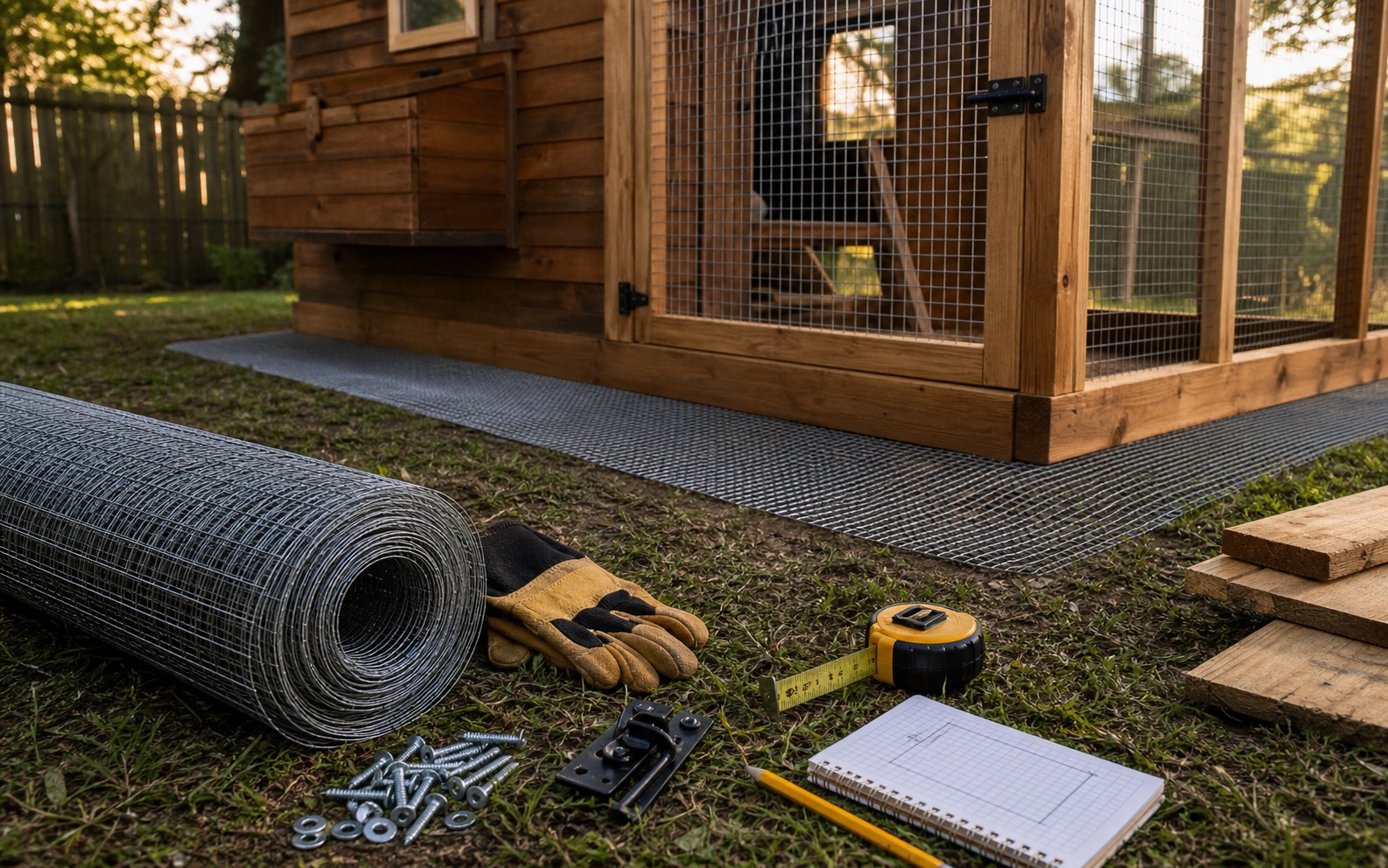
Predator-Proof Chicken Coop for Beginners
A practical beginner guide to predator-proofing a chicken coop and run before birds arrive, with the security layers that matter most and the upgrades that can wait.
Chickens
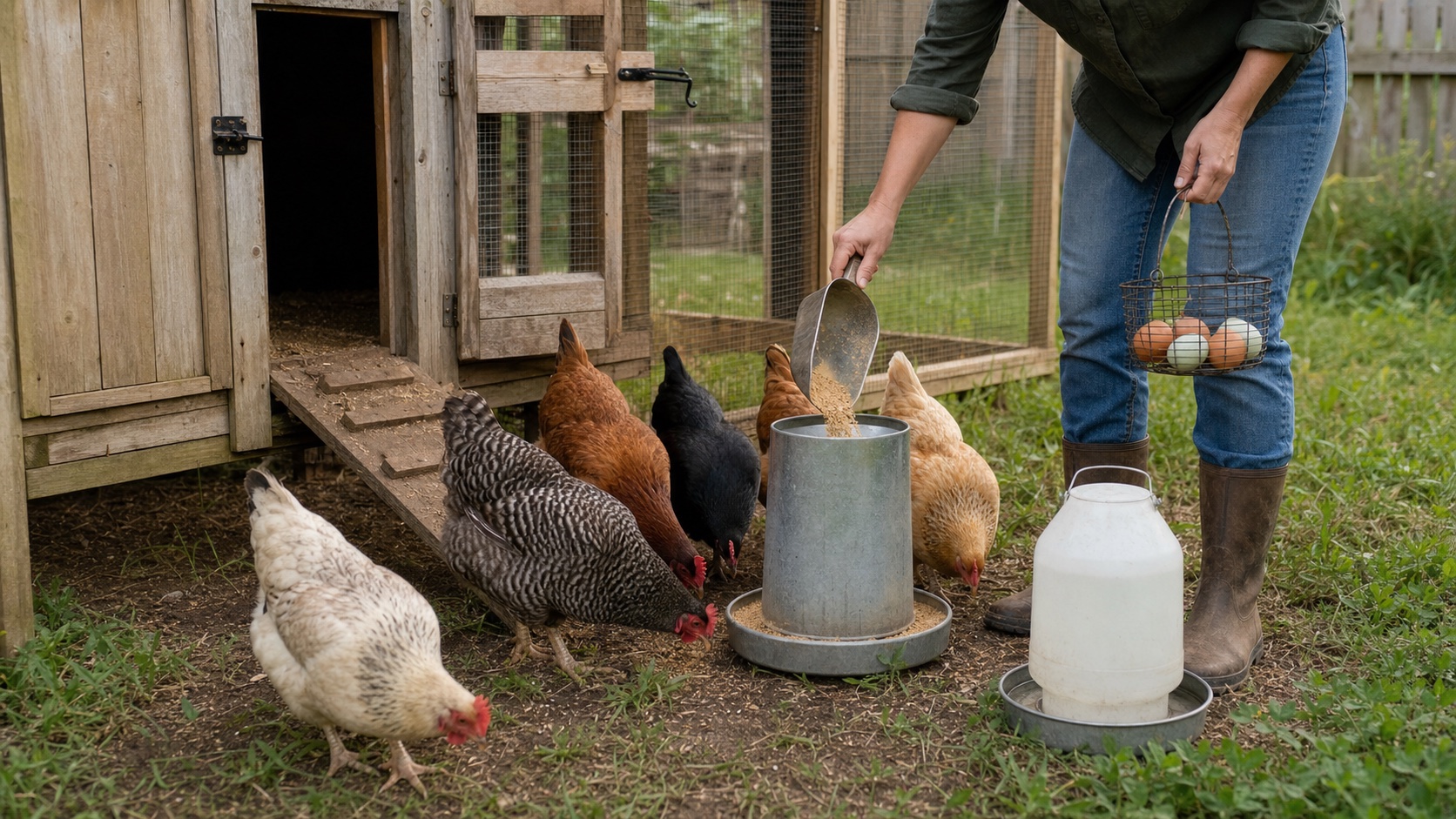
Daily Chicken Care Routine for Busy Families
A realistic morning and evening chicken-care routine built around fresh water, feed, eggs, observation, a secure coop, and the few checks busy families should not skip.
Frequently asked questions
What should be inside a beginner chicken run?
A beginner chicken run should have secure containment, shade, clean water, dry areas, dust-bathing space, feed access when appropriate, simple enrichment, and enough room for daily checks and cleaning. Start with function before decorating the run.
Do chickens need grass in their run?
Grass is useful but not required, and many chicken runs lose grass quickly. A safe, dry, well-drained run with shade, water, dust-bathing material, and secure fencing matters more than keeping the ground perfectly green.
Can poultry netting be the only predator protection?
Portable poultry netting can help manage daytime range and boundaries, but it is not the same as a locked predator-resistant coop. Beginners should still use secure night housing and match fencing decisions to local predator pressure.
Where should water go in a chicken yard?
Put water where chickens can reach it easily, where it stays as clean and cool as possible, and where spills will not turn the main traffic path into mud. In hot weather, shade and frequent checks matter more than a fancy container.
Recommendations
Useful tools and resources for this decision
These are included only where they reduce repeated friction, clarify a next step, or help you avoid buying the wrong thing first.
Optional yard boundary
Portable poultry netting
A movable fence can help beginners create a supervised daytime chicken yard, rotate pressure off one patch of ground, and keep birds away from gardens or unsafe areas.
Best for: Daytime range control when the flock already has secure night housing
Check current priceDaily-care basic
Galvanized or heavy-duty poultry waterer
A stable waterer is one of the few chicken-yard items worth solving early because clean water touches daily care, heat stress, and flock behavior.
Best for: Beginners whose current container tips, fouls quickly, or cannot hold enough water for the day
Check current priceUseful in exposed runs
Shade cloth for chicken runs
Shade cloth can help reduce sun exposure in an open run when natural shade is not mature yet.
Best for: Open yards that get direct afternoon sun
Check current priceProtect the feed
Metal feed storage can
A metal can with a tight lid keeps feed drier and less tempting to rodents than a loose bag in the corner of a shed or garage.
Best for: Beginners storing feed near the coop or yard
Check current priceFree Extension reference
North Dakota State University beginner chicken guide
A free Extension guide covering beginner chicken planning, brooding, housing, feeding, and general care considerations.
Best for: Checking the basics behind your setup decisions
View resourceRecommended next reads
Read next if it helps the decision
Move into the next guide only if it clarifies the next practical step.
Chickens
How Much Space Do Backyard Chickens Really Need?
A practical guide to coop and run space for backyard chickens, including why minimums and workable setups are not the same thing.
Chickens
Predator-Proof Chicken Coop for Beginners
A practical beginner guide to predator-proofing a chicken coop and run before birds arrive, with the security layers that matter most and the upgrades that can wait.
Chickens
Daily Chicken Care Routine for Busy Families
A realistic morning and evening chicken-care routine built around fresh water, feed, eggs, observation, a secure coop, and the few checks busy families should not skip.
Chicken setup support
Get the chicken setup checklist before you buy more flock gear.
Use the first-year checklist to price the flock honestly, cover the starter essentials, and delay the upgrades that can wait.
Best for: Readers trying to price a first flock honestly and avoid a scattered chicken setup.
- A pre-chick setup checklist
- A recurring-cost planning section
- A simple weekly flock-care rhythm
Chicken setup notes, beginner flock lessons, and the checklist first.
After signup, the download will unlock right here so you can save or print it.
About the author
William Mock
Founder, writer, and beginner homesteader
William writes from the beginner side of rebuilding after a layoff: homestead plans, family systems, budgets, tools, and the decisions that make a home feel less fragile.
Read why this site existsRelated Guides
Keep building context
Chickens
How Much Space Do Backyard Chickens Really Need?
A practical guide to coop and run space for backyard chickens, including why minimums and workable setups are not the same thing.
Chickens
Predator-Proof Chicken Coop for Beginners
A practical beginner guide to predator-proofing a chicken coop and run before birds arrive, with the security layers that matter most and the upgrades that can wait.
Chickens
Daily Chicken Care Routine for Busy Families
A realistic morning and evening chicken-care routine built around fresh water, feed, eggs, observation, a secure coop, and the few checks busy families should not skip.