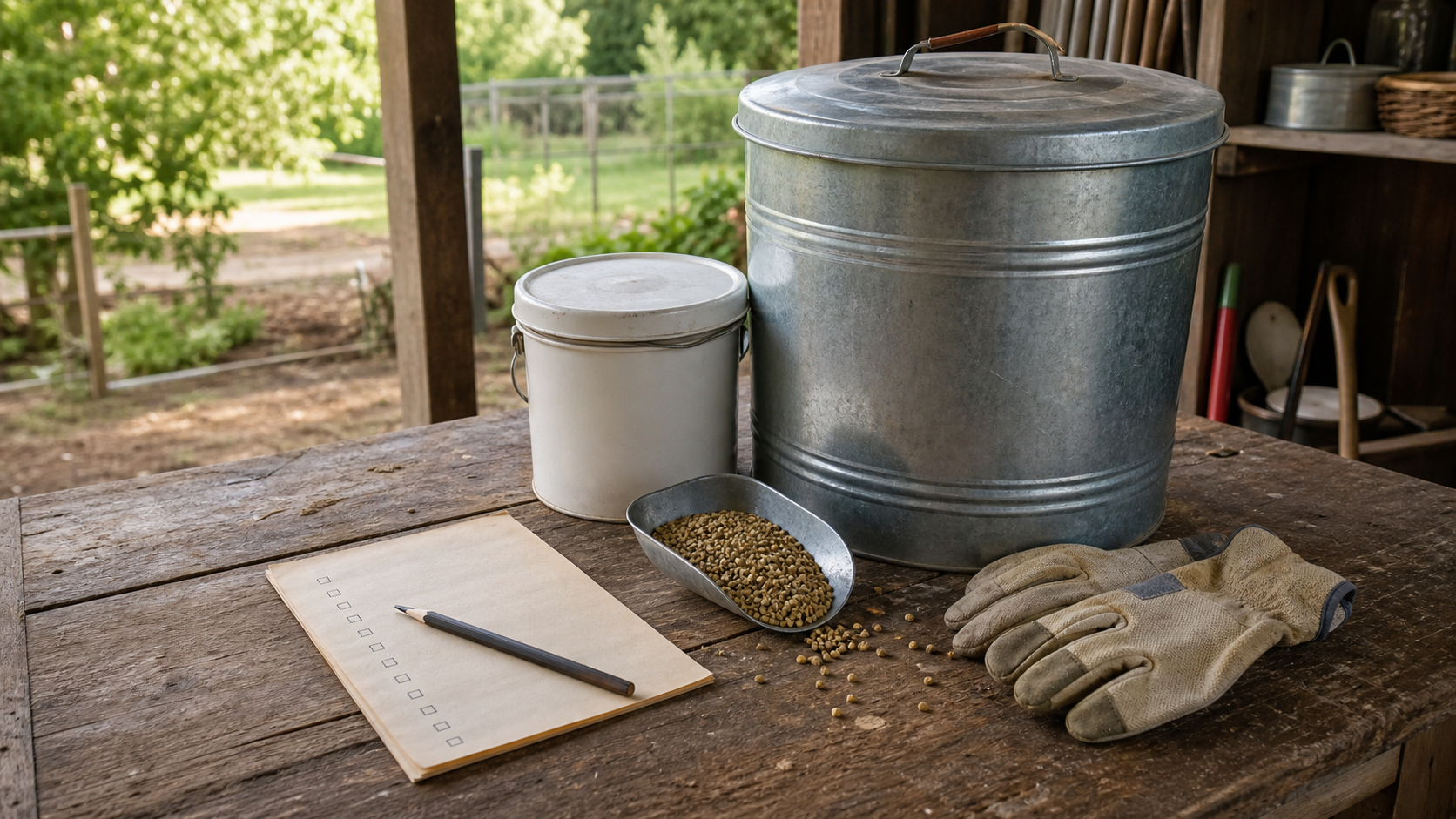
Chicken feed storage sounds like a small detail until the bag tears, the scoop disappears, the feed gets damp, or you start noticing little signs that something else has found the feed before your flock did.
For beginners, the goal is not to build a perfect feed room. The goal is to keep chicken feed dry, sealed, easy to scoop, and annoying for mice to reach. That simple setup protects the feed budget and makes the daily chicken routine feel less scattered.
The feed bag that taught the lesson
There is a particular kind of beginner mistake that does not feel like a mistake at first. You bring home feed, set the bag somewhere that seems reasonable, fold the top over, and tell yourself you will deal with a better system later.
Then later keeps getting pushed. The chore still happens. The chickens still get fed. But the setup starts stealing little pieces of attention. The bag slumps. Pellets end up on the floor. Someone sets the scoop down in a different place. The lidless corner of the storage area starts feeling less like a system and more like a standing invitation.
That was the lesson for me: chicken feed storage is not really about buying a nicer container. It is about admitting that the daily chore needs a home. If the feed has a real place, the scoop has a real place, and the lid closes every time, the whole routine gets quieter.
What good chicken feed storage has to do
A good chicken feed storage setup has four jobs. It should keep moisture out, keep pests from easy access, make feeding simple, and help you notice when the feed supply is getting low.
That last one matters more than beginners expect. If you cannot see the rhythm of your feed use, you will either run out at the wrong time or overbuy because you are nervous. Feed storage connects directly to your monthly chicken feed costs, so it belongs beside the budget conversation, not after it.
Chicken feed budget
Match storage to the amount your flock really eats.
Before buying a bigger container, use the feed cost guide to understand monthly feed use, waste, storage, and how flock size changes the numbers.
Read the feed cost guideThe best container for most beginners
For most beginner backyard chicken keepers, I would start with one lidded metal feed can that holds your main bag of feed and one smaller bucket or daily-use container if the main can lives away from the coop.
The metal can handles the main storage job. The smaller container handles convenience. That keeps you from opening the main can five times a day, dragging feed across the yard, or leaving the bag folded open because the chore route is irritating.
Recommendations
Beginner storage pieces worth considering
Best first storage upgrade
Galvanized feed storage can
A lidded metal can is a strong first choice when you store full bags of feed near a coop, shed, garage, or porch.
Best for: Beginners buying feed by the 40- or 50-pound bag
Check current priceUseful second container
Gamma-seal bucket lid
A screw-on bucket lid can turn a heavy food-grade bucket into a useful small-batch feed container.
Best for: Keeping a smaller daily-use amount near the chore route
Check current priceLow-cost helper
Metal feed scoop
A simple scoop keeps feeding more consistent and keeps hands out of the storage container.
Best for: Daily feeding without guessing portions every time
Check current priceWhere to put the feed storage
The right location is dry, shaded, easy to reach, and not inside the chicken run where spilled feed turns into a constant temptation. A shed, garage, covered porch, mudroom corner, or dry coop-adjacent storage area can work if the lid stays closed and the container is protected from weather.
Convenience matters because an inconvenient setup gets worked around. If the feed can is technically safe but irritating to use, someone will eventually leave something open, carry too much at once, or create a little spill that does not get cleaned up.
How much feed should you keep on hand?
A small beginner flock does not need a bunker of feed. Keep enough on hand that one busy week, bad weather day, or schedule change does not create a scramble, but do not buy so far ahead that feed sits around getting stale, damp, or forgotten.
A practical starting point is one open bag plus your next purchase planned before the can is empty. Once you know your flock's rhythm, you can decide whether keeping an unopened backup bag makes sense for your household.
A simple feed storage routine
That may sound like overkill, but the routine takes less time than dealing with a torn bag, mystery moisture, or a feed area that starts attracting attention. It is the same logic as a good daily chicken care routine: boring repeatability beats heroic cleanup.
Daily chicken rhythm
Make feed storage part of the daily routine.
If feeding, water, bedding, eggs, and cleanup still feel scattered, use the daily chicken care guide to put the basic rhythm in order.
Read the daily care routineWhat usually attracts mice around chicken feed
Mice are not usually attracted by your container label. They are attracted by access, shelter, and food. A folded-open paper bag, spilled pellets under a shelf, scratch tossed where chickens cannot clean it up, or a feeder left full overnight can all make the area more inviting.
This is not a promise that a sealed can solves every pest problem. It does not. But it removes one of the easiest food sources and makes the whole setup easier to inspect. That is a worthwhile beginner win.
What can wait
You do not need a custom feed room, wall-mounted dispenser, automatic inventory system, or a row of matching containers before the first flock. Those can wait until your actual chore pattern proves they would solve a real problem.
A realistic beginner setup
Say you have six hens, one main layer feed, and a coop that sits a short walk from the garage. A simple setup could be one metal can in the garage with the main bag, one metal scoop inside the can, and a small sealed bucket near the back door for the next day or two of chores.
Once a week, you check the can, sweep the area, and add feed to the small bucket if needed. When the feed level drops below your comfort line, you add it to the errand list. That is not fancy, but it is a system. It keeps the feed dry, reduces handling, and makes the chore easier for another family member to take over.
Chicken hub
Keep the chicken setup in order.
Use the chicken hub to connect feed storage with flock size, feeder choice, coop setup, brooder planning, and daily care.
Open the chicken guidesWhat matters most
The best chicken feed storage system is the one you will actually close, clean around, and use every day. It does not have to be pretty. It does not have to be expensive. It just has to keep feed dry, keep the bag from becoming the system, and make the next chore obvious.
Start with the container that solves the current problem. Then let your real flock size, feed use, weather, and chore route tell you whether anything else has earned a place.
Recommended next reads
Keep reading
If feed storage is the next thing you are tightening up, these guides help connect the storage decision to the rest of the chicken setup.
Chickens
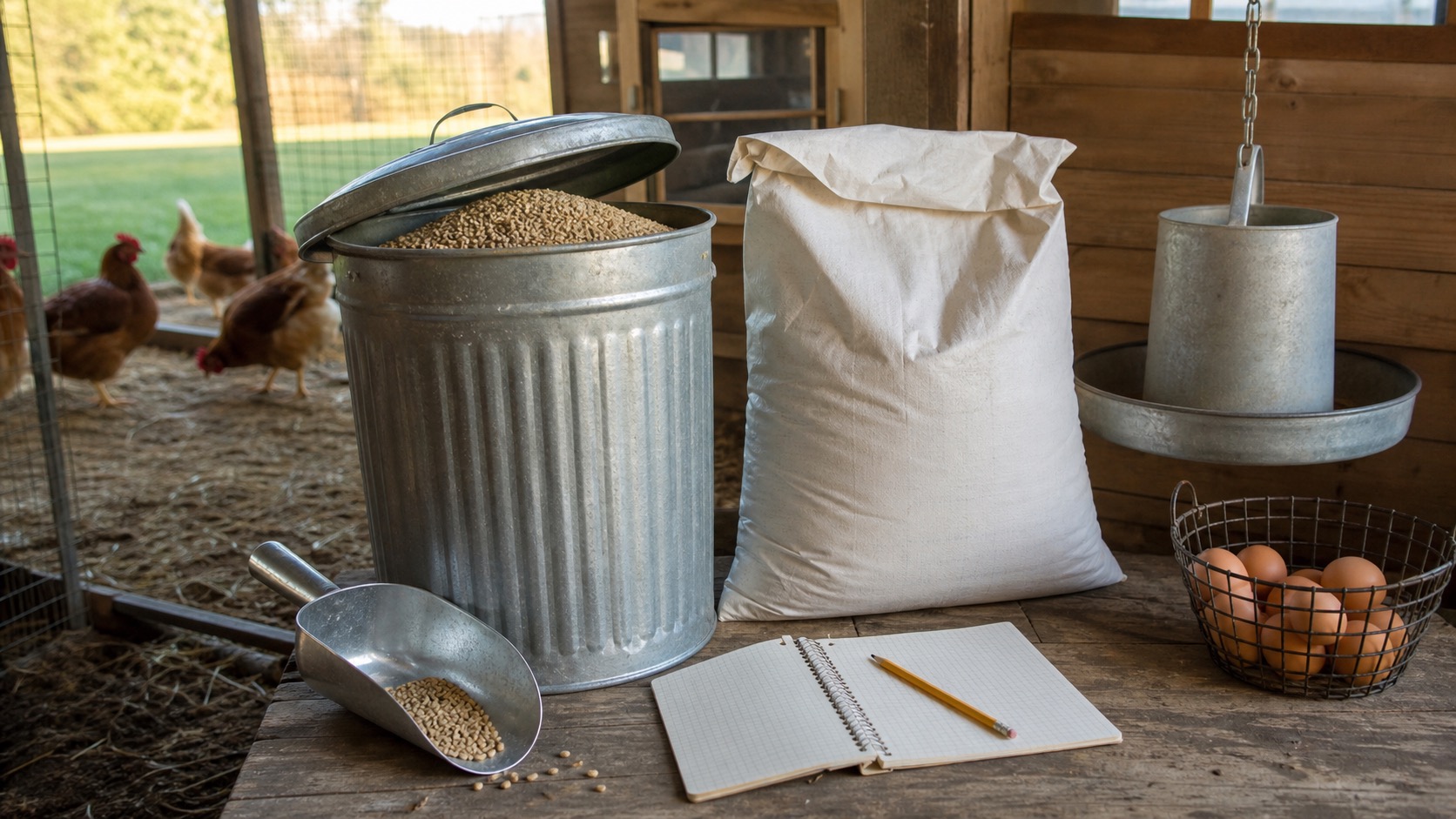
Chicken Feed Costs for Beginners: Monthly Numbers That Actually Matter
A practical guide to monthly chicken feed costs for beginners, including feed math, flock size, waste, storage, and the recurring costs that make egg math more honest.

Chickens
Best Chicken Feeder for Beginners
The best chicken feeder for beginners is usually the one that stays boring: low mess, enough capacity, weather-tolerant, and easy to refill without becoming another daily irritation.
Chickens
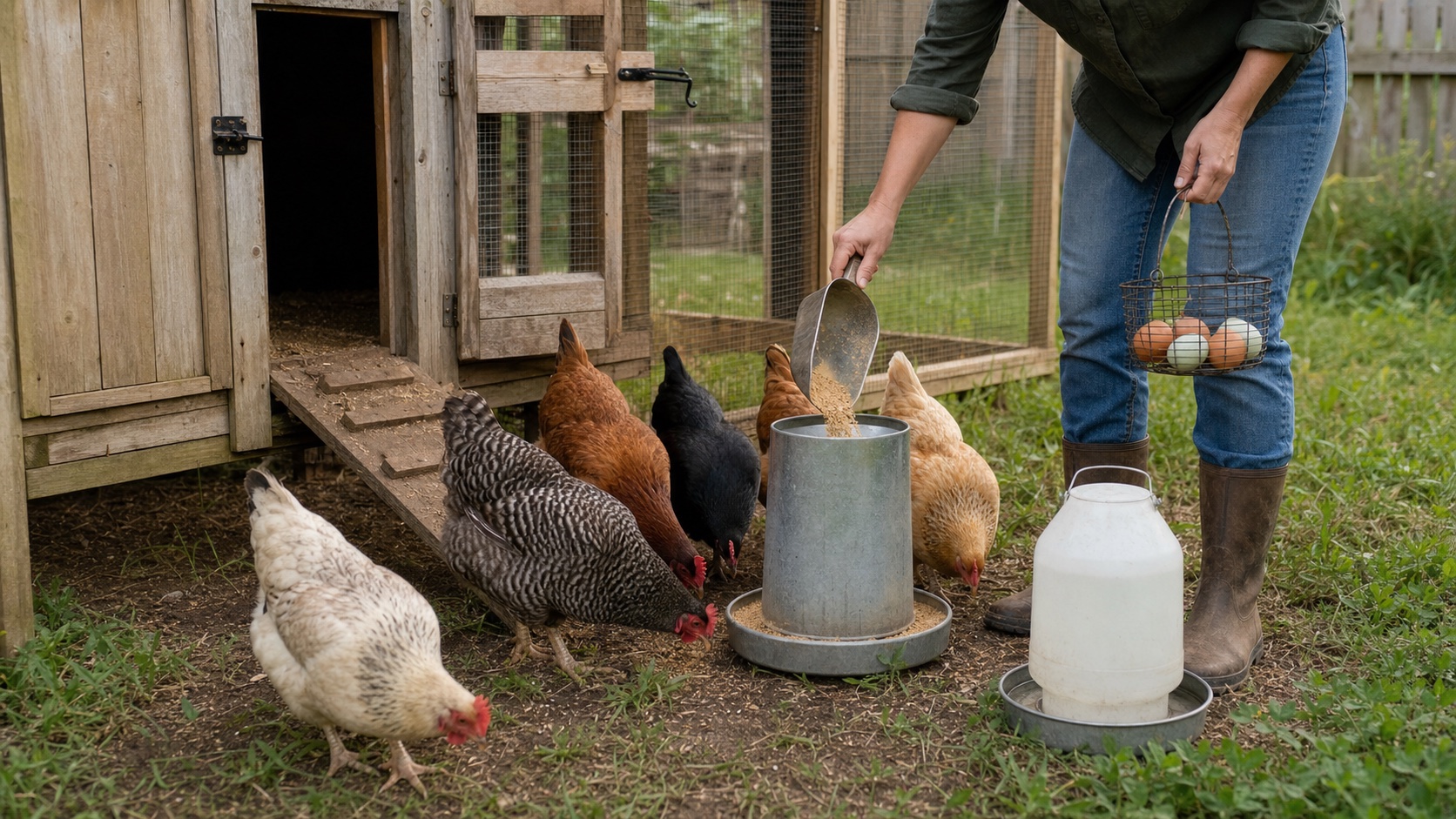
Daily Chicken Care Routine for Busy Families
A realistic morning and evening chicken-care routine built around fresh water, feed, eggs, observation, a secure coop, and the few checks busy families should not skip.
Frequently asked questions
What is the best way to store chicken feed?
Store chicken feed in a clean, dry, sealed container with a tight lid. Keep it off damp ground, out of direct weather, and close enough to the coop that daily feeding stays easy.
Can I leave chicken feed in the paper bag?
A paper bag is fine for getting feed home, but it is not a good long-term storage system. Bags tear, absorb moisture, and are easier for pests to reach.
Should chicken feed be stored in metal or plastic?
Either can work if the lid seals well and the container stays dry. Metal cans are harder for rodents to chew. Heavy food-grade buckets can work for smaller amounts or short-term storage.
What should I do with wet or moldy chicken feed?
Do not feed wet, sour-smelling, or moldy feed to chickens. Remove it, clean the storage area, and fix the moisture problem before refilling the container.
Recommendations
Useful tools and resources for this decision
These are included only where they reduce repeated friction, clarify a next step, or help you avoid buying the wrong thing first.
Best first storage upgrade
Galvanized feed storage can
A lidded metal can is a strong first choice when you store full bags of feed near a coop, shed, garage, or porch.
Best for: Beginners buying feed by the 40- or 50-pound bag
Check current priceUseful second container
Gamma-seal bucket lid
A screw-on bucket lid can turn a heavy food-grade bucket into a useful small-batch feed container.
Best for: Keeping a smaller daily-use amount near the chore route
Check current priceLow-cost helper
Metal feed scoop
A simple scoop keeps feeding more consistent and keeps hands out of the storage container.
Best for: Daily feeding without guessing portions every time
Check current priceRead first
Chicken feed cost guide
Use the feed cost guide before buying a larger storage setup so you know how much feed your flock actually moves through.
Best for: Matching storage size to your real flock
Read the guideRecommended next reads
Read next if it helps the decision
Move into the next guide only if it clarifies the next practical step.
Chickens
Chicken Feed Costs for Beginners: Monthly Numbers That Actually Matter
A practical guide to monthly chicken feed costs for beginners, including feed math, flock size, waste, storage, and the recurring costs that make egg math more honest.
Chickens
Best Chicken Feeder for Beginners
The best chicken feeder for beginners is usually the one that stays boring: low mess, enough capacity, weather-tolerant, and easy to refill without becoming another daily irritation.
Chickens
Daily Chicken Care Routine for Busy Families
A realistic morning and evening chicken-care routine built around fresh water, feed, eggs, observation, a secure coop, and the few checks busy families should not skip.
Chicken setup support
Get the chicken setup checklist before you buy more flock gear.
Use the first-year checklist to price the flock honestly, cover the starter essentials, and delay the upgrades that can wait.
Best for: Readers trying to price a first flock honestly and avoid a scattered chicken setup.
- A pre-chick setup checklist
- A recurring-cost planning section
- A simple weekly flock-care rhythm
Chicken setup notes, beginner flock lessons, and the checklist first.
After signup, the download will unlock right here so you can save or print it.
About the author
William Mock
Founder, writer, and beginner homesteader
William writes from the beginner side of rebuilding after a layoff: homestead plans, family systems, budgets, tools, and the decisions that make a home feel less fragile.
Read why this site existsRelated Guides
Keep building context
Chickens
Chicken Feed Costs for Beginners: Monthly Numbers That Actually Matter
A practical guide to monthly chicken feed costs for beginners, including feed math, flock size, waste, storage, and the recurring costs that make egg math more honest.
Chickens
Best Chicken Feeder for Beginners
The best chicken feeder for beginners is usually the one that stays boring: low mess, enough capacity, weather-tolerant, and easy to refill without becoming another daily irritation.
Chickens
Daily Chicken Care Routine for Busy Families
A realistic morning and evening chicken-care routine built around fresh water, feed, eggs, observation, a secure coop, and the few checks busy families should not skip.