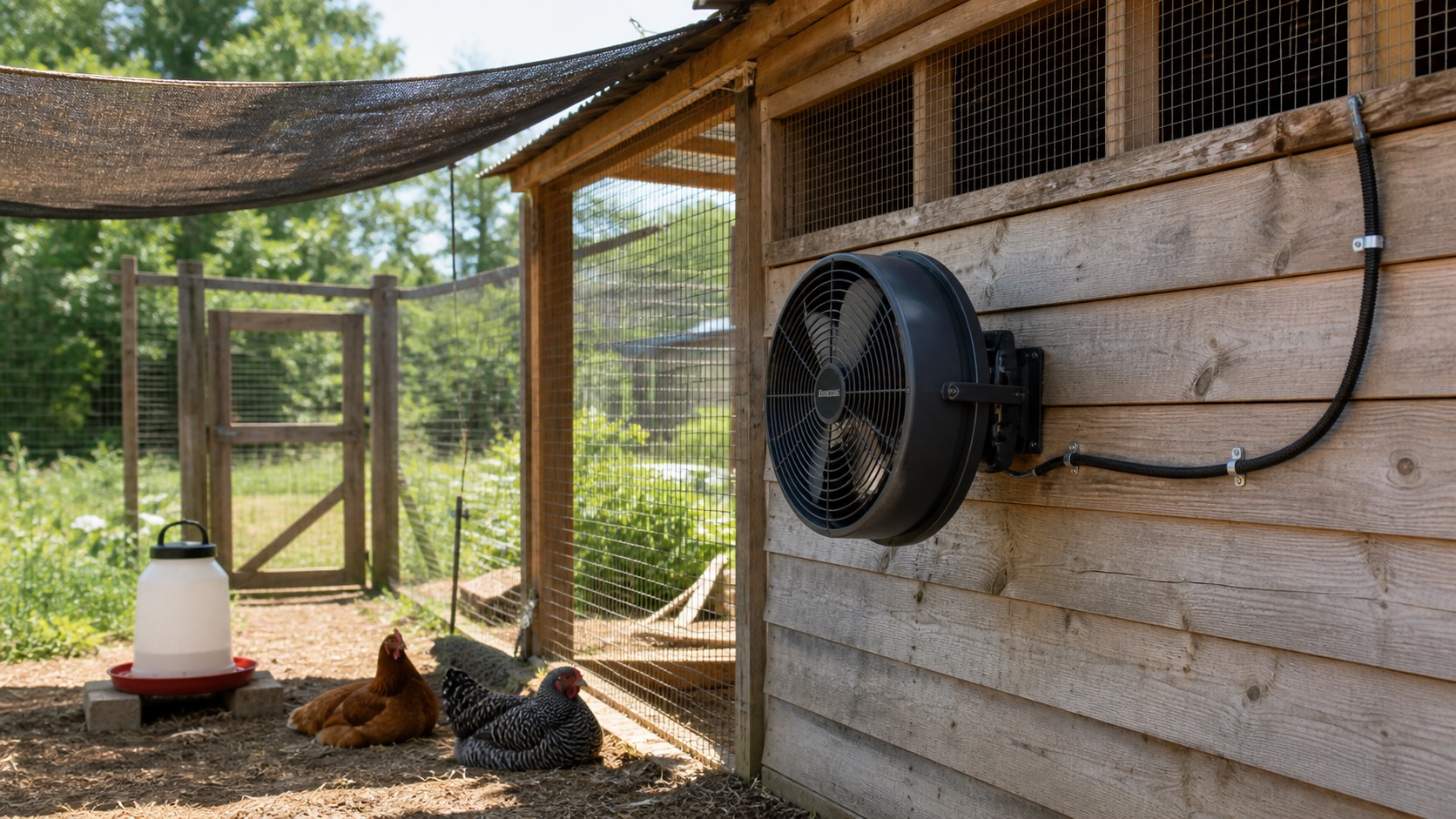
A fan can help a chicken coop in summer, but it is not the whole heat plan. That is the part beginners need to hear first.
When the run feels heavy, the coop feels stale, and the birds are panting in the shade, buying a fan feels like the obvious fix. Sometimes airflow really does help. But if the birds have warm water, weak shade, poor ventilation, crowded space, or unsafe cords within reach, a fan can become a distraction from the bigger problem.
The fan is not the plan
The first time I caught myself wanting to solve a hot chicken day with a single purchase, it was not really about the fan. It was about wanting the problem to have one clean answer. Buy the thing, plug it in, feel responsible, move on.
But homestead chores have a way of exposing that kind of shortcut. A fan can move air, but it cannot make a crowded run spacious. It cannot turn dirty warm water into a reliable drinking system. It cannot fix a coop that traps heat all evening. It cannot make an exposed extension cord safe just because the birds look more comfortable.
That is the lesson I keep relearning in small ways: the useful purchase is the one that supports a working system. The risky purchase is the one that lets me pretend the system is already working.
What a fan can actually do
A fan helps by moving air. That can matter when the coop or run has still, hot air and the birds cannot get relief from natural breeze. University of Minnesota Extension includes ventilation and air movement as part of preventing poultry heat stress, along with water, shade, feeding timing, and reducing heat load.
The important word is part. A fan is one layer. If the air being moved is trapped inside a hot, closed box, the fan is not doing the same job as real ventilation. If it is aimed across dusty bedding or mounted where rain can reach it, it may create a new risk while solving only part of the heat problem.
Fix these before buying a fan
If you are asking whether your chickens need a fan, walk the setup before you shop. The answer may be yes, but the walk will tell you whether the fan is solving the real bottleneck or just giving you a more complicated version of the same problem.
Where to place a chicken coop fan
For many beginner backyard setups, the safest fan is not inside the bird area. It is outside the run wire, behind hardware cloth, mounted high enough that the birds cannot reach it, or aimed through a secure opening where the cord and blades are protected.
The goal is not to blast chickens with wind. The goal is to move stale air out and bring fresher air through the shaded area where birds already want to rest. Think airflow path, not fan noise.
What about running a fan at night?
A coop can stay hot after sunset, especially after a long humid day. Night airflow can help if the coop is stale and warm, but the same safety checks still apply. Birds are roosting. Predators are active. Moisture can build. A fan should never replace secure ventilation.
Before running a fan overnight, ask whether the coop already has predator-resistant openings that allow warm air to escape. If the only way the coop breathes is through a powered fan, that is a design problem to fix, not a routine to depend on forever.
What to buy and what to skip
If the basics are weak, buy those first. A second waterer, better shade, or hardware cloth over ventilation openings may do more for the flock than a fan. If the basics are solid and the coop or run still needs air movement, then a fan can earn its place.
Recommendations
Fan setup gear worth considering
Compare outdoor fans
Outdoor-rated fan with enclosed guard
Look for a fan that can be mounted securely outside bird reach and used according to the manufacturer's weather and safety directions.
Best for: Adding airflow to a shaded run or ventilated coop wall
Skip the fan if you cannot protect cords, blades, plugs, and the motor from birds and weather.
Check current priceLook at cord covers
Outdoor extension cord cover or cord clips
Useful when a cord must be secured high, protected from wet ground, and kept away from beaks and daily traffic.
Best for: Cleaner cord routing around a coop fan
Cord management is not a cosmetic detail around animals, bedding, and water.
Check current priceCompare shade cloth
Shade cloth for chicken runs
Shade cloth can reduce the heat load before the fan has to help, especially where afternoon sun hits the run hard.
Best for: Runs that need more afternoon shade
Leave airflow paths open. A wrapped-up run can become hotter and staler.
Check current priceWhat can wait
Solar fan experiments, automatic misting systems, complicated timers, smart plugs, and elaborate summer coop upgrades can wait. They might be useful in the right setup, but they are not the beginner foundation.
The foundation is boring and repeatable: shaded water, real shade, safe ventilation, enough space, calm chores, and a way for hot air to leave. Add a fan only when it strengthens that system.
A simple decision
If the coop feels hot and stale, and you can mount a fan safely outside bird reach, a fan is reasonable. If the coop has poor ventilation, one waterer in the sun, no afternoon shade, and exposed cords would be the only way to plug something in, the answer is not yet.
Fix the system first. Then let the fan be one useful layer, not the thing holding the whole summer together.
Next step
Build the full summer chicken care system.
If heat is the bigger issue, start with the broader summer chicken care guide before you decide whether a fan belongs in your setup.
Read the summer chicken guideRecommended next reads
Keep the coop system honest
Fan safety works best when space, airflow, and coop maintenance are already realistic.
Chickens
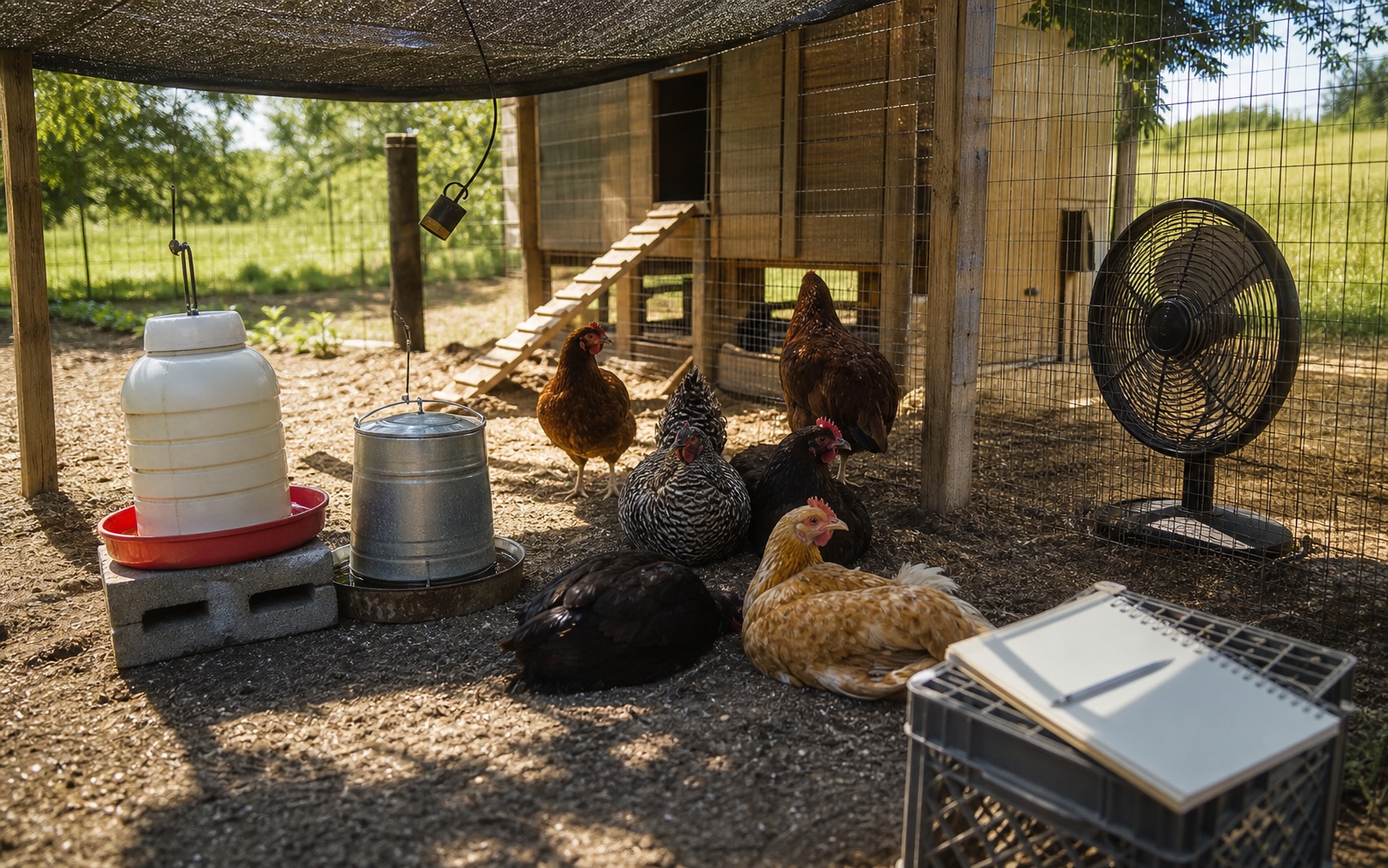
How to Keep Backyard Chickens Cool in Summer
A practical summer heat guide for backyard chickens: water, shade, airflow, feeding timing, warning signs, and the beginner mistakes that make hot days harder.

Chickens
How Much Space Do Backyard Chickens Really Need?
A practical guide to coop and run space for backyard chickens, including why minimums and workable setups are not the same thing.
Chickens
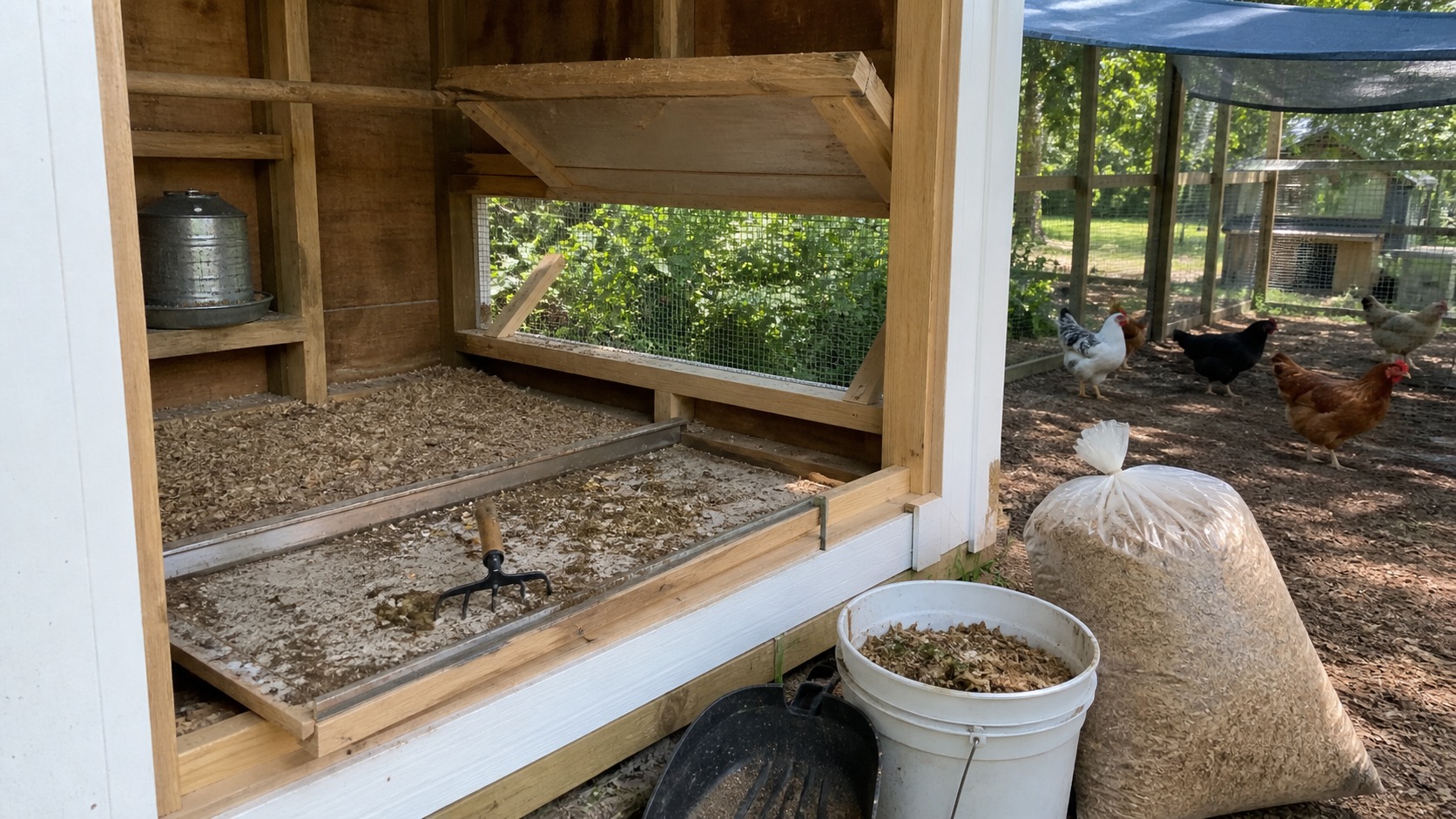
How to Keep a Chicken Coop From Smelling Bad in Summer
A practical summer coop odor guide for beginners: ventilation, dry bedding, manure under roosts, water leaks, run drainage, ammonia warning signs, and what not to cover up.
Frequently asked questions
Should you put a fan in a chicken coop in summer?
A fan can help when the coop or run has still, hot air, but it should not be the first or only summer cooling plan. Start with shade, fresh water, space, and ventilation, then add a fan only if it can be placed safely away from birds, dust, moisture, and loose cords.
Where should a chicken coop fan go?
Place a fan where it moves air through a shaded area without letting chickens reach the blades or cord. For many backyard setups, that means outside the run wire, behind hardware cloth, mounted securely, and protected from rain.
Can a fan hurt chickens?
Yes, if it creates electrical, moisture, dust, fire, blade, or cord hazards. A fan can also give false confidence if the coop still lacks water, shade, ventilation, or enough space for birds to spread out.
Do chickens need a fan at night?
Sometimes, especially if the coop stays hot and stale after sunset. But the safer first question is whether predator-resistant ventilation is open and whether the fan can run without rain, cord, dust, or blade risks.
Recommendations
Useful tools and resources for this decision
These are included only where they reduce repeated friction, clarify a next step, or help you avoid buying the wrong thing first.
Compare outdoor fans
Outdoor-rated fan with enclosed guard
A fan can be useful when mounted safely outside bird reach and protected from weather. Look for stable mounting, a protective guard, and an outdoor-suitable design.
Best for: Moving air through a shaded run or ventilated coop area
Do not use a fan where birds can reach blades or cords. Water, shade, and ventilation still come first.
Check current priceLook at cord covers
Outdoor extension cord cover or cord clips
Cord management matters as much as the fan. Cords should be secured, off the ground, away from beaks, and kept out of wet bedding or waterer traffic.
Best for: Reducing loose-cord hazards around coop fans
Use only outdoor-rated electrical components and follow the product directions. When in doubt, ask an electrician.
Check current priceCompare shade cloth
Shade cloth for chicken runs
Shade cloth often solves more of the heat problem than a fan alone because it lowers the heat load before airflow has to help.
Best for: Runs where birds have too little afternoon shade
Do not wrap the run so tightly that airflow disappears.
Check current priceRead the Extension guide
University of Minnesota Extension heat-stress guide
A practical Extension guide covering poultry heat stress, water intake, ventilation, shade, feed timing, electrolytes, and warning signs.
Best for: Source-backed summer chicken care basics
View resourceRecommended next reads
Read next if it helps the decision
Move into the next guide only if it clarifies the next practical step.
Chickens
How to Keep Backyard Chickens Cool in Summer
A practical summer heat guide for backyard chickens: water, shade, airflow, feeding timing, warning signs, and the beginner mistakes that make hot days harder.
Chickens
How Much Space Do Backyard Chickens Really Need?
A practical guide to coop and run space for backyard chickens, including why minimums and workable setups are not the same thing.
Chickens
How to Keep a Chicken Coop From Smelling Bad in Summer
A practical summer coop odor guide for beginners: ventilation, dry bedding, manure under roosts, water leaks, run drainage, ammonia warning signs, and what not to cover up.
Chicken setup support
Get the chicken setup checklist before you buy more flock gear.
Use the first-year checklist to price the flock honestly, cover the starter essentials, and delay the upgrades that can wait.
Best for: Readers trying to price a first flock honestly and avoid a scattered chicken setup.
- A pre-chick setup checklist
- A recurring-cost planning section
- A simple weekly flock-care rhythm
Chicken setup notes, beginner flock lessons, and the checklist first.
After signup, the download will unlock right here so you can save or print it.
About the author
William Mock
Founder, writer, and beginner homesteader
William writes from the beginner side of rebuilding after a layoff: homestead plans, family systems, budgets, tools, and the decisions that make a home feel less fragile.
Read why this site existsRelated Guides
Keep building context
Chickens
How to Keep Backyard Chickens Cool in Summer
A practical summer heat guide for backyard chickens: water, shade, airflow, feeding timing, warning signs, and the beginner mistakes that make hot days harder.
Chickens
How Much Space Do Backyard Chickens Really Need?
A practical guide to coop and run space for backyard chickens, including why minimums and workable setups are not the same thing.
Chickens
How to Keep a Chicken Coop From Smelling Bad in Summer
A practical summer coop odor guide for beginners: ventilation, dry bedding, manure under roosts, water leaks, run drainage, ammonia warning signs, and what not to cover up.