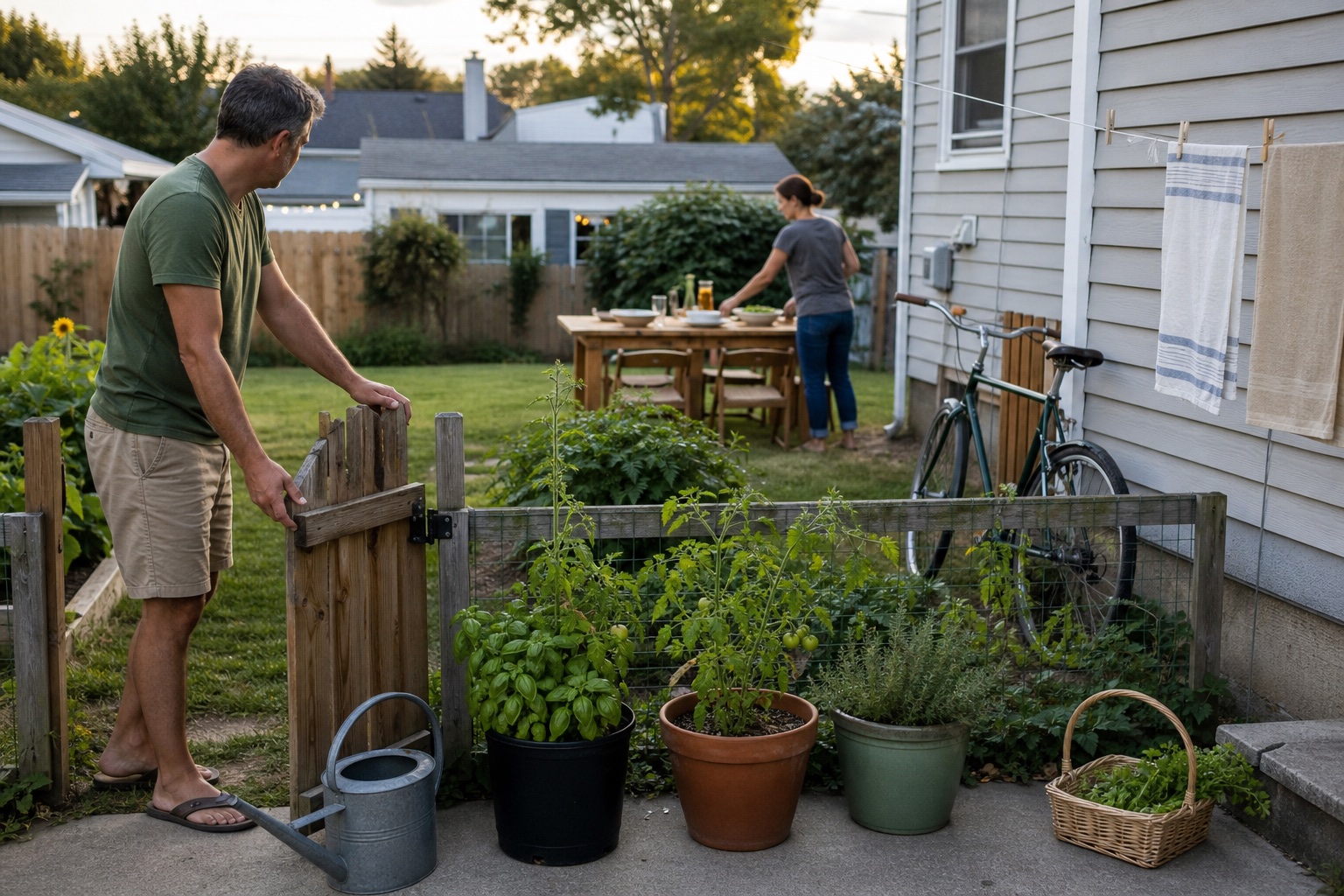
You do not have to wait for acreage, a country address, or a different job to start living a simpler life. Begin by testing one ordinary month with fewer unmanaged commitments, a short meal rhythm, visible spending, one useful household system, and enough margin to recover when the week goes sideways. A future property may expand what you can do, but the habits that make life steadier can start at the address you already have.
Build the fresh start in the right order
Start with the part of life that needs steadiness now
The Fresh Start hub gathers practical guides for the first month after a layoff, household conversations, food security, routines, and careful relocation decisions.
Follow the Fresh Start pathThe morning the address stopped being the first step
After I was laid off, the map felt larger almost overnight. Work had been the boundary around where we could live and how much change seemed possible. Once that boundary disappeared, it was easy to look past the house we were standing in and imagine that the real fresh start was somewhere down a gravel road.
But the next morning still began in the same kitchen. There were bills to sort, meals to figure out, a family calendar on the wall, and the uncomfortable question of what came next. A different address could change our access to land. It could not decide how we spent Tuesday night, whether we bought our way through stress, or whether every new idea became a family project before anyone had agreed to it.
That was the useful turn for me. Instead of treating simpler living as a reward waiting on the other side of a move, I could look for evidence of it in an ordinary week. Did dinner require a last-minute rescue? Did the calendar leave room for a walk and a conversation? Did the things we owned support the work in front of us, or create more work? The answers were not as exciting as browsing properties, but they were much more honest.
Define simpler before you chase it
A simpler life is not one universal lifestyle. It does not require white walls, an empty closet, homemade everything, or quitting paid work. In our context, simpler means fewer fragile points in the week: less money leaving unnoticed, fewer meals decided at the worst possible time, fewer simultaneous projects, and more useful routines that the whole household can understand.
Those sentences keep the goal from turning into a shopping category. If what you want is dependable family meals, less debt, time outdoors, and one modest food-growing skill, none of those requires waiting for a closing date. If what you want is room for livestock, a well, a large garden, or a particular school and community, a move may matter. Naming the difference protects both the current season and the future decision.
Run a 30-day before-you-move test
Do not attempt a complete life reset in one weekend. Choose one small test in each of the six areas below, write it on a single page, and leave the rest alone for a month. The point is not to perform simple living perfectly. It is to find out which changes reduce pressure enough to survive a normal family week.
Make money visible before making it severe
Especially after a layoff or income change, simple living can become confused with cutting everything at once. Start with visibility. The Consumer Financial Protection Bureau provides a spending tracker designed to help people record where money goes and consider whether that spending matches their priorities. Use a notebook, bank export, or the worksheet. The method matters less than seeing the pattern without guessing.
For 30 days, place every possible future-homestead purchase on a waiting list. A dehydrator, larger tiller, storage system, or set of specialized tools may eventually be useful. Buying it now can create the feeling of progress while reducing the cash margin that makes a real move safer. Buy what solves a current, repeated problem. Let future-property gear wait until the property and the problem are real.
Build a small food rhythm in the kitchen you have
Food is one of the fastest places to test whether a simpler system actually helps. The EPA recommends planning meals for the week, checking the refrigerator, freezer, and pantry first, making a list around meals you expect to eat at home, and buying quantities you are likely to use. That is also a practical resilience exercise: know what you have, use it before it disappears, and keep a short list of meals your household will really eat.
Do not begin by buying a year's worth of food or preserving equipment. Start with one week, one visible pantry shelf, and one freezer list. If that rhythm holds for a month, the next layer might be a slightly deeper rotation or one seasonal skill. The guide to building food security before you move takes that food-specific path further without pretending storage alone creates security.
Simplify the calendar, not only the closet
A clean shelf does not create a calm week if every evening is promised away. Look at the next four weeks and mark work, school, caregiving, medical needs, community responsibilities, and genuine rest. Then remove one optional commitment or postpone one self-assigned project. This is not an argument for withdrawing from people. It is a way to stop treating every open square as unused capacity.
The household needs to be part of that decision. If one person calls the new garden, repair list, and pantry project a simpler life while everyone else experiences more labor, the system is not simple. Our guide to a weekly chore rhythm for families is useful here because it makes maintenance and capacity visible before another project enters the week.
Clear one friction zone, not the whole house
Choose the place that causes a repeated delay. Maybe shoes and bags block the door each morning. Maybe a pantry shelf hides food until it expires. Maybe the basic hand tools are divided among three rooms. Clear that one zone, keep the items used for the task together, and observe whether the week improves.
Avoid making large disposal decisions while stress is doing the choosing. You do not need to empty sentimental boxes, rent a storage unit, or buy matching containers to complete this test. A simpler system should reduce the number of decisions required to do ordinary work. If organizing the system requires a shopping trip and a full Saturday, shrink it.
Practice one skill that earns its place
Pick a skill because it supports a real household need, not because it looks like homesteading. Cook one flexible meal from staples. Learn to sharpen and store one garden tool. Grow basil in a pot if you use basil. Mend a work shirt. Practice the same thing several times and notice the cost, time, mess, and whether the result was useful.
The repetition is the test. One impressive Saturday project can hide a system that is impossible on Wednesday. A modest skill repeated in an ordinary week tells you more about the life you are building than a pile of supplies waiting for the right property.
What matters now and what can wait
How to read the results after 30 days
Also notice what did not work. If the meal list was too ambitious, shorten it. If the weekly check-in became another meeting nobody wanted, make it ten minutes and discuss only fixed obligations, maintenance, and one project. If every version of the plan depends on one exhausted person carrying it, redesign the work instead of calling that person undisciplined.
A move may still be the right decision. It deserves its own budget, employment plan, family agreement, property inspection, and sober look at services and infrastructure. The guide on whether to move to the country after a layoff separates that due diligence from the emotional relief of having a new option.
The first step is an ordinary week
The most convincing version of a simpler life is not a property photo. It is an ordinary Wednesday that asks a little less of the household because the meals, money, tools, projects, and expectations have some shape. That kind of week will not erase grief, fix a layoff, or make every decision obvious. It does give the future something sturdier to stand on.
Choose the pressure point that returns most often, make one small change, and repeat it for a month. If a future move comes, take the working rhythm with you. If the move takes longer than expected, you have not spent the waiting season pretending life has not started yet.
Your next practical step
Use the first-30-days guide if the layoff is still fresh
Benefits, insurance, bills, and family communication deserve attention before a large relocation or lifestyle plan takes over the month.
Plan the first 30 daysRecommended next reads
Keep building from here
Use the move-decision guide when geography is the next real question, or keep strengthening food and weekly routines where you are.

Fresh Start
Should You Move to the Country After a Layoff? A Stability-First Guide
A grounded decision guide for separating a real rural move from an escape plan, then checking income, family rhythm, water, septic, access, broadband, zoning, and financial runway before committing.

Fresh Start
How to Start Building Food Security Before You Move
A practical guide to building food security before you move, buy land, or make a bigger lifestyle change.

Systems
A Weekly Chore Rhythm for Families Starting Homestead Life
A practical weekly task rhythm for beginners who want household work, animals, meals, and projects to fit real family life.
Frequently asked questions
Can I live a simpler life without moving to the country?
Yes. A simpler life begins with how you use money, time, food, possessions, and attention. A different property can eventually support goals that need more space, but it cannot automatically create calmer meals, fewer commitments, better spending habits, or a workable family rhythm. Test those parts where you live now.
How do I start simplifying my life after a layoff?
Handle urgent benefits, insurance, and bill deadlines first. Then choose one small pressure point such as unplanned food spending, an overloaded calendar, or a cluttered household work zone. Run one repeatable fix for 30 days instead of trying to reinvent your finances, career, home, and identity at the same time.
Does simple living mean becoming a minimalist?
No. Minimalism may help some people, but simple living is not a required number of possessions or a particular look. For a working household, it can mean keeping useful tools, reducing duplicate purchases, making ordinary meals reliably, and leaving enough margin to handle a hard week.
What should I simplify first?
Start with the recurring problem that creates the most avoidable pressure. That may be missed meals, scattered bills, too many weekend projects, or one cluttered area that slows a daily task. Fixing a repeated point of friction usually teaches you more than clearing an entire room once.
How long should I test a simpler routine before deciding to move?
Thirty days is long enough to observe several ordinary weeks, but it is not a universal deadline for a relocation decision. Use the test to collect evidence about what improves, what your family resists, and which goals truly require different land, housing, work, schools, health care, or infrastructure. A move deserves separate financial and property due diligence.
Recommendations
Useful tools and resources for this decision
These are included only where they reduce repeated friction, clarify a next step, or help you avoid buying the wrong thing first.
Free planner
Fresh Start Homestead Weekly Rhythm Planner
A free one-page planner for separating fixed responsibilities, maintenance, and one meaningful project.
Best for: Testing a calmer weekly pattern without scheduling every hour
Read the guideFree checklist
Beginner Homestead Starter Checklist
A practical site checklist for choosing a first direction without buying everything or starting every system at once.
Best for: Separating useful first steps from future-property purchases
Read the guideFederal worksheet
CFPB spending tracker
A free Consumer Financial Protection Bureau worksheet for recording spending and comparing it with household priorities.
Best for: Seeing where money goes before setting a simpler-household budget
View resourceFederal guidance
EPA food-waste prevention guide
Current household guidance for planning meals, checking food already on hand, shopping with a list, and using what you buy.
Best for: Building a lower-waste meal rhythm from the kitchen you have
View resourceRecommended next reads
Read next if it helps the decision
Move into the next guide only if it clarifies the next practical step.
Fresh Start
Should You Move to the Country After a Layoff? A Stability-First Guide
A grounded decision guide for separating a real rural move from an escape plan, then checking income, family rhythm, water, septic, access, broadband, zoning, and financial runway before committing.
Fresh Start
How to Start Building Food Security Before You Move
A practical guide to building food security before you move, buy land, or make a bigger lifestyle change.
Systems
A Weekly Chore Rhythm for Families Starting Homestead Life
A practical weekly task rhythm for beginners who want household work, animals, meals, and projects to fit real family life.
Fresh start support
Get the first-step checklist that helps turn a reset into a real plan.
Use the checklist to pick one calmer next move, one budget frame, and one part of the bigger life rebuild to focus on first.
Best for: Beginners who need a first-season plan with limits, not more tabs or more gear.
- A first-season decision checklist
- A one-system starter plan
- A buy-now versus wait-later filter
Quiet notes for rebuilding, useful guides, and one real planning tool first.
After signup, the download will unlock right here so you can save or print it.
About the author
William Mock
Founder, writer, and beginner homesteader
William writes from the beginner side of rebuilding after a layoff: homestead plans, family systems, budgets, tools, and the decisions that make a home feel less fragile.
Read why this site existsRelated Guides
Keep building context
Fresh Start
Should You Move to the Country After a Layoff? A Stability-First Guide
A grounded decision guide for separating a real rural move from an escape plan, then checking income, family rhythm, water, septic, access, broadband, zoning, and financial runway before committing.
Fresh Start
How to Start Building Food Security Before You Move
A practical guide to building food security before you move, buy land, or make a bigger lifestyle change.

Fresh Start
How to Build a Daily Routine After a Layoff
Build a steady daily routine after a layoff with four practical anchors for urgent paperwork, focused job-search work, household care, and recovery.