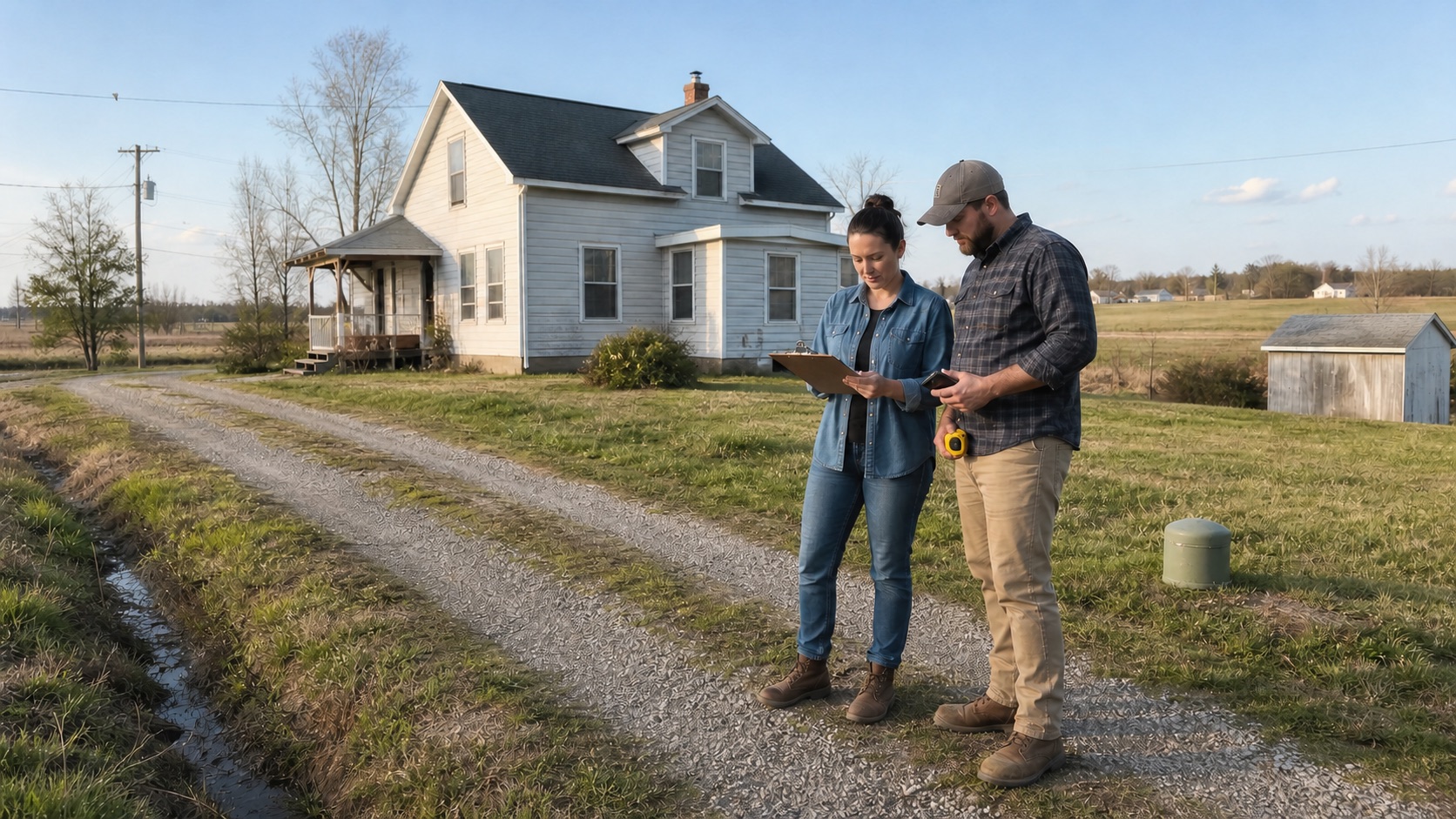
Do not move to the country after a layoff simply because the old life suddenly feels fragile. Move only when the rural version of an ordinary week works on paper and in practice: income, health care, school, transportation, broadband, utilities, water, waste, property maintenance, family trust, and enough cash margin for the surprises that do not appear in a listing. A country move can be a real fresh start, but it should solve named problems without creating larger unnamed ones.
Stabilize before you relocate
Start with the first 30 days after a layoff
Put cash, benefits, insurance, paperwork, household pressure, and one steadier weekly rhythm ahead of a permanent lifestyle decision.
Use the first-30-days planWhen the map got bigger overnight
For years, work did more than fill the calendar and pay the bills. It quietly drew a boundary around the map. Home had to sit within reach of the job, and the job helped decide which roads, towns, school rhythms, and daily drives were realistic. I did not think about that boundary much while it was holding.
The layoff erased that line faster than it erased any of the household responsibilities inside it. Suddenly the map felt bigger. That can feel like freedom when the old setup has already shown its weak points. A quieter road, more space, and a lower-looking property price can start to resemble an answer before the question has been made clear.
What I had to respect was the difference between freedom and missing information. Losing one geographic anchor does not mean every direction is equally safe. It means the next map has to be drawn on purpose. I do not want a rural move to become a beautiful explanation for why we skipped the slower work of income, cash, health care, family agreement, and an honest ordinary week.
Name what the move is supposed to fix
Country living is a location, not a cure. It may create room for food systems, privacy, outdoor work, lower density, or a different pace. It can also add driving, maintenance, isolation, unreliable services, weather exposure, private infrastructure, and fewer nearby employment options. Those tradeoffs are not arguments against moving. They are the decision.
If the only honest sentence is, 'I need everything to feel different,' the move is still too large to evaluate. That feeling deserves attention, but it does not yet identify the right county, property, loan, commute, or first-year workload.
Gate one: Can the household carry the move?
A layoff changes the math lenders, insurers, and families use. Before browsing becomes planning, write down current cash, severance, benefits, insurance dates, debt, current housing obligations, moving costs, job-search needs, and the income assumptions behind the rural budget. Rules and personal circumstances vary, so use qualified financial, mortgage, tax, legal, insurance, and benefits professionals where the decision requires them.
The Consumer Financial Protection Bureau tells prospective buyers to assess finances, set a price budget, prepare documents, and decide whether it is the right time before shopping for a mortgage. That sequence matters even more when income has just changed. Loan approval is not the same thing as household resilience, and a lower purchase price is not the same thing as a lower full cost of living.
Run two budgets, not one
The first budget covers getting there: inspections, professional advice, appraisal, loan and closing costs, deposits, travel, moving, overlap between homes, immediate safety repairs, and basic setup. The second covers staying there: the full housing payment, taxes, insurance, utilities, fuel, vehicles, road or driveway work, internet, water and septic maintenance, tools, weather preparation, repairs, and the ordinary household budget.
Do not put garden savings, eggs, a side business, or future self-sufficiency into the base case. Let those become later evidence. The property should be survivable before it is productive. Use the free first-year homestead budget worksheet to expose categories, then replace every placeholder with local quotes, records, and conservative assumptions.
Price the year after closing
Build a realistic first-year rural budget
Separate housing, infrastructure, tools, animals, garden plans, repairs, and learning costs before a lower listing price starts telling the whole story.
Use the homestead budget guideGate two: Does the location support an ordinary week?
The next job may be remote, hybrid, local, contract, or in a field with fewer rural openings. Search actual roles from the proposed address. Check how often an employer could require an office visit, how far the nearest employment centers are, and what happens if remote policy changes. A cheap house can become expensive when every future job requires a long drive or another move.
Then map the rest of the week: groceries, school, child care, health care, pharmacy, veterinarian if animals are planned, feed and hardware stores, worship or community, family support, airports, and the places the household visits repeatedly. Drive important routes at realistic times and in ordinary weather when possible. Mileage is not the same as time, and a pretty road is still a transportation dependency.
Gate three: Does the property survive due diligence?
Do not let acreage distract from systems. The house, well, septic, access, drainage, boundaries, easements, utilities, insurance, structures, and local land-use rules determine what the property can safely and legally support. Use appropriately licensed or qualified local professionals and written records. This article is a screening framework, not property, legal, financial, engineering, environmental, or inspection advice.
EPA's current homebuyer guidance specifically emphasizes septic inspection before purchase. Its private-well guidance points owners toward certified laboratory testing and local contaminant information. FEMA provides the official public source for its flood maps, and USDA Web Soil Survey provides valuable area-level soil information. Each is a starting layer, not a promise about one property.
Verify the life before you buy the land
A reversible test can answer questions that a showing cannot. Spend time in the area outside vacation hours. Work remotely there if that income matters. Buy groceries, make the drive, check mobile service, notice evening road noise, visit after rain when appropriate, and see what closes early. If renting nearby is practical, compare that test against the cost and disruption of moving twice.
The family version needs its own review. The existing guide to moving to a homestead with kids goes deeper on school, friendships, routines, voice, and familiar anchors. This page answers whether relocation is stable enough to pursue. That page answers how the family transition should be carried once the direction becomes serious.
Use a decision scorecard with stop rules
Reasons to pause even when the property feels right
A pause is not a vote for the old life. It is a way to keep one hard interruption from choosing the next permanent obligation. You can build food security, budgeting skill, family routines, gardening experience, repair judgment, and a clearer property filter while the move remains uncommitted.
Build evidence before acreage
Start food security before you move
Use pantry, freezer, meal, shopping, and waste-reduction habits to prove one part of the future life in the home you have now.
Build food security nowThe decision I would trust
I would trust a country move that can survive an unromantic conversation. The next job may change. The well needs evidence. The septic system needs inspection. The drive adds time. The family loses some things it values. The first year cannot carry every dream. The budget still has margin after those truths are included.
That does not make the move less hopeful. It makes the hope sturdy enough to live in. When the map gets bigger after a layoff, the goal is not to pick a direction fast. It is to draw a life the household can still recognize and trust after the fresh-start feeling becomes an ordinary Tuesday.
Choose one grounded next move
Use the Fresh Start Homestead path
Narrow the dream into one food, budget, garden, tool, chicken, or household system that fits the season you are actually in.
Start hereFrequently asked questions
Is moving to the country after a layoff a good idea?
It can be, but a layoff should not be the only reason. A stronger move has a believable income plan, protected cash runway, household agreement, a realistic rural budget, and property due diligence. If relocation is mainly an attempt to outrun panic, grief, or an unstable month, stabilize first and keep the idea open without forcing the timing.
How long should you wait after losing a job before moving?
There is no universal waiting period. Wait long enough to understand severance, benefits, insurance, unemployment or job-search requirements, current expenses, housing obligations, and the likely income geography of the next job. The decision should be based on facts and household capacity rather than an arbitrary number of days.
What should you check before buying a rural property?
At minimum, verify legal access, boundaries and easements, zoning and intended uses, water source and testing, septic records and inspection, flood and drainage information, insurance availability, broadband at the exact address, mobile coverage, road maintenance, utilities, taxes, and the condition of the home and outbuildings. Use qualified local professionals; an online checklist cannot replace inspections, records, or legal advice.
Is the FCC broadband map enough to confirm rural internet?
No. The FCC map is a useful first screen based on provider-reported availability, but it does not guarantee installation timing, price, actual performance, reliability, data limits, or good service inside the home. Check the exact address, contact providers, ask nearby residents, test mobile coverage, and get installation details before relying on remote work.
Should you rent in a rural area before buying?
Renting can be a useful reversible test when suitable housing exists and the move will not create another expensive disruption. It can reveal commute time, services, weather, isolation, internet reliability, and family fit. It does not replace property-specific due diligence, and two moves may cost more than one, so compare the full tradeoff.
Recommendations
Useful tools and resources for this decision
These are included only where they reduce repeated friction, clarify a next step, or help you avoid buying the wrong thing first.
Free budget tool
First-Year Homestead Budget Worksheet
A free worksheet for separating purchase price from the operating, repair, animal, garden, tool, and infrastructure costs that arrive after a move.
Best for: Households testing whether the rural version of the monthly budget leaves enough margin
Read the guideFederal finance source
CFPB homebuying preparation guide
Federal tools for assessing finances, setting a home-price budget, preparing mortgage documents, and deciding whether it is the right time to buy.
Best for: Anyone moving from rural idea to an actual home-purchase decision
View resourceAddress-level screen
FCC National Broadband Map guide
Official instructions for checking provider-reported fixed and mobile broadband availability at an address and challenging inaccurate availability information.
Best for: Remote workers and families who cannot treat internet service as optional
View resourceSeptic due diligence
EPA septic guide for new homebuyers
Current federal guidance on how septic systems work, why buyers should arrange an inspection, and what maintenance ownership requires.
Best for: Buyers considering a home that is not connected to a municipal sewer
View resourceWell-water source
EPA private-well testing guidance
Federal guidance on private-well protection, certified laboratory testing, common test categories, local contaminants, and situations that call for additional testing.
Best for: Households evaluating a property with private drinking water
View resourceFlood-map screen
FEMA Flood Map Service Center
The official public source for FEMA flood hazard maps and address-based map searches.
Best for: An early flood-hazard and insurance conversation before an offer
View resourceSoil information
USDA Web Soil Survey
USDA access to current soil survey maps, properties, and land-use interpretations for a defined area of interest.
Best for: Early screening of soil patterns before paying for property-specific professional evaluation
View resourceRecommended next reads
Read next if it helps the decision
Move into the next guide only if it clarifies the next practical step.

Fresh Start
What to Do the First 30 Days After a Layoff if You Want a Simpler Life
A calmer first-30-days plan for people processing a layoff and trying to build a steadier, simpler life instead of reacting in every direction at once.

Fresh Start
How to Talk With Your Spouse About a Simpler Life After a Layoff
A grounded guide for talking with your spouse after a layoff about money, fear, simpler living, homesteading hopes, and one reversible next step.

Fresh Start
Moving to a Homestead With Kids: What to Plan Before You Go
A grounded family guide to planning a homestead move with kids, including school, routines, chores, friendships, money, and a trial season before relocating.
Fresh start support
Get the first-step checklist that helps turn a reset into a real plan.
Use the checklist to pick one calmer next move, one budget frame, and one part of the bigger life rebuild to focus on first.
Best for: Beginners who need a first-season plan with limits, not more tabs or more gear.
- A first-season decision checklist
- A one-system starter plan
- A buy-now versus wait-later filter
Quiet notes for rebuilding, useful guides, and one real planning tool first.
After signup, the download will unlock right here so you can save or print it.
About the author
William Mock
Founder, writer, and beginner homesteader
William writes from the beginner side of rebuilding after a layoff: homestead plans, family systems, budgets, tools, and the decisions that make a home feel less fragile.
Read why this site existsRelated Guides
Keep building context
Fresh Start
What to Do the First 30 Days After a Layoff if You Want a Simpler Life
A calmer first-30-days plan for people processing a layoff and trying to build a steadier, simpler life instead of reacting in every direction at once.
Fresh Start
How to Talk With Your Spouse About a Simpler Life After a Layoff
A grounded guide for talking with your spouse after a layoff about money, fear, simpler living, homesteading hopes, and one reversible next step.
Fresh Start
Moving to a Homestead With Kids: What to Plan Before You Go
A grounded family guide to planning a homestead move with kids, including school, routines, chores, friendships, money, and a trial season before relocating.