Mulching a beginner vegetable garden should make the garden easier to care for, not give you one more thing to overthink. The goal is simple: cover bare soil, hold moisture longer, reduce weeds, keep soil from splashing onto leaves, and make the garden less needy during a normal week.
The beginner mistake is treating mulch like a magic layer. It is useful, but it is still part of a system. Too little mulch does almost nothing. Too much mulch can hold moisture where stems need air, slow warm soil in spring, or make watering feel more confusing than it needs to be.
The mulch job that taught me restraint
The first time I really paid attention to mulch, I wanted it to fix everything at once. Weeds were showing up, the surface looked dry, and the garden was starting to feel like it had more opinions than I had time. My instinct was to keep adding material until the bed looked finished.
Then I pulled some mulch back near a plant and realized the story underneath was more important than the view from above. Some places were still damp. Some spots were thin and crusty. A few stems had mulch tucked too close because I had been thinking about coverage instead of the plant. That small check changed the way I think about the job.
Mulch is not there to make the bed look perfect. It is there to protect the soil while still letting you see what the garden is telling you. That is the balance beginners need more than a perfect material list.
Why mulch helps a first vegetable garden
Bare soil is high-maintenance. It dries faster, crusts harder, splashes onto lower leaves during rain, and gives weed seeds an easy place to start. Mulch puts a loose protective layer between the weather and the soil surface.
For a beginner, the biggest benefits are practical. You may water less often because the soil loses moisture more slowly. You may weed less because the mulch blocks some light from reaching weed seeds. You may see less soil splash on tomato, pepper, squash, and cucumber leaves. Most importantly, the garden becomes a little more forgiving when the week gets busy.
Gardening Hub
Build the first garden in a calmer order.
The gardening hub keeps the first-season decisions together: size, crops, watering, mulch, containers, compost, and maintenance.
Open beginner gardening guidesThe best beginner mulch options
The best mulch is not always the one with the prettiest bag. For vegetables, I would rather have clean, affordable, organic material that is easy to move, easy to pull back, and safe to use around food crops. If you can source it locally and inspect it first, that is usually better than ordering a bulky product online.
What I would use first
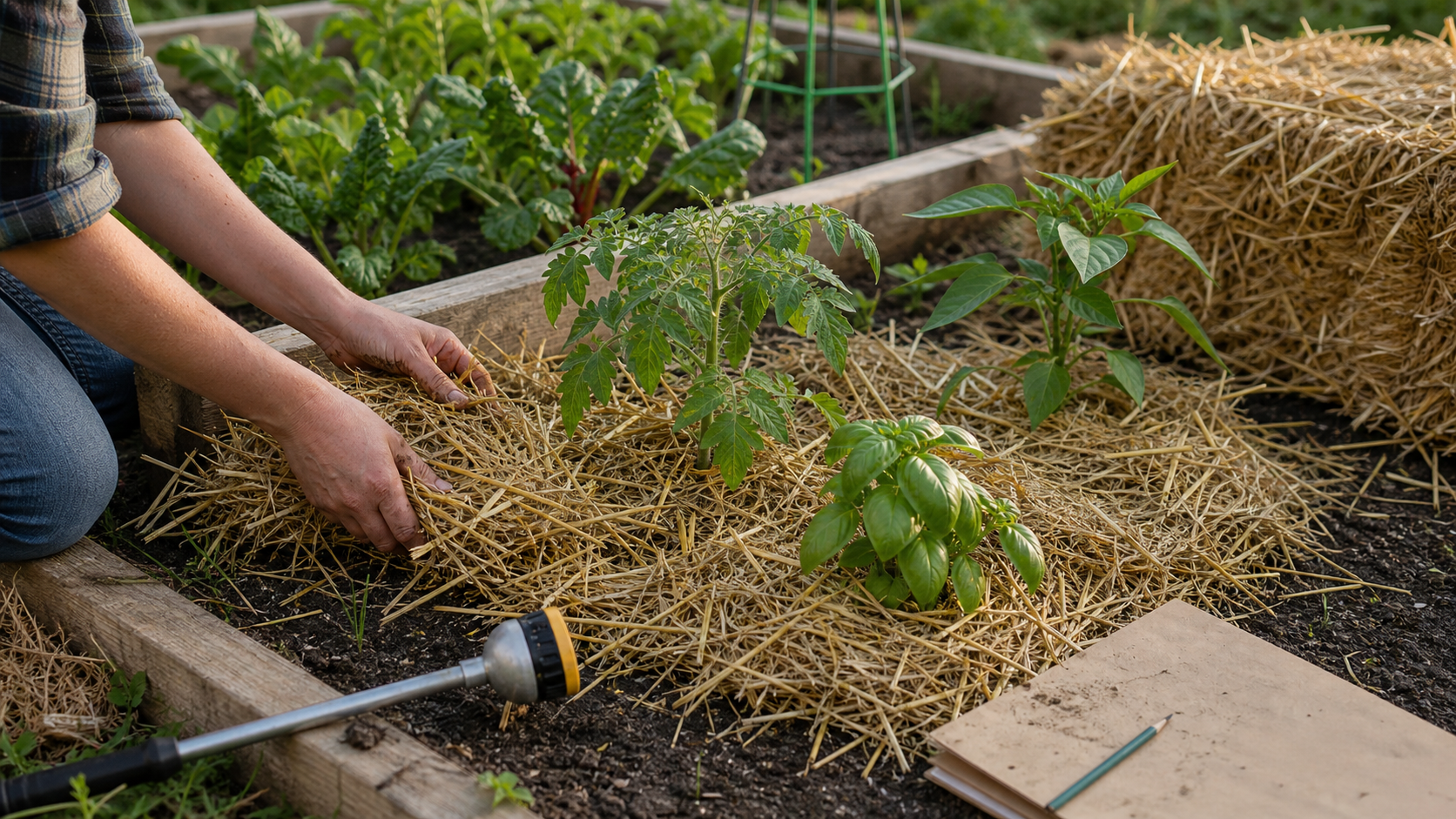
If I were helping a beginner with a small summer vegetable garden, I would usually start with clean straw or shredded leaves around established plants, compost where the bed needs a thinner topdress, and wood chips on paths instead of in the main planting rows.
That keeps the system simple. Straw is easy to pull back for soil checks. Leaves are cheap if you already have them, and the fall leaf-mold guide explains how to age the clean excess for later use. Compost is useful but easy to spend too much money on. Wood chips are excellent for walking paths because they keep your feet out of mud and protect the bed edges from constant traffic.
How deep to apply mulch
A good beginner starting point is about 2 to 3 inches of loose organic mulch around established plants. Straw can look fluffier at first and settle after watering and weather. Grass clippings should be much thinner at first because thick wet layers can mat together. Compost is usually applied as a thinner top layer unless you have a lot of finished compost available.
The depth matters less than the behavior. Water should still move through. Air should still reach the soil. Plant stems should not sit packed in a damp collar. If the bed smells sour, stays soggy, or sheds water instead of letting it soak through, pull the mulch back and reset the layer.
What not to mulch too soon
Some parts of a vegetable garden need a lighter hand. Tiny direct-sown seedlings can be shaded or buried if you mulch too aggressively. Warm-season crops may not appreciate cold soil covered too early in spring. Slug-prone spots can get worse if you create a cool damp blanket before you are watching closely.
Mulch changes how you water
Once mulch is down, the top layer may look dry even while the soil underneath is still damp. That is good, but it can confuse you if you judge by appearances. Pull the mulch back and check the soil before watering on autopilot.
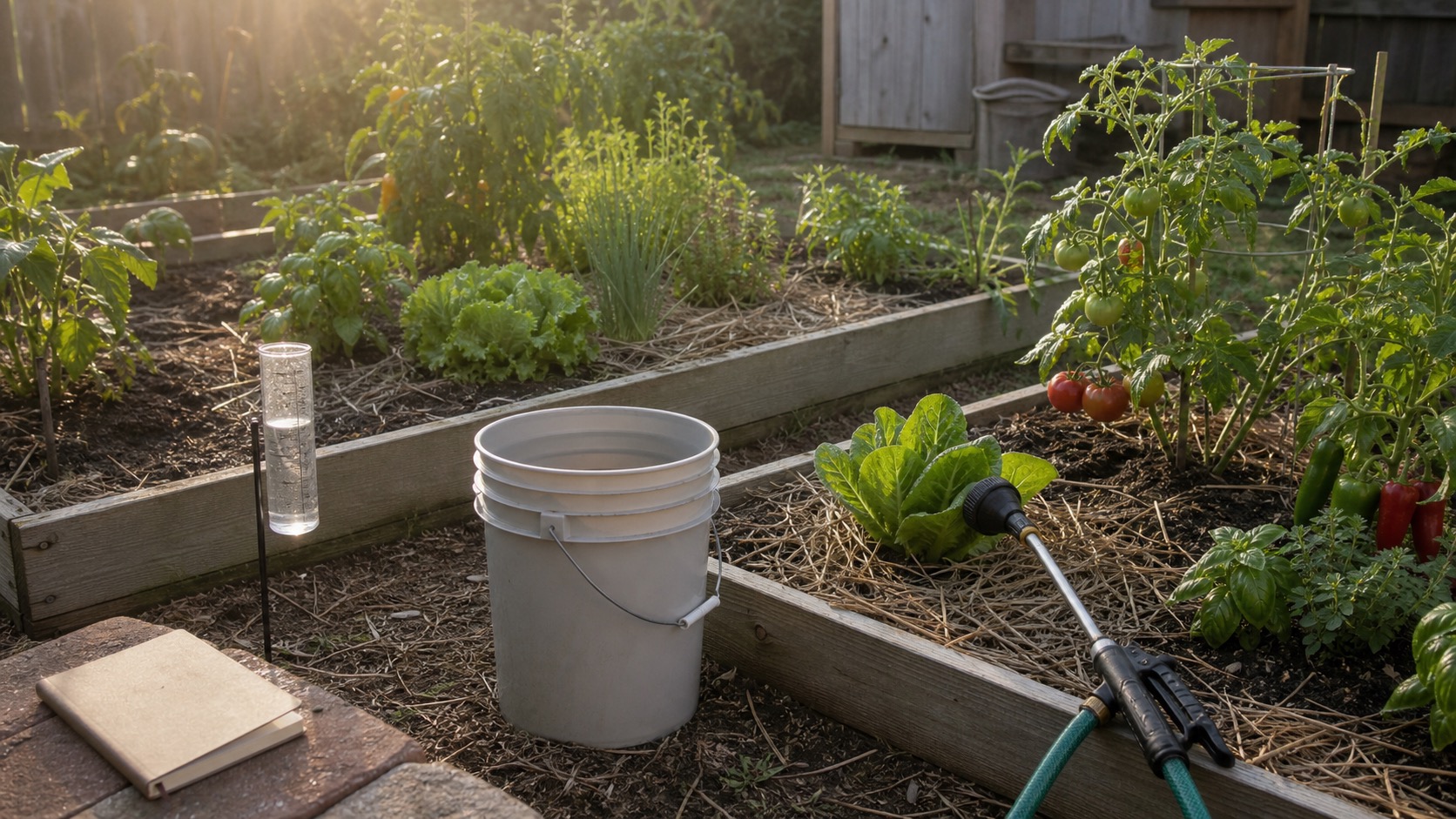
This pairs naturally with the watering routine in how to water a beginner vegetable garden without guessing. Mulch helps hold moisture, but it does not remove the need to check the root zone. A rain gauge, watering wand, and two-inch soil check are enough for most small gardens.
A realistic beginner scenario
Say you have two 4-by-8 raised beds from your realistic beginner garden size plan. One bed has tomatoes, peppers, basil, and a few flowers. The other has lettuce, beans, cucumbers, and a little empty space where something failed to germinate.
Do not mulch both beds the same way just because they are beside each other. Give the tomatoes and peppers a loose straw layer once they are established. Use a lighter touch around basil and lettuce. Keep mulch away from cucumber stems but cover the surrounding soil. Leave the failed patch visible until you decide whether to replant it, cover it, or turn it into a path.
What to buy and what can wait
This is where the spending restraint matters. You do not need a designer mulch system for a first vegetable garden. If local straw, shredded leaves, compost, or untreated clippings can do the job, start there. Spend only where the purchase removes friction you are already feeling.
Recommendations
Useful mulch-season helpers
Buy local first if possible
Clean straw mulch
Useful when you need a loose organic cover around established vegetable plants and cannot source a clean local bale.
Best for: Small gardens, tomato beds, squash beds, and paths
Check current priceBeginner-friendly
Watering wand
A basic wand helps water through mulch slowly and gently without blasting soil or seedlings.
Best for: Hand-watered raised beds and containers
Check current priceLow-cost helper
Rain gauge
A simple rain gauge keeps watering and mulch decisions honest after summer storms.
Best for: Gardeners who want fewer guesses during hot weeks
Check current priceQuick mulch checklist before you walk away
What matters most
The best beginner mulch setup is boring in the right way. It keeps soil covered, makes watering more predictable, slows weeds, and gives you a cleaner garden to work in. It does not need to impress anybody.
If your first garden already feels a little messy, pair this with the messy beginner garden recovery guide. Mulch is one of the few garden fixes that can make the bed calmer without asking you to redesign everything.
Start small, observe the soil underneath, and adjust. That is the pattern that matters more than the material.
Next Step
Build the first garden around maintenance you can repeat.
If you are still planning the bed itself, start with the first garden guide before buying more supplies.
Plan your first gardenRecommended next reads
Read the next garden guides
These will help you connect mulch to the rest of a realistic first-season garden system.
Gardening
How to Water a Beginner Vegetable Garden Without Guessing
A practical beginner watering guide for small vegetable gardens: how much water plants need, how to check soil moisture, when to water, and what to stop doing.
Gardening
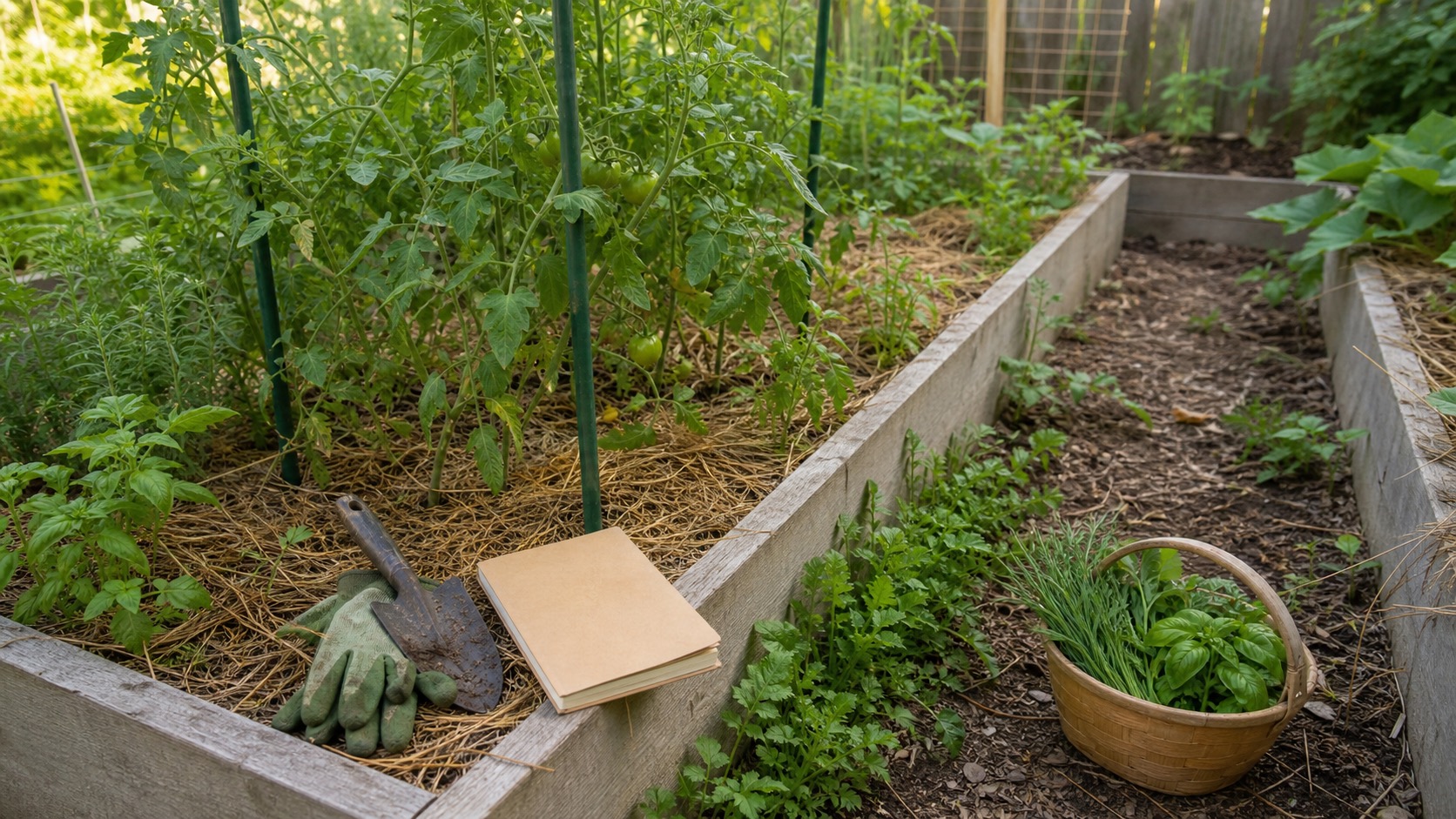
What to Do When Your First Garden Starts Looking Messy
A calm beginner guide for the moment your first vegetable garden starts looking messy: what to fix first, what to ignore, and how to recover without starting over.
Gardening
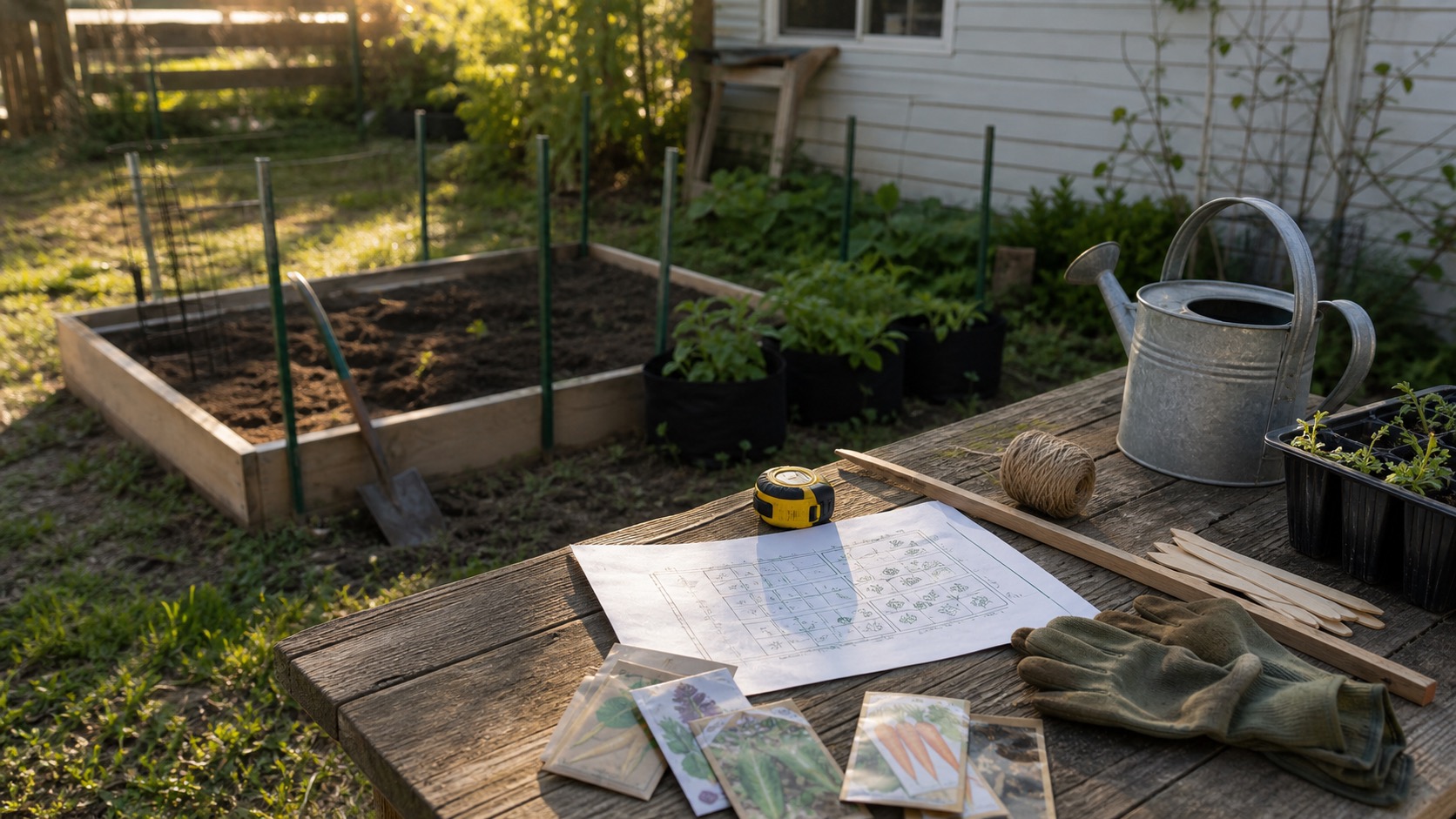
How to Plan Your First Homestead Garden Without Doing Too Much
A successful first garden is smaller, clearer, and less romantic than many beginners expect. That is a good thing.
Frequently asked questions
What is the best mulch for a beginner vegetable garden?
Clean straw, shredded leaves, compost, and untreated dry grass clippings can all work well. The best beginner mulch is usually the clean, affordable material you can apply lightly, keep away from stems, and replenish without turning the garden into another expensive project.
How deep should mulch be in a vegetable garden?
For most beginner vegetable beds, start with about 2 to 3 inches of loose organic mulch after plants are established. Straw can settle, so it may look deeper when first applied. Keep mulch pulled back slightly from stems and crowns so the plant base can breathe.
Should I mulch around vegetable seedlings right away?
Be gentle with tiny seedlings. Let small direct-sown plants get established before burying the surrounding surface in mulch, and use a lighter layer around young transplants so you do not shade, cool, or smother them.
Can mulch cause problems in a vegetable garden?
Yes, if it is too thick, packed tight against stems, full of weed seeds, contaminated with herbicide residue, or applied before the soil has warmed for warm-season crops. Mulch is useful, but it still needs observation.
Recommendations
Useful tools and resources for this decision
These are included only where they reduce repeated friction, clarify a next step, or help you avoid buying the wrong thing first.
Useful first buy
Clean straw mulch
A simple bale of clean straw is useful around tomatoes, peppers, squash, cucumbers, and pathways when you want weed suppression and steadier soil moisture.
Best for: Beginners who cannot source clean local straw easily
Check current priceBeginner-friendly
Watering wand
A basic watering wand helps you water gently at soil level after mulch is in place.
Best for: Small raised beds, containers, and hand-watered beginner gardens
Check current priceLow-cost helper
Rain gauge
A plain rain gauge keeps mulch and watering decisions tied to what actually fell, not what the storm sounded like from inside the house.
Best for: Anyone trying to water less by guessing less
Check current priceResearch reference
Better Homes & Gardens straw mulch guide
A practical mulch overview with Extension-sourced guidance on straw, weeds, moisture, and choosing clean material.
Best for: Readers who want another plain-language reference before buying a bale
View resourceRecommended next reads
Read next if it helps the decision
Move into the next guide only if it clarifies the next practical step.
Gardening
How to Water a Beginner Vegetable Garden Without Guessing
A practical beginner watering guide for small vegetable gardens: how much water plants need, how to check soil moisture, when to water, and what to stop doing.
Gardening
What to Do When Your First Garden Starts Looking Messy
A calm beginner guide for the moment your first vegetable garden starts looking messy: what to fix first, what to ignore, and how to recover without starting over.
Gardening
How to Plan Your First Homestead Garden Without Doing Too Much
A successful first garden is smaller, clearer, and less romantic than many beginners expect. That is a good thing.
Garden gear support
Get the buy-first guide before the first garden collects too much gear.
Use the guide to decide which early garden purchases earn money now, which ones can be borrowed, and which ones can wait until the routine proves itself.
Best for: Beginners who keep seeing useful things online and need a disciplined way to decide what actually earns a place.
- A buy now, borrow, wait, or skip framework
- Starter category shortlists
- A three-question purchase test
Garden planning notes, restrained gear decisions, and the guide first.
After signup, the download will unlock right here so you can save or print it.
About the author
William Mock
Founder, writer, and beginner homesteader
William writes from the beginner side of rebuilding after a layoff: homestead plans, family systems, budgets, tools, and the decisions that make a home feel less fragile.
Read why this site existsRelated Guides
Keep building context
Gardening
How to Water a Beginner Vegetable Garden Without Guessing
A practical beginner watering guide for small vegetable gardens: how much water plants need, how to check soil moisture, when to water, and what to stop doing.
Gardening
How Big Should a Beginner Vegetable Garden Be?
A practical guide to choosing a beginner vegetable garden size your time, watering routine, harvest goals, and actual meals can support.
Gardening
What to Do When Your First Garden Starts Looking Messy
A calm beginner guide for the moment your first vegetable garden starts looking messy: what to fix first, what to ignore, and how to recover without starting over.