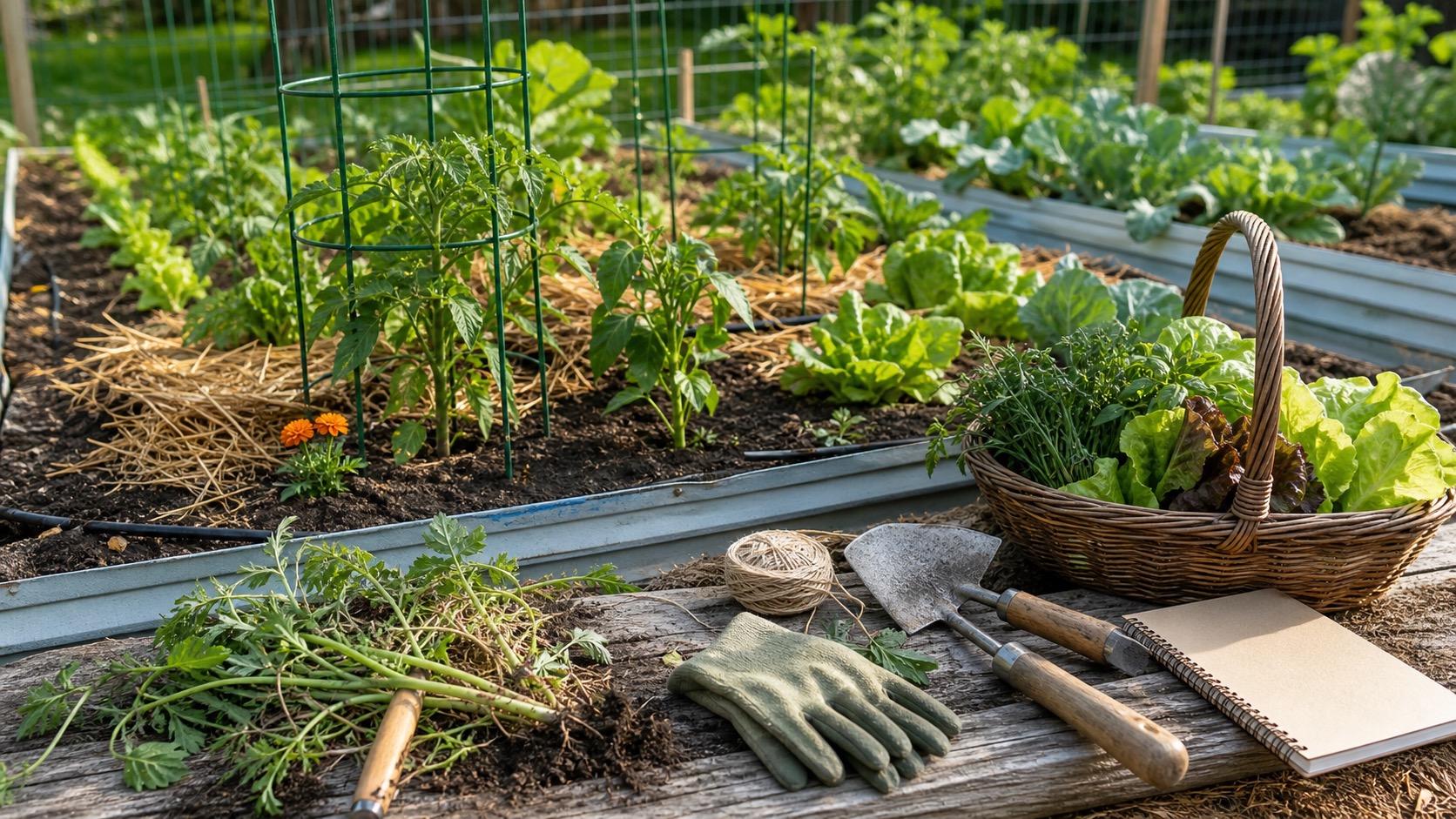
June is where a beginner vegetable garden stops feeling like a planting project and starts acting like a living system. The beds are not new anymore. The weather is warmer. Weeds are faster. Tomatoes need support. Lettuce may be trying to bolt. And the garden starts asking for maintenance instead of more excitement.
I like a June checklist because it keeps the garden from turning into a vague guilt cloud. You do not need to fix everything every night. You need a short loop that protects water, soil, airflow, plant support, pest visibility, and the small harvests that are already ready. That is enough work for a beginner garden.
Why June changes the garden
Early spring lets you dream on paper. June makes the plan prove itself. Warm-season crops begin stretching, cool-season crops may slow down, weeds find every patch of open soil, and watering becomes less theoretical. This is also when a garden that was sized for ambition starts showing whether it was sized for the week you actually live.
University of Maryland Extension points out that vegetables need enough soil moisture for plant growth, productivity, and eating quality, while weeds compete for water and nutrients and can also shelter pests. That is why June maintenance is not just tidying. It is protecting the conditions your plants need to keep going.
The weekly June garden loop
The easiest maintenance rhythm is not a giant weekend reset. It is a 20- to 30-minute loop you repeat once or twice a week. Walk slowly. Look before you touch. Handle water, weeds, mulch, support, pests, and harvest in the same order so your brain does not have to renegotiate the garden every time.
Water before you add more work
If the garden is already hard to keep watered, June is not the moment to add three new beds. Yesterday's watering guide goes deeper on how to check moisture and avoid guessing, but the June version is simple: water the garden you have before you expand the garden you imagine.
Maryland Extension recommends avoiding shallow, frequent watering for most established vegetables because it encourages shallow roots. Soaker hoses and drip systems can help because they deliver water slowly and directly to the root zone. If you are hand watering, water around the base instead of doing a quick leaf shower and walking away.
Weed before you mulch
Mulch helps, but it is not magic. If you throw mulch over tall weeds, the weeds are still in charge. Pull or slice young weeds first, especially around the base of vegetable plants and along bed edges. Then mulch the bare soil so the next flush has a harder time getting light.
Minnesota Extension's mulching guidance highlights the basic benefits beginners actually need: mulch helps regulate soil moisture, suppress weeds, moderate soil temperature, and build organic matter over time. The beginner caution is just as important: keep mulch pulled back from stems so you are not trapping moisture against plant crowns.
Support plants before they make it urgent
June is when tomato cages, stakes, twine, and simple trellises start earning their space. It is easier to tie a tomato while the stem is still flexible than to rescue it after a storm. It is easier to guide beans or cucumbers early than to untangle a vine that already found three neighboring plants.
Keep this practical. A beginner garden does not need a perfect pruning philosophy on day one. Remove broken, diseased, or soil-dragging growth when you see it. Improve airflow where plants are crowded. Tie gently. Do not turn every maintenance pass into a surgery.
Look for problems before they become the whole garden
A beginner does not need to identify every insect on sight. But you do need the habit of looking under leaves, checking new growth, noticing chewing patterns, and comparing one plant to another. Extension guidance often points beginners back to monitoring because the earlier you spot a problem, the more options you have.
A realistic beginner scenario
Imagine a family with two raised beds planted in May. The first bed has tomatoes, peppers, basil, and lettuce. The second has beans, cucumbers, radishes, and a few extra seedlings tucked in because there was space. By the first week of June, the lettuce is ready, weeds are coming up around the bed edges, one tomato is leaning, and the gardener is tempted to plant another tray of starts.
The right next move is not more ambition. It is a maintenance pass. Harvest the lettuce that is ready. Pull the weeds while they are small. Tie the tomato. Check moisture. Mulch the exposed soil. Look under the cucumber leaves. Then decide whether there is truly room and time for another planting. That is a calmer way to build skill.
What can wait in June
June is full of tempting upgrades: another bed, a bigger trellis, a fancy irrigation setup, more compost bins, more starts, more tools. Some of those may be useful later. But if the current garden is asking for water, weeds, support, and observation, the upgrade can wait.
My honest filter for June garden maintenance
A beginner garden that looks a little messy in June is not a failed garden. It is a working garden. The question is whether the mess is manageable. A few weeds, a leaning tomato, and lettuce that needs picking are normal. A garden you avoid because it feels too big is a signal.
The goal is not to perform garden competence. The goal is to keep the living parts cared for while learning what your real week can hold. If you can keep water steady, weeds small, soil covered, plants supported, and problems visible, June becomes less of a panic and more of a rhythm.
Recommendations
Source-backed June garden references
June checklist
University of Minnesota Extension June garden checklist
Use this for a broad seasonal reminder of June garden tasks and warm-weather care.
Best for: A quick seasonal reference
View resourceVegetable care
University of Maryland Extension vegetable garden care guide
Use this for vegetable-garden basics on watering, weeding, mulching, and monitoring plant problems.
Best for: A practical maintenance baseline
View resourceMulch guide
University of Minnesota Extension mulching guide
Use this when deciding what mulch should do in your garden and how to avoid basic stem and moisture problems.
Best for: Mulch decisions in summer beds
View resourceGardening
Keep the garden sized to the week you actually live.
Use the gardening hub to connect watering, bed size, planting choices, seed starting, and seasonal maintenance before the garden gets bigger than your rhythm.
Open the gardening hubRecommended next reads
Keep the first garden steady
If June maintenance feels bigger than expected, these guides help narrow the garden back to a manageable rhythm.
Gardening
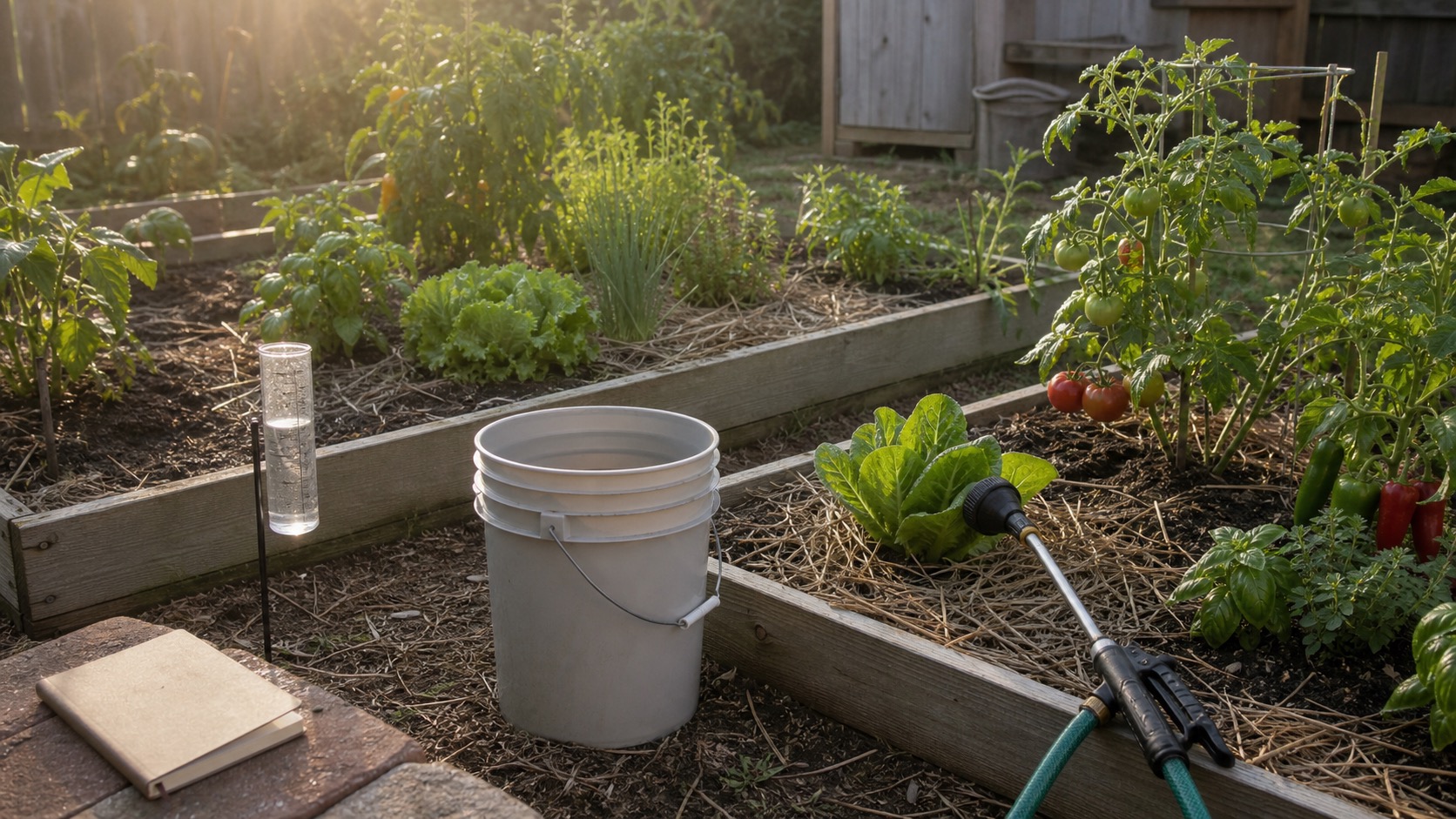
How to Water a Beginner Vegetable Garden Without Guessing
A practical beginner watering guide for small vegetable gardens: how much water plants need, how to check soil moisture, when to water, and what to stop doing.
Gardening
How Big Should a Beginner Vegetable Garden Be?
A practical guide to choosing a beginner vegetable garden size your time, watering routine, harvest goals, and actual meals can support.

Gardening
What to Plant First in a Beginner Homestead Garden
A practical crop-selection guide for first gardens: what to plant first, what to skip for now, and how to choose crops that teach useful skills without overwhelming the week.
Frequently asked questions
What should beginner gardeners do in June?
Focus on the maintenance that protects the garden you already planted: check soil moisture, pull young weeds, refresh mulch, support tomatoes or climbing crops, inspect leaves for pests and disease, harvest early greens and herbs, and fill small gaps only if you can keep up with the watering.
How often should I weed a vegetable garden in June?
A short weeding pass once or twice a week is usually easier than waiting for a large cleanup. Pull weeds while they are young and tender, especially before adding mulch or before they compete heavily for water and nutrients.
Should I mulch a vegetable garden in June?
Mulch is often useful in June after the soil has warmed and plants are established. Organic mulches such as straw, dried grass clippings, compost, or shredded leaves can conserve moisture, suppress weeds, and reduce soil splash, but keep mulch pulled back from plant stems.
Can I still plant vegetables in June?
Often, yes. Fast crops like beans, cucumbers, summer squash, herbs, and some greens can still fit into many summer gardens depending on your climate and first frost date. The practical question is whether you can water and care for the new planting during heat.
Recommendations
Useful tools and resources for this decision
These are included only where they reduce repeated friction, clarify a next step, or help you avoid buying the wrong thing first.
Extension checklist
University of Minnesota Extension June garden checklist
A seasonal Extension checklist covering June garden tasks, container checks, watering, mulch, and practical warm-weather reminders.
Best for: Readers who want a broader June yard and garden reference
View resourceVegetable care
University of Maryland Extension vegetable garden care guide
A practical guide to watering, weeding, mulching, fertilizing, and monitoring vegetable garden problems through the growing season.
Best for: Beginners who need the core care tasks in one place
View resourceMulch guide
University of Minnesota Extension mulching guide
A detailed Extension guide on how mulch affects soil moisture, weeds, soil temperature, and garden maintenance.
Best for: Gardeners deciding whether mulch belongs in their summer vegetable beds
View resourceRecommended next reads
Read next if it helps the decision
Move into the next guide only if it clarifies the next practical step.
Gardening
How to Water a Beginner Vegetable Garden Without Guessing
A practical beginner watering guide for small vegetable gardens: how much water plants need, how to check soil moisture, when to water, and what to stop doing.
Gardening
How Big Should a Beginner Vegetable Garden Be?
A practical guide to choosing a beginner vegetable garden size your time, watering routine, harvest goals, and actual meals can support.
Gardening
What to Plant First in a Beginner Homestead Garden
A practical crop-selection guide for first gardens: what to plant first, what to skip for now, and how to choose crops that teach useful skills without overwhelming the week.
Garden gear support
Get the buy-first guide before the first garden collects too much gear.
Use the guide to decide which early garden purchases earn money now, which ones can be borrowed, and which ones can wait until the routine proves itself.
Best for: Beginners who keep seeing useful things online and need a disciplined way to decide what actually earns a place.
- A buy now, borrow, wait, or skip framework
- Starter category shortlists
- A three-question purchase test
Garden planning notes, restrained gear decisions, and the guide first.
After signup, the download will unlock right here so you can save or print it.
About the author
William Mock
Founder, writer, and beginner homesteader
William writes from the beginner side of rebuilding after a layoff: homestead plans, family systems, budgets, tools, and the decisions that make a home feel less fragile.
Read why this site existsRelated Guides
Keep building context
Gardening
How to Water a Beginner Vegetable Garden Without Guessing
A practical beginner watering guide for small vegetable gardens: how much water plants need, how to check soil moisture, when to water, and what to stop doing.
Gardening
How Big Should a Beginner Vegetable Garden Be?
A practical guide to choosing a beginner vegetable garden size your time, watering routine, harvest goals, and actual meals can support.
Gardening
What to Plant First in a Beginner Homestead Garden
A practical crop-selection guide for first gardens: what to plant first, what to skip for now, and how to choose crops that teach useful skills without overwhelming the week.