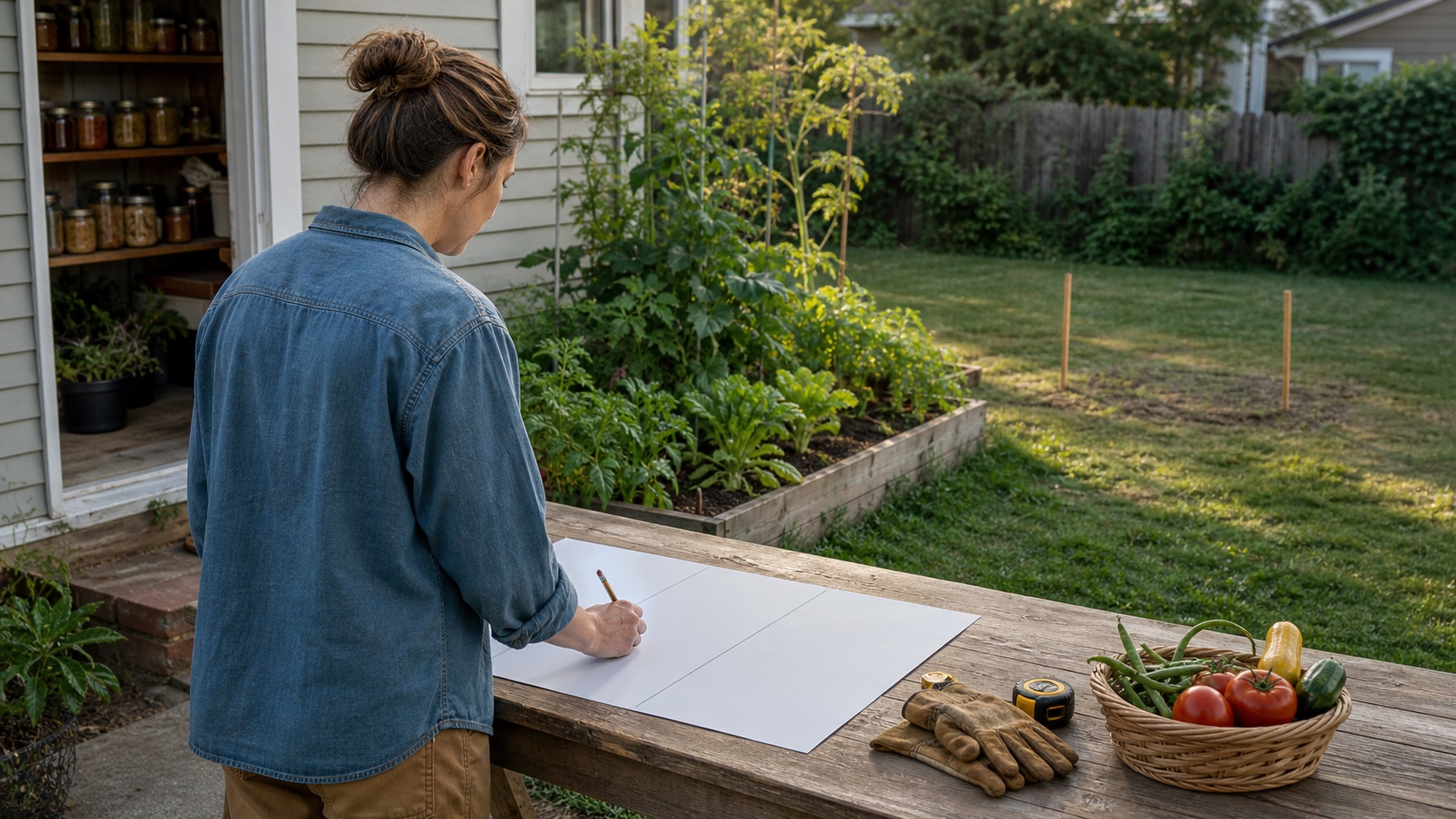
A realistic 90-day homestead plan starts with 30 days of observing and setting limits, 30 days of building one small working system, and 30 days of repeating, measuring, and improving it. The goal is not to fit a whole homestead into three months. It is to finish the quarter with one useful system, a truthful budget, a weekly rhythm, and better evidence for the next decision.
The list that wanted to become a whole new life
After the layoff, making a plan felt like a way to get some weight back under my feet. I made the kind of list that looks responsible and is secretly overwhelm with better handwriting. Garden. Chickens. Pantry. Tools. Land. Income. Repairs. A simpler family rhythm. None of those ideas was foolish, but together they could turn one hard season into a second full-time job we had not budgeted for.
The list looked more certain than our life actually was. It had no room for a job lead, a family week going sideways, a surprise bill, bad weather, or the possibility that the first idea might teach us to change the second one. It was an attractive picture of progress, but it was not yet an operating plan.
The better question became smaller: what can we learn and repeat before we take on the next obligation? That shift is the heart of this plan. You are not proving how serious you are by moving fast. You are giving one real system enough time to tell the truth about your money, your week, your property, and the kind of work your family can sustain.
Start with the full beginner path
Use the four-layer starting order before the calendar
The cornerstone guide helps you stabilize the household, choose a first food system, build a weekly rhythm, and delay expansion before assigning work to the next 90 days.
Read where to start homesteadingWhat this 90-day homestead plan is and is not
This is a decision sequence, not a promise that every reader should plant, build, or buy the same thing in the same week. Climate, season, property condition, local rules, water, soil, work schedules, health, children, animals, and cash all change what is responsible. A renter with a sunny patio and a family moving onto acreage can use the same sequence while choosing completely different projects.
Before day one, set four guardrails
A calendar will not protect the household unless the limits are written before the exciting decisions begin. Put four guardrails at the top of the page: money, weekly time, physical space, and the number of new living systems you will accept. For most beginners, that last number should be one. A garden bed, pantry rotation, compost routine, or flock is not only a setup project. It creates maintenance that continues after the first weekend.
Use the realistic first-year homestead budget guide to separate tools, infrastructure, animals, garden, learning, and maintenance before one attractive project absorbs the rest of the year. The point is not to predict every dollar perfectly. It is to keep the first quarter from silently spending the fourth quarter's options.
Set the money boundary
Price the first year before funding the first weekend
A category budget shows which costs repeat, which belong to infrastructure, and where a smaller start preserves room for repairs and household needs.
Build a first-year homestead budgetDays 1-30: stabilize and observe
The first month should produce a map of reality, not a pile of materials. Walk the property at different times and in different weather when it is safe. Notice sun and shade, where water comes from, where it goes, which route stays usable, where tools could stay dry, what already needs maintenance, and which part of the household week has margin for repeated care. Without land, map the same constraints inside the home: storage, food waste, cooking time, freezer room, available light, and the attention a container or new routine can actually receive.
For U.S. properties, USDA's NRCS Web Soil Survey provides current official soil survey information for a defined area. That is a planning layer, not a substitute for a site-specific soil test, septic evaluation, engineering judgment, water testing, local code review, or qualified professional. Contact the appropriate local Extension office, conservation district, planning department, health department, utility, veterinarian, or licensed professional before relying on a general map for a consequential decision.
Days 31-60: build one small system
Choose the system that solves a real household need with the least irreversible commitment. A rotating pantry may fit a family that needs meal stability now. A small bed may fit a household with workable soil, sun, water, and seasonal timing. Containers may be better when the future is uncertain. Chickens fit only when housing, legal rules, care, feed, water, predator protection, backup care, and recurring money are already stronger than the calendar deadline.
If garden, chickens, and pantry all sound equally important, compare time, land, cash, daily care, and how quickly each option can help. Choosing pantry first does not cancel the garden. Choosing a garden first does not make chickens less meaningful. Sequence protects the later projects from being built on exhausted money and attention.
Choose one food system
Compare garden, chickens, and pantry before committing
Match the first system to your current time, land, budget, care capacity, and household need.
Choose the best first food systemDays 61-90: operate, measure, and improve
The third month is where setup starts revealing maintenance. Do not celebrate by adding a second system. Repeat the first through ordinary workdays, weekends, weather changes, family plans, and at least one inconvenient week. The useful question is not whether it can work when everybody is motivated. It is whether the next necessary action stays visible when the household is busy.
Penn State Extension's planning and record-keeping guidance matters here: beginners have less experience to rely on, so current records turn a new season into usable knowledge. You do not need farm-management software for one household system. A notebook, calendar note, or simple spreadsheet is enough if you consistently record dates, work, costs, and results.
Give the plan a weekly rhythm
Every 90-day goal eventually becomes a Tuesday task. Put maintenance on a real weekly rhythm before adding anything else: watering checks, pantry rotation, harvest, cleanup, supply review, records, and one repair block. Assign ownership clearly enough that the work does not live in one person's head. A good plan leaves room for family life; it does not treat family life as the interruption.
Protect the ordinary week
Turn the plan into a repeatable chore rhythm
A weekly rhythm keeps the current system visible and exposes the true maintenance load before the next project arrives.
Build a weekly chore rhythmWhat to buy and what can wait
The first 90 days do not require a special planner, matching storage, power equipment, a trailer of lumber, livestock, or a complete tool set. Use the calendar, notebook, buckets, hand tools, shelves, and containers you own until a repeated problem proves the need for something else. Borrow, rent, or buy used when the work is occasional and the safety, condition, and return plan are clear.
This is why I am not attaching a shopping cart to this article. The correct purchase depends on the system and constraints you observe. The free beginner checklist is a better first tool than an affiliate product here. If a later problem proves you need a feeder, garden tool, storage container, light, or repair supply, a specific buyer guide can help without pretending every beginner needs the same setup.
Keep the quarter visible
Use the free beginner homestead checklist
Sort the work into what matters now, what needs research, and what can wait before another project reaches the calendar.
Get the beginner checklistWhat success looks like on day 90
Success is not a property that suddenly looks like somebody else's finished homestead. It is a household that knows what one useful system costs, who maintains it, where it strains the week, what result it produces, and whether it deserves another quarter. You should also know more about the land or home than on day one, including at least one assumption that turned out to be wrong.
That may sound small next to the dream list. It is not. A working system creates evidence. Evidence makes the budget better, the next project calmer, and the family conversation more honest. Finish by choosing only one next move: maintain, simplify, repair, or expand. Then give that decision the same patience you gave the first one.
Recommended next reads
Plan the next decision without outrunning this one
These guides keep the first quarter grounded in a clear starting order, a realistic budget, and one food system that fits the life you have now.
Homesteading
Beginner Homesteading: Where to Start When You Feel Overwhelmed
If homesteading feels meaningful but overwhelming, start with a simpler order of operations instead of trying to do everything at once.

Budgeting
A Realistic First-Year Homestead Budget by Category
A realistic first-year homestead budget by category, with a practical order for garden, chickens, tools, storage, repairs, learning, and what can wait.

Homesteading
The Best First Food System for Beginners: Garden, Chickens, or Pantry?
A practical comparison of three strong first food systems for beginners: pantry depth, a modest garden, or a small flock.
Frequently asked questions
What should a beginner do first on a homestead?
Stabilize the household and observe what already exists: money, time, water, access, drainage, sunlight, storage, local rules, and maintenance needs. Then choose one small food or household-resilience system that fits those limits. Buying animals or equipment should not be the automatic first move.
Can I follow this 90-day plan without owning land?
Yes. Map your budget, schedule, pantry, cooking habits, storage, available light, and current skills. Your one working system could be a rotating pantry, container garden, basic cooking routine, seed-starting practice, or food-storage habit. The sequence matters more than acreage.
Should chickens be part of the first 90 days?
Only if housing, predator protection, local rules, daily care, feed, water, backup care, veterinary options, and the recurring budget are already clear. For many beginners, the safer first 90 days are for planning and building the system rather than bringing birds home on an arbitrary deadline.
How much should I spend during the first 90 days?
There is no responsible universal amount. Set a household-safe ceiling before choosing the project, keep emergency money separate, and price both startup and recurring costs. A small plan maintained from normal cash flow is stronger than a large plan that depends on optimistic savings.
What if the first project is not working after 90 days?
Review actual cost, weekly time, family friction, maintenance, waste, and results before adding more. Repair or simplify the weak point if the goal still matters. Stop or postpone the project if it does not fit the household; that is useful information, not failure.
Recommendations
Useful tools and resources for this decision
These are included only where they reduce repeated friction, clarify a next step, or help you avoid buying the wrong thing first.
Extension planning source
Penn State Extension planning and record-keeping guide
A practical explanation of why beginning farmers need simple plans and current records while experience is being built.
Best for: Choosing a simple weekly record habit for the first season
View resourceOfficial soil resource
USDA NRCS Web Soil Survey
The official online source for soil survey maps, properties, and interpretations that can inform U.S. land-use decisions.
Best for: A first desktop review of soil information for a specific property
Use it as one planning layer, then seek appropriate local testing and qualified site-specific advice.
View resourceExtension planning worksheet
Colorado State University Extension sustainable homestead planner
A land-stewardship worksheet organized around soil, plants, water, animals, and air, with short actions tied to longer goals.
Best for: Turning a broad vision into property-specific observations and short actions
View resourceFree planning tool
Fresh Start Homestead beginner checklist
A free first-season checklist for sorting what to do now, what to research, and what can wait.
Best for: Keeping the 90-day plan visible without buying another planner
Read the guideRecommended next reads
Read next if it helps the decision
Move into the next guide only if it clarifies the next practical step.
Homesteading
Beginner Homesteading: Where to Start When You Feel Overwhelmed
If homesteading feels meaningful but overwhelming, start with a simpler order of operations instead of trying to do everything at once.
Budgeting
A Realistic First-Year Homestead Budget by Category
A realistic first-year homestead budget by category, with a practical order for garden, chickens, tools, storage, repairs, learning, and what can wait.
Homesteading
The Best First Food System for Beginners: Garden, Chickens, or Pantry?
A practical comparison of three strong first food systems for beginners: pantry depth, a modest garden, or a small flock.
First-Step Support
Get the first-step checklist before the bigger idea turns into too many projects.
A practical worksheet for choosing one system, setting a first-stage budget, and narrowing the next move while the picture is still forming.
Best for: Beginners who need a first-season plan with limits, not more tabs or more gear.
- A first-season decision checklist
- A one-system starter plan
- A buy-now versus wait-later filter
Beginner-friendly notes, useful guides, and the checklist first.
After signup, the download will unlock right here so you can save or print it.
About the author
William Mock
Founder, writer, and beginner homesteader
William writes from the beginner side of rebuilding after a layoff: homestead plans, family systems, budgets, tools, and the decisions that make a home feel less fragile.
Read why this site existsRelated Guides
Keep building context
Homesteading
Beginner Homesteading: Where to Start When You Feel Overwhelmed
If homesteading feels meaningful but overwhelming, start with a simpler order of operations instead of trying to do everything at once.
Budgeting
A Realistic First-Year Homestead Budget by Category
A realistic first-year homestead budget by category, with a practical order for garden, chickens, tools, storage, repairs, learning, and what can wait.
Homesteading
The Best First Food System for Beginners: Garden, Chickens, or Pantry?
A practical comparison of three strong first food systems for beginners: pantry depth, a modest garden, or a small flock.