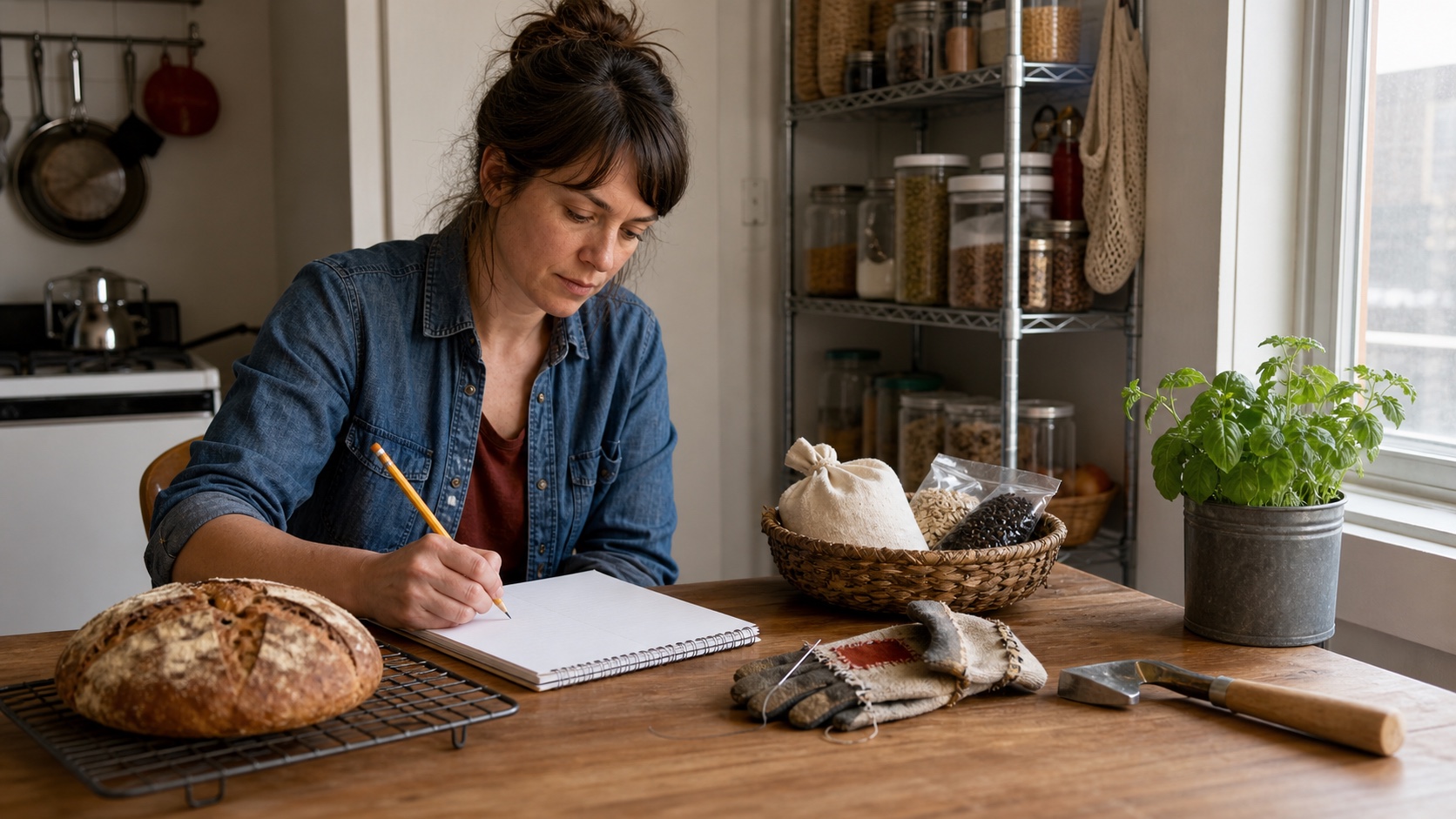
The best homesteading skills to learn before you own land are the ones that travel with you: budgeting and record keeping, cooking repeatable staple meals, rotating a small pantry, growing one container crop, repairing and maintaining ordinary gear, preserving food with tested methods, researching land and local rules, and building a weekly work rhythm. Practice one skill long enough to produce evidence instead of collecting eight new hobbies at once.
Dinner was already a homestead lesson
After the layoff, I could spend a lot of mental energy on the future property: more room, better shelves, a garden, tools, chickens, and a life that felt less exposed. The dream was useful, but it also gave me a place to postpone the beginning. It was easy to imagine that the serious skills would start when the address changed.
Then dinner kept arriving in the kitchen we already had. Making a meal from what was on hand required an inventory, a plan, substitutions, timing, cleanup, and the humility to notice what nobody wanted to eat twice. That ordinary work did not look much like the homestead in my head, but it was already teaching the same habits: know your resources, reduce waste, finish the loop, and write down what worked before memory improves the story.
Land changes what is possible. It does not make follow-through appear. That was the useful turn for me. I did not need to perform a finished homestead life in a temporary season. I needed to practice the small skills that would keep being useful when the setting eventually changed.
What makes a homesteading skill portable
A portable skill produces something you can evaluate now: a meal that gets repeated, a grocery category that becomes clearer, a plant that survives your real schedule, a repaired glove that returns to work, or a record that changes the next purchase. Watching videos and saving plans can support learning, but information becomes skill only when a safe, legal, appropriately small version has been practiced.
1. Budgeting and record keeping
Track one household system for 30 days: pantry spending, container inputs, tool repairs, freezer use, or project time. Record the date, money, time, result, and what you would change. Penn State Extension emphasizes that beginning farmers need records because experience has not yet made patterns obvious. The same principle works before land. A notebook is enough if it gets updated.
2. Cook repeatable pantry meals
Choose three ordinary meals your household will actually eat and learn to make them from ingredients you can store and rotate. The skill is not gourmet cooking or stockpiling. It is knowing quantities, substitutions, timing, cost, leftovers, and the point where a busy evening usually breaks the plan. This creates food resilience without waiting for a harvest.
Build the food layer
Start food security before the move
Use a two-week meal list, small pantry rotation, freezer inventory, and one growing experiment instead of buying a future kitchen's worth of supplies.
Build food security where you live3. Grow one container crop and keep notes
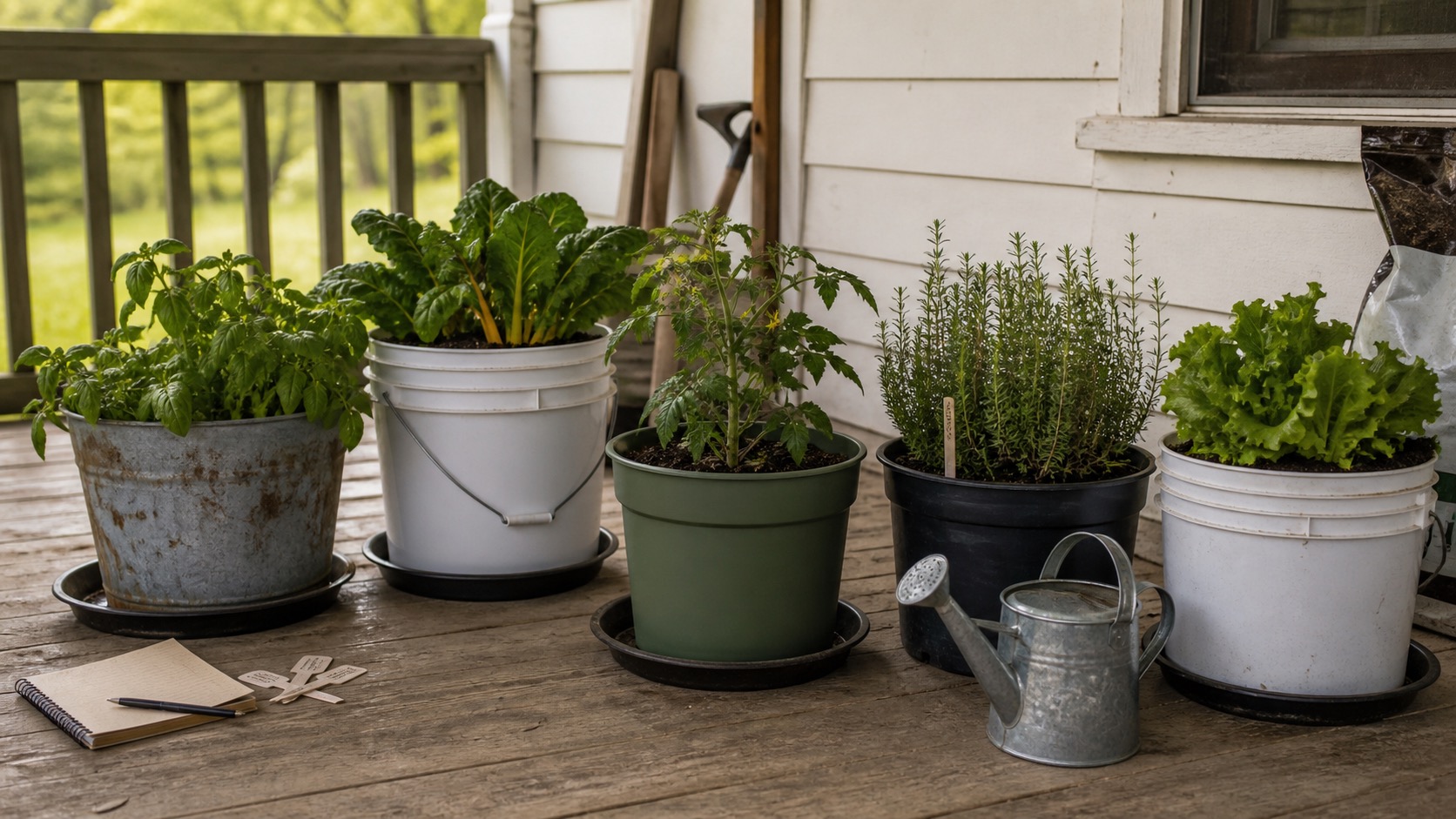
One suitable container can teach more than an imaginary acre. You learn how light changes, how quickly the growing medium dries, whether drainage works, which pest or disease questions appear, and whether the household uses the harvest. Follow the lease, building rules, weight limits, water restrictions, plant suitability, and local guidance. Start with one crop that fits the container and conditions rather than a patio full of optimism.
Run the small experiment
Use containers to learn before more land
The container guide covers crop choice, drainage, growing medium, costs, watering, and the notes that transfer to a future garden.
Practice container gardening4. Maintain and repair ordinary things
Learn to inspect, clean, dry, store, label, and safely maintain the simple items you already use. Mend a glove. Tighten an appropriate fastener. Clean soil from a hand tool and address rust according to its material and instructions. Notice damage before the tool fails during the next job. Stop when the task involves structural, electrical, fuel, pressure, blade, chemical, or other hazards beyond your training. Knowing when to call a qualified professional is part of the skill.
5. Preserve one small batch with tested guidance
Food preservation is not one skill. Freezing, drying, fermenting, water-bath canning, and pressure canning have different food-safety controls, equipment, and suitable foods. A beginner can start by freezing a small amount of appropriate produce using current Extension guidance, including the specified preparation, packaging, storage, and thawing method.
6. Research land without falling in love first
Practice finding the offices and records that answer real property questions: zoning, permits, animal rules, road access, utilities, flood information, wells, septic systems, taxes, easements, conservation resources, and soil surveys. In the United States, USDA NRCS Web Soil Survey provides official soil information for land-use planning, but generalized map information does not replace site-specific investigation, testing, legal review, or qualified professional advice.
7. Build a weekly work rhythm
Pick one daily check, one weekly reset, and one project block. Put them beside the work, school, meal, and family anchors that already exist. A future homestead adds recurring care; it does not create extra evenings. The skill is ending a project, returning tools, recording the result, and leaving enough margin that the household does not resent the experiment.
8. Learn from real people and local sources
Find the local Extension office, conservation district, library, tool library, repair program, community garden, producer association, or class that fits the skill. Ask what beginners misunderstand in your area. Volunteer or observe only with permission, clear expectations, appropriate supervision, and safe work boundaries. A local relationship can teach climate, suppliers, rules, timing, and failure modes that a national checklist cannot see.
Use a 30-day pre-land skill test
Choose the right first skill
Score the options before starting eight projects
Compare gardening, pantry, preservation, tools, chickens, and household systems by current need, cost, time, space, and the number of open loops they create.
Choose your first homestead skillWhat to buy and what can wait
Use the kitchen tools, notebook, containers, shelves, calendar, hand tools, and library access you already have until the practice proves a specific gap. Do not build a future-land tool collection in a small home, buy preservation equipment before choosing a safe method, or purchase livestock supplies before the property, rules, budget, housing, and care plan exist. Storage cost and moving weight are real costs too.
I am leaving affiliate products out of this article on purpose. The first step is to identify and practice a skill, not buy a visual symbol of it. When a real project later proves you need a specific tool, container, storage system, or safety item, use the relevant buyer guide and make that narrower decision with evidence.
Keep the practice small
Use the free beginner homestead checklist
Sort what you can practice now, what needs local research, and what should wait for land, training, or a stronger budget.
Get the beginner checklistLet land expand the skill instead of creating it
You do not need to become a miniature farmer in an apartment. You need one or two habits that make the future less fragile: better records, repeatable meals, less waste, a plant you can keep alive, gear that lasts longer, or questions that prevent a bad land decision. Those are small outcomes, but they move.
Start with the skill your present household can use this month. Practice it until the boring middle feels normal. Write down what it cost and what it changed. When more space eventually arrives, you will still have plenty to learn from the land. You will simply meet it with a little more patience, evidence, and follow-through.
Recommended next reads
Keep learning before the address changes
These guides help you choose one skill, strengthen food security where you live, and use a container as a real growing experiment instead of a decorative placeholder.

Homesteading
How to Choose Your First Homestead Skill When Everything Feels Important
A calm decision framework for choosing the first homestead skill to learn based on real pressure, repeatability, cost, and your current season of life.

Fresh Start
How to Start Building Food Security Before You Move
A practical guide to building food security before you move, buy land, or make a bigger lifestyle change.
Gardening
Container Gardening for the Future Homesteader
A practical guide to using container gardening as a real training ground for future homestead life instead of treating it like a lesser version.
Frequently asked questions
Can you start homesteading before you own land?
Yes. You can practice budgeting, meal planning, pantry rotation, container growing, basic maintenance, record keeping, safe food preservation, and weekly household systems where you live now. These skills will not replace property-specific experience, but they reduce the number of new systems you must learn at once later.
What is the best first homesteading skill to learn?
Choose the skill that solves a problem your household already has. Pantry cooking may fit a tight grocery budget, container growing may fit a sunny small space, maintenance may fit recurring repair costs, and record keeping may fit a family preparing for a move. The best first skill is useful now and repeatable during an ordinary week.
Can I practice homesteading in an apartment?
Yes, within your lease, building rules, available space, ventilation, fire safety, and local requirements. A small pantry rotation, one suitable container plant, scratch cooking, mending, tool care, records, and research are apartment-friendly. Avoid unsafe equipment, overloaded storage, prohibited livestock, unapproved modifications, or processes your space cannot support safely.
Should I learn canning before buying land?
You can learn from current research-based Extension and National Center for Home Food Preservation guidance, but do not improvise canning recipes or processes. Freezing a small amount of suitable produce using tested instructions may be a lower-equipment first preservation practice. Choose a method your kitchen, storage, time, and safety knowledge can support.
Which homesteading skills should wait until I have land?
Property-specific livestock care, tractor operation, chainsaw work, tree felling, well or septic work, permanent electrical changes, structural construction, pesticide application, and other hazardous or regulated work should wait for the actual site, appropriate training, protective equipment, permissions, and qualified professional help. Reading about a task is not the same as being ready to perform it.
Recommendations
Useful tools and resources for this decision
These are included only where they reduce repeated friction, clarify a next step, or help you avoid buying the wrong thing first.
Extension planning source
Penn State Extension planning and record-keeping guide
A practical guide to planning, tracking costs and work, and turning first-year experience into better decisions.
Best for: Building a simple record habit before managing more systems
View resourceFood preservation source
University of Minnesota Extension freezing guide
Current research-based guidance for preparing, packaging, freezing, storing, and safely thawing fruits and vegetables.
Best for: A lower-equipment first food-preservation practice
View resourceCanning safety source
University of Minnesota Extension canning guide
Research-based canning guidance that directs beginners to tested recipes and procedures.
Best for: Learning what safe canning requires before buying equipment
View resourceOfficial soil resource
USDA NRCS Web Soil Survey
The official online source for U.S. soil survey maps, properties, and interpretations used in land-use planning.
Best for: Learning how to review soil information without treating a map as site-specific approval
View resourceRecommended next reads
Read next if it helps the decision
Move into the next guide only if it clarifies the next practical step.
Homesteading
How to Choose Your First Homestead Skill When Everything Feels Important
A calm decision framework for choosing the first homestead skill to learn based on real pressure, repeatability, cost, and your current season of life.
Fresh Start
How to Start Building Food Security Before You Move
A practical guide to building food security before you move, buy land, or make a bigger lifestyle change.
Gardening
Container Gardening for the Future Homesteader
A practical guide to using container gardening as a real training ground for future homestead life instead of treating it like a lesser version.
First-Step Support
Get the first-step checklist before the bigger idea turns into too many projects.
A practical worksheet for choosing one system, setting a first-stage budget, and narrowing the next move while the picture is still forming.
Best for: Beginners who need a first-season plan with limits, not more tabs or more gear.
- A first-season decision checklist
- A one-system starter plan
- A buy-now versus wait-later filter
Beginner-friendly notes, useful guides, and the checklist first.
After signup, the download will unlock right here so you can save or print it.
About the author
William Mock
Founder, writer, and beginner homesteader
William writes from the beginner side of rebuilding after a layoff: homestead plans, family systems, budgets, tools, and the decisions that make a home feel less fragile.
Read why this site existsRelated Guides
Keep building context
Homesteading
How to Choose Your First Homestead Skill When Everything Feels Important
A calm decision framework for choosing the first homestead skill to learn based on real pressure, repeatability, cost, and your current season of life.
Fresh Start
How to Start Building Food Security Before You Move
A practical guide to building food security before you move, buy land, or make a bigger lifestyle change.
Gardening
Container Gardening for the Future Homesteader
A practical guide to using container gardening as a real training ground for future homestead life instead of treating it like a lesser version.