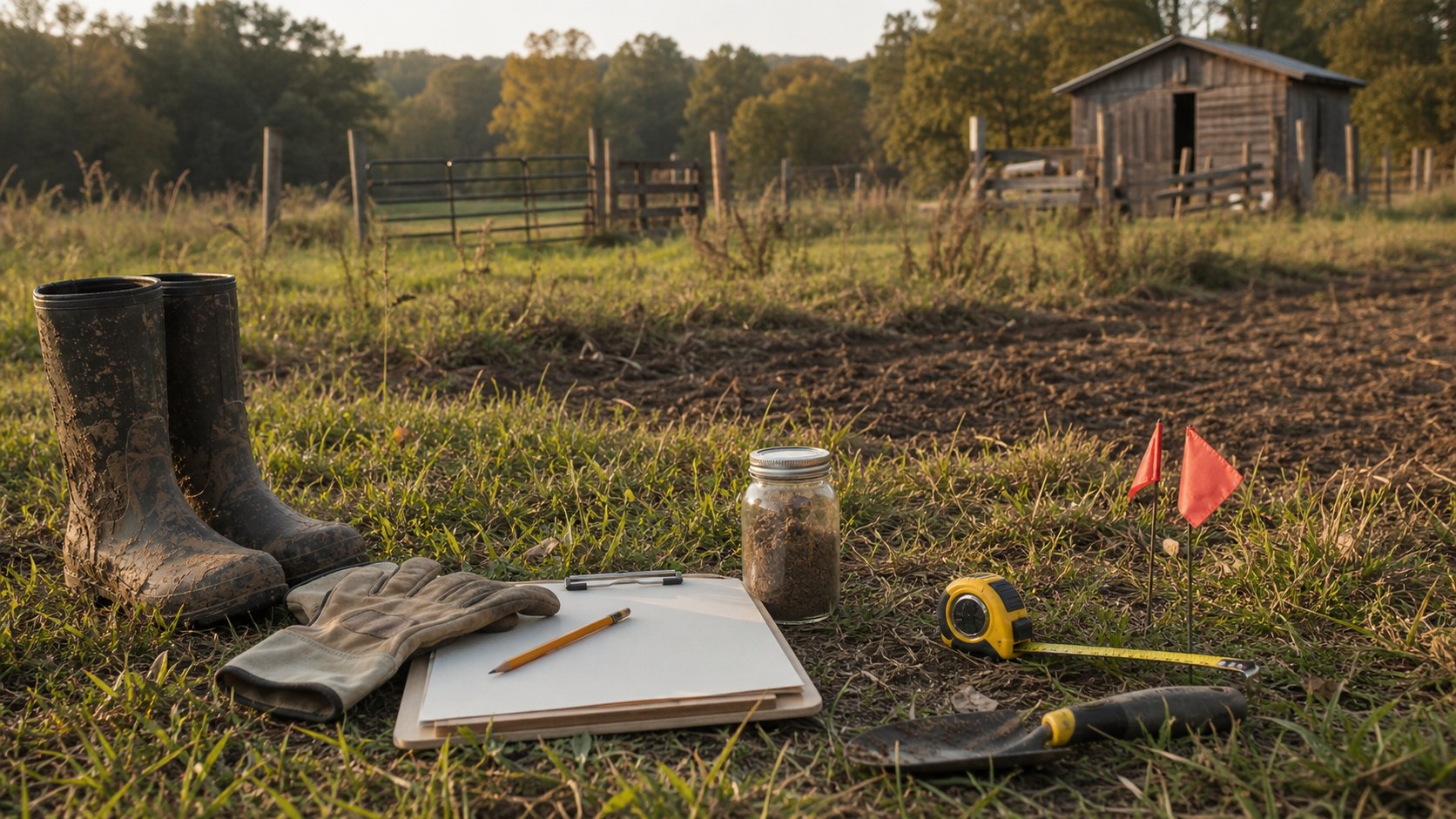
Before you buy more land equipment, learn the land itself. Watch where water sits after rain. Walk the slopes. Notice where a truck or trailer can actually turn around. Track which jobs repeat and which ones only feel urgent because they are annoying this week. Equipment should solve a proven bottleneck, not a vague feeling that land ownership requires machines.
I understand the pull, though. Gear feels like progress. When you are trying to build a more grounded life, a mower, tractor, trailer, chainsaw, tiller, or attachment can look like the thing that finally makes the place feel real. But the wrong purchase can quietly become another unfinished project: something to store, maintain, repair, insure, move around, and feel guilty about.
This is where homesteading asks for patience before confidence. A little observation can save a lot of money. More importantly, it can keep the fresh start from becoming a pile of expensive decisions made before the real pattern was visible.
The wet-ground walk that was worth more than a catalog
A catalog can make equipment feel like the obvious next step. A wet-ground walk is less exciting and usually more honest. After rain, the land starts telling you things a sales page cannot: where water sits, where tires would rut, which slope feels different underfoot, and which route would turn a simple job into a mess.
That kind of walk can delay a purchase in the best way. Maybe the answer is drainage, a different path, a cart, a rental, or waiting until the job repeats enough times to prove itself. Learning the land first is not hesitation. It is how you keep equipment from becoming an expensive guess.
The Real Decision Is Not Equipment
The real decision is whether you have a repeated land problem that ownership can solve better than a smaller option. That is different from asking whether a piece of equipment would be useful someday. Almost every tool is useful in the right situation. The question is whether it belongs in your situation right now.
A beginner homestead has a lot of competing needs: fencing, garden setup, feed storage, compost, water, household budget, family routines, and basic repairs. One expensive purchase can starve three quieter priorities. That does not make equipment bad. It just means the purchase has to earn its place.
If you are still deciding what should wait, keep land equipment in the same timing conversation as animals, fencing, infrastructure, and projects. Equipment often belongs there because timing matters as much as price.
Related Timing Guide
Decide what belongs in year one and what can wait.
Use the year-two guide to keep equipment decisions connected to the rest of the first-year homestead plan.
Read the year-two guideA Realistic Beginner Scenario
Imagine you have a few acres, a long list, and one section of the property that keeps bothering you. Maybe the grass gets away from you. Maybe brush is creeping in. Maybe you need to move compost, mulch, feed, firewood, or garden soil farther than you expected. You start looking at equipment because carrying everything by hand feels inefficient.
That is a real problem. But it still needs a better question: what exactly is repeating? If the problem is one heavy spring cleanup, renting may be cleaner. If the problem is weekly hauling, a cart or small trailer might beat a bigger machine. If the problem is wet ground, the answer may be waiting, drainage planning, or a different route. If the problem is too many projects at once, no machine will fix the calendar.
This is why I like a plain notebook before a shopping tab. Not because notebooks are magical, but because written evidence slows down impulse. It turns “we need something” into “we moved feed twice a week for six weeks, the path stayed dry except after heavy rain, and the real bottleneck is distance, not power.” That kind of sentence makes a better buying decision.
What to Learn First
Start with drainage. Walk the land after a normal rain and after a hard rain. Mark the places that hold water, turn slick, wash out, or stay soft longer than the rest. Equipment that works fine on paper can become a liability on ground that stays wet or ruts easily.
Then learn access. Gates, narrow turns, low branches, soft shoulders, steep approaches, and awkward backing areas all matter. A trailer that cannot turn around near the work zone is not a convenience. A machine that barely fits through a gate will make every chore feel tense.
Next, learn repetition. For 30 to 60 days, write down every land task that makes you think about buying equipment. Mowing, hauling, grading, moving mulch, clearing brush, carrying water, feeding animals, moving compost, and hauling lumber all count. Put a mark beside each task every time it happens. At the end, the pattern will be clearer than your memory.
When Buying Starts to Make Sense
Buying starts to make sense when the job repeats, the land supports the tool, the storage is ready, and the cost does not crowd out basics. That combination is less exciting than a sale price, but it is much more useful.
For small tools, that decision may come quickly. A sturdy cart, a good shovel, real work gloves, or a used wheelbarrow can earn its keep fast because the maintenance and storage are simple. Larger equipment should pass a higher bar because every big tool brings a second job: caring for the tool itself.
If the need is real but the budget is tight, do not assume new is the cleanest path. Used can be wise when the item is simple, inspectable, and easy to repair. Used can be expensive when you are buying someone else’s deferred maintenance.
Used Tool Filter
Check which homestead tools are worth buying used first.
The used-tool guide helps separate simple secondhand wins from used gear that may hide another repair bill.
Read the used-tool guideWhat Can Usually Wait
Large machines can usually wait until the land has taught you more. So can specialty attachments, trailers with no clear parking spot, tools for once-a-year jobs, and anything that requires a building, route, or maintenance routine you do not have yet.
This is not an anti-equipment argument. Good tools are part of a working homestead. I just do not want the first year to become a season of buying around uncertainty. Sometimes the most practical move is to rent once, pay a skilled person once, or borrow from someone you trust while you learn whether the job is truly recurring.
For the broader budget sequence, keep equipment decisions connected to the rest of the homestead instead of treating gear as a separate category. A machine may be useful and still be the wrong first use of the next dollar.
Budget Sequence
Put equipment beside the rest of the buy-first list.
The budget guide helps you decide what to buy first, what can wait, and where gear fits without crowding out basics.
Read the budget guideThe Safety and Maintenance Piece
Land equipment is not just a purchase. It is moving parts, weight, slopes, blades, fuel, batteries, noise, pinch points, and judgment calls. If a job involves steep ground, trees, buried utilities, drainage changes, electrical work, wells, roads, or structures, slow down and bring in qualified help where needed.
Maintenance matters too. A machine you cannot maintain becomes less like an asset and more like a subscription to future frustration. Before buying, price the boring pieces: fuel, fluids, belts, blades, tires, batteries, grease, filters, manuals, repairs, and a dry place to keep it.
A Plain Decision Filter
Here is the filter I would use before any bigger land-equipment purchase: repeated job, right scale, safe terrain, ready storage, visible maintenance, and no hidden budget damage. If one of those pieces is missing, the next step is probably learning, renting, borrowing, or simplifying rather than buying.
That filter is slower than impulse, but it respects the whole life around the homestead. The goal is not to own impressive equipment. The goal is to build a place that works, one clear layer at a time.
Best Next Step
Put the next purchase through the buy-first filter.
The resource library can help you separate useful first purchases from gear that only looks necessary from a distance.
Browse the resource libraryRecommended next reads
Read the next guide that supports this decision
These guides keep the equipment question connected to timing, budget, and practical tools instead of letting one purchase carry the whole homestead plan.
Homesteading
What Can Wait Until Year Two on a New Homestead
A practical guide to the projects, animals, equipment, and upgrades that are often better delayed until year two on a new homestead.

Tools
7 Homestead Tools Worth Buying Used First
The beginner-friendly tools that are usually smart to buy secondhand, plus the inspection rules that keep a bargain from becoming another repair project.
Budgeting
Homesteading on a Budget: What to Buy First and What Can Wait
If money is tight, the smartest homestead purchases are the ones that reduce friction quickly and keep you from rebuying the same lesson twice.
Frequently asked questions
What should I learn before buying land equipment?
Learn where water sits after rain, which areas are too steep or soft, how vehicles enter and turn around, which jobs repeat weekly or monthly, where equipment would be stored, and whether renting or hiring would handle the job with less risk.
Should a beginner buy a tractor first?
Usually not automatically. A tractor can be the right tool for repeated heavy work, but beginners should first prove the work pattern, understand terrain and storage limits, price maintenance, and compare rental or hired help for occasional jobs.
How long should I observe land before buying equipment?
At minimum, observe through several rains and a few normal work weeks. A full season is better when possible because mowing, hauling, drainage, mud, snow, garden work, and animal chores reveal different problems at different times.
What land equipment can usually wait?
Large machines, specialty attachments, trailers without clear storage, and tools for once-a-year jobs can usually wait until the task has repeated enough times to prove that ownership is cheaper, safer, and more practical than renting, borrowing, or hiring.
Recommended next reads
Read next if it helps the decision
Move into the next guide only if it clarifies the next practical step.
Homesteading
What Can Wait Until Year Two on a New Homestead
A practical guide to the projects, animals, equipment, and upgrades that are often better delayed until year two on a new homestead.
Tools
7 Homestead Tools Worth Buying Used First
The beginner-friendly tools that are usually smart to buy secondhand, plus the inspection rules that keep a bargain from becoming another repair project.
Budgeting
Homesteading on a Budget: What to Buy First and What Can Wait
If money is tight, the smartest homestead purchases are the ones that reduce friction quickly and keep you from rebuying the same lesson twice.
First-Step Support
Get the first-step checklist before the bigger idea turns into too many projects.
A practical worksheet for choosing one system, setting a first-stage budget, and narrowing the next move while the picture is still forming.
Best for: Beginners who need a first-season plan with limits, not more tabs or more gear.
- A first-season decision checklist
- A one-system starter plan
- A buy-now versus wait-later filter
Beginner-friendly notes, useful guides, and the checklist first.
After signup, the download will unlock right here so you can save or print it.
About the author
William Mock
Founder, writer, and beginner homesteader
William writes from the beginner side of rebuilding after a layoff: homestead plans, family systems, budgets, tools, and the decisions that make a home feel less fragile.
Read why this site existsRelated Guides
Keep building context
Homesteading
What Can Wait Until Year Two on a New Homestead
A practical guide to the projects, animals, equipment, and upgrades that are often better delayed until year two on a new homestead.
Tools
7 Homestead Tools Worth Buying Used First
The beginner-friendly tools that are usually smart to buy secondhand, plus the inspection rules that keep a bargain from becoming another repair project.
Budgeting
Homesteading on a Budget: What to Buy First and What Can Wait
If money is tight, the smartest homestead purchases are the ones that reduce friction quickly and keep you from rebuying the same lesson twice.