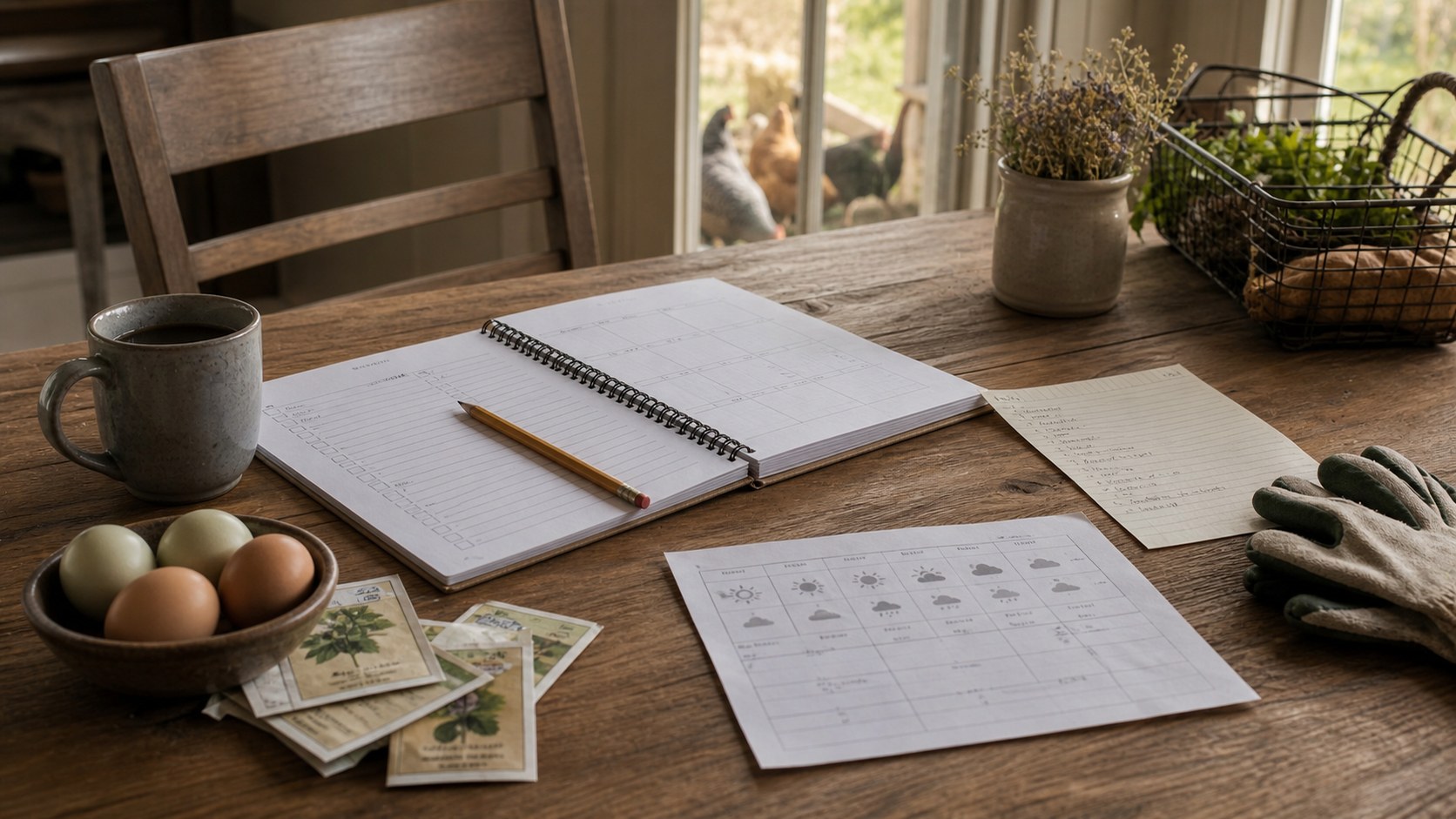
Use Sunday to answer five plain questions: what is the weather doing, what do the chickens need daily, what does the garden need before it becomes urgent, what meals will actually happen, and what single project gets a protected block. That is enough planning for most beginner homestead weeks.
I like the idea of a calm Sunday plan because it gives the week a little mercy before Monday starts pulling on every loose thread. But I do not want a routine that only works when the house is quiet, the calendar is empty, and everyone is feeling organized. That is not the week most families are living.
The useful version is smaller. It is a kitchen-table check, not a command center. It should help you thaw food, refill feed, notice a weather window, protect one work block, and leave Monday with fewer surprises.
How This Is Different From a Weekly Rhythm
The broader weekly rhythm is the structure of the whole household: daily anchors, reset points, project windows, chores, meals, and margin. Sunday planning is narrower. It is the moment when you look at the actual week in front of you and decide what fits.
That difference matters for search and for real life. A weekly rhythm answers, "How do we want the week to work?" A Sunday plan answers, "Given this weather, this food, these appointments, these animals, and this energy level, what are we doing next?"
Cornerstone guide
Need the bigger weekly structure first?
Use the calmer weekly rhythm guide if the whole week still feels shapeless. Then come back to this Sunday routine as the weekly review point.
Read the weekly rhythm guideThe Five-Part Sunday Check
Start with the parts of the week that punish neglect. Animals need daily care. Meals need ingredients before dinner. Garden work often depends on rain, heat, frost, or harvest timing. Projects need an honest block, not a wish.
A Realistic Beginner Scenario
Imagine a normal Sunday afternoon. There are eggs on the counter, laundry still moving, leftovers in the fridge, seed packets you meant to sort, a work calendar that already has a few hard edges, and chickens that do not care whether the household feels organized.
The mistake would be writing an ideal week from scratch. The better move is to ask what the week is already demanding. If Tuesday is packed, Tuesday does not get a complicated dinner or a garden project. If rain is coming Wednesday, the mulch or transplant decision moves earlier. If feed is low, that errand gets a real slot instead of becoming a surprise.
What Matters First
The first layer is visibility. Put the plan somewhere the household will actually see it. I do not care whether that is a paper planner, a fridge board, or one sheet taped near the coffee. If the plan disappears into a private notebook, it will not help the person making dinner or the person walking past the feed bin.
What Can Wait
Wait on color-coded systems, separate binders for every category, seven-day meal plans that nobody wants to eat, and giant project boards that make the household feel behind before the week starts.
Also wait on adding new animals, expanding the garden, or starting another build project if the Sunday review keeps showing the same issue: the current week has no margin. The plan is not failing when it tells you to slow down. That may be the most useful thing it does.
The Sunday Closing Loop
Before you put the notebook away, close the loop. Circle the one project. Mark the feed or grocery errand. Choose the first meal. Put one outdoor task on the day with the best weather. Then leave Monday morning a note that is short enough to obey.
That last step is where the routine starts to earn its place. A Sunday plan that never reaches Monday morning is just another nice idea. A Sunday plan that tells you what to thaw, what to check, and what not to worry about yet can change the feel of the whole week.
The Useful Ending
A good Sunday routine should make the next week feel less invisible. It should not make you feel like the homestead has become another boss.
Start this week with one sheet of paper. Weather, chickens, garden, meals, project. Keep it that plain. If the plan lowers pressure, repeat it next Sunday. If it does not, make it smaller until it does.
Best next step
Keep the weekly plan from scattering by Thursday
The 20-minute evening reset is the natural follow-up when Sunday planning is working, but the week still needs a small daily landing place.
Read the evening resetRecommended next reads
Read next if this helped
These guides connect the Sunday review to the bigger weekly rhythm and the family boundaries that keep projects from taking over.

Systems
How to Build a Calmer Weekly Homestead Rhythm
A workable weekly rhythm matters more than bursts of motivation. This is how to structure a steadier, lower-drama home system.

Systems
The 20-Minute Evening Reset That Protects the Next Homestead Day
A practical evening reset for homestead households: 20 minutes to lower morning friction, stage first chores, protect meals, and keep tomorrow from starting behind.
Systems
How to Keep Homestead Projects from Taking Over Family Life
A practical guide to keeping homestead goals from swallowing evenings, weekends, and the people you are trying to build the life with.
Frequently asked questions
How long should a Sunday homestead planning routine take?
Keep the first version to about 20 to 30 minutes. Long enough to check weather, meals, animals, garden needs, and one project block, but short enough that you will still do it when Sunday is full.
Is Sunday the only day this routine works?
No. Sunday works for many households because it sits before the school and work week, but Friday night or Monday morning can work too. The point is one repeatable review moment before the week starts making decisions for you.
What should I plan first: meals, chickens, or the garden?
Start with anything that has a daily consequence. For most beginners, that means animals and meals first, then weather-sensitive garden work, then optional projects only after the basics have a place.
What should not go into the Sunday plan?
Do not turn Sunday into a master list of every homestead idea. Leave out someday projects, decorative planning, complex meal schedules, and chores that do not fit the actual calendar.
Recommendations
Useful tools and resources for this decision
These are included only where they reduce repeated friction, clarify a next step, or help you avoid buying the wrong thing first.
Week view
Large weekly planner pad
A simple paper week view helps the household see meals, weather-sensitive work, animal care, errands, and one project block in the same place.
Best for: Families that need the week visible on the kitchen table before Monday starts
Check current priceMeal anchor
Magnetic meal planning notepad
Useful if dinner decisions keep slipping because the plan is buried in a notebook. Keep it where food decisions actually happen.
Best for: Households where meals are the pressure point that makes the rest of the week feel scattered
Check current priceOutdoor notes
Weatherproof clipboard
A clipboard can hold the weekly sheet while you walk the garden, check the coop, or make quick notes outside.
Best for: Garden and chicken notes that need to survive a quick outdoor check
Check current priceShared view
Dry erase fridge board
A small fridge board can hold the final version: meals, daily animal reminders, harvest notes, and the one project that earned a spot.
Best for: Households that need a shared visible plan but do not want another app
Check current priceRecommended next reads
Read next if it helps the decision
Move into the next guide only if it clarifies the next practical step.
Systems
How to Build a Calmer Weekly Homestead Rhythm
A workable weekly rhythm matters more than bursts of motivation. This is how to structure a steadier, lower-drama home system.
Systems
The 20-Minute Evening Reset That Protects the Next Homestead Day
A practical evening reset for homestead households: 20 minutes to lower morning friction, stage first chores, protect meals, and keep tomorrow from starting behind.
Systems
How to Keep Homestead Projects from Taking Over Family Life
A practical guide to keeping homestead goals from swallowing evenings, weekends, and the people you are trying to build the life with.
Weekly rhythm support
Get the weekly reset planner that keeps the week from scattering.
A print-friendly weekly planner for resets, anchor tasks, and the few routines that make the house feel steadier.
Best for: Readers who need a calmer household rhythm before they need more projects.
- A weekly anchor planner
- A reset checklist
- A what-to-drop, delay, or delegate review
Low-noise notes on routines, resets, and steadier household systems.
After signup, the download will unlock right here so you can save or print it.
About the author
William Mock
Founder, writer, and beginner homesteader
William writes from the beginner side of rebuilding after a layoff: homestead plans, family systems, budgets, tools, and the decisions that make a home feel less fragile.
Read why this site existsRelated Guides
Keep building context
Systems
How to Build a Calmer Weekly Homestead Rhythm
A workable weekly rhythm matters more than bursts of motivation. This is how to structure a steadier, lower-drama home system.
Systems
The 20-Minute Evening Reset That Protects the Next Homestead Day
A practical evening reset for homestead households: 20 minutes to lower morning friction, stage first chores, protect meals, and keep tomorrow from starting behind.
Systems
How to Keep Homestead Projects from Taking Over Family Life
A practical guide to keeping homestead goals from swallowing evenings, weekends, and the people you are trying to build the life with.