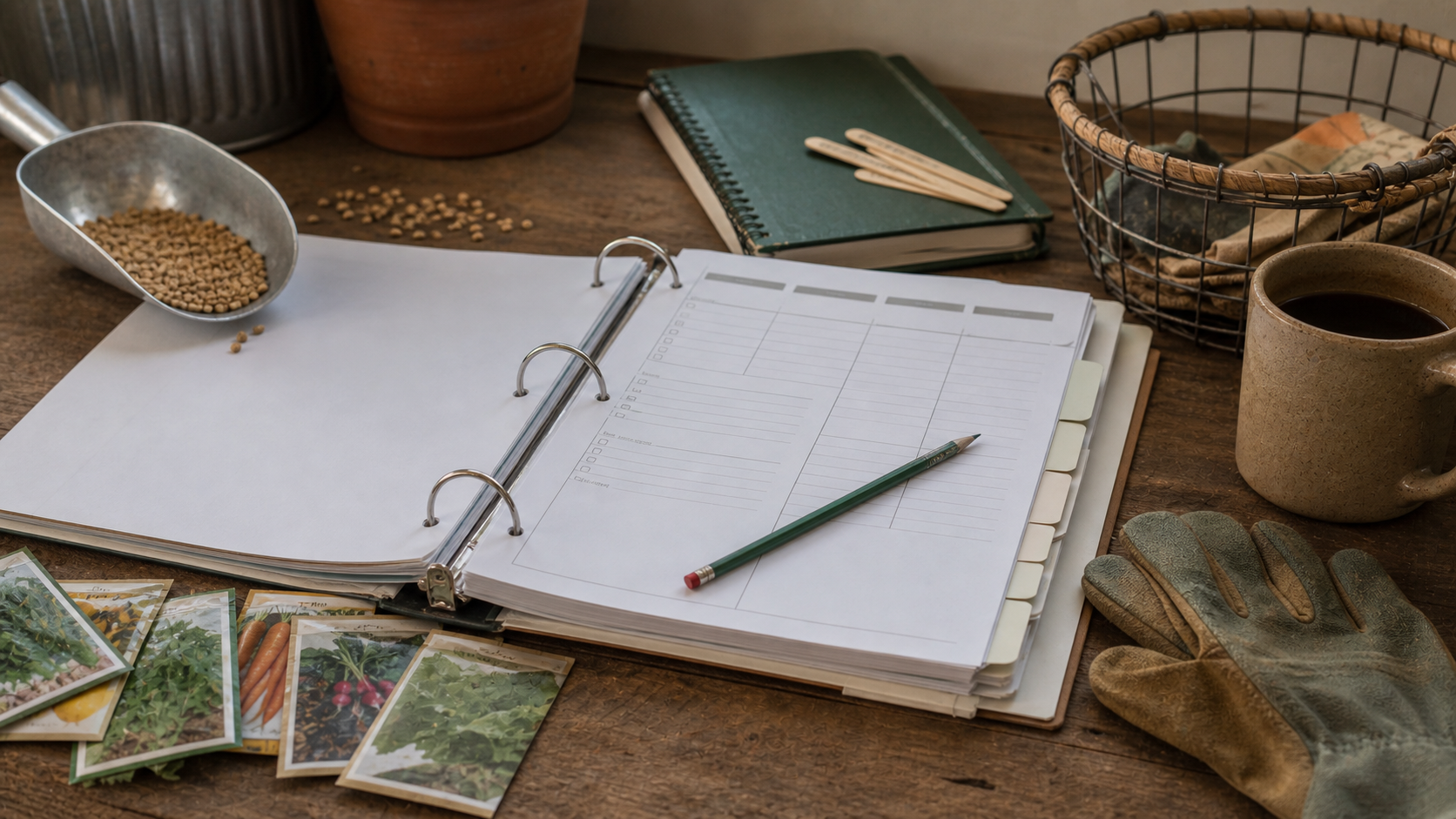
A beginner homestead binder should not be a scrapbook of everything you hope to do someday. It should be a working place for the few decisions, routines, costs, and notes you need to find again when the week is already moving.
That distinction matters. A binder can make homesteading feel calmer, or it can become one more project that looks organized while real life still runs on memory. The useful version is smaller, messier, and more honest.
The binder that finally made sense
I like the idea of a clean system more than I like admitting how quickly a clean system can get ignored. There have been plenty of times where the plan lived in three places at once: a notebook on the table, a note on my phone, a receipt in a pocket, and some half-remembered conversation from Sunday night.
The moment a binder started making sense was not when it looked nice. It was when I needed one boring answer fast. What did we decide to buy first? When did we last change that routine? What did we learn from the garden bed that struggled? What chores actually need to happen before the week gets away from us?
That is the kind of binder I trust: not a perfect homestead headquarters, but a place where the household stops losing the same decisions over and over.
What a homestead binder is actually for
The job of a homestead binder is to lower friction. It should help you repeat chores, remember decisions, compare costs, keep seasonal notes, and hand off basic information when someone else needs to help.
It is not there to prove you are organized. It is there to keep ordinary work from depending on whatever one tired person can remember.
Systems Hub
Use systems to make homesteading easier to repeat.
The systems hub keeps the weekly routines, reset habits, family chore rhythms, and project boundaries together.
Open the systems guidesThe five sections I would start with
A beginner binder should follow the real pressure points of a beginner homestead. For most families, that means time, food, animals, money, and projects. You can always add more later.
Section 1: Weekly rhythm
This section should connect directly to a calmer weekly homestead rhythm. Keep it practical: the recurring jobs that make the week function, the chores that are easy to forget, and the few reset tasks that prevent Monday from starting in a pile.
Do not make the weekly page so detailed that it becomes another job. The best version is useful at a glance. If you need to explain the system every time you open it, it is too heavy.
Section 2: Garden notes
The garden section is where a binder starts paying for itself. Beginners forget more than they think they will. The bed that dried out, the crop that surprised you, the mulch that helped, the spacing that was too tight, the seed packet that looked promising but did nothing useful: all of that becomes better next year if you write it down.
If you are still planning the garden itself, connect this section to your first homestead garden plan and keep the first version smaller than your ambition.
Garden Planning
Keep the garden notes tied to a realistic first plan.
If the garden section starts turning into a wish list, return to the first-garden planning guide and make the binder support that smaller system.
Read the first garden guideSection 3: Chicken or animal care
If chickens are part of your first homestead layer, this section should be boring and useful. Feed, water, bedding, egg notes, supply levels, predator checks, heat or cold routines, and the daily care handoff all belong here.
The goal is not to turn chicken keeping into paperwork. The goal is that another adult in the house could open the binder and understand the basic rhythm without asking six questions while you are already behind.
Section 4: Budget and purchases
This may be the most important section if you are building slowly. Homesteading has a way of turning one reasonable purchase into five related purchases. A binder gives you a place to slow that down.
Use this section with a first-year budget mindset. If you already have a spending plan, connect it to your first-year homestead budget categories so each purchase has a reason.
Budget Planning
Make the binder protect the first-year budget.
Use the budget category guide when the purchase list starts getting bigger than the actual season you are in.
Read the first-year budget guideSection 5: Projects
The project section is where you keep the homestead from turning every idea into a half-finished Saturday. Keep one active project page and one parking lot. That is enough for most beginners.
This pairs with keeping homestead projects from taking over family life. The binder should make the project smaller and clearer, not bigger and more tempting.
A realistic beginner scenario
Imagine a family with a small garden, a future chicken plan, a tight monthly budget, and a long list of ideas that all feel important. Without a binder, the week runs through scattered notes and memory. The same questions keep coming back: what did we decide, what did we buy, what should happen next, and why did we pause that project?
A useful binder does not solve the whole life. It gives that family one place to land the decisions. Sunday night, they open the weekly page. After a garden walk, they add two notes. When a tool looks tempting, it goes on the wait list first. When chickens get closer, the care section starts with feed, water, housing, and cost notes instead of a pile of random tabs.
That is not fancy. It is exactly why it works.
What to buy and what can wait
You can build the first version with supplies you probably already have. If you do buy anything, buy boring things that make the binder easier to use, not decorative things that make it harder to start.
Recommendations
Binder supplies that earn their place
Useful first buy
Three-ring binder
A plain binder gives you one place for weekly plans, notes, receipts, seasonal pages, and project lists.
Best for: A simple paper command center
Check current priceLow-cost helper
Tab dividers
Tabs separate weekly rhythm, garden, animal care, budget, and projects without needing a complicated planner.
Best for: Keeping sections findable
Check current priceOptional but useful
Sheet protectors
Use these for pages that get reused around dirt, feed, water, or family handoffs.
Best for: Reusable checklists and reference pages
Check current priceThe five-minute weekly review
The binder only works if it gets touched. I would rather have a five-minute weekly review that happens than a one-hour planning session that keeps getting skipped.
What matters most
The best homestead binder is the one that gets dirty around the edges because it lives close to the work. If it becomes too precious, too complete, or too hard to update, it will drift into the same category as every other good idea that never becomes a habit.
Start with five sections. Remove anything you do not use. Keep the pages plain. Let the binder become a record of what your household is actually learning, not a performance of what you hope the homestead will look like later.
Next Step
Build the weekly rhythm before adding more pages.
If the binder feels like too much, start with the weekly rhythm guide and add sections only when they solve real friction.
Read the weekly rhythm guideRecommended next reads
Read the systems guides next
These guides help turn the binder into a rhythm instead of another project.
Systems
How to Build a Calmer Weekly Homestead Rhythm
A workable weekly rhythm matters more than bursts of motivation. This is how to structure a steadier, lower-drama home system.

Systems
A Weekly Chore Rhythm for Families Starting Homestead Life
A practical weekly task rhythm for beginners who want household work, animals, meals, and projects to fit real family life.
Systems
How to Keep Homestead Projects from Taking Over Family Life
A practical guide to keeping homestead goals from swallowing evenings, weekends, and the people you are trying to build the life with.
Frequently asked questions
What should be in a beginner homestead binder?
Start with five sections: weekly rhythm, garden notes, chicken or animal care, budget and purchases, and projects. Add only the pages you actually use during a normal week.
Do I need a printable homestead planner?
No. A printable planner can help if it matches your real routines, but a plain binder, notebook, dividers, and a few simple pages are enough to start.
How often should I update a homestead binder?
Use it weekly for planning and briefly after projects, garden walks, feed purchases, animal changes, or budget decisions. A binder that gets touched for five minutes is better than one that waits for a perfect planning day.
What should I leave out of a beginner homestead binder?
Leave out dream-property maps, giant wish lists, complicated trackers, and sections you are not living yet. Keep the first version tied to chores, money, food systems, notes, and next decisions.
Recommendations
Useful tools and resources for this decision
These are included only where they reduce repeated friction, clarify a next step, or help you avoid buying the wrong thing first.
Useful first buy
Three-ring binder
A plain binder is enough for weekly plans, garden notes, feed receipts, project lists, printed checklists, and seasonal records.
Best for: Beginners who want paper records without building a complicated planning system
Check current priceLow-cost helper
Tab dividers
Simple dividers keep chores, garden, chickens, budget, and projects from turning into one loose pile.
Best for: Separating a small binder into practical sections
Check current priceOptional but useful
Sheet protectors
Useful for pages that get handled with dirty hands, like chore checklists, feed instructions, emergency numbers, and seasonal plans.
Best for: Reusable lists that live near real work
Check current priceStart here
Start Here checklist
Use the site checklist if you need help narrowing the first food system, budget boundary, and weekly rhythm before building a bigger binder.
Best for: Readers still choosing the first layer of their homestead plan
Read the guideRecommended next reads
Read next if it helps the decision
Move into the next guide only if it clarifies the next practical step.
Systems
How to Build a Calmer Weekly Homestead Rhythm
A workable weekly rhythm matters more than bursts of motivation. This is how to structure a steadier, lower-drama home system.
Systems
A Weekly Chore Rhythm for Families Starting Homestead Life
A practical weekly task rhythm for beginners who want household work, animals, meals, and projects to fit real family life.
Systems
How to Keep Homestead Projects from Taking Over Family Life
A practical guide to keeping homestead goals from swallowing evenings, weekends, and the people you are trying to build the life with.
Weekly rhythm support
Get the weekly reset planner that keeps the week from scattering.
A print-friendly weekly planner for resets, anchor tasks, and the few routines that make the house feel steadier.
Best for: Readers who need a calmer household rhythm before they need more projects.
- A weekly anchor planner
- A reset checklist
- A what-to-drop, delay, or delegate review
Low-noise notes on routines, resets, and steadier household systems.
After signup, the download will unlock right here so you can save or print it.
About the author
William Mock
Founder, writer, and beginner homesteader
William writes from the beginner side of rebuilding after a layoff: homestead plans, family systems, budgets, tools, and the decisions that make a home feel less fragile.
Read why this site existsRelated Guides
Keep building context
Systems
How to Build a Calmer Weekly Homestead Rhythm
A workable weekly rhythm matters more than bursts of motivation. This is how to structure a steadier, lower-drama home system.
Systems
A Weekly Chore Rhythm for Families Starting Homestead Life
A practical weekly task rhythm for beginners who want household work, animals, meals, and projects to fit real family life.

Systems
The 20-Minute Evening Reset That Protects the Next Homestead Day
A practical evening reset for homestead households: 20 minutes to lower morning friction, stage first chores, protect meals, and keep tomorrow from starting behind.