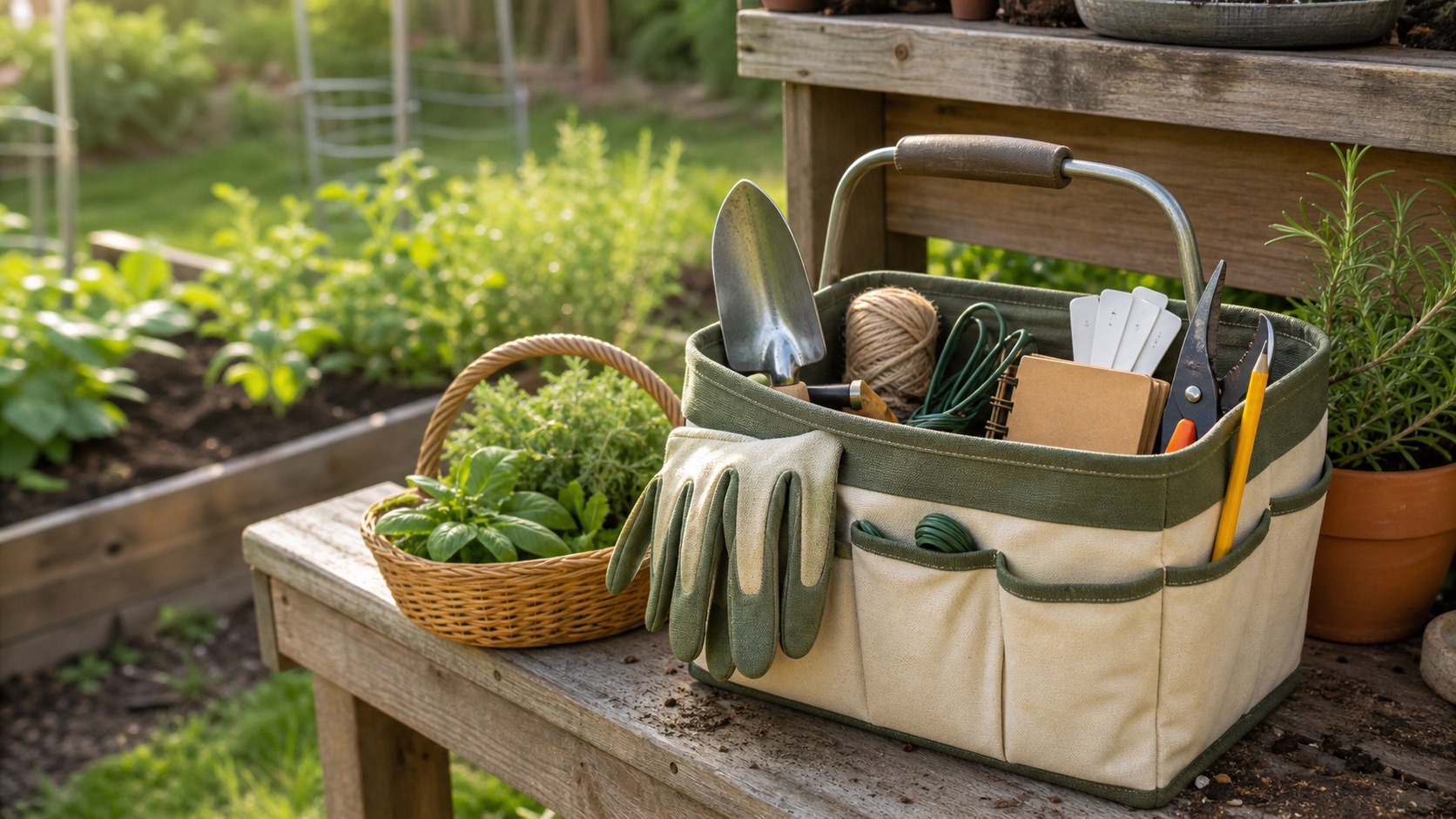
A beginner garden tool caddy does not need to hold every garden tool you own. It needs to hold the small things you reach for during ordinary garden checks: gloves, a trowel, pruners or snips, twine, labels, a pencil, a notebook, and maybe a small harvest container.
That sounds almost too simple, but this is one of those small systems that makes a garden easier to maintain. When the tools are already together, a five-minute check can stay a five-minute check. When everything is scattered, the check starts with a search and quietly becomes another thing you avoid.
The real decision is not the caddy
The real decision is whether your garden tools have a home close enough to the work. A caddy is just one way to solve that. A five-gallon bucket, an open utility bin, an old milk crate, or a canvas tote can work if it keeps the right tools together and comes back inside when the work is done.
That distinction matters because it keeps the buying honest. If you are still figuring out your garden rhythm, start with something you already own. If the same tools keep disappearing, getting rained on, or making you walk back to the garage three times, then a dedicated garden tool caddy starts to make sense.
The small tool hunt that changed my mind
The moment that made this click for me was not dramatic. I was trying to do a quick garden check before the rest of the day swallowed the margin. I needed gloves, something to cut a piece of twine, and a pencil so I could write down which plants needed support. None of it was where my brain thought it was.
The gloves were by the back door, but not the pair I wanted. The pruners were somewhere between the garage and the last project. The pencil was inside. The twine was in a bin that made sense when I put it there and made no sense when I was standing in the garden. The actual work took maybe ten minutes. The tool hunt took almost as long, and it changed the whole mood of the chore.
That is the kind of thing I pay attention to now. Homesteading does not only get harder because the work is hard. It gets harder because small friction stacks up until a simple task feels heavier than it should. A garden caddy is not magic. It is just a way of removing one repeated excuse.
What to keep in a beginner garden tool caddy
The best first version is boring on purpose. Do not pack it for every possible problem. Pack it for the work you actually do in a short garden pass: checking water, pulling a few weeds, tying up a plant, harvesting herbs, cutting something small, and making one note before you forget.
What can wait
A garden caddy can turn into clutter if you treat it like a miniature shed. The first version should stay light enough to carry and simple enough to reset. If you pack every specialty tool, you will stop using it for quick checks.
A realistic beginner setup
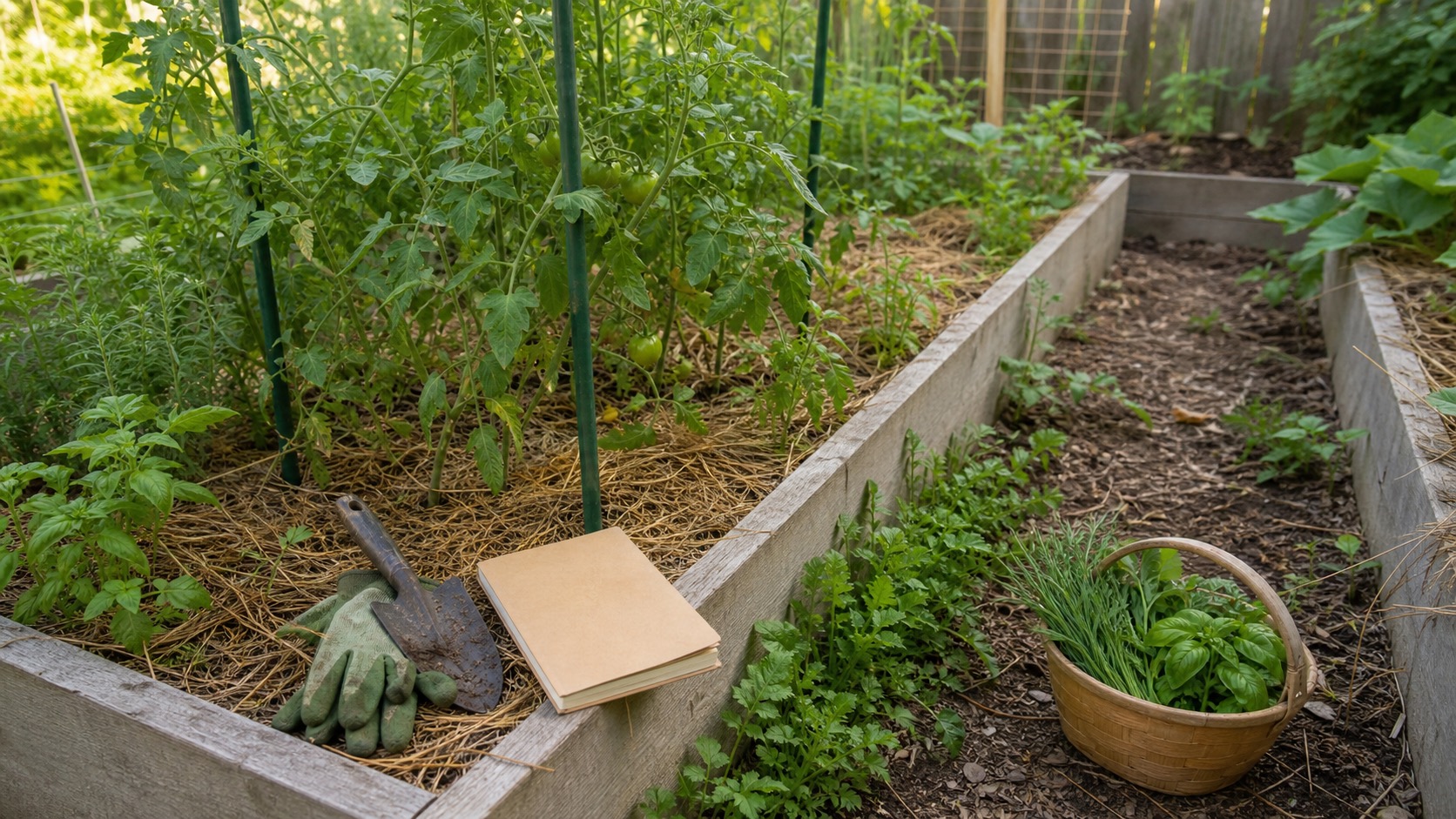
Picture a small raised-bed garden in early summer. The tomatoes need one more tie. The basil can be harvested. A few weeds are small enough to pull without making a whole project out of it. One bed corner looks dry, but you need to check soil moisture before dragging out the hose.
With a caddy, the pass is simple. Gloves go on. Pull the weeds closest to the crop. Use the trowel or your finger to check the soil below the mulch. Tie the tomato before it leans farther. Snip basil for dinner. Write down, “west bed dry, tomatoes need support again Saturday.” That note is not decoration. It is future-you getting a little help.
What I would buy and what I would improvise
If I had nothing, I would not start with a big boxed garden tool kit. I would start with one carry container, one pair of gloves, one trowel, one small cutter, twine, labels, pencil, and a plain notebook. That is enough to handle most short garden maintenance without turning the caddy into another thing to organize.
I would also improvise before upgrading. A bucket can prove whether carrying tools together matters. An old open tote can prove which pockets you actually need. A cheap notebook can prove whether notes help before you buy anything nicer. The goal is not to own a cute setup. The goal is to remove the repeated friction that keeps the garden from getting checked.
Recommendations
Affiliate-friendly tools that fit this setup
Useful if tools scatter
Open garden tool caddy or canvas tote
Buy this only if your current bucket, tote, or crate is not solving the scatter problem.
Best for: Beginners who keep losing hand tools between the shed, porch, and garden
Check current priceStart here
Lightweight coated garden gloves
The first small buy I would make if bare hands are slowing down weeding, planting, or cleanup.
Best for: Daily garden checks and light maintenance
Check current priceAdd when needed
Bypass pruners or garden snips
Add one sharp cutter once harvesting, tying, trimming, and cleanup are repeating.
Best for: Herbs, broken stems, twine, and small plant cleanup
Check current priceLow-cost clarity
Plain field notebook
Use this for garden notes before buying a fancy planner or making a complicated spreadsheet.
Best for: Water checks, planting dates, pest notes, and next-season lessons
Check current priceHow to keep the caddy from becoming clutter
The caddy needs a reset rhythm or it will collect trash, extra labels, seed packets, dull tools, and things you meant to bring inside. Keep the reset small. At the end of the week, empty the trash, return seed packets to dry storage, wipe off tools, sharpen or set aside anything dull, and put the caddy back where the next garden check starts.
If something has lived in the caddy for a month without being used, take it out. If something is missing every week, add it. That is the whole system. Let the work vote.
The honest filter
A beginner garden tool caddy is worth it if it makes the right work easier to start. It is not worth it if it becomes a shopping list, a decoration, or a portable junk drawer. Start with the tools you already reach for. Keep the system small. Buy only when the missing piece has shown up more than once.
That is the bigger lesson underneath this little setup. Homesteading gets steadier when ordinary chores have less friction. A caddy will not grow the garden for you, but it can help you show up for the garden before the small problems become Saturday problems.
Keep the first setup practical
Use the tools hub before buying another specialty item.
The goal is not a shed full of gear. It is a small set of tools that makes repeated work easier to finish.
Open the tools guideRecommended next reads
Continue with the tool setup path
These guides help you choose the first tools and storage pieces without building clutter.

Tools
Best Beginner Work Gloves for Garden and Coop Work
A practical guide to choosing beginner work gloves for garden, coop, and yard work without overbuying or buying the wrong kind.

Tools
Best Buckets, Totes, and Bins for a Working Homestead
A practical guide to the buckets, totes, and bins that actually reduce clutter, extra trips, and daily friction around the homestead.
Gardening
What to Do When Your First Garden Starts Looking Messy
A calm beginner guide for the moment your first vegetable garden starts looking messy: what to fix first, what to ignore, and how to recover without starting over.
Frequently asked questions
What should a beginner keep in a garden tool caddy?
Start with gloves, a hand trowel, small pruners or snips, plant ties or twine, plant labels, a pencil, a simple notebook, and one small harvest container. Add specialty tools only when the same job keeps repeating.
Is a garden tool caddy worth buying?
A garden tool caddy is worth it if tools are getting lost, left outside, or carried back and forth in several trips. If you already have a bucket or open tote that works, use that first before buying a dedicated caddy.
What garden tools can wait for beginners?
Specialty weeders, soil testers, expensive harvest baskets, multiple pruner styles, kneeling benches, and large tool sets can usually wait until the garden proves which jobs repeat every week.
How do I keep a garden caddy from becoming clutter?
Give the caddy one job: the tools you use for short garden checks. Empty trash and extra seed packets weekly, return tools after each pass, and remove anything you have not used for a few weeks.
Recommendations
Useful tools and resources for this decision
These are included only where they reduce repeated friction, clarify a next step, or help you avoid buying the wrong thing first.
Useful if tools scatter
Open garden tool caddy or canvas tote
A simple open caddy works when you want gloves, hand tools, twine, labels, and notebook supplies in one grab-and-go place.
Best for: Beginners who keep losing hand tools between the shed, porch, and garden
Check current priceStart here
Lightweight coated garden gloves
Keep one flexible pair in the caddy for weeding, planting, tying, and quick garden cleanup.
Best for: Daily garden checks where bare hands slow you down or get torn up
Check current priceAdd when needed
Bypass pruners or garden snips
A small cutting tool earns its place once you are harvesting herbs, trimming broken stems, cutting twine, or cleaning up small growth.
Best for: Beginners who are past planting and into harvest, support, and maintenance
Check current priceLow-cost clarity
Plain field notebook
Use a cheap notebook for water notes, planting dates, pest signs, harvests, and what you would change next season.
Best for: Gardeners who forget what happened by the time next weekend arrives
Check current priceRecommended next reads
Read next if it helps the decision
Move into the next guide only if it clarifies the next practical step.
Tools
Best Beginner Work Gloves for Garden and Coop Work
A practical guide to choosing beginner work gloves for garden, coop, and yard work without overbuying or buying the wrong kind.
Tools
Best Buckets, Totes, and Bins for a Working Homestead
A practical guide to the buckets, totes, and bins that actually reduce clutter, extra trips, and daily friction around the homestead.
Gardening
What to Do When Your First Garden Starts Looking Messy
A calm beginner guide for the moment your first vegetable garden starts looking messy: what to fix first, what to ignore, and how to recover without starting over.
Buy-first support
Get the buy-first guide before you add another tool.
Use the buy-first guide to decide what earns money now, what can be borrowed, and what belongs on the wait list.
Best for: Beginners who keep seeing useful things online and need a disciplined way to decide what actually earns a place.
- A buy now, borrow, wait, or skip framework
- Starter category shortlists
- A three-question purchase test
Practical tool notes, restrained gear decisions, and one disciplined guide first.
After signup, the download will unlock right here so you can save or print it.
About the author
William Mock
Founder, writer, and beginner homesteader
William writes from the beginner side of rebuilding after a layoff: homestead plans, family systems, budgets, tools, and the decisions that make a home feel less fragile.
Read why this site existsRelated Guides
Keep building context
Tools
Best Beginner Work Gloves for Garden and Coop Work
A practical guide to choosing beginner work gloves for garden, coop, and yard work without overbuying or buying the wrong kind.
Tools
Best Buckets, Totes, and Bins for a Working Homestead
A practical guide to the buckets, totes, and bins that actually reduce clutter, extra trips, and daily friction around the homestead.

Tools
Best Pruning Shears for Beginners
A practical guide to the best pruning shears for beginners, including what actually matters, what to skip, and which simple pruner styles usually earn their place first.