Chicken egg color is mostly a matter of genetics. White, cream, brown, blue, green, olive, and tinted shells come from the pigments a hen's body deposits while the egg forms. The color can make an egg basket beautiful, but it does not tell you that one egg is healthier, fresher, or better cared for than another.
For a beginner choosing chickens, egg color is a perfectly reasonable preference. It just belongs behind temperament, climate fit, space, feed cost, laying goals, and the kind of daily care your family can actually maintain.
The first blue egg made the whole system feel real
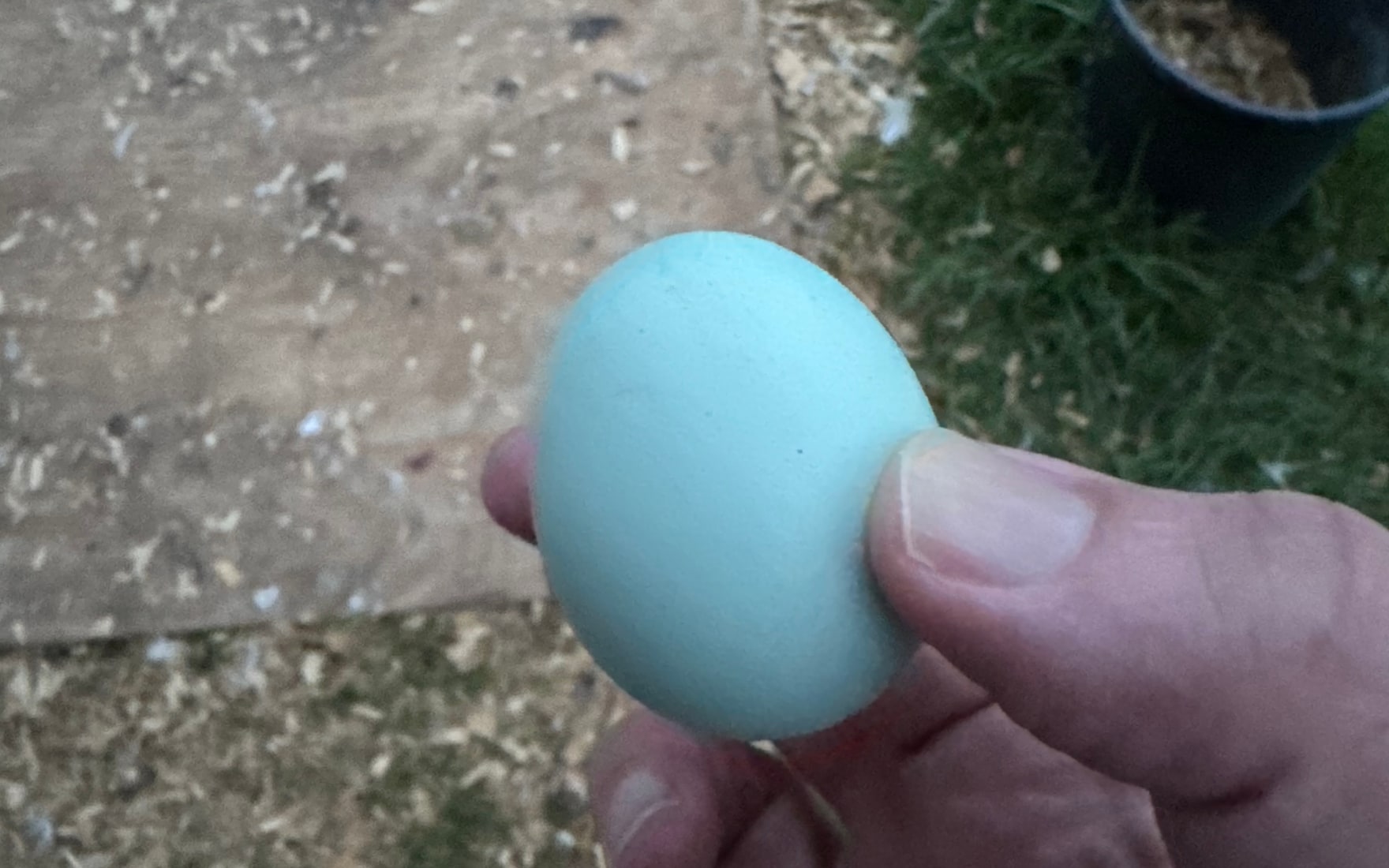
I still remember standing outside with the first blue egg in my hand. The picture is not polished. There is worn concrete under it, a little grass at the edge, and part of the chicken setup blurred behind my fingers. That is exactly why I like it. The egg looked almost too blue to be real, but everything around it was ordinary.
Before that moment, chicken keeping had mostly looked like inputs: feed, water, bedding, latches, cleaning, checking birds, and trying to make the routine fit the rest of family life. Then one small blue egg turned all of that invisible work into something I could hold. I took the picture because it felt worth stopping for.
The useful lesson came after the excitement. The shell color was memorable, but it was not the system. A blue egg did not make the hen healthier than the brown-egg layers. It did not make the waterer refill itself or change what the flock needed from us. Color made the result fun. Care still made the flock work.
Waiting on a first egg?
Learn the signs that a pullet is getting close to laying
Comb color, nesting behavior, squatting, age, breed, season, and setup readiness tell you more than staring at an empty nest box.
Read the first-egg guideHow chicken eggs get their shell color
An eggshell is built largely from calcium carbonate as the egg moves through the hen's reproductive tract. The base shell is light, and pigment changes what we see at the end. The genetics behind the hen determine which pigment system is active and how strongly color is expressed.
Brown shells receive protoporphyrin pigment, much of it late in the shell-forming process and concentrated toward the surface. That is why the inside of a brown shell is usually lighter than the outside and why some brown pigment can appear uneven, speckled, or rubbed at the surface.
Blue shells involve biliverdin pigment deposited through the shell rather than only painted across the outside. Crack a clean blue egg and the inside of the shell will usually carry the blue tone too. When brown pigment is added over a blue shell, the result can look green or olive. The exact shade depends on the genetic combination and pigment intensity.
Which chicken breeds lay blue, brown, green, or white eggs?
Breed gives you a useful expectation, not a paint sample. White Leghorns are known for white eggs. Rhode Island Reds, Plymouth Rocks, Australorps, Orpingtons, and many other common backyard breeds usually lay shades of brown. Ameraucanas are associated with blue eggs, while Easter Eggers are mixed birds that may lay blue, green, tinted, or light-brown eggs. Olive Eggers are crosses selected to combine a blue-shell gene with heavier brown pigmentation.
The University of Florida Extension breed guide makes the more important beginner point alongside the color table: breeds also differ in size, temperament, feed use, hardiness, and production. A colorful basket is enjoyable, but the best first flock is made of birds that fit the household and climate.
Choosing a first flock
Compare beginner breeds by the traits that affect daily care
Egg color belongs in the decision, but temperament, climate fit, space, and production rhythm should carry more weight.
Compare beginner chicken breedsCan the same hen lay different shades?
Yes, within limits. One hen normally keeps the same basic shell color, but her eggs do not come from a factory color chip. Pigment intensity may fade through a laying cycle. Brown eggs may become lighter as a hen ages. Speckles may be stronger one day and lighter another. Bloom, dust, moisture, and indoor lighting can also make a shell look pinker, grayer, or more saturated than it really is.
What generally does not happen is a true switch from one genetic shell system to another. A blue-egg hen should not suddenly become a brown-egg hen. If a nest box holds several colors, the simplest explanation is usually that more than one hen is using it.
Color does not make one egg more nutritious
Blue, green, and dark-brown eggs can look special enough that people assume they must be healthier. University of Florida Extension is direct about this: shell color is based on breed and does not affect nutritional value. The hen's nutrition influences the egg, but the shell shade is not a shortcut for judging that nutrition.
Yolk color is a separate issue. Feed ingredients can influence yolk color, which is why a deep orange yolk and a blue shell should not be treated as one genetic package. Shell color also does not prove an egg is organic, pasture-raised, fresher, cleaner, or safer. Those are different questions with different evidence.
A color change is not the same as a shell-quality problem
A pale brown egg or a new speckle pattern can be cosmetic. A shell that is thin, soft, shell-less, badly misshapen, deeply ridged, cracked, or repeatedly abnormal is a different kind of signal. The University of Georgia Extension notes that odd eggs can occur for several reasons, including an immature shell gland in young layers, nutrition problems, stress, age, physical condition, or disease.
One strange first egg from a young pullet is not automatically an emergency. The pattern matters. Check the complete ration, constant clean water, access to appropriate calcium for laying hens, heat load, flock stress, and whether one bird or several birds are affected. Do not start random supplements or medication from a shell-color guess.
Collect and store colorful eggs the same careful way
A blue shell is not tougher because it is blue, and a dark-brown shell is not automatically safer. Collect eggs regularly, keep nest boxes clean and dry, separate cracked or leaking eggs, and follow sound food-safety guidance for cleaning, refrigeration, and storage.
You do not need special equipment to enjoy a mixed basket. A bowl, small bucket, or basket you already own works. A dedicated wire egg basket earns its place only when eggs are getting tucked into pockets, balanced in both hands, or carried with feed and tools. That is the only monetization that fits here: one simple carrying tool for a repeated job, not a color-themed shopping list.
Recommendations
One optional tool and the references behind this guide
Optional egg-day tool
Little Giant large wire egg basket
A simple open wire basket for collecting and carrying eggs without turning egg gathering into a decorative gear project.
Best for: Small-flock keepers who regularly carry more eggs than fit safely in one hand
A bowl or basket you already own is enough until carrying eggs becomes a repeated problem.
Check current priceExtension breed guide
University of Florida Extension backyard chicken breed guide
A practical breed table showing common laying breeds, typical shell colors, temperament, size, and beginner considerations.
Best for: Beginners choosing a flock by care needs instead of egg color alone
View resourceShell quality guide
University of Georgia egg abnormality guide
A Cooperative Extension guide to shell-less, soft, rough, misshapen, and otherwise unusual eggs.
Best for: Flock keepers deciding whether an odd shell is cosmetic or needs investigation
View resourceAfter the egg comes inside
Use a storage routine that does not depend on memory
Collection dates, clean cartons, crack checks, refrigeration, and a consistent oldest-first system matter more than shell color.
Read the fresh-egg storage guideEnjoy the color without building the flock around it
That first blue egg deserved the picture. It still does. Small moments like that are part of why the work feels meaningful. A mixed basket can make an ordinary morning feel a little less ordinary.
But the color is the bonus, not the foundation. Build the flock around birds you can house, feed, protect, observe, and care for through an ordinary week. Then let the blue, brown, green, cream, or white eggs be the part that surprises you when you open the nest box.
Keep learning
Build the whole beginner chicken system
Use the chicken hub to connect breeds, flock size, startup costs, feed, housing, daily care, seasonal changes, and egg handling.
Browse backyard chicken guidesRecommended next reads
Your next chicken decisions
These guides help connect a colorful egg basket to the breed choice, first-laying timeline, and safe storage routine behind it.
Chickens
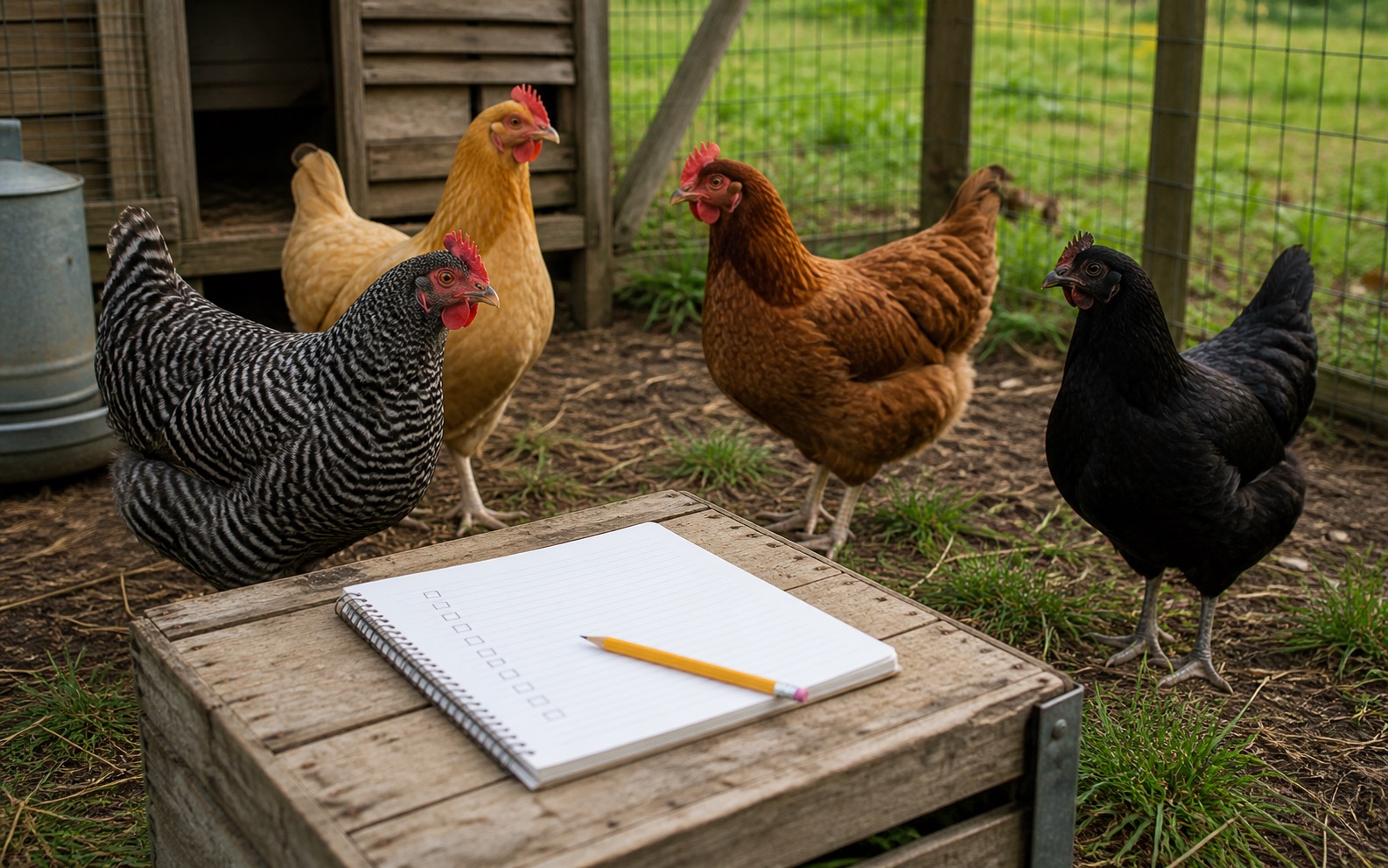
Best Chicken Breeds for Beginners
A practical beginner guide to choosing chicken breeds by temperament, climate, egg goals, local rules, and daily care instead of chasing every egg color at once.

Chickens
When Do Chickens Start Laying Eggs? First Egg Signs and What to Do Next
A practical beginner guide to when pullets usually start laying eggs, what signs to watch for, and how to handle the first eggs without overbuying gear.
Chickens
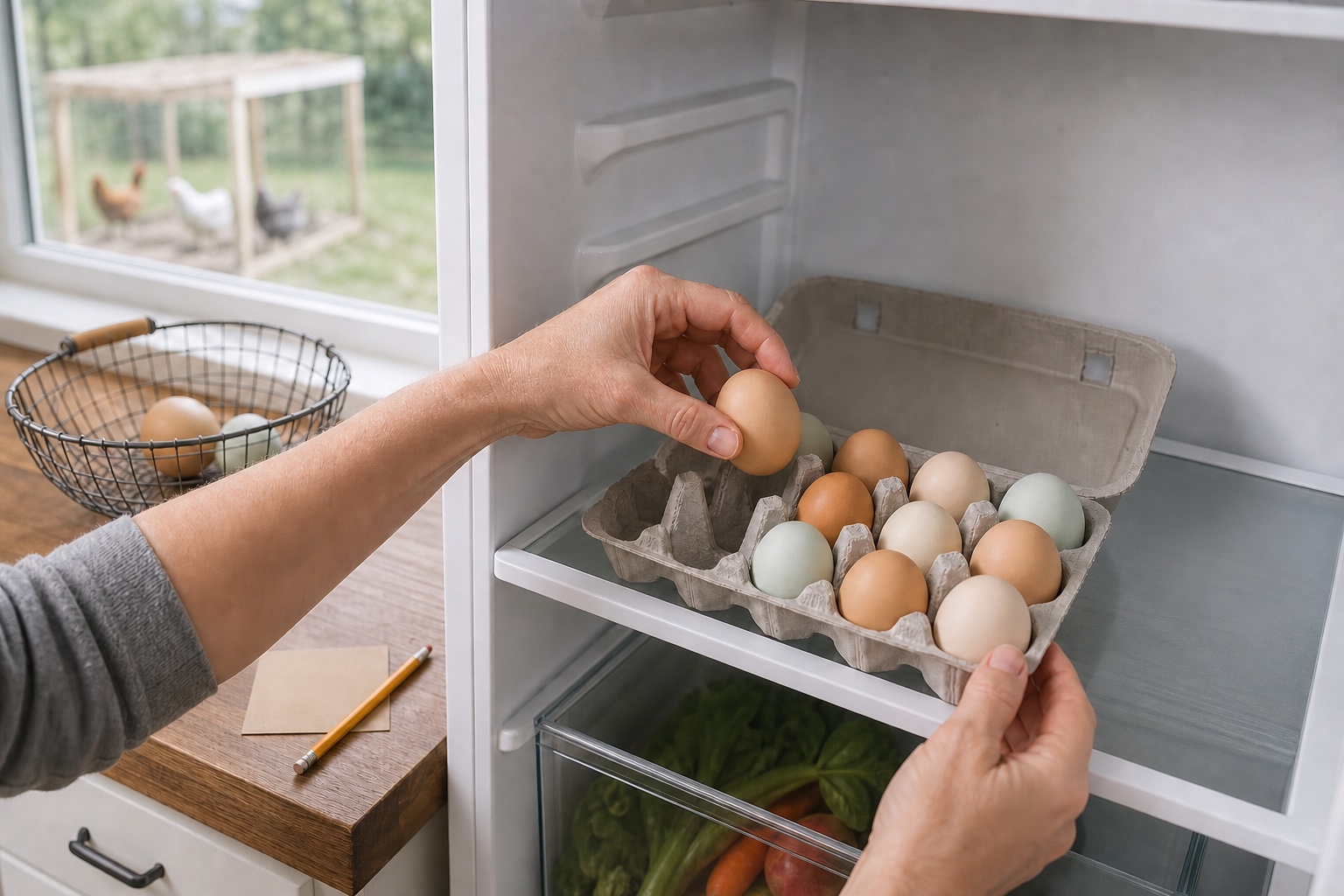
How to Store Fresh Eggs From Backyard Chickens Safely
A safe fresh-egg routine starts before the refrigerator: collect often, keep nests clean, reject cracked shells, dry-clean light soil, date the carton, and refrigerate promptly.
Frequently asked questions
What determines the color of a chicken egg?
Eggshell color is primarily determined by the hen's genetics. Different breeds and crosses deposit different pigments as the shell forms, producing white, cream, brown, blue, green, olive, or tinted eggs.
Are blue or brown eggs healthier than white eggs?
No. Shell color by itself does not make an egg more nutritious. The hen's overall diet and health influence egg nutrition and quality, but a blue, brown, green, or white shell is not a nutrition grade.
Can one chicken lay different colored eggs?
One hen generally stays within her genetically determined color family, although the shade, bloom, speckles, and pigment intensity can vary through the laying cycle, with age, and during periods of stress. A hen that lays blue eggs does not normally switch to laying brown eggs.
When should a change in eggshell appearance concern me?
One odd egg can happen, especially with a young layer. Look closer when thin, soft, shell-less, badly misshapen, unusually pale, or rough eggs repeat, when several hens change at once, or when shell changes come with lower production, poor appetite, respiratory signs, weakness, or other illness.
Recommendations
Useful tools and resources for this decision
These are included only where they reduce repeated friction, clarify a next step, or help you avoid buying the wrong thing first.
Extension breed guide
University of Florida Extension backyard chicken breed guide
A practical breed table showing common laying breeds, typical shell colors, temperament, size, and beginner considerations.
Best for: Beginners choosing a flock by care needs instead of egg color alone
View resourceEgg color reference
Utah State University common egg questions
An Extension reference covering blue-green shell genetics and common misconceptions about colorful eggs.
Best for: Readers who want a plain explanation of blue and green egg inheritance
View resourceShell quality guide
University of Georgia egg abnormality guide
A Cooperative Extension guide to shell-less, soft, rough, misshapen, and otherwise unusual eggs.
Best for: Flock keepers deciding whether an odd shell is cosmetic or needs investigation
View resourceOptional egg-day tool
Little Giant large wire egg basket
A simple open wire basket for collecting and carrying eggs without turning egg gathering into a decorative gear project.
Best for: Small-flock keepers who regularly carry more eggs than fit safely in one hand
A bowl or basket you already own is enough until carrying eggs becomes a repeated problem.
Check current priceRecommended next reads
Read next if it helps the decision
Move into the next guide only if it clarifies the next practical step.
Chickens
Best Chicken Breeds for Beginners
A practical beginner guide to choosing chicken breeds by temperament, climate, egg goals, local rules, and daily care instead of chasing every egg color at once.
Chickens
When Do Chickens Start Laying Eggs? First Egg Signs and What to Do Next
A practical beginner guide to when pullets usually start laying eggs, what signs to watch for, and how to handle the first eggs without overbuying gear.
Chickens
How to Store Fresh Eggs From Backyard Chickens Safely
A safe fresh-egg routine starts before the refrigerator: collect often, keep nests clean, reject cracked shells, dry-clean light soil, date the carton, and refrigerate promptly.
Chicken setup support
Get the chicken setup checklist before you buy more flock gear.
Use the first-year checklist to price the flock honestly, cover the starter essentials, and delay the upgrades that can wait.
Best for: Readers trying to price a first flock honestly and avoid a scattered chicken setup.
- A pre-chick setup checklist
- A recurring-cost planning section
- A simple weekly flock-care rhythm
Chicken setup notes, beginner flock lessons, and the checklist first.
After signup, the download will unlock right here so you can save or print it.
About the author
William Mock
Founder, writer, and beginner homesteader
William writes from the beginner side of rebuilding after a layoff: homestead plans, family systems, budgets, tools, and the decisions that make a home feel less fragile.
Read why this site existsRelated Guides
Keep building context
Chickens
When Do Chickens Start Laying Eggs? First Egg Signs and What to Do Next
A practical beginner guide to when pullets usually start laying eggs, what signs to watch for, and how to handle the first eggs without overbuying gear.
Chickens
Best Chicken Breeds for Beginners
A practical beginner guide to choosing chicken breeds by temperament, climate, egg goals, local rules, and daily care instead of chasing every egg color at once.
Chickens
How to Store Fresh Eggs From Backyard Chickens Safely
A safe fresh-egg routine starts before the refrigerator: collect often, keep nests clean, reject cracked shells, dry-clean light soil, date the carton, and refrigerate promptly.