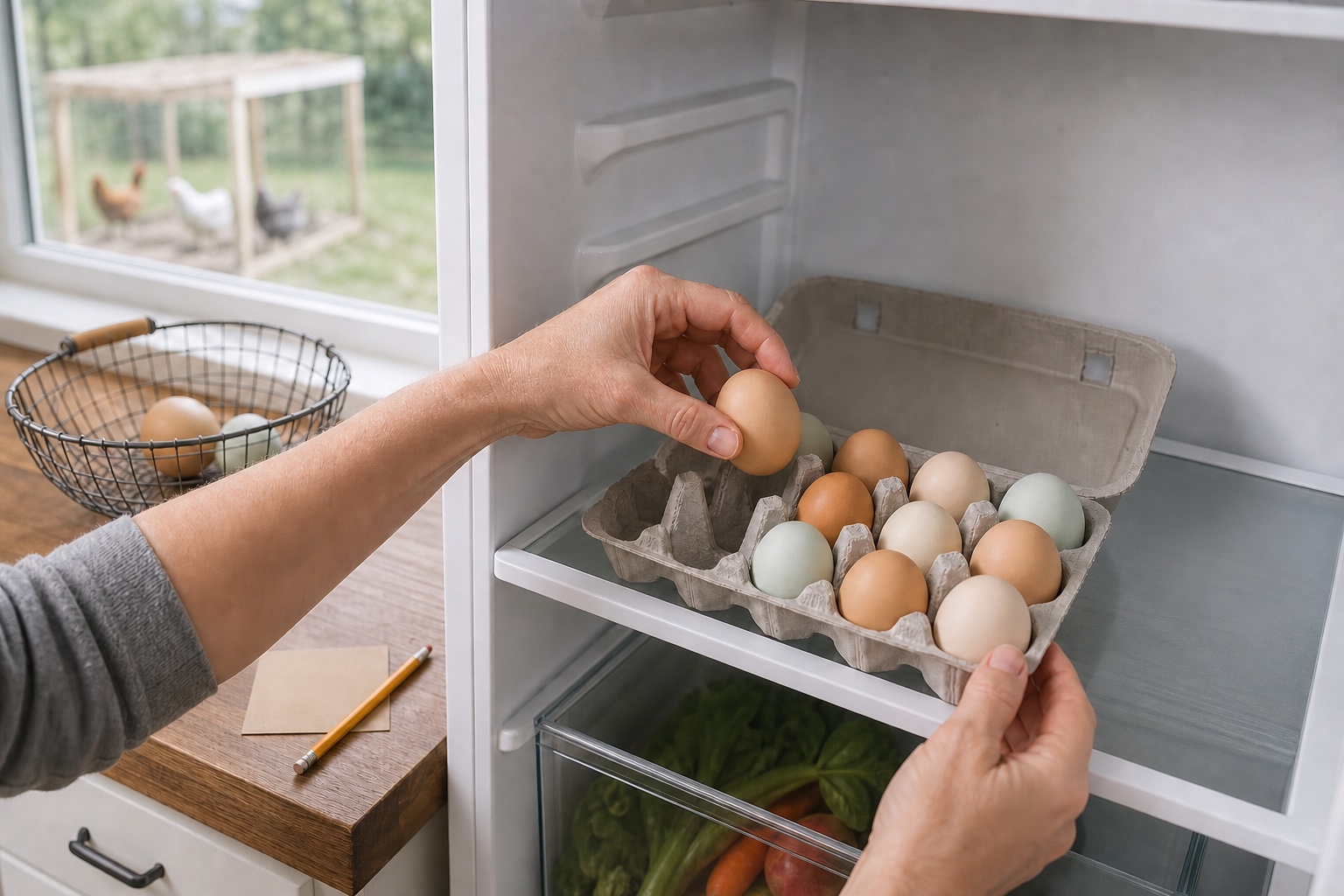
The simplest safe routine for fresh backyard chicken eggs is to collect them frequently, inspect every shell, dry-clean only light soil, discard cracked eggs, write the collection or pack date on a clean carton, and refrigerate promptly at 40 degrees Fahrenheit or below. Store the carton on an interior refrigerator shelf, not in the door, and use the oldest eggs first.
The carton that had eggs but no answers
The first egg is easy to remember. It feels like a small ceremony. You carry it inside more carefully than anything else you collected that day, show it to the family, and set it where nobody can bump it. The third and fourth eggs are still exciting. Then the refrigerator starts holding a few eggs from different days, and the story gets less clear.
I remember opening a carton and realizing the eggs all looked equally fresh because I had given myself no other information. One came from yesterday. A few came from earlier in the week. Someone had moved them to make room, and the neat little order I thought I would remember was gone.
That was the useful shift. Egg storage was not about finding a prettier basket. It was about building a routine plain enough that anyone in the house could follow it: check the shell, mark the date, put the new eggs behind the older eggs, and return the carton to the cold shelf. The egg was the reward. The system was what made the reward usable.
Start the storage routine in the nest box
Safe storage begins before an egg reaches the kitchen. A clean, dry nest produces eggs that need less intervention. University of Minnesota Extension recommends collecting eggs two to three times a day, keeping the chicken house clean and dry, and cleaning nests and replacing nesting material regularly.
For a small home flock, build at least a morning and evening collection into the daily chicken routine, then collect more often during heat, freezing weather, heavy production, or any period when eggs are getting dirty or broken. During cold snaps, use the focused guide to winter egg-collection timing and accidentally frozen eggs. Frequent collection reduces time around manure, moisture, temperature extremes, and curious hens.
Sort every egg before it joins the carton
Do not use smell or appearance as proof that an intact egg was never contaminated. USDA notes that even clean, unbroken fresh shell eggs may contain Salmonella. Shell inspection removes obvious failures; refrigeration and thorough cooking manage risks that eyes cannot see.
Should you wash fresh backyard eggs?
The better first question is why the egg is dirty. A wet or manure-covered egg points back to nest bedding, collection frequency, muddy feet, crowding, a broken egg, or birds sleeping in the nest box. Fixing that source produces cleaner eggs every day. Washing one dirty egg only solves one dirty egg.
University of Minnesota Extension advises keeping eggs dry and using a dry-cleaning method such as fine sandpaper, a brush, or emery cloth for shell soil. It warns against using rags or sponges to scrub. Keep any dry-cleaning tool dedicated to eggs and clean enough that it does not move contamination from one shell to the next.
For a beginner household, the calmer system is clean nests, frequent collection, dry cleaning for minor marks, and discarding eggs that arrive too dirty or damaged to trust. That keeps the everyday routine simple while leaving technical wet washing to situations where you are prepared to follow the full method.
Refrigerate eggs the same way every time
The molded egg rack in a refrigerator door looks convenient, but the door experiences larger temperature swings every time it opens. USDA and Extension guidance favors keeping eggs in their carton on an interior shelf. The carton also protects the shell and preserves the date that a loose refrigerator rack immediately loses.
A refrigerator dial marked one through seven is not a temperature. If the appliance does not provide a reliable reading, a basic refrigerator thermometer answers the only question that matters: is the egg shelf holding 40 degrees Fahrenheit or below?
How long fresh backyard eggs last
USDA lists raw shell eggs at three to five weeks under refrigeration. University of Minnesota Extension gives a four-to-five-week shelf-life range from the pack date. Those are planning ranges for properly handled eggs, not permission to ignore cracks, poor refrigeration, uncertain dates, off odors, or unusual appearance.
Date every carton and rotate oldest first. If eggs from several days share a carton, use the oldest collection date for the carton or mark rows separately. Do not build a tracking system so elaborate that nobody maintains it. A pencil date and first-in, first-out shelf position are enough for most families.
The float test measures age, not safety
As an egg ages, moisture and carbon dioxide move through the shell and its air cell grows. A large enough air cell can make the egg float. USDA says this indicates poor quality, but the egg may still be safe. The reverse matters too: sinking does not prove an egg is free of pathogens.
Use the float test only if knowing that an egg is older helps you choose a cooking use. Do not let it override an unknown storage history, a cracked shell, time left warm, or signs of spoilage. A date on the carton gives you better information without wetting the shell.
Cook and handle eggs like a perishable food
Young children, older adults, pregnant people, and anyone with a weakened immune system face a higher risk from foodborne illness. That is not a reason to fear backyard eggs. It is a reason to keep the routine boring, consistent, and aligned with current food-safety guidance.
What matters first and what can wait
A plain carton and pencil can carry most of the system. A refrigerator thermometer is worth buying when the actual temperature is unknown. A food thermometer earns its place across the whole kitchen. An egg candler may become useful if you grade, sell, or hatch eggs, but ordinary household storage does not need to begin there.
Skip water-glassing and check local rules before selling
Water-glassing eggs in lime water has regained attention online, but Utah State University Extension does not recommend it for long-term storage. Salmonella can contaminate an egg before the shell forms, and an old preservation tradition cannot verify that the egg began free of contamination. Refrigeration is the safer shell-egg routine.
If production outruns breakfast, do not let excess eggs pressure you into an untested storage method. Share or sell only within current state and local requirements, which may govern cleaning, refrigeration, cartons, labels, dates, grading, and where sales can occur. For longer storage, egg contents can be frozen using a current tested method; whole eggs should not be frozen in the shell.
Before the first full carton
Know what the first eggs are telling you
Use the first-egg guide to recognize laying signs, handle odd early eggs calmly, check nest boxes, and build the routine that supports a young flock.
Read the first-egg guideThe best egg-storage system is one everyone follows
Fresh backyard eggs deserve excitement, but they also deserve the same calm food-safety habits as anything else that feeds the family. Collect them. Look at them. Keep them dry. Date them. Refrigerate them. Cook them with care.
The basket makes the photograph. The carton and pencil make the week work. That is the kind of small homestead system worth keeping.
Recommended next reads
Build the laying-flock routine
These guides cover the decisions around egg storage: recognizing first-lay signs, keeping daily care visible, and choosing a flock size the household can manage.

Chickens
When Do Chickens Start Laying Eggs? First Egg Signs and What to Do Next
A practical beginner guide to when pullets usually start laying eggs, what signs to watch for, and how to handle the first eggs without overbuying gear.
Chickens
Daily Chicken Care Routine for Busy Families
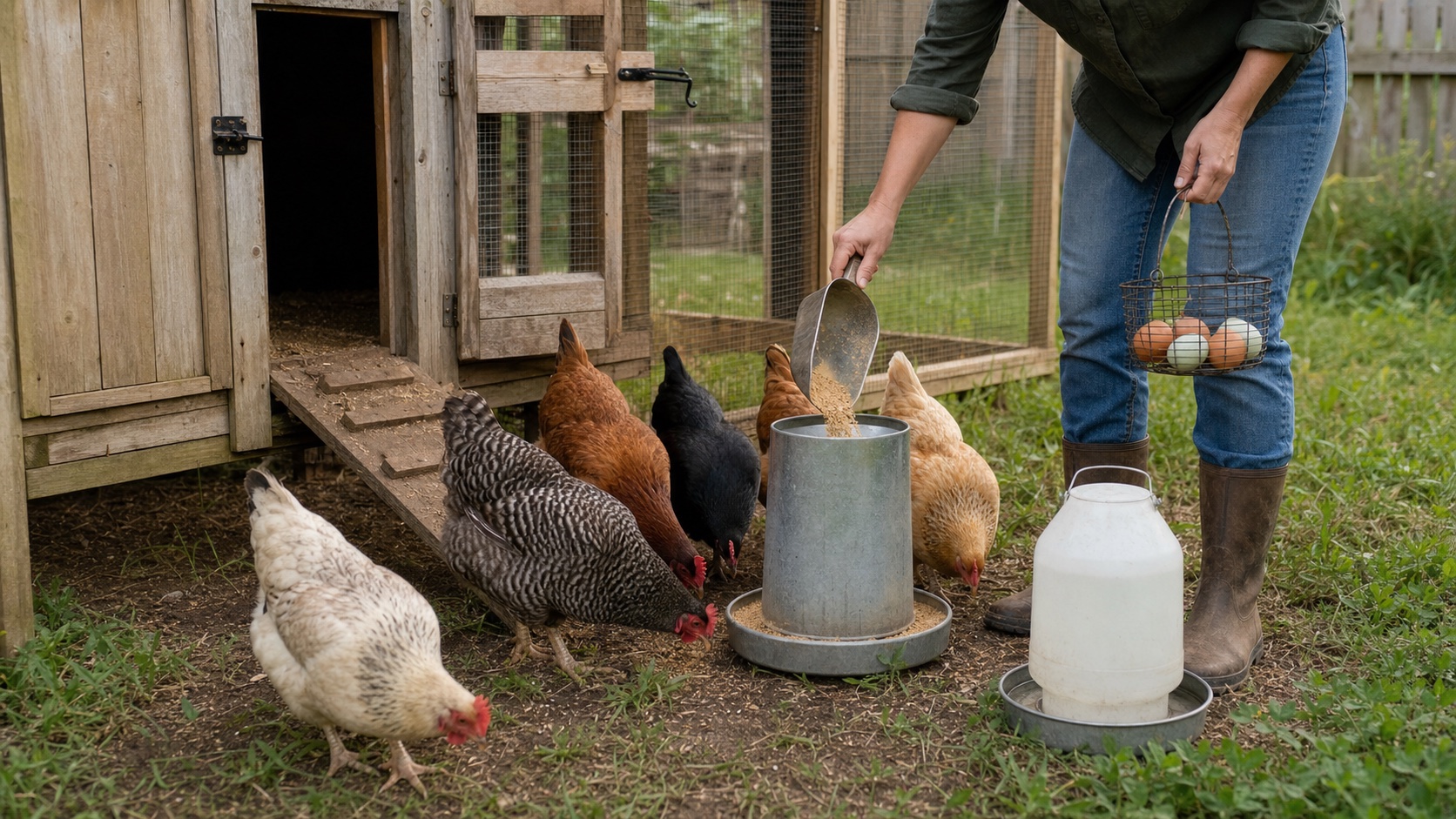
A realistic morning and evening chicken-care routine built around fresh water, feed, eggs, observation, a secure coop, and the few checks busy families should not skip.
Chickens
How Many Chickens Should a Beginner Start With?
A practical, beginner-first guide to choosing a first flock size without overcommitting on coop space, feed, chores, or your actual week.
Keep it practical
Price and plan the first flock before it arrives
Get the beginner chicken checklist and use it to cover feed, water, housing, predator protection, recurring costs, and the daily routine before birds come home.
Practical notes from the work in progress. Low-noise and easy to leave.
Frequently asked questions
Do fresh backyard chicken eggs need to be refrigerated?
For the simplest conservative U.S. household routine, refrigerate fresh eggs promptly at 40 degrees Fahrenheit or below. Keep them in a carton on an interior shelf rather than in the refrigerator door. This article follows USDA and university Extension guidance instead of relying on room-temperature traditions that may use different production and handling systems.
Should I wash fresh eggs before refrigerating them?
Prevent dirty eggs first with clean, dry nest boxes and frequent collection. University of Minnesota Extension recommends keeping eggs dry and using a dry-cleaning method for light soil. Wet washing is not a casual rinse: water temperature, approved cleaning products, sanitizing, drying, and prompt refrigeration all matter. Follow current Extension guidance if wet cleaning is necessary.
How long do fresh eggs last in the refrigerator?
USDA lists raw shell eggs at about three to five weeks in the refrigerator. University of Minnesota Extension gives a four-to-five-week shelf-life range from the pack date. Date the carton when eggs are collected or packed, use the oldest first, and discard any egg with a cracked shell, off odor, or unusual appearance.
Does the egg float test tell me whether an egg is safe?
No. USDA explains that floating means the egg's air cell has enlarged, which indicates age and lower quality. A floating egg may still be safe, and a sinking egg is not proven safe. Dates, refrigeration, shell condition, handling, and separate inspection after cracking are better safety controls.
Can I eat an egg with a cracked shell?
Discard eggs found with broken or cracked shells. Bacteria can enter through shell damage, and you often do not know when the crack happened. Do not let the value of one egg outweigh the uncertainty.
Is water-glassing a safe way to preserve backyard eggs?
Utah State University Extension does not recommend water-glassing eggs for long-term storage. Refrigeration is the safer routine for shell eggs. If production exceeds what your household can use, consider sharing within local rules or freezing egg contents with a current tested method rather than preserving raw shell eggs in lime water.
Recommendations
Useful tools and resources for this decision
These are included only where they reduce repeated friction, clarify a next step, or help you avoid buying the wrong thing first.
Compare refrigerator thermometers
Easy-read refrigerator thermometer
A basic thermometer confirms that the interior shelf where eggs are stored is actually holding 40 degrees Fahrenheit or below.
Best for: Households storing a regular supply of backyard eggs in a refrigerator without a reliable temperature display
Skip it if your appliance already provides a trustworthy verified temperature. The purpose is knowing the temperature, not adding another gadget.
Check current priceCompare plain egg cartons
Plain fiber egg cartons
Clean cartons protect shells, keep eggs organized, and give you a simple place to write the collection or pack date.
Best for: Families collecting enough eggs that loose bowls and mixed dates are becoming confusing
Clean cartons you already have can work for household use. Check local labeling and packaging rules before selling or donating eggs.
Check current priceCompare food thermometers
Digital food thermometer
A food thermometer is useful for egg casseroles, quiche, and other mixed dishes that should reach 160 degrees Fahrenheit.
Best for: Households cooking mixed egg dishes where appearance alone does not confirm a safe internal temperature
This serves far more meals than an egg date stamp or specialty storage rack. Use one you already trust if it reads accurately.
Check current priceRead the Extension checklist
University of Minnesota Extension farm-fresh egg checklist
Current practical guidance covering collection, dry cleaning, cracked eggs, cartons, refrigeration, preparation, and coop hygiene.
Best for: Checking the complete path from nest box to refrigerator
View resourceReview USDA egg guidance
USDA shell egg safety guide
A broad federal reference for refrigeration, storage time, cracked shells, float-test meaning, cooking, and higher-risk recipes.
Best for: Verifying household storage and cooking decisions
View resourceRead the storage guidance
Utah State University Extension egg storage guidance
A direct explanation of refrigeration, freezing egg contents, and why water-glassing is not recommended.
Best for: Comparing safe storage with popular long-term preservation claims
View resourceRecommended next reads
Read next if it helps the decision
Move into the next guide only if it clarifies the next practical step.
Chickens
When Do Chickens Start Laying Eggs? First Egg Signs and What to Do Next
A practical beginner guide to when pullets usually start laying eggs, what signs to watch for, and how to handle the first eggs without overbuying gear.
Chickens
Daily Chicken Care Routine for Busy Families
A realistic morning and evening chicken-care routine built around fresh water, feed, eggs, observation, a secure coop, and the few checks busy families should not skip.
Chickens
How Many Chickens Should a Beginner Start With?
A practical, beginner-first guide to choosing a first flock size without overcommitting on coop space, feed, chores, or your actual week.
Chicken setup support
Get the chicken setup checklist before you buy more flock gear.
Use the first-year checklist to price the flock honestly, cover the starter essentials, and delay the upgrades that can wait.
Best for: Readers trying to price a first flock honestly and avoid a scattered chicken setup.
- A pre-chick setup checklist
- A recurring-cost planning section
- A simple weekly flock-care rhythm
Chicken setup notes, beginner flock lessons, and the checklist first.
After signup, the download will unlock right here so you can save or print it.
About the author
William Mock
Founder, writer, and beginner homesteader
William writes from the beginner side of rebuilding after a layoff: homestead plans, family systems, budgets, tools, and the decisions that make a home feel less fragile.
Read why this site existsRelated Guides
Keep building context
Chickens
How Many Chickens Should a Beginner Start With?
A practical, beginner-first guide to choosing a first flock size without overcommitting on coop space, feed, chores, or your actual week.
Chickens
When Do Chickens Start Laying Eggs? First Egg Signs and What to Do Next
A practical beginner guide to when pullets usually start laying eggs, what signs to watch for, and how to handle the first eggs without overbuying gear.
Chickens
Daily Chicken Care Routine for Busy Families
A realistic morning and evening chicken-care routine built around fresh water, feed, eggs, observation, a secure coop, and the few checks busy families should not skip.