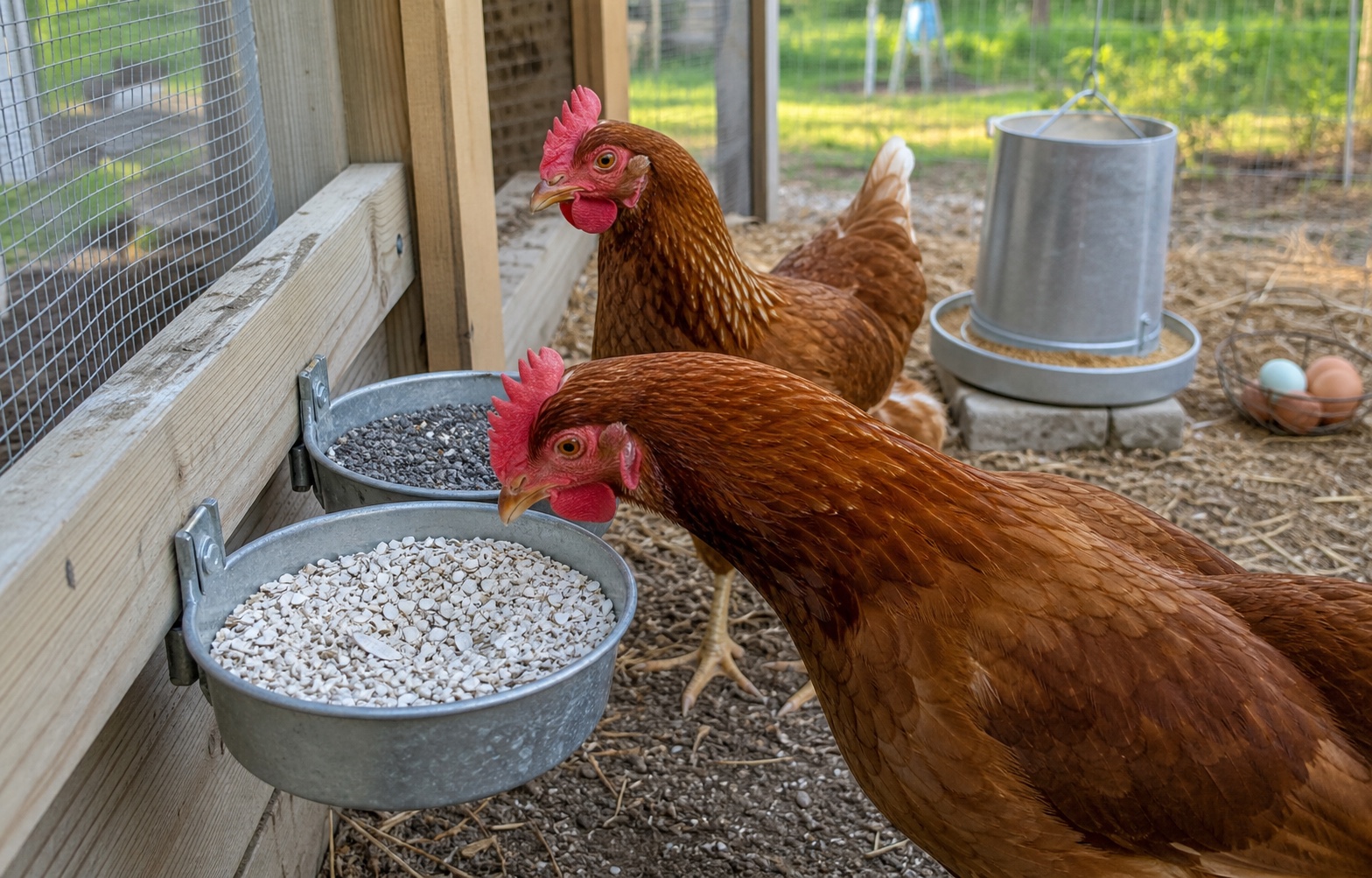
Actively laying hens should have the correct complete ration and access to supplemental calcium such as crushed oyster shell when appropriate. Offer oyster shell free-choice in a separate, clean container instead of treating it like grit or mixing random amounts into every bird's feed. Oyster shell supplies calcium; insoluble poultry grit helps the gizzard grind coarse food. They are not interchangeable.
For a beginner flock, the order matters more than the supplement shelf. Start with age-appropriate complete feed and constant clean water. Add separate oyster shell for layers. Provide appropriately sized insoluble grit when the birds eat scratch, whole grains, fibrous forage, or other coarse foods and cannot reliably find suitable stone. Then watch the whole flock instead of using one unusual egg as a diagnosis.
The blue shell that made calcium feel less abstract
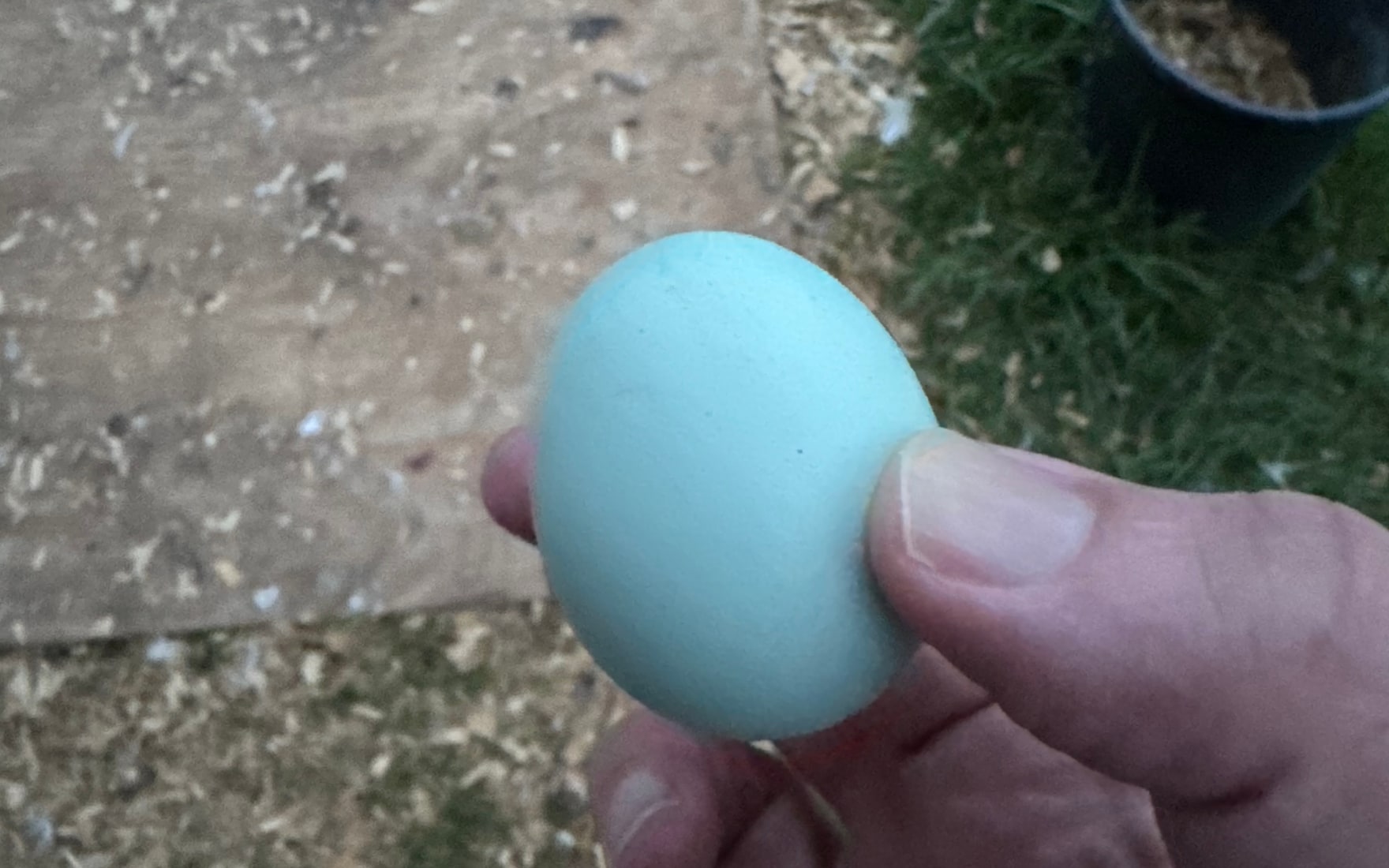
I still remember holding our first blue egg outside. Until that point, most of chicken keeping had been inputs: feed, water, bedding, latches, cleaning, and one more ordinary check before moving on with the day. The egg made the work visible, but this time the detail that caught me was not only the color. It was the shell itself.
A shell looks simple after it is in the basket. In the hen, it is the end of a whole nutrition and body process. That realization can send a beginner straight toward supplements. If calcium matters, more calcium must be better. If grit helps digestion, maybe oyster shell does both. The feed shelf makes those shortcuts easy because every bag looks like another solution.
The better lesson was restraint. The egg did not ask me to turn the feeder into a chemistry experiment. It asked me to make the basic system easier to understand: the right complete ration, water that never disappears, calcium available to the hens using it, grit available for the food that requires it, and enough observation to notice a pattern before reacting to one shell.
Build the whole first-flock system
Price feed, housing, water, care, and supplies together
The backyard chicken cost guide keeps a small supplement decision inside the actual first-year setup instead of letting purchases scatter.
Read the chicken cost guideOyster shell, grit, and layer feed do three different jobs
Oregon State Extension is explicit about the key confusion: oyster shell cannot substitute for grit because it is too soft to do the gizzard's grinding work. The reverse is also true in practice. Granite grit is not a calcium program for a laying hen. A bird may visit both cups, but she is using them for different reasons.
Which chickens need oyster shell?
Oyster shell belongs primarily with active laying hens and breeding hens, not every chicken at every age. Layer feed already contains much more calcium than starter or grower feed. Some hens may still need or choose supplemental calcium, particularly when an all-purpose ration is used for a mixed flock or shell quality indicates the current calcium program deserves review.
A pullet approaching lay is a transition, not a reason to put chicks on layer feed early. Oregon State places the usual layer-feed transition around 18 to 20 weeks or the first egg, whichever occurs first. Feed formulas and breeds vary, so read the bag label and use local Extension guidance when the flock does not fit the simple timeline.
Waiting for the laying transition?
Know the first-egg signs before changing the setup
Comb color, squatting, nest interest, age, breed, season, and the actual first egg give a clearer transition signal than a date alone.
Read the first-egg guideHow to offer oyster shell without overcomplicating the coop
Use a small, stable container separate from the main feeder and grit cup. Place it where laying hens can reach it without standing in it, filling it with bedding, or soaking it every time rain blows through the run. A mounted livestock cup, a small heavy dish, or another clean container you already own can work.
Separate free-choice feeding is useful because individual laying hens do not all have identical calcium demand. It also protects the complete ration from casual mixing. Once supplements are stirred into the main feeder, it becomes harder to know what each bird consumed and easier to mistake a mineral addition for a balanced diet.
When chickens need grit
Chickens do not chew with teeth. The muscular gizzard grinds food, and hard insoluble grit helps with coarse material. Birds eating only a properly manufactured complete crumble or pellet may have less need for added grit than birds eating whole grains, scratch, garden material, fibrous forage, or kitchen scraps.
Outdoor access is not a guarantee. Some birds find plenty of suitable small stone in natural ground. Others live on clay, deep litter, grass, sand, snow-covered soil, or a run where useful stone is scarce. If the flock eats coarse food and you cannot confidently identify a reliable grit source, age-appropriate commercial poultry grit is a simple separate option.
Thin shells are a clue, not a calcium diagnosis
A thin, soft, rough, misshapen, or shell-less egg can involve nutrition, but calcium is not the only variable. The complete ration, phosphorus, vitamin D, water, heat, age, stress, body condition, and disease can all affect shell formation or egg quality. Adding more oyster shell without checking the rest of the system can miss the actual problem.
Start the review with the bag label and the birds. Confirm the feed type and freshness, how much scratch and treats are displacing it, water access, heat load, oyster-shell availability, flock ages, and which hens are affected. Repeated shell abnormalities or a bird acting unwell deserve guidance from a poultry veterinarian, diagnostic lab, or local Extension professional rather than a larger scoop of supplement.
When the shell looks different
Separate harmless color variation from a quality problem
The egg-color guide explains pigment, normal shade changes, first-egg irregularities, and the shell patterns that deserve a closer flock check.
Read the egg-color guideWhat is worth buying and what can wait
Crushed oyster shell is inexpensive and purposeful when active layers need separate calcium. Manna Pro's five-pound bag is clearly labeled for laying poultry and publishes a calcium analysis. That makes it a reasonable small-flock option, but it is not special enough to ignore the local feed store. Compare the delivered price with a local bag before ordering online.
The container does not need to be branded. A stable clean cup you already own is enough if it can stay dry and cannot become a manure collection point. Buy a mounted cup only when tipping, contamination, or daily refilling is a repeated problem. Do not turn two handfuls of mineral into a new coop organization project.
Keep recurring feed costs honest
Price the ration before the supplements
Use flock size, bag weight, waste, storage, treats, and actual consumption to understand the monthly feed number behind the eggs.
Read the chicken feed cost guideA five-minute oyster shell and grit check
That first blue shell made the nutrition question visible for me. The answer turned out to be less dramatic than the egg: complete feed, clean water, one separate calcium cup, one separate grit cup when needed, and enough attention to keep the categories straight.
Oyster shell earns its place when it serves laying hens without confusing the rest of the ration. Grit earns its place when the food and ground make grinding help necessary. Neither product should become a shortcut around the flock's basic system. Keep those jobs clear, and the feed shelf gets quieter.
Continue building a calmer first flock
Use the chicken hub for the next care decision
Move from nutrition into flock size, startup cost, daily routines, weather care, housing, and egg handling without buying the whole setup twice.
Explore beginner chicken guidesFrequently asked questions
Do chickens need oyster shell if they eat layer feed?
Layer feed is formulated with substantially more calcium than starter or grower feed, but some laying hens may still benefit from supplemental oyster shell. Oregon State Extension recommends offering oyster shell free-choice in a separate feeder so active layers can select it as needed. Start with the correct complete feed and clean water rather than using oyster shell to repair an unbalanced ration.
Is oyster shell the same as chicken grit?
No. Oyster shell is a soluble calcium source used mainly by laying hens for eggshell and body calcium needs. Insoluble poultry grit is hard stone retained in the gizzard to help grind coarse foods. Oyster shell is too soft to replace grit, and grit does not supply the calcium oyster shell is meant to provide.
When should I start giving pullets oyster shell?
Use the laying transition and the feed label rather than an arbitrary early date. Extension guidance commonly moves pullets to layer nutrition around 18 to 20 weeks or when the first egg appears. Do not give growing chicks a high-calcium layer ration simply because they will lay later. For mixed ages, ask your local Extension educator or poultry veterinarian about an appropriate all-flock feeding plan with separate calcium for active layers.
How much oyster shell should I give laying hens?
Do not force a measured daily portion into each hen. Keep a modest amount available free-choice in a clean, dry, separate container, then refill based on actual use. Follow the complete feed and oyster-shell labels. A sudden change in consumption or repeated shell problems deserves a review of the entire ration, water, flock condition, weather, and health rather than automatic supplementation.
Do free-range chickens still need poultry grit?
Chickens with access to suitable ground often find small stones, but that depends on the soil, season, confinement, and what they eat. Birds consuming whole grains, scratch, fibrous forage, or other coarse foods need access to appropriately sized insoluble grit. If you are uncertain whether the range provides it, a separate container of age-appropriate poultry grit is a simple backup.
Recommendations
Useful tools and resources for this decision
These are included only where they reduce repeated friction, clarify a next step, or help you avoid buying the wrong thing first.
Optional layer supplement
Manna Pro crushed oyster shell, 5 pounds
Coarse oyster shell and coral calcium intended as a free-choice calcium source for laying poultry.
Best for: Small backyard flocks with active laying hens that need a clearly labeled supplemental calcium option
Check a local feed store first because a basic five-pound bag may cost less there. Skip this for chicks and nonlaying juveniles unless a poultry professional directs otherwise, and do not use it as a substitute for complete feed or grit.
Check current pricePrimary feeding reference
Oregon State Extension guide to feeding laying hens
A detailed guide to starter, grower, layer, all-purpose feed, oyster shell, scratch, grit, treats, and water.
Best for: Understanding where oyster shell and grit fit inside the complete feeding system
View resourceSmall-flock reference
University of Minnesota Extension guide to raising chickens for eggs
A broad small-flock guide covering balanced feed, oyster shell, grit, water, housing, nest boxes, sanitation, and observation.
Best for: Checking the calcium decision against the rest of backyard layer care
View resourceNutrition reference
University of Georgia Extension backyard flock nutrition guide
Source-backed poultry nutrition guidance covering complete feeds, calcium, phosphorus, vitamins, minerals, and life-stage differences.
Best for: Understanding why laying birds need more calcium and why growing birds need the correct life-stage ration
View resourceRecommended next reads
Read next if it helps the decision
Move into the next guide only if it clarifies the next practical step.

Chickens
When Do Chickens Start Laying Eggs? First Egg Signs and What to Do Next
A practical beginner guide to when pullets usually start laying eggs, what signs to watch for, and how to handle the first eggs without overbuying gear.
Chickens
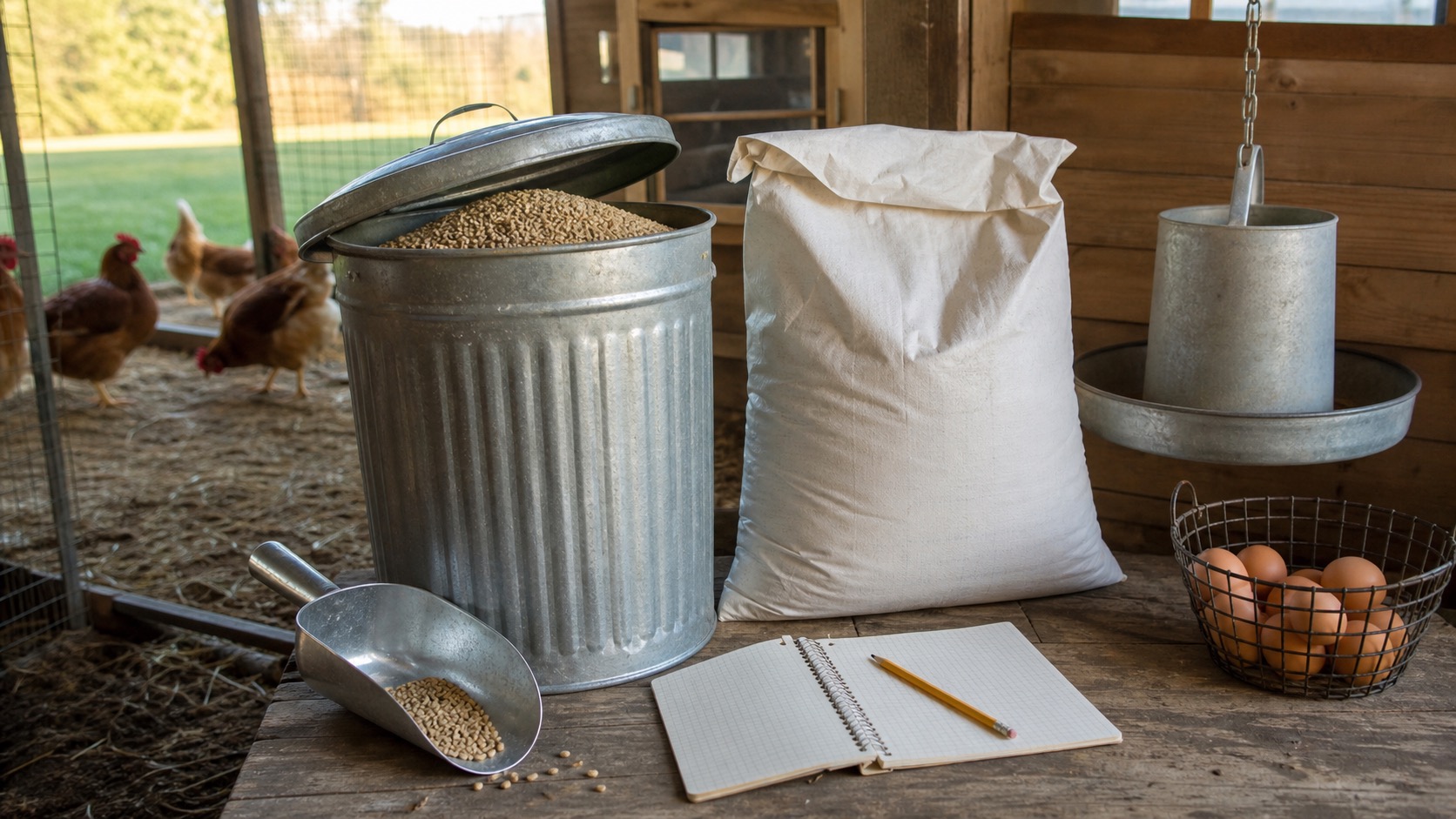
Chicken Feed Costs for Beginners: Monthly Numbers That Actually Matter
A practical guide to monthly chicken feed costs for beginners, including feed math, flock size, waste, storage, and the recurring costs that make egg math more honest.
Chickens
Chicken Egg Colors Explained: Blue, Brown, Green, and More
Why chickens lay blue, brown, green, cream, or white eggs, which breeds lay each color, what shade changes are normal, and when the shell deserves a closer look.
Chicken setup support
Get the chicken setup checklist before you buy more flock gear.
Use the first-year checklist to price the flock honestly, cover the starter essentials, and delay the upgrades that can wait.
Best for: Readers trying to price a first flock honestly and avoid a scattered chicken setup.
- A pre-chick setup checklist
- A recurring-cost planning section
- A simple weekly flock-care rhythm
Chicken setup notes, beginner flock lessons, and the checklist first.
After signup, the download will unlock right here so you can save or print it.
About the author
William Mock
Founder, writer, and beginner homesteader
William writes from the beginner side of rebuilding after a layoff: homestead plans, family systems, budgets, tools, and the decisions that make a home feel less fragile.
Read why this site existsRelated Guides
Keep building context

Chickens
The Real Cost of Getting Started With Backyard Chickens
Backyard chickens can be a strong first step into homesteading, but the startup costs and recurring work deserve an honest look.
Chickens
When Do Chickens Start Laying Eggs? First Egg Signs and What to Do Next
A practical beginner guide to when pullets usually start laying eggs, what signs to watch for, and how to handle the first eggs without overbuying gear.
Chickens
Chicken Feed Costs for Beginners: Monthly Numbers That Actually Matter
A practical guide to monthly chicken feed costs for beginners, including feed math, flock size, waste, storage, and the recurring costs that make egg math more honest.