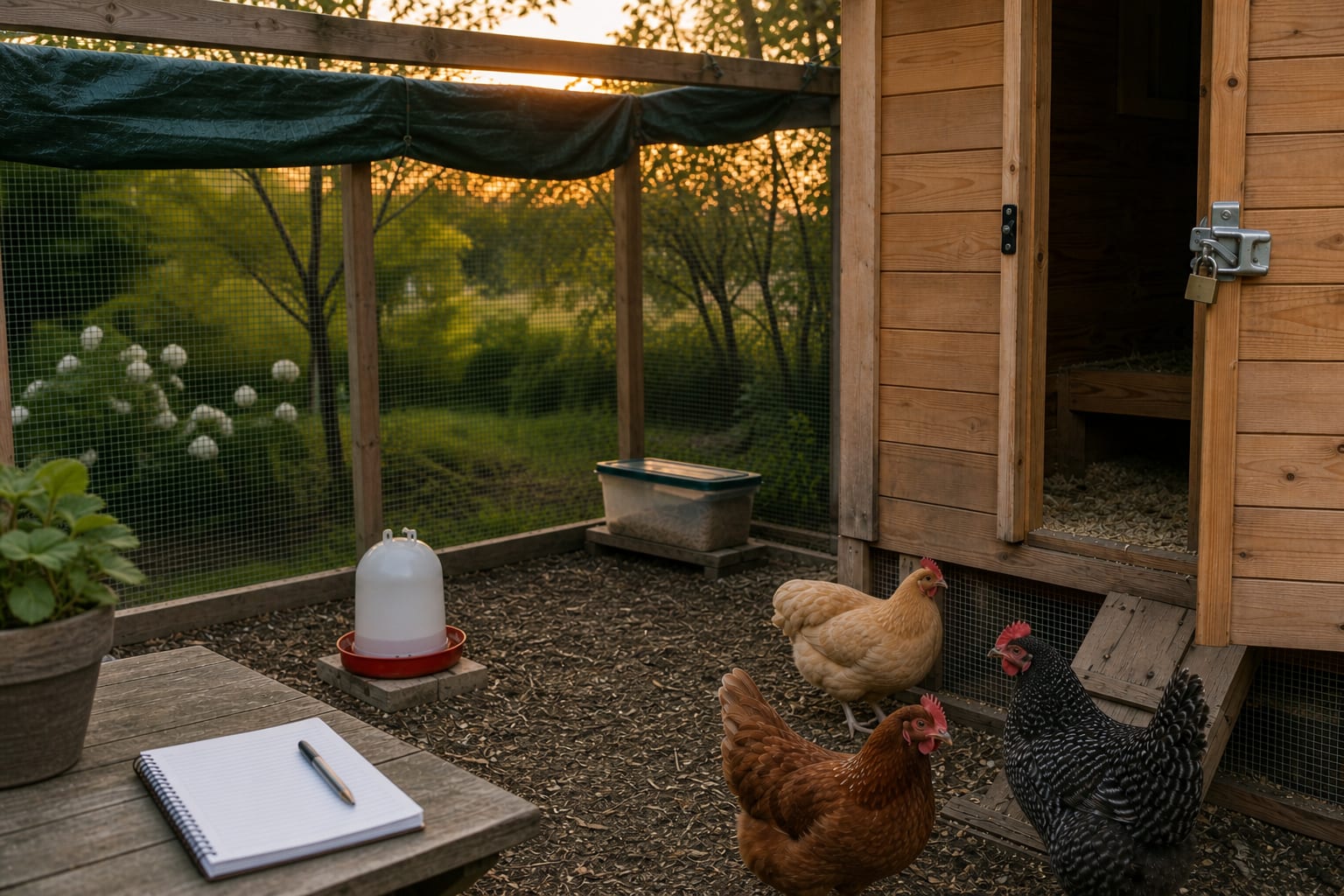
Fireworks night is one of those backyard chicken problems that beginners do not always think about until the sun is going down and the first boom rolls across the neighborhood. The birds are already part of the evening routine. The kids are excited. The dog may be unsettled. The yard feels different. Then you remember the coop.
The good news is that helping chickens through fireworks is usually not about buying a special calming product. It is about doing the ordinary things earlier, slower, and more carefully: water, feed, shade, ventilation, latches, roosting, and a next-morning check.
The night the coop became part of the holiday plan
There is a strange moment in beginner homesteading when a holiday stops being only a family calendar event and becomes a systems check. You are still thinking about food, kids, neighbors, weather, and whether everyone has what they need. But now there is also a flock outside that did not agree to the fireworks schedule.
That is the part that stuck with me. Not some dramatic chicken disaster. Just the realization that animals turn vague responsibility into specific responsibility. A loud night asks whether the coop actually closes cleanly, whether the waterer is full, whether the run has a weak corner, and whether the evening routine is clear enough to hold when the rest of the household is distracted.
It made me appreciate the boring prep. The cool homestead moment is not standing outside with a perfect plan while everything is quiet. It is walking the same route you walk on ordinary nights, putting your hand on the latch, looking at the birds instead of the idea of the birds, and knowing you did the simple work before the noise started.
What fireworks change for chickens
Chickens live by patterns more than explanations. Sudden noise, vibration, flashing light, visitors, dogs barking, doors opening, late-night traffic around the yard, and people moving differently can all make the evening feel less predictable.
Some flocks will roost and ride it out without much visible drama. Others may shift around, startle, vocalize, pile into a corner, refuse the usual roost for a while, or act touchy the next morning. The point is not to assume panic. The point is to reduce the things you can control so the flock has fewer problems stacked on top of the noise.
Start before dark, not after the first boom
The best fireworks plan starts while you can still see. Walk the setup before the neighborhood gets loud. Look at the run gate, coop door, latches, wire, roof edge, ground line, waterer, feeder, bedding, and roost area. This is the same habit from a good daily chicken-care routine, just with a little more attention because the evening may be less normal.
If the flock normally free-ranges, bring them back to the protected area earlier than usual. Do not wait until the first fireworks startle them. A calm early close is better than trying to herd nervous birds under pressure. If they are already in a secure run, keep the routine predictable and avoid turning the evening into a big production.
Do not seal the coop tight to block sound
It is tempting to think quieter means closed up. That can be a bad trade, especially on a hot July night. Chickens still need ventilation. A stuffy coop can become a bigger problem than the noise you are trying to soften.
Instead of sealing the coop, aim for familiar shelter and safe airflow. Keep predator-resistant vents open. Use the normal roosting area. If a window or vent cover is normally secured with hardware cloth, leave the secure ventilation doing its job. Do not throw tarps over every opening in a way that traps heat or blocks air.
Keep the night boring
The loud night is not the night to introduce a brand-new roost, move the waterer across the coop, add a strange light, rearrange the nest boxes, test an automatic door for the first time, or invite everyone to walk through the run because the chickens are interesting.
Boring is the goal. Familiar bedding. Familiar roost. Familiar water location. Familiar door. Familiar close. The less you change, the easier it is to notice what actually changed because of the fireworks.
If you need to check the flock after dark, use a headlamp or small flashlight and keep the visit short. Do not bring candles, lantern flames, sparklers, or extension-cord experiments near dry bedding, wood, feed, or the run. Fire risk is not worth the atmosphere.
What to watch during the noise
If the coop is secure and the birds are inside, you usually do not need to keep opening the door. Repeatedly checking can add disturbance, especially if every visit brings flashlight beams, voices, footsteps, or a door swinging open.
Listen for something that sounds different from normal settling: repeated frantic crashing, a bird caught somewhere, a predator event, a door failure, or a human safety issue near the coop. Otherwise, let the familiar night space do its job. The goal is steady care, not nervous hovering.
The morning-after check matters
The next morning is when you slow down again. Do not just open the door and move on. Watch the flock leave the coop. Look for limping, drooping posture, a bird standing alone, open-mouth breathing, injury, missing feathers, unusual quiet, or a hen that does not want to come down.
Then inspect the physical setup. Loud nights can overlap with visitors, dogs, kids, gates, trash, and late chores. Check latches, wire, run edges, bedding, water, feed, and the ground around the coop. If anything shifted, fix the small problem while it is still small.
When to get help
Most fireworks nights should end with ordinary observation and maybe a better latch on your shopping list. But if a chicken is injured, cannot stand, is struggling to breathe, seems severely distressed, was attacked, or is acting dramatically different from normal, do not treat the situation like a routine checklist.
Separate immediate safety from guesswork. Move carefully, reduce additional stress, and contact a poultry-aware veterinarian, local Extension office, or experienced local poultry keeper when the situation is beyond basic husbandry. A blog post can help with preparation, but it cannot diagnose a bird in front of you.
What is worth buying for fireworks night?
I would not build a shopping list around fireworks. Most of the useful work is already part of good chicken keeping: a secure coop, clean water, predator-resistant ventilation, a normal roosting routine, and a morning check. But a loud holiday can reveal a few purchases that were already justified.
A latch that clearly locks is worth considering if the current one is weak. A headlamp is useful for every dark chore, not just July. A better waterer is worth it if the current one tips, fouls, or runs dry. Those are not fireworks gimmicks. They are ordinary tools that make the whole setup calmer.
Recommendations
Useful prep that earns its place
Security upgrade
Two-step locking coop latch
A better latch helps when the current door or run gate is too easy to bump, half-close, or misunderstand in the dark.
Best for: Weak coop doors and run gates
Check current priceUseful all year
Battery headlamp for chores
A headlamp keeps your hands free for latches, waterers, and bird checks without bringing flame near bedding.
Best for: Evening and winter coop checks
Check current priceBasic care first
Easy-clean poultry waterer
A stable, cleanable waterer gives you one less basic need to worry about on hot, noisy nights.
Best for: Small flocks with messy or unreliable water setups
Check current priceMake it part of the normal routine
The strongest fireworks plan is really a better normal routine. If the coop closes cleanly every night, if the waterer is checked every day, if the run edges get looked at, and if the birds are observed instead of treated like background decorations, then fireworks night is less of a special emergency.
That is the larger lesson I keep coming back to on the homestead side of life. Good systems are not dramatic. They are the reason ordinary nights stay ordinary, even when the neighborhood gets loud.
Next step
Strengthen the nightly chicken routine.
If this article exposed a weak latch, loose routine, or uncertain evening close, start with the daily chicken-care routine and the predator-proof coop guide before adding more gear.
Read the daily chicken routineFrequently asked questions
Do fireworks scare backyard chickens?
Fireworks can startle chickens because of the sudden noise, vibration, lights, and household disruption around the coop. Some flocks handle it quietly, while others become restless, pile up, refuse to roost normally, or act jumpy the next morning.
Should I bring chickens into the house during fireworks?
Usually no. Moving adult chickens into an unfamiliar indoor space can create more stress and mess unless there is a specific emergency. A secure, ventilated, familiar coop is normally the calmer first plan.
Should I leave a light on in the chicken coop during fireworks?
I would not add a bright new light just for fireworks night. Sudden lighting changes can disrupt roosting. If you already use a safe, low, battery-powered light for chores, keep it outside the bedding and away from fire risk.
What should I check the morning after fireworks?
Check that every bird is present, moving normally, eating and drinking, breathing comfortably, and not injured. Then inspect latches, wire, bedding, waterers, feeders, and the run for debris, damage, or anything that shifted overnight.
Recommendations
Useful tools and resources for this decision
These are included only where they reduce repeated friction, clarify a next step, or help you avoid buying the wrong thing first.
Upgrade before the noisy night
Two-step locking coop latch
A better latch is one of the few purchases that can matter on loud, chaotic nights because it makes the evening close more positive and less ambiguous.
Best for: Coop doors or run gates that can be bumped, nudged, or half-closed
Check current priceSafer than candles
Battery headlamp for evening coop checks
A simple headlamp makes it easier to check birds, water, latches, and the run without juggling a phone flashlight or bringing open flame near bedding.
Best for: Families doing late coop checks after dark
Check current priceProtect the basic need
Easy-clean poultry waterer
Extra clean water is useful before a stressful night, especially during summer heat, but it still needs to be stable, clean, and easy to inspect.
Best for: Small flocks where the current waterer tips, fouls quickly, or runs dry
Check current priceRead before dark
Predator-proof chicken coop guide
Use the main coop security guide to inspect latches, wire, vents, doors, run edges, and the night routine before a loud holiday evening.
Best for: Turning fireworks-night prep into a stronger ordinary night routine
Read the guideBiosecurity resource
USDA Defend the Flock biosecurity resources
USDA APHIS guidance and checklists for everyday poultry biosecurity habits around people, equipment, wild birds, and flock care.
Best for: Keeping visitor-heavy holiday weekends from becoming sloppy around the flock
View resourceRecommended next reads
Read next if it helps the decision
Move into the next guide only if it clarifies the next practical step.
Chickens
Daily Chicken Care Routine for Busy Families
A realistic morning and evening chicken-care routine built around fresh water, feed, eggs, observation, a secure coop, and the few checks busy families should not skip.
Chickens
Predator-Proof Chicken Coop for Beginners
A practical beginner guide to predator-proofing a chicken coop and run before birds arrive, with the security layers that matter most and the upgrades that can wait.
Chickens
Beginner Chicken Yard Setup: What to Put Inside the Run
A practical beginner guide to setting up a chicken yard or run with shade, water, dust bathing, fencing, storage, and daily-care access that actually works.
Chicken setup support
Get the chicken setup checklist before you buy more flock gear.
Use the first-year checklist to price the flock honestly, cover the starter essentials, and delay the upgrades that can wait.
Best for: Readers trying to price a first flock honestly and avoid a scattered chicken setup.
- A pre-chick setup checklist
- A recurring-cost planning section
- A simple weekly flock-care rhythm
Chicken setup notes, beginner flock lessons, and the checklist first.
After signup, the download will unlock right here so you can save or print it.
About the author
William Mock
Founder, writer, and beginner homesteader
William writes from the beginner side of rebuilding after a layoff: homestead plans, family systems, budgets, tools, and the decisions that make a home feel less fragile.
Read why this site existsRelated Guides
Keep building context
Chickens
Daily Chicken Care Routine for Busy Families
A realistic morning and evening chicken-care routine built around fresh water, feed, eggs, observation, a secure coop, and the few checks busy families should not skip.
Chickens
Predator-Proof Chicken Coop for Beginners
A practical beginner guide to predator-proofing a chicken coop and run before birds arrive, with the security layers that matter most and the upgrades that can wait.
Chickens
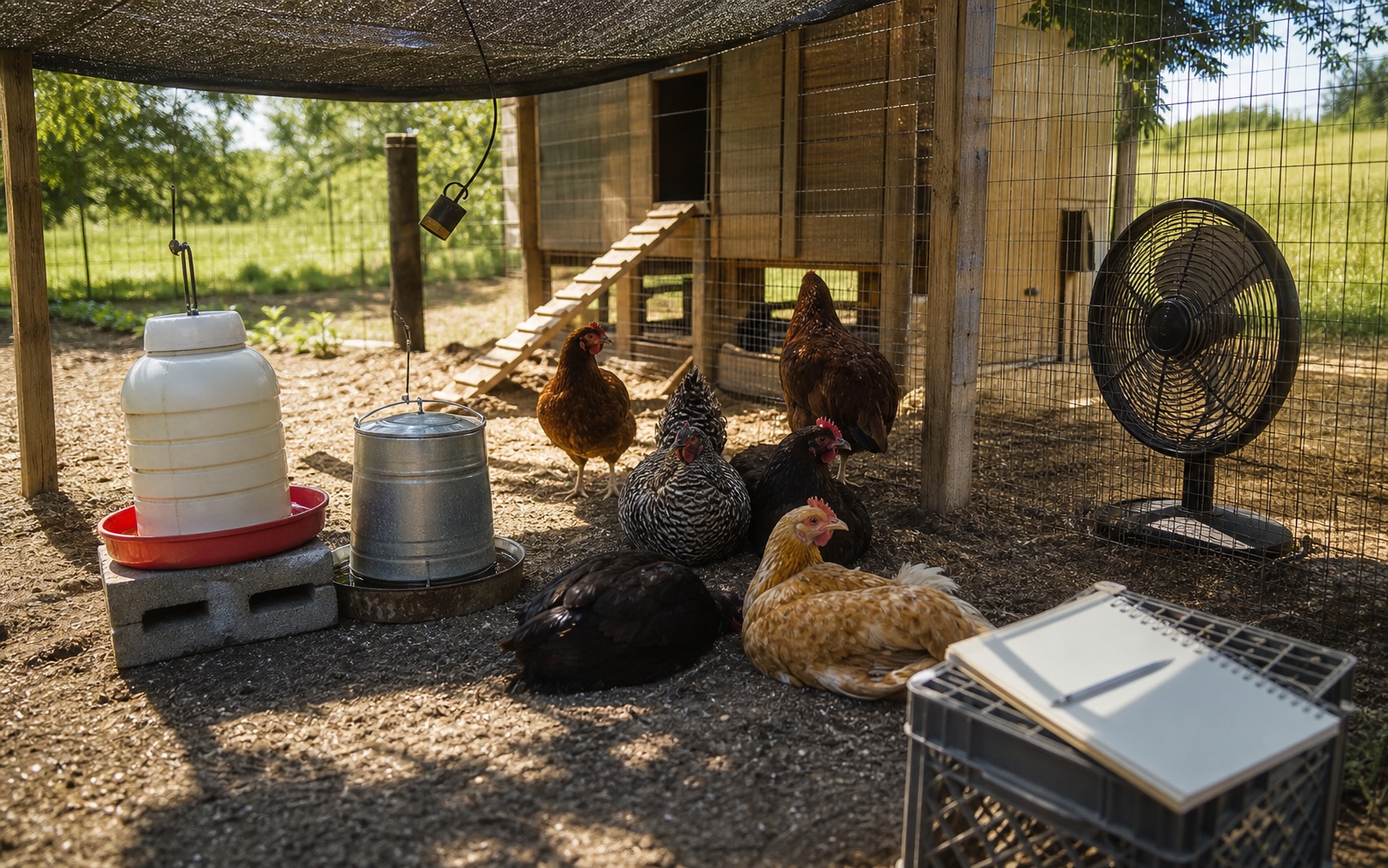
How to Keep Backyard Chickens Cool in Summer
A practical summer heat guide for backyard chickens: water, shade, airflow, feeding timing, warning signs, and the beginner mistakes that make hot days harder.