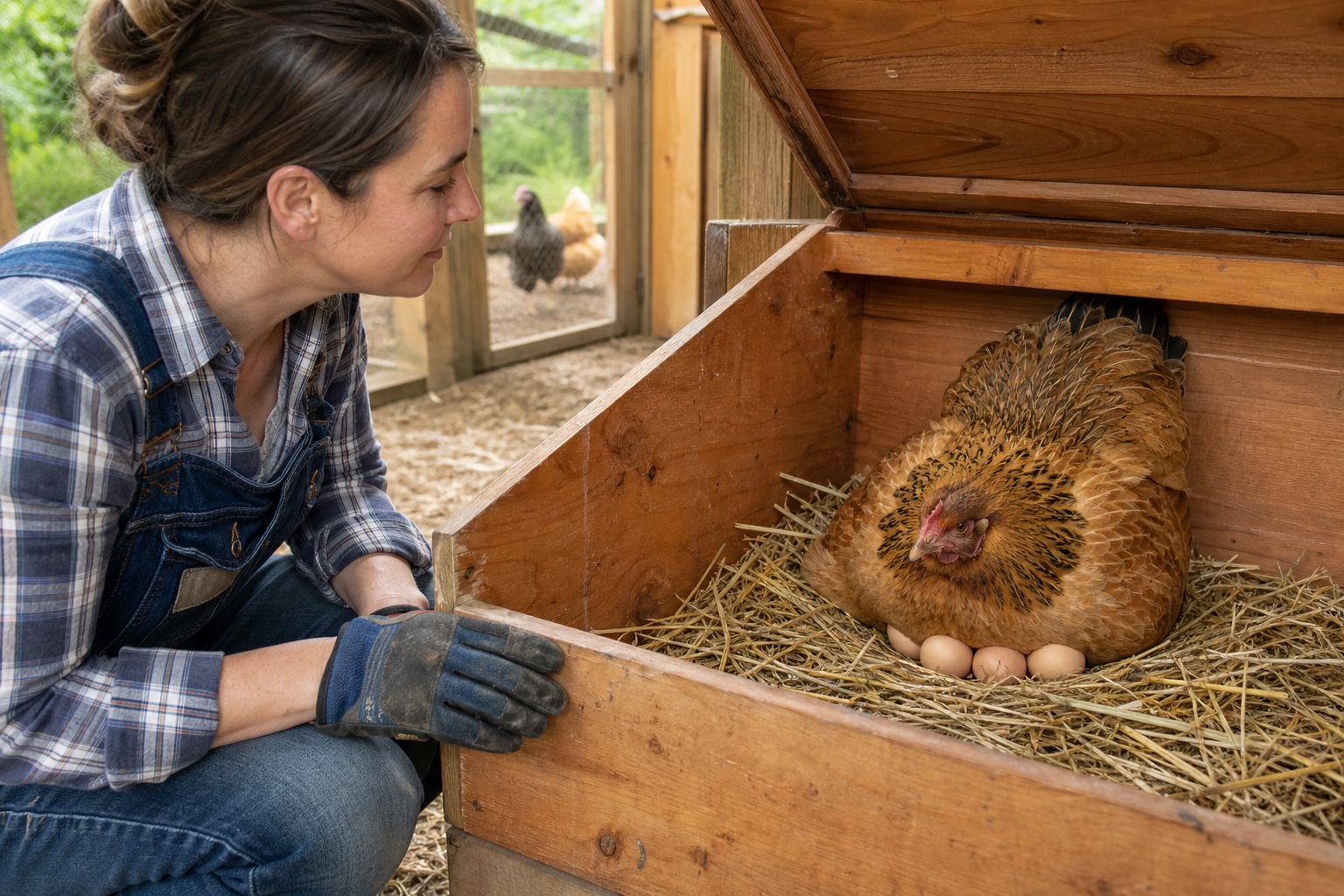
A broody hen does more than spend extra time laying an egg. She stays planted in the nest after the normal laying window, settles low and wide over the clutch, may puff up or protest when you reach in, and returns to the same nest after you remove her. Watch the pattern over several checks, rule out illness, and then make one clear decision: either prepare properly for chicks or interrupt the broodiness humanely.
The egg check that suddenly felt like an argument
One afternoon, an ordinary egg check stopped being ordinary. I lifted the nest-box lid expecting the usual quick count and found one hen spread over the bottom like she had doubled in size. Her feathers were puffed, her eyes were fixed on me, and the soft flock chatter had been replaced by a low warning I had not heard from her before.
My first thought was that something had changed for the worse. She was not acting like herself, and a chicken that suddenly sits still deserves attention. But when I moved her carefully, she stood up, complained, took a quick break, and headed straight back to the same nest. She was not simply tired. She had decided that box and those eggs were now her whole job.
The useful part of that little standoff was realizing that broodiness creates a decision for the keeper, not just a personality change in the hen. Letting her sit because it feels natural can be the wrong answer when the eggs are infertile or the family is not ready for chicks. Breaking the behavior without first checking her health can be wrong too. The calm move is to identify what you are seeing and choose the next branch on purpose.
Seven signs a hen is truly broody
A hen can linger because she is laying slowly, hiding from another bird, avoiding heat, or feeling unwell. That is why the return to the nest matters so much. Broodiness is a sustained nest commitment. One long visit is a reason to watch; a determined return after food and water is much stronger evidence.
Breed and season can raise the odds. Mississippi State Extension notes that genetics and seasonal changes, especially increasing day length, influence broodiness. Some hens rarely show the behavior while others seem ready to set whenever a clutch accumulates. Knowing your individual birds still matters more than relying on breed reputation alone.
Broody hen or sick hen?
University of Minnesota Extension recommends learning what a healthy bird looks like and investigating when an individual stops doing normal things such as running to food or breathing quietly. That daily baseline is why a simple chicken-care routine is more valuable than trying to memorize every possible disease.
Decide whether you actually want chicks
A broody hen is not a free incubator. She is the beginning of a roughly 21-day incubation period and then weeks of chick care. Even a successful hatch can produce more males than you can keep. Check local limits, count the real space, and talk through the cockerel plan before a single fertile egg goes under her.
If you want her to hatch chicks
Natural incubation can work beautifully, but it moves control from a calibrated incubator to a living animal. University of Georgia Extension describes both natural and artificial incubation as valid options with different limits. Your job is not to micromanage every turn of the egg. It is to make the surrounding system safe enough for the hen to do her part.
If you do not want chicks
Penn State Extension recommends frequent egg collection, removing the hen, and denying nest access. Mississippi State Extension describes three to four days in a wire-floored cage with ample feed and water for persistent broodiness. The goal is to remove the dark, warm, nest-like conditions that reinforce sitting, not to frighten or exhaust the bird.
What matters first and what can wait
This is one of those chicken problems where restraint saves money. Gloves are useful if your hands need protection. A crate is useful if the simpler interruption steps fail. Chick equipment is useful only after you choose chicks. Buying all three before making the decision turns one broody hen into a shopping trip.
Keep the whole flock visible
Build a daily chicken routine that catches changes early
Use the busy-family care routine to make food, water, egg collection, head counts, and quick health observations part of the same dependable loop.
Read the daily chicken routineThe right answer is the one you prepared for
A hen settled over a clutch can make hatching chicks feel like the obvious next homestead step. Sometimes it is. Sometimes the more responsible choice is to remove the eggs, reset the nest, and keep the flock you already have working well.
That hen in the nest box was not being difficult. She was doing exactly what her body told her to do. My part was deciding what our family and setup could honestly support. Once that answer was clear, the low growl and puffed feathers stopped feeling like a mystery. They became information.
Recommended next reads
Understand the laying flock before adding chicks
These guides help you keep daily care visible, recognize normal laying changes, and choose a flock size your family can actually manage.
Chickens
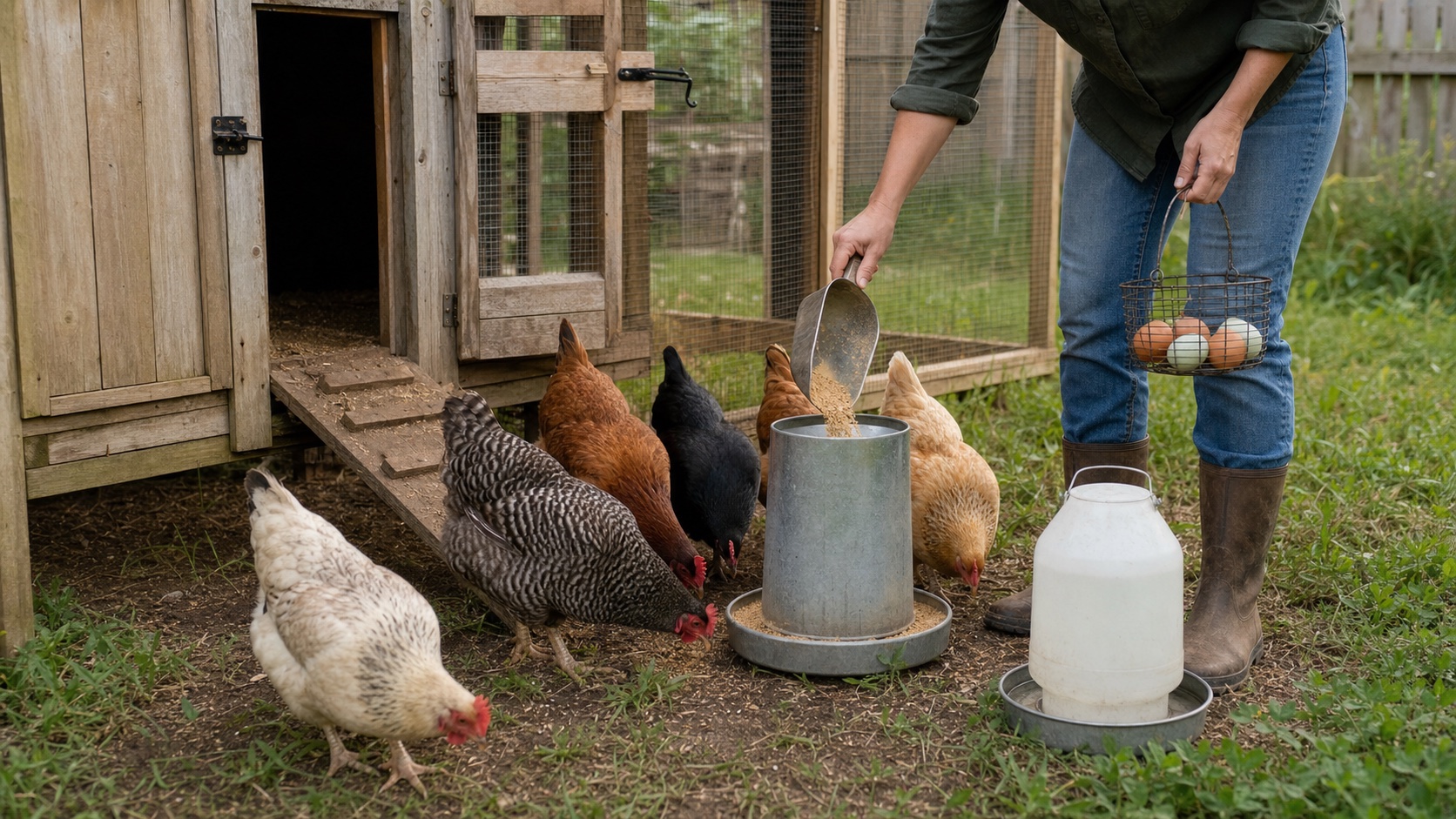
Daily Chicken Care Routine for Busy Families
A realistic morning and evening chicken-care routine built around fresh water, feed, eggs, observation, a secure coop, and the few checks busy families should not skip.

Chickens
When Do Chickens Start Laying Eggs? First Egg Signs and What to Do Next
A practical beginner guide to when pullets usually start laying eggs, what signs to watch for, and how to handle the first eggs without overbuying gear.
Chickens
How Many Chickens Should a Beginner Start With?
A practical, beginner-first guide to choosing a first flock size without overcommitting on coop space, feed, chores, or your actual week.
Keep it practical
Price and plan the first flock before it arrives
Get the beginner chicken checklist and use it to cover feed, water, housing, predator protection, recurring costs, and the daily routine before birds come home.
Practical notes from the work in progress. Low-noise and easy to leave.
Frequently asked questions
How can I tell if my hen is broody or just laying an egg?
A hen that is laying normally leaves the nest after the egg is finished. A broody hen remains on the nest well beyond her usual laying time, settles flat over the clutch, may puff up or protest when approached, and repeatedly returns after being removed. Confirm the pattern over more than one check instead of deciding from a single long visit.
Can a hen go broody without a rooster?
Yes. Broodiness is driven by hormones, genetics, season, and nesting conditions, not by the presence of a rooster. A hen can faithfully sit on infertile eggs for weeks. Without a rooster, the eggs produced by your flock will not hatch.
Does a broody hen stop laying eggs?
Usually, yes. Penn State and University of Georgia Extension both note that broody hens stop laying while they commit to incubation. Egg production can take time to resume after the behavior ends, so do not count on that hen's usual eggs during a broody spell.
How long does a broody hen sit on eggs?
Chicken eggs normally take about 21 days to hatch once consistent incubation begins. A hen sitting on infertile eggs has no successful hatch date to end the cycle, which is one reason to intervene if you do not intend to raise chicks.
Should I remove eggs from a broody hen?
Remove eggs promptly if you do not want chicks. Collecting eggs frequently and denying access to the preferred nest after the other hens have laid are basic Extension-backed ways to discourage broodiness. Use gloves or a piece of stiff cardboard if the hen is defensive, and move calmly rather than punishing her.
How do I know whether a nest-sitting hen is sick instead?
A broody hen is intensely focused on a nest and often becomes active enough to eat, drink, defecate, and return when removed. Treat weakness, labored breathing, nasal discharge, diarrhea, inability to walk, persistent straining, a swollen abdomen, or abnormal behavior away from the nest as health concerns. Isolate safely and contact a poultry veterinarian or your Extension office rather than assuming broodiness.
How long does it take to stop broodiness?
A mild case may end after several days of frequent egg collection and blocked nest access. Mississippi State Extension describes three to four days in a wire-floored pen with ample feed and water for a persistent broody hen. Check her frequently, protect her from weather and predators, and repeat only if needed.
Recommendations
Useful tools and resources for this decision
These are included only where they reduce repeated friction, clarify a next step, or help you avoid buying the wrong thing first.
Compare poultry handling gloves
Washable poultry handling gloves
Sturdy washable gloves protect your hands when a normally calm hen becomes defensive about a nest.
Best for: Keepers who need to collect eggs or move a protective broody hen without turning the check into a struggle
Skip these if you already own clean sturdy work gloves. Penn State also suggests stiff cardboard as a simple barrier while removing eggs.
Check current priceCompare ventilated wire crates
Ventilated wire pet crate
A secure wire crate can serve as a temporary broody pen when egg removal and blocked nest access have not worked.
Best for: A persistent broody hen when you can provide constant feed and water, shade, weather protection, security, and frequent checks
This is a short-term management tool, not punishment or permanent housing. Borrow or repurpose a safe crate before buying one, and never withhold food or water.
Check current priceCompare chick feeder sets
Low-profile chick feeder and waterer set
Dedicated chick-sized equipment keeps feed and water accessible if you intentionally allow a successful hatch.
Best for: Families that have fertile eggs, a secure chick area, and a real plan for every chick that may hatch
Do not buy this just because a hen is broody. It belongs on the list only after you have decided to raise chicks and prepared a backup brooder.
Check current priceRead the Penn State guidance
Penn State Extension broodiness guidance
A concise reference on what broody hens do, why laying stops, frequent egg collection, nest access, and safe handling.
Best for: Verifying the first steps when a hen will not leave the nest
View resourceOpen the backyard flock guide
University of Georgia backyard flock guide
A full backyard-flock management reference that covers broody behavior, discouraging it, and the choice between natural and artificial incubation.
Best for: Planning the broader laying and hatching setup around the hen
View resourceReview healthy-hen signs
University of Minnesota healthy-flock guide
Practical guidance for learning each bird's normal activity, eating, breathing, and droppings so behavior changes are easier to investigate.
Best for: Separating a nest-focused behavior from signs that a hen may be unwell
View resourceRecommended next reads
Read next if it helps the decision
Move into the next guide only if it clarifies the next practical step.
Chickens
Daily Chicken Care Routine for Busy Families
A realistic morning and evening chicken-care routine built around fresh water, feed, eggs, observation, a secure coop, and the few checks busy families should not skip.
Chickens
When Do Chickens Start Laying Eggs? First Egg Signs and What to Do Next
A practical beginner guide to when pullets usually start laying eggs, what signs to watch for, and how to handle the first eggs without overbuying gear.
Chickens
How Many Chickens Should a Beginner Start With?
A practical, beginner-first guide to choosing a first flock size without overcommitting on coop space, feed, chores, or your actual week.
Chicken setup support
Get the chicken setup checklist before you buy more flock gear.
Use the first-year checklist to price the flock honestly, cover the starter essentials, and delay the upgrades that can wait.
Best for: Readers trying to price a first flock honestly and avoid a scattered chicken setup.
- A pre-chick setup checklist
- A recurring-cost planning section
- A simple weekly flock-care rhythm
Chicken setup notes, beginner flock lessons, and the checklist first.
After signup, the download will unlock right here so you can save or print it.
About the author
William Mock
Founder, writer, and beginner homesteader
William writes from the beginner side of rebuilding after a layoff: homestead plans, family systems, budgets, tools, and the decisions that make a home feel less fragile.
Read why this site existsRelated Guides
Keep building context
Chickens
How Many Chickens Should a Beginner Start With?
A practical, beginner-first guide to choosing a first flock size without overcommitting on coop space, feed, chores, or your actual week.
Chickens
When Do Chickens Start Laying Eggs? First Egg Signs and What to Do Next
A practical beginner guide to when pullets usually start laying eggs, what signs to watch for, and how to handle the first eggs without overbuying gear.
Chickens
Daily Chicken Care Routine for Busy Families
A realistic morning and evening chicken-care routine built around fresh water, feed, eggs, observation, a secure coop, and the few checks busy families should not skip.