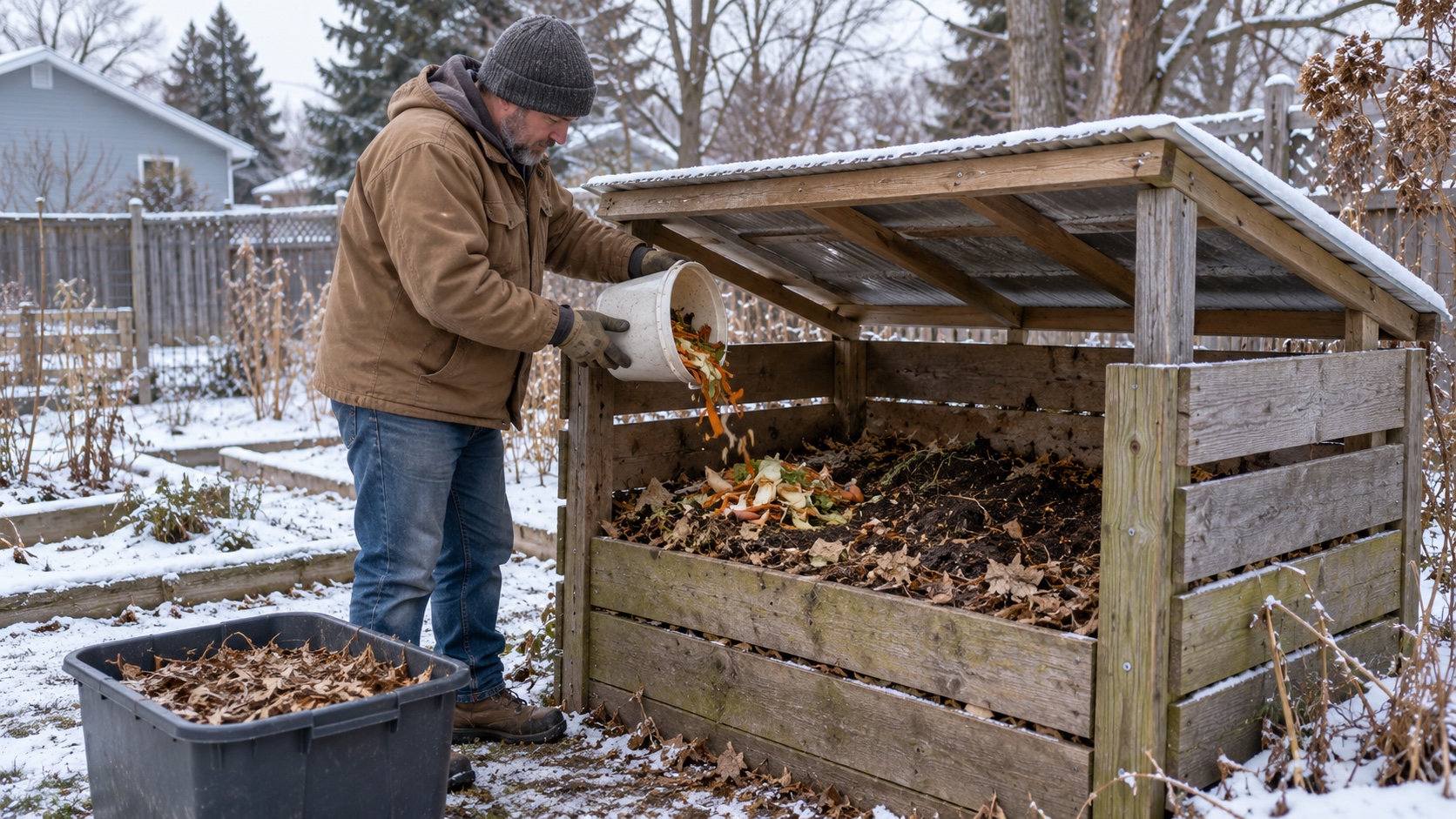
Yes, you can compost in winter. A backyard pile may slow down or freeze, then resume decomposing when conditions warm. Keep adding fruit and vegetable scraps only when the pile is safely accessible, protected from excess moisture, supplied with dry browns, and secure enough for local pest pressure. If those conditions fail, pause outdoor additions and use sealed storage, a local collection program, or another suitable system. Winter compost does not have to steam on schedule to remain useful.
This is the cold-weather follow-up to the beginner composting guide. Use that cornerstone for greens, browns, moisture, airflow, and the basic ingredient list. This article begins when freezing weather changes access and pace but the kitchen keeps producing scraps with impressive administrative consistency.
The bucket that made winter composting a route problem
The first time I mapped the winter version of our household systems, I kept looking at the outdoor pile as if the compost biology were the main question. Would it stay warm? Would it keep shrinking? Was there some perfect cold-weather recipe I had missed? Meanwhile, the more useful evidence was sitting much closer to the back door: the scrap container still filled after dinner whether the garden was awake or not.
That changed the decision. The system had to work on a dark weekday, not just during a cheerful Saturday inspection. Someone had to reach the pile without crossing ice, uncover it without dumping snow into the center, add browns that were not frozen into one decorative brick, cover the scraps, and get back inside before the entire project started negotiating for its own coat rack.
I have not run a measured hot compost pile through a full Indiana winter, and I will not borrow that experience from somebody else's thermometer. What I can say from the planning side is that winter composting succeeds or fails as a route and containment system before it becomes a temperature project. If the repeated trip is unsafe or unrealistic, changing the plan is management, not quitting.
Choose the winter goal before changing the pile
An active pile and a passive pile are both composting systems, but they make different promises. An active pile needs enough suitable material, moisture, oxygen, volume, and management to keep decomposition moving. A passive pile accepts a slower timeline and may freeze. A paused system stops taking outdoor food scraps while existing material waits for warmer conditions.
Illinois Extension's winter composting guide says extremely cold conditions slow rather than automatically end decomposition, while larger piles retain heat better and small piles are more likely to freeze. It also asks the practical questions first: can the pile be reached, can enough feedstock be supplied, and can excess precipitation be controlled? That is a better beginner test than asking whether a pile can technically remain hot.
Prepare the system before the ground freezes
Do the awkward work while the bin, gate, and ground still cooperate. Repair loose panels, sharp wire, cracked lids, leaning posts, and drainage problems before snow hides them. Clear a modest path without placing the pile against the house, fence, well, surface water, or another location that conflicts with local guidance. A winter shortcut should not create a spring repair.
The EPA's current home-composting guide recommends storing a steady supply of browns, choosing a year-round accessible site with good drainage, using two to three times the volume of browns as greens, and covering food scraps beneath dry material. Those basics matter more in winter because the pile processes each new addition more slowly.
Manage water before chasing heat
Winter moisture is regional. Rain, wet snow, snowmelt, wind, dry cold, and the cover design can push the same pile in opposite directions. Oregon State Extension's slow-composting guide separates wet-region drainage and loose-cover needs from the added-water needs of drier regions. Reach below the weathered surface and check the material itself. It should be damp like a wrung-out sponge, not dripping, sour, powder-dry, or sealed inside ice.
A cover can limit saturation and help retain some warmth, but it must preserve airflow and send water to a safe place. Do not wrap the pile into an airtight parcel. Compost microorganisms need oxygen, and runoff should not move toward wells, drains, foundations, paths, neighboring property, or surface water. Follow local rules when site drainage or water quality is uncertain.
Penn State Extension's home-composting guide notes that a pile may go dormant in winter and resume decomposing when air temperatures rise. Illinois Extension advises reducing or stopping turning during sustained freezing weather to avoid releasing retained heat. Those are useful reminders for a passive beginner pile: not moving is sometimes a condition, not a crisis. The pile does not need a pep talk or a tiny treadmill.
Keep food scraps from becoming a pest system
Cold weather does not make exposed food scraps invisible to animals. Keep meat, fish, bones, dairy, fats, oils, greasy foods, pet waste, diseased plants, and other locally excluded materials out of a basic backyard pile. Bury accepted fruit and vegetable scraps in the active material and cover them with dry browns every time.
The EPA recommends a lid and potentially a floor where rodents are a concern, with no bin holes or gaps larger than one-quarter inch. Local pressure can require a different system entirely, especially in bear country or where municipal rules limit food-scrap composting. An open bay that handles clean yard debris well may not be the right place for winter kitchen scraps. Do not solve active wildlife activity by improvising poisons or traps around a food-growing area; use local wildlife and pest guidance.
Turn less unless you are managing an active pile
For a passive pile, turning frozen material usually adds effort without improving the day. Do not force a fork into an icy mass, climb onto snowbanks, or work from a slick surface. Wait for a safe workable window, then correct a real issue such as saturation, compaction, or exposed food rather than turning because a calendar said Tuesday.
A household deliberately managing an active pile may use temperature trends to decide whether an adjustment changed the center. If a long-stem thermometer would answer that repeated question, the REOTEMP FG20P is a researched model with a 20-inch stem and a dial marked for compost activity. I have not personally tested it. Remove any probe before turning or moving the pile, insert it slowly so it does not bend or strike hidden hard material, and keep hands away from the tip.
Skip the purchase when the goal is simply to contain material until spring. Your hand, eyes, nose, stored browns, and a patient timeline can manage a passive pile. A thermometer measures temperature at its sensing area; it does not certify the whole backyard pile for pathogen reduction, weed-seed destruction, or use before the compost is actually finished and cured.
One small-yard winter example
Picture a household with one lidded backyard bin, a five-minute walk to the pile in dry weather, a vegetable garden that has finished for the year, and one tote of clean shredded leaves stored under cover. The first freeze arrives, and the family produces about one small kitchen container of accepted fruit and vegetable scraps every several days. This is an example, not a claim about our current pile.
They choose a passive winter goal. On safe days, one person empties the small container, buries the scraps in the existing material, adds a generous brown cover, closes the lid, and checks for odor, damage, tracks, and standing water. They do not turn the frozen pile or expect finished compost by a date on the seed-starting calendar.
After freezing rain makes the route unsafe and the leaf tote runs low, outdoor additions pause. Scraps go to the municipal drop-off according to its accepted-material rules until the path and pile are workable again. Nothing about that switch makes the compost project less serious. It keeps one modest soil-building habit from becoming a winter obstacle course with banana peels.
What matters first and what can wait
If autumn leaves are the main material, the leaf-mold method may be a better low-work destination than forcing a balanced active pile. If garden residue is still being sorted, use the fall cleanup guide to keep diseased or questionable material out of the backyard system.
Let the pile slow down without losing the system
Winter composting is not a test of how much inconvenience a serious beginner can absorb. It is a containment decision followed by a patience decision. Keep adding when the route, browns, moisture, capacity, and pest plan all hold. Pause when they do not. The organisms can resume later; the household does not need to prove anything to a frozen pile.
Keep the cold-weather plan small
Close the rest of the garden without creating ten winter projects
Use the fall cleanup guide to sort finished crops, healthy habitat, compostable material, diseased debris, and the soil protection that should remain after the beds are clear.
Open the fall cleanup guideFrequently asked questions
Can you add food scraps to compost in winter?
Yes, when the pile is safely accessible, the bin is suitable for local pest pressure, and every addition can be covered with enough dry brown material. Decomposition may slow or stop while the pile is frozen. Reduce or pause additions if scraps are accumulating faster than the system can contain them.
Does compost freeze in winter?
A small or inactive backyard pile may freeze partly or completely. That does not mean it failed. Decomposition slows in cold conditions and resumes as the pile and weather warm. Larger, balanced active piles may retain heat longer, but beginners do not need to promise year-round heat.
Should a compost pile be covered in winter?
Covering can help keep rain and snowmelt from saturating a pile, but the cover must not eliminate airflow or create runoff. Wet and dry climates need different management. Use local Extension guidance, preserve ventilation, and check moisture below the exposed surface before adding water or changing the cover.
Should you turn compost during winter?
A passive pile usually needs less turning during sustained freezing weather because unnecessary turning can release retained heat. An actively managed pile may be turned according to its temperature, moisture, materials, and regional guidance. Do not force a tool into frozen material or turn a pile from an icy work area.
What can I do with scraps if outdoor composting stops for winter?
Use a local food-scrap collection or drop-off program, freeze or temporarily store accepted scraps in a sealed container until the next practical trip, or use a properly managed indoor vermicomposting system if it genuinely fits the household. Check program rules before collecting material because accepted items vary.
Recommendations
Useful tools and resources for this decision
These are included only where they reduce repeated friction, clarify a next step, or help you avoid buying the wrong thing first.
Optional active-pile tool
REOTEMP FG20P backyard compost thermometer
A 20-inch analog compost thermometer with a 0 to 200 F range, a 1.8-inch dial, three activity zones, and a 1/4-inch stainless-steel stem according to the manufacturer.
Best for: A household intentionally managing an active compost pile and needing center-temperature trends to guide checks
Check current priceCheck the model details
REOTEMP FG20P manufacturer specifications
The manufacturer's current page for the FG20P, including stem length, dial design, intended home-compost use, and handling guidance.
Best for: Confirming the exact model before deciding whether temperature tracking has earned a place in the routine
View resourceRecommended next reads
Read next if it helps the decision
Move into the next guide only if it clarifies the next practical step.

Gardening
How to Start Composting for Beginners Without Making a Mess
Composting is one of the simplest homestead skills to start early, but beginners often make it too complicated. Here is how to begin with a small, clean system that actually fits real life.
Gardening
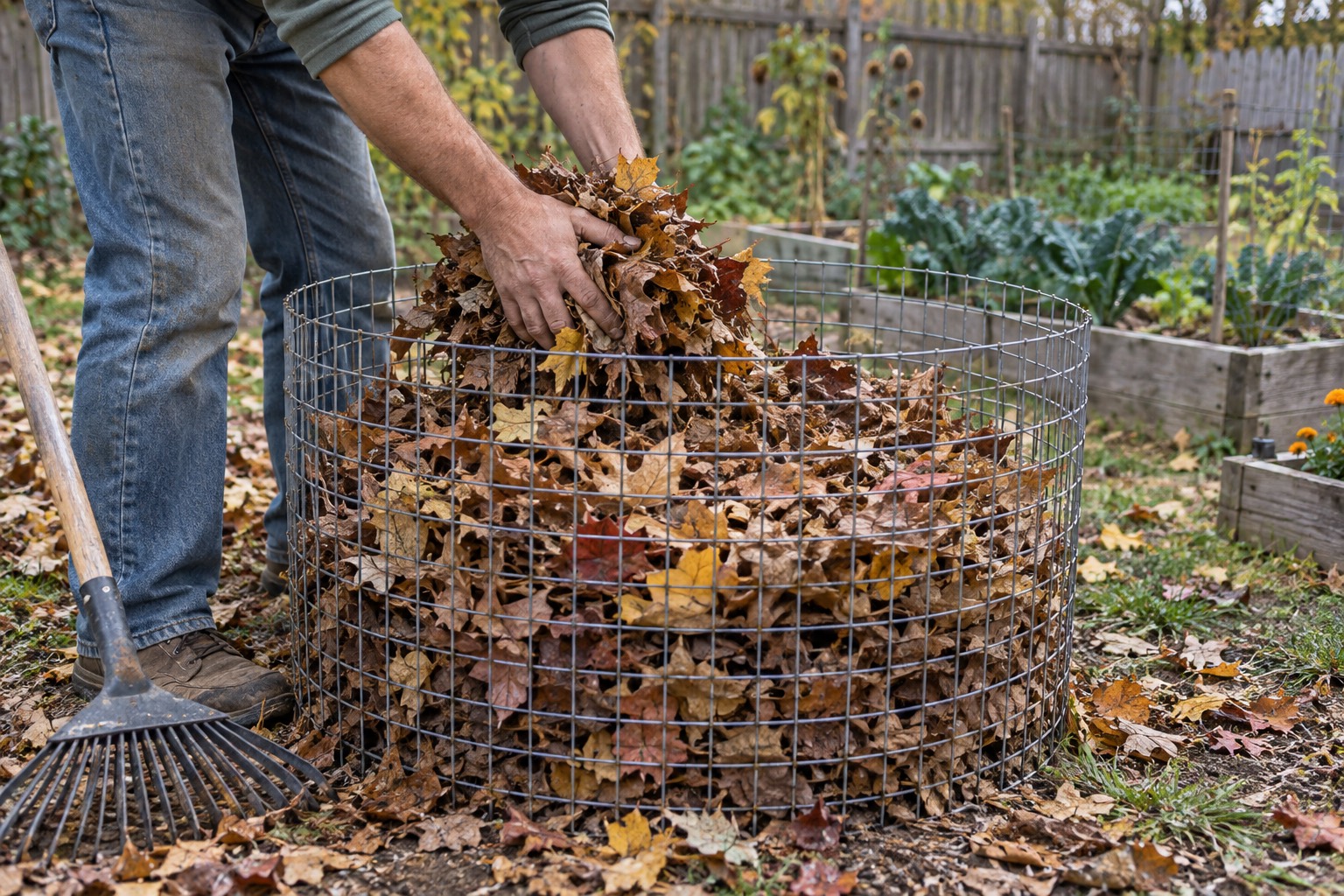
How to Make Leaf Mold From Fall Leaves
Turn clean fall leaves into a useful garden soil amendment with a simple pile, wire bin, or ventilated container and enough patience.
Gardening
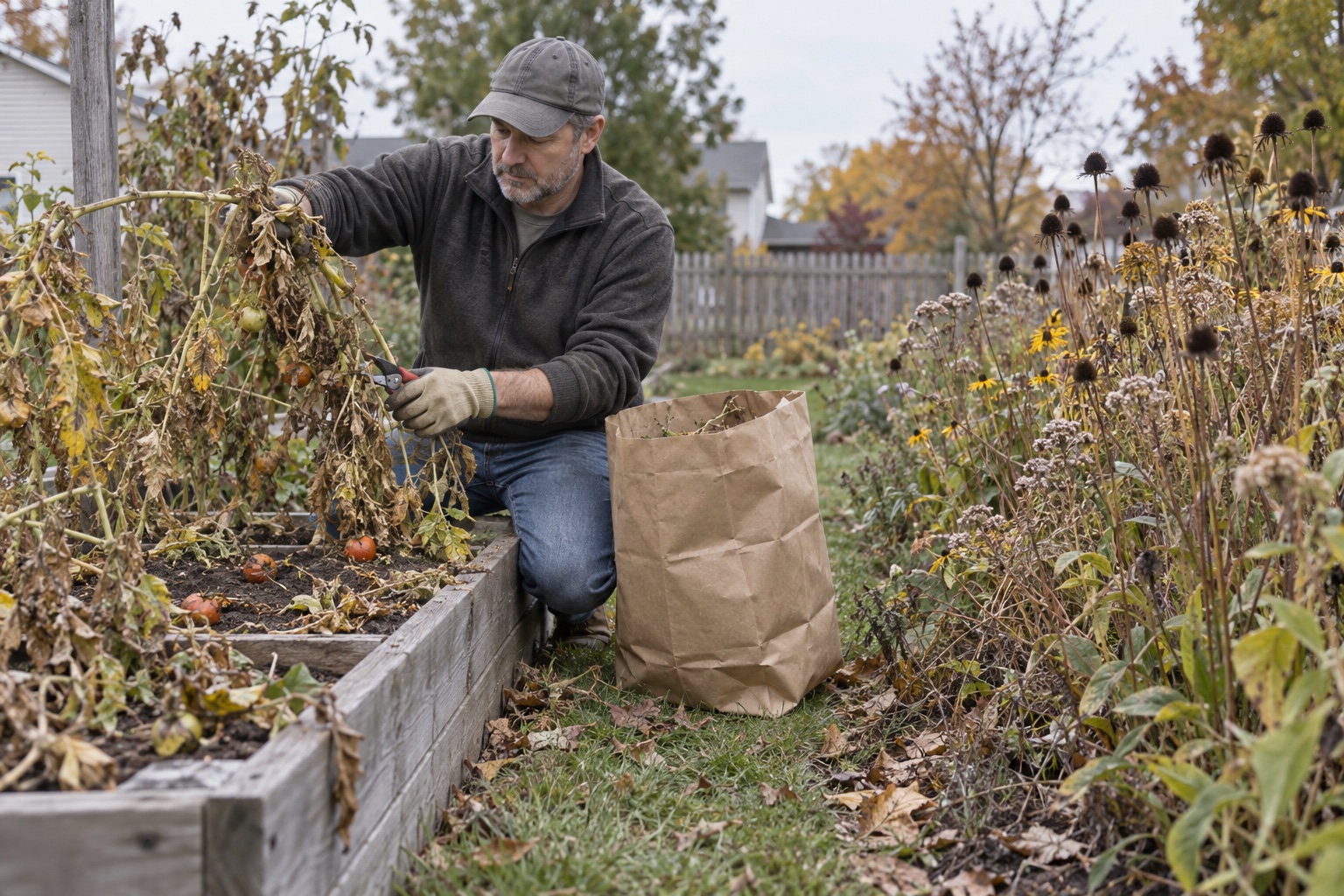
Fall Garden Cleanup for Beginners: What to Remove and Leave
Remove spent vegetable plants, diseased debris, fallen fruit, and seed-heavy weeds, but leave healthy perennial stems and some leaf litter where they support winter habitat.
Garden gear support
Get the buy-first guide before the first garden collects too much gear.
Use the guide to decide which early garden purchases earn money now, which ones can be borrowed, and which ones can wait until the routine proves itself.
Best for: Beginners who keep seeing useful things online and need a disciplined way to decide what actually earns a place.
- A buy now, borrow, wait, or skip framework
- Starter category shortlists
- A three-question purchase test
Garden planning notes, restrained gear decisions, and the guide first.
After signup, the download will unlock right here so you can save or print it.
About the author
William Mock
Founder, writer, and beginner homesteader
William writes from the beginner side of rebuilding after a layoff: homestead plans, family systems, budgets, tools, and the decisions that make a home feel less fragile.
Read why this site existsRelated Guides
Keep building context
Gardening
How to Start Composting for Beginners Without Making a Mess
Composting is one of the simplest homestead skills to start early, but beginners often make it too complicated. Here is how to begin with a small, clean system that actually fits real life.
Gardening
How to Make Leaf Mold From Fall Leaves
Turn clean fall leaves into a useful garden soil amendment with a simple pile, wire bin, or ventilated container and enough patience.
Gardening
Fall Garden Cleanup for Beginners: What to Remove and Leave
Remove spent vegetable plants, diseased debris, fallen fruit, and seed-heavy weeds, but leave healthy perennial stems and some leaf litter where they support winter habitat.