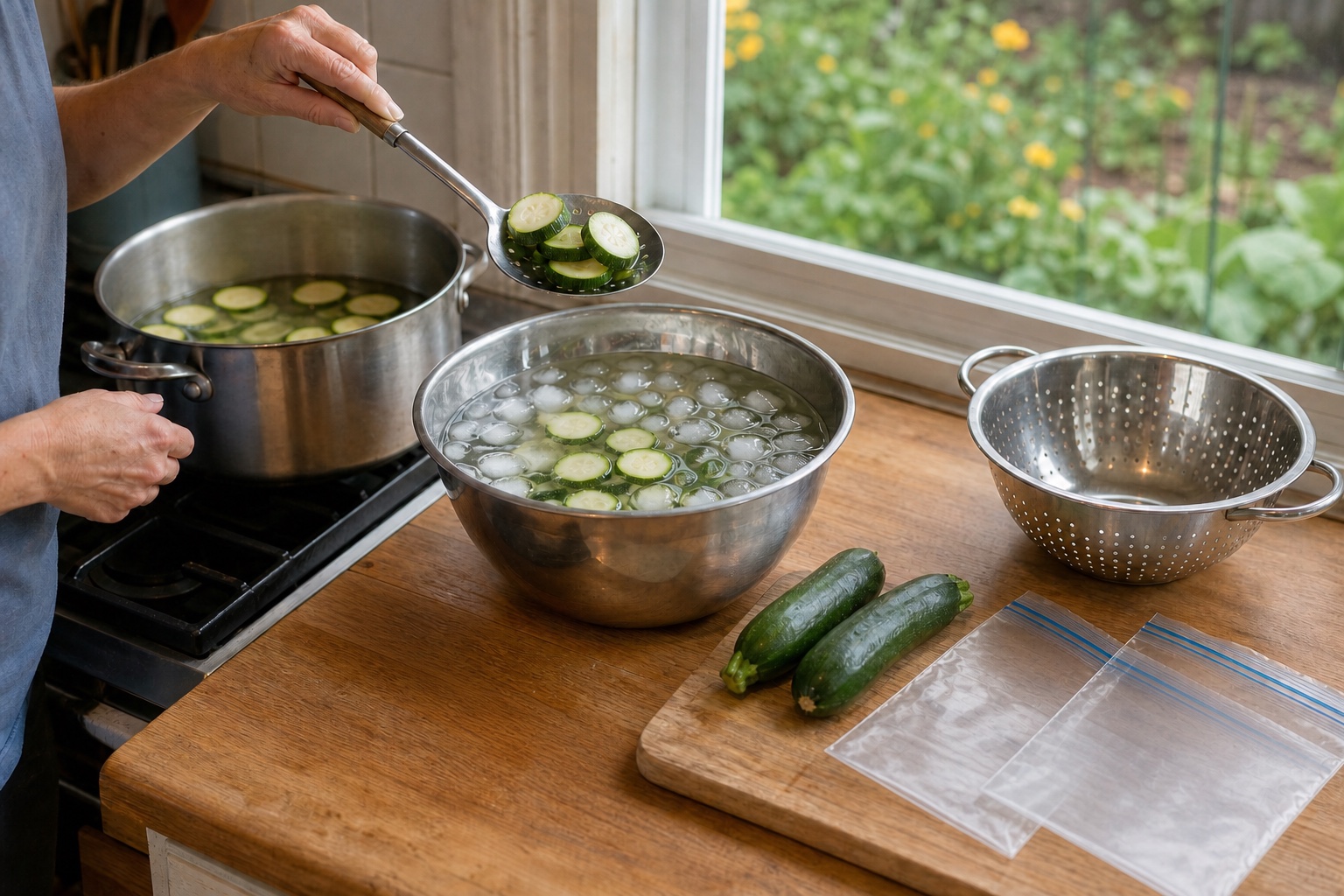
The best way to freeze zucchini depends on how you will use it. Cut young zucchini into half-inch slices and water-blanch for three minutes for soups, stews, sauces, and casseroles. Grate and steam-blanch small batches for one to two minutes for bread, muffins, or fritters. Cool promptly, drain well, package in meal-size portions, label, and freeze at 0 degrees Fahrenheit or below.
The zucchini that went from trophy to obligation
A zucchini can hide under one broad leaf long enough to become a different category of vegetable. I found one that had gone from an easy side dish to something closer to a green baseball bat. Carrying it into the kitchen felt like proof the garden was producing. Setting it on the counter felt like buying myself time.
It was still there the next day, taking up more room in my head than on the counter. I could shred it, bake with it, make dinner revolve around it, or freeze it. The temptation was to cut it into random pieces, slide them into a bag, and call the problem solved. That would have moved the obligation from the counter to the freezer.
The better lesson was smaller: decide on the future meal before touching the knife. A measured bag of grated zucchini has a job. A package of blanched slices has a job. An unlabeled frozen chunk is only a garden decision delayed until winter.
Choose the future meal before the cut
This decision prevents the most common kind of freezer waste: food preserved without a realistic destination. If your family never makes zucchini bread, six two-cup bags of shreds are not security. If nobody likes soft zucchini slices, freeze a finished soup or use the squash fresh instead.
Start with young, tender zucchini
The National Center for Home Food Preservation begins with young squash with tender skin. Freezing cannot improve a tough rind, oversized seeds, bruising, or poor flavor. Use sound zucchini as soon after harvest as practical, wash it under cool running water, and trim away the ends.
An oversized zucchini is not automatically useless. Cut it open and judge it honestly. If the skin is hard and the center is mostly mature seeds, remove the tough parts and use the acceptable flesh in a cooked recipe soon. Do not give your best freezer space to a vegetable you already do not want to eat.
How to freeze zucchini slices
Do not overload the pot. If the water takes a long time to return to a boil, the batch is too large for the water volume and heat. Work in smaller rounds. A few extra minutes at the stove are cheaper than filling the freezer with unevenly processed food.
Blanching time matters. The National Center explains that underblanching can stimulate enzyme activity and be worse for quality than no blanching, while overblanching costs flavor, color, vitamins, and texture. Use the tested time rather than cooking until the slices look done.
How to freeze grated zucchini for baking
Oregon State Extension describes an unblanched option for grated zucchini used in breads and muffins, where spices can mask some flavor change. Penn State and the National Center recommend steam blanching. For a beginner building one dependable routine, I would use the National Center's tested blanching method rather than trying to remember which future recipe makes the exception reasonable.
Why frozen zucchini gets watery
Penn State Extension explains the basic problem plainly: zucchini contains a large amount of water, and freezing creates crystals that break down its cell walls. When the zucchini thaws, those damaged cells release water. Blanching controls enzymes and protects quality, but it does not rebuild the cell walls.
Pack, freeze, and use it before it disappears
Use packaging designed for the freezer. Thin storage or sandwich bags allow more air and moisture movement, which encourages freezer burn and quality loss. Press excess air from freezer bags, leave expansion room in rigid containers, and freeze portions small enough to use in one meal.
Freeze food promptly and avoid loading the freezer with more unfrozen produce than it can freeze within a day. University of Minnesota Extension notes that slow freezing creates larger ice crystals and poorer quality. Keep packages separated until frozen solid so cold air can move around them, then stack them.
For best quality, plan to use frozen fruits and vegetables within eight to twelve months at 0 degrees Fahrenheit or below. Put the oldest packages where you can see them. A freezer inventory on the door is less exciting than another preservation tool, but it is far more likely to turn July zucchini into January food.
What matters first and what can wait
A vacuum sealer, electric food processor, dedicated blanching pot, specialty freezer trays, and a second freezer can wait. A box grater earns its place if you regularly bake with zucchini. A freezer thermometer earns its place if you cannot verify the temperature. Buy around a repeated need, not around one impressive harvest.
Before the next oversized squash
Harvest the fast crops while they are still at their best
Use the beginner harvest guide to check zucchini, cucumbers, beans, herbs, greens, and tomatoes in the order that keeps a small garden from getting ahead of the kitchen.
Use the harvest guideFreeze a meal, not a guilty conscience
An abundant zucchini plant can make wasting one squash feel like a moral failure. It is not. The useful goal is not to preserve every ounce at any cost. It is to keep the best food in forms your household will actually use.
Choose the winter meal, prepare the zucchini for that meal, label it clearly, and stop when the freezer has enough. That turns a harvest problem into supper instead of turning the freezer into a colder version of the kitchen counter.
Recommended next reads
Keep the summer garden useful
These guides cover the next practical decisions: harvesting fast crops on time, checking a suddenly wilted squash plant, and keeping the first garden small enough to manage.
Gardening
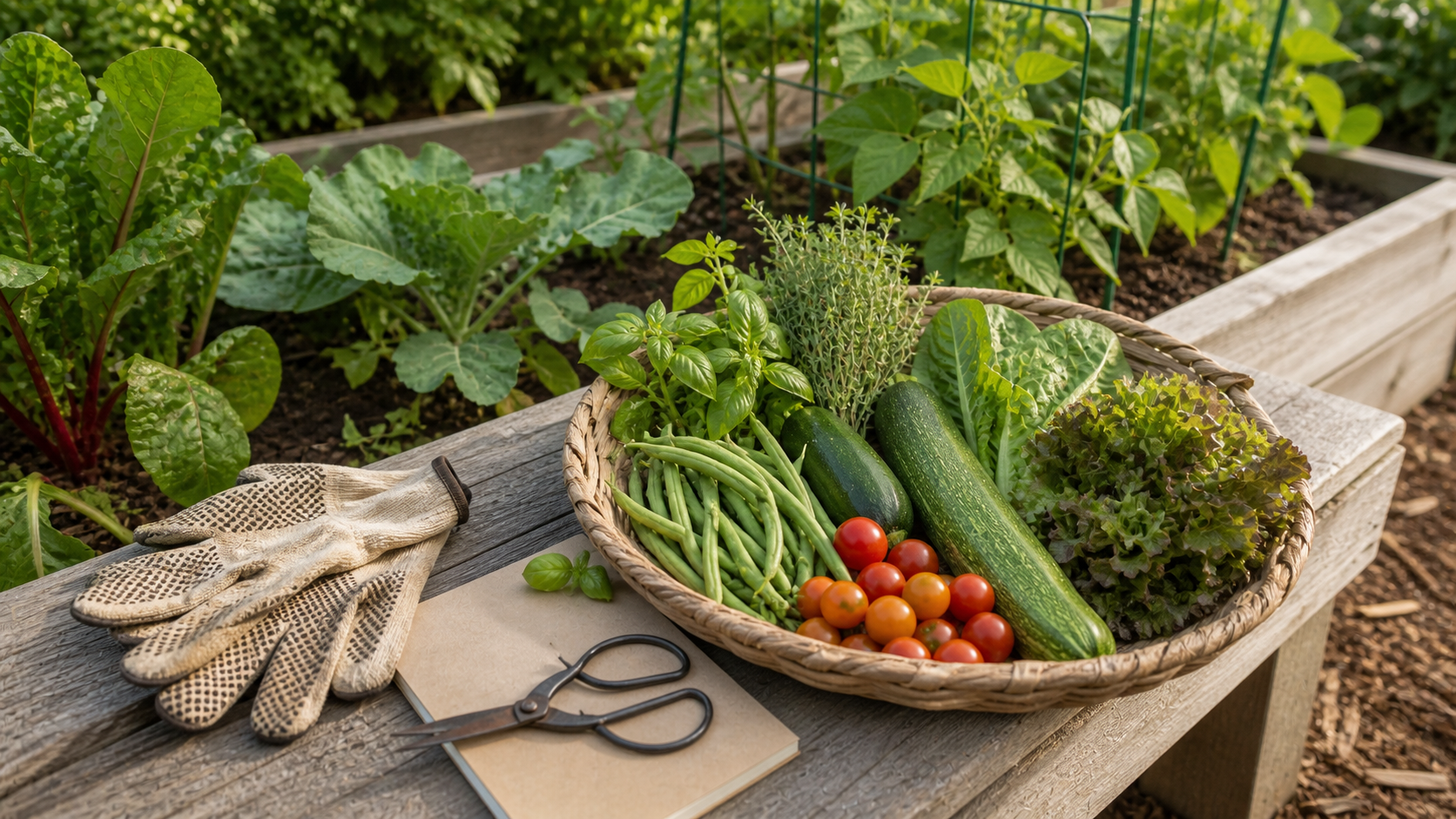
What to Harvest First in a Beginner Vegetable Garden
A practical beginner guide to the first garden harvest: what to pick early, what to leave longer, how to avoid waste, and how to build confidence without overthinking it.
Gardening
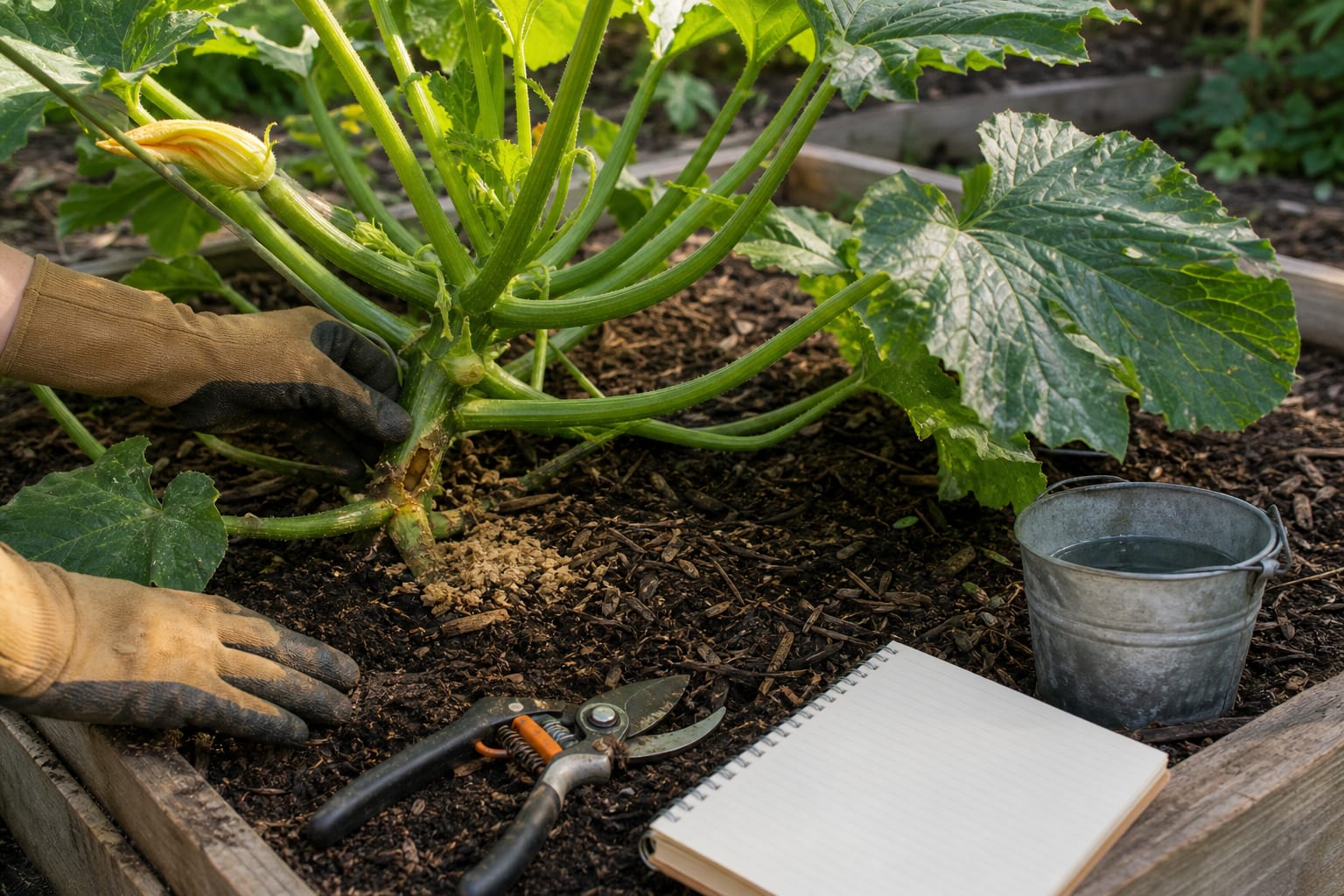
Squash Vine Borer Signs in a Beginner Garden: What to Do First
A calm beginner guide to spotting squash vine borer signs, checking wilted zucchini or squash stems, deciding what to do now, and planning prevention next season.
Gardening
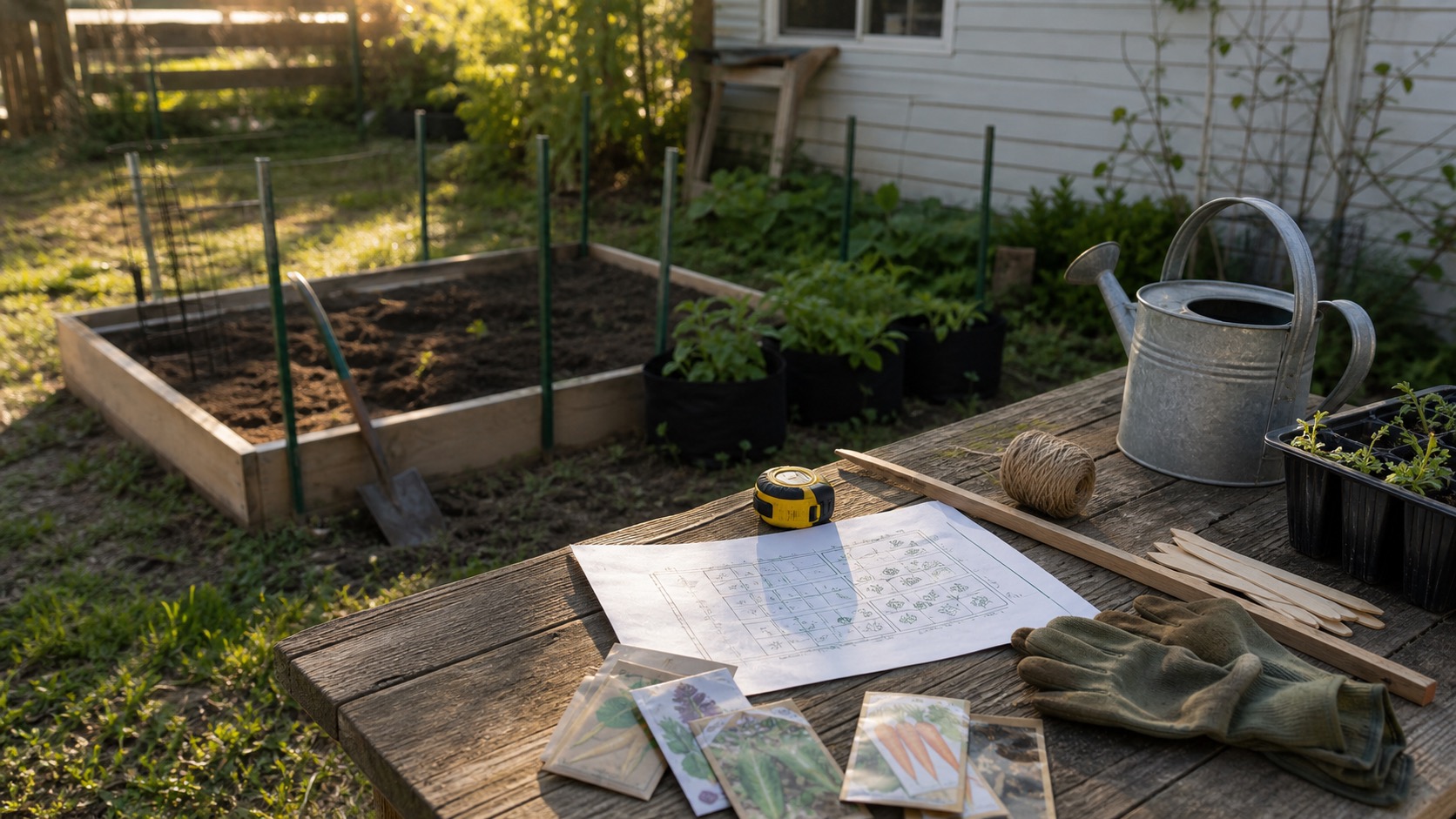
How to Plan Your First Homestead Garden Without Doing Too Much
A successful first garden is smaller, clearer, and less romantic than many beginners expect. That is a good thing.
Keep it practical
Build a first garden you can keep up with
Get the beginner homestead checklist and use it to choose a smaller first system, set a realistic budget boundary, and keep the next season from becoming ten projects at once.
Practical notes from the work in progress. Low-noise and easy to leave.
Frequently asked questions
Can you freeze zucchini without blanching it first?
For reliable quality, follow a tested freezing method. The National Center for Home Food Preservation recommends water-blanching half-inch zucchini slices for three minutes and steam-blanching small batches of grated zucchini for one to two minutes. Oregon State Extension notes an unblanched option for grated zucchini used in strongly flavored breads and muffins, but blanching is the more broadly supported starting point for preserving flavor, color, and texture.
Why is frozen zucchini watery after thawing?
Zucchini naturally contains a great deal of water. Ice crystals damage plant cell walls during freezing, so water is released as the zucchini thaws. Proper blanching, prompt cooling, good drainage, fast freezing, and stable storage improve quality, but they cannot make thawed zucchini as crisp as fresh.
How long should zucchini be blanched before freezing?
Water-blanch zucchini cut into half-inch slices for three minutes. For grated zucchini intended for baking, steam-blanch small batches for one to two minutes, until translucent. Start the water-blanching timer when the water returns to a boil, then cool the zucchini promptly.
Should frozen zucchini be thawed before cooking?
It depends on the use. Sliced zucchini can often go from frozen into soup, stew, or a cooked sauce where soft texture belongs. Thaw grated zucchini in the refrigerator before baking, then drain excess liquid as the recipe and tested preservation guidance direct.
How long does frozen zucchini keep?
For best quality, use properly prepared and packaged frozen vegetables within about eight to twelve months when the freezer stays at 0 degrees Fahrenheit or below. Longer storage at a continuously safe frozen temperature is primarily a quality issue, but flavor, color, and texture will continue to decline.
Can plain zucchini be canned instead of frozen?
Do not improvise a home-canning process for plain zucchini or summer squash. There is no current research-tested home-canning process for plain summer squash. Use a tested pickling or tomatoes-with-zucchini recipe from a reliable preservation authority, or choose freezing or drying instead.
Recommendations
Useful tools and resources for this decision
These are included only where they reduce repeated friction, clarify a next step, or help you avoid buying the wrong thing first.
Compare freezer thermometers
Freezer thermometer
A simple thermometer confirms that the freezer is holding 0 degrees Fahrenheit or below instead of asking a numbered dial to stand in for an actual temperature.
Best for: Households beginning to preserve garden food for several months
This is more useful than specialty zucchini equipment. Skip it only if your appliance already gives you a trustworthy temperature reading.
Check current priceCompare freezer packaging
Heavy-duty freezer bags or rigid freezer containers
Packaging made for freezing reduces air and moisture transfer better than thin sandwich bags and lets you portion zucchini by the meal.
Best for: Gardeners freezing several meal-size portions at once
Use freezer-safe containers you already own if they seal well. A vacuum sealer can wait unless freezer burn is a repeated, proven problem.
Check current priceCompare box graters
Stainless-steel box grater
A stable grater handles zucchini for bread, muffins, fritters, and casseroles without requiring another powered appliance.
Best for: Gardeners who plan to freeze measured portions of grated zucchini for baking
Skip this if your food processor already shreds well or you only want sliced zucchini for cooked dishes.
Check current priceRead the tested directions
National Center for Home Food Preservation freezing directions
The direct research-based procedure for freezing sliced summer squash and grated zucchini for baking.
Best for: Verifying blanching times, cooling, headspace, and packaging steps
View resourceReview the Extension guide
University of Minnesota Extension freezing guide
Practical guidance on freezer temperature, package size, fast freezing, safe thawing, and expected quality life.
Best for: Understanding the freezer system around the zucchini
View resourceRecommended next reads
Read next if it helps the decision
Move into the next guide only if it clarifies the next practical step.
Gardening
What to Harvest First in a Beginner Vegetable Garden
A practical beginner guide to the first garden harvest: what to pick early, what to leave longer, how to avoid waste, and how to build confidence without overthinking it.
Gardening
Squash Vine Borer Signs in a Beginner Garden: What to Do First
A calm beginner guide to spotting squash vine borer signs, checking wilted zucchini or squash stems, deciding what to do now, and planning prevention next season.
Gardening
How to Plan Your First Homestead Garden Without Doing Too Much
A successful first garden is smaller, clearer, and less romantic than many beginners expect. That is a good thing.
Garden gear support
Get the buy-first guide before the first garden collects too much gear.
Use the guide to decide which early garden purchases earn money now, which ones can be borrowed, and which ones can wait until the routine proves itself.
Best for: Beginners who keep seeing useful things online and need a disciplined way to decide what actually earns a place.
- A buy now, borrow, wait, or skip framework
- Starter category shortlists
- A three-question purchase test
Garden planning notes, restrained gear decisions, and the guide first.
After signup, the download will unlock right here so you can save or print it.
About the author
William Mock
Founder, writer, and beginner homesteader
William writes from the beginner side of rebuilding after a layoff: homestead plans, family systems, budgets, tools, and the decisions that make a home feel less fragile.
Read why this site existsRelated Guides
Keep building context
Gardening
How to Plan Your First Homestead Garden Without Doing Too Much
A successful first garden is smaller, clearer, and less romantic than many beginners expect. That is a good thing.
Gardening
What to Harvest First in a Beginner Vegetable Garden
A practical beginner guide to the first garden harvest: what to pick early, what to leave longer, how to avoid waste, and how to build confidence without overthinking it.
Gardening
Squash Vine Borer Signs in a Beginner Garden: What to Do First
A calm beginner guide to spotting squash vine borer signs, checking wilted zucchini or squash stems, deciding what to do now, and planning prevention next season.