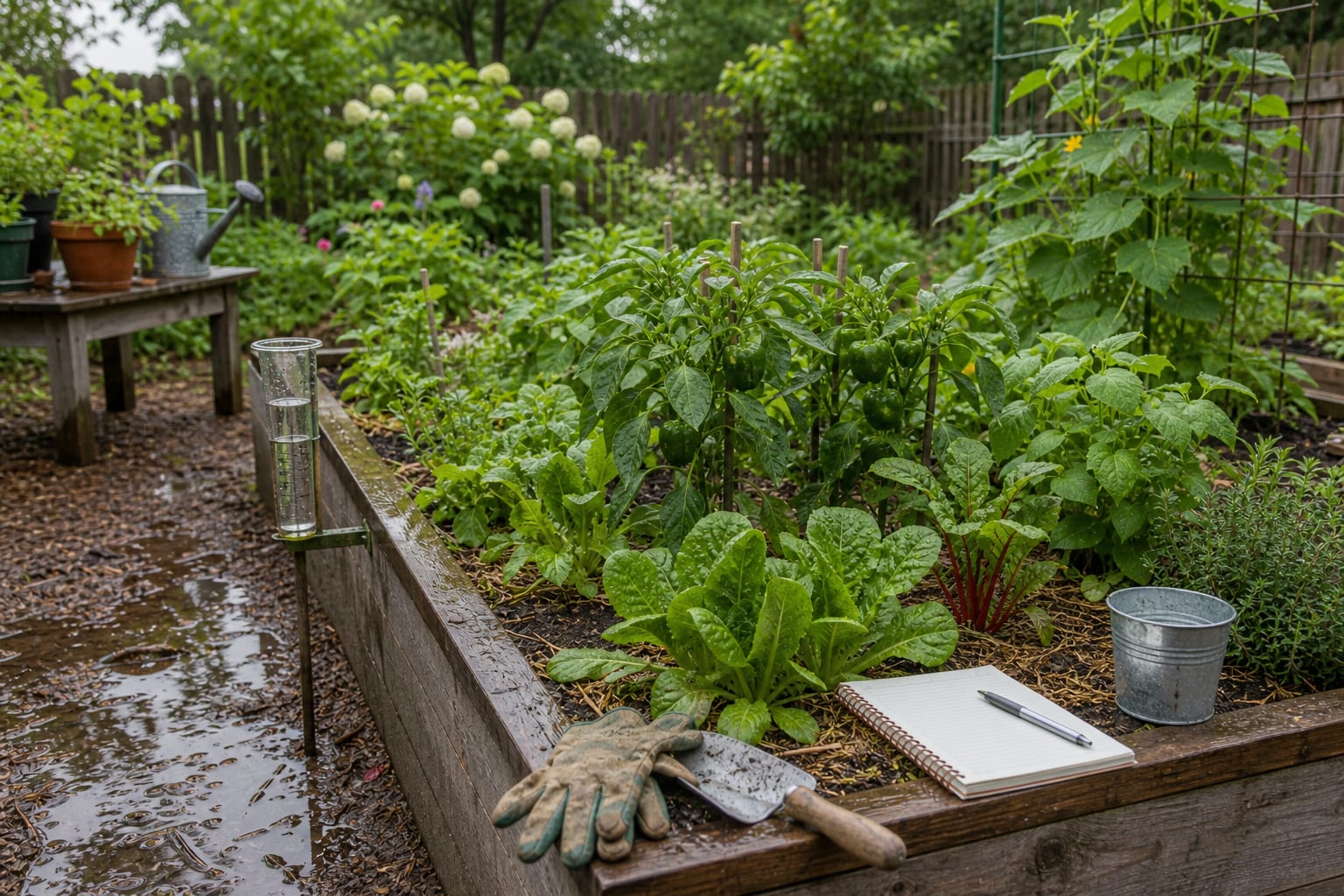
A hard summer rain can make a beginner vegetable garden look like it changed personalities overnight. The path has puddles. Mulch moved. Lower leaves are splashed with soil. One pepper plant is leaning. The rain gauge looks impressive, and suddenly you are not sure whether to celebrate the free water or start fixing everything.
The beginner move is not to charge into wet beds with a shovel. The better move is to walk the edges, read the damage calmly, protect the plants that actually need help, and let the soil drain before doing work that can wait.
The morning after a hard rain
The first real after-rain garden walk has a way of humbling you. Before the storm, the bed can feel settled. Afterward, the garden shows you the truth about paths, mulch, low spots, plant support, and where water actually wants to go.
That is the part I have learned to respect. A rainstorm is not only a problem to clean up. It is information. It shows which path turns muddy, which bed edge sheds mulch, which plant was already leaning, and which part of the garden stays wet longer than the rest.
When I slow down enough to notice those clues, the work gets smaller and more useful. Instead of trying to rescue the whole garden, I can fix the one washed-out corner, lift the one branch, pull mulch back from one stem, and write down the drainage problem that belongs on the fall or spring improvement list.
First, do no harm to wet soil
Wet soil is easy to damage. Walking in a saturated bed can compact the soil, squeeze out air, and make future drainage worse. That matters because a lot of beginner garden recovery is really soil recovery. If you stomp through the bed while trying to help, you may create a longer-term problem than the storm did.
Use paths, stepping spots, boards, or bed edges if you need to reach something urgent. If the job is not urgent, wait until the soil is workable. A garden does not need every problem fixed while the rainwater is still shining on the leaves.
Make a quick safety and food-safety distinction
An ordinary hard rain is not the same as a true flood. If the garden simply got soaked by rain, the recovery is mostly about drainage, mulch, plant support, and observation. If the garden was covered by floodwater, runoff from unknown areas, sewage, overflowing ditches, or water you would not want on food, slow down and treat it as a food-safety question.
That distinction matters. Soil splash on lettuce from a normal rain is not the same as edible leaves sitting in contaminated floodwater. If you are unsure whether water was contaminated, use local Extension or food-safety guidance before harvesting. This is not the place to guess because the plant looks fine.
What to check first after heavy rain
Start with a slow edge walk. You are not fixing yet. You are looking for the few things that matter most: standing water, broken stems, exposed roots, mulch that moved, soil splash, leaning supports, washed seed rows, debris, and water routes you did not notice before.
What to fix now and what can wait
After heavy rain, the urgent jobs are usually small. Lift the branch that is about to break. Move mulch away from a buried stem. Clear a drainage hole in a container. Pick up debris. Re-cover exposed roots with a little soil or compost. Tie the plant that is leaning into the path.
The bigger jobs can wait. Do not regrade the bed while it is saturated. Do not fertilize because everything looks tired. Do not prune heavily because leaves are wet and dramatic. Do not turn one storm into a complete garden redesign while the ground is still soft.
Deal with standing water carefully
A shallow puddle in a path is different from water sitting around plant crowns or inside containers. Paths can often wait a little while. Containers with blocked drainage need faster attention because roots can sit in saturated mix. Low spots around plant stems may need mulch pulled back, soil opened gently later, or a longer-term drainage note.
If water is standing in a bed for a long time after normal rain, treat that as information about site choice, soil structure, bed height, or path layout. You may not solve it today, but you can mark it. A note like “water pools by the back-left pepper after hard rain” is more useful than a vague memory that the garden looked wet.
Reset mulch without smothering plants
Heavy rain can move mulch in two directions at once. Some soil ends up bare. Other mulch piles against stems. Fix both, but do it gently. Pull mulch back from stems and crowns first, then spread loose material over bare soil after the bed drains enough to work from the edge.
Do not pack mulch down because you are worried it will move again. Packed mulch can shed water, trap moisture against stems, or mat into a layer that is harder for young plants. Loose coverage is usually the better beginner move.
Soil splash and leaf cleanup
Soil splash is one reason mulch matters. Rain can bounce soil onto lower leaves, fruit, and stems. That does not mean every plant is ruined, but it does mean you should inspect low leaves and edible portions more carefully.
For sturdy plants, you may remove a few lower leaves that are damaged, badly splashed, or sitting on wet soil. For leafy greens and herbs, harvest decisions depend on what touched the leaves and whether this was ordinary rain or possible contamination. Wash harvests properly, and be more cautious if water sources were questionable.
Do not fertilize just because the garden looks tired
After a storm, plants may look bent, wet, pale, or dramatic for reasons that have nothing to do with fertilizer. Roots may be oxygen-starved for a short time. Leaves may be heavy with water. Soil may be saturated. Throwing fertilizer at a stressed, wet garden can be a way of acting busy without solving the real issue.
Wait until the garden drains and you can see what is actually happening. If growth remains pale or stalled later, use a soil-aware plan instead of a storm reaction. The rain may have revealed a fertility issue, but it did not prove one by itself.
What is worth buying after heavy rain?
Most after-rain recovery does not need a shopping trip. You can do a lot with a notebook, gloves, a hand tool, and restraint. But a few low-cost items can earn their place if the same problem repeats: a rain gauge for better decisions, a hand trowel for small fixes, and clean mulch for bare soil.
I would not buy permanent path material, drainage pipe, raised-bed kits, or a pile of amendments because one storm made the garden look rough. Let the pattern repeat first. Then spend money on the actual bottleneck, not the feeling you had while looking at puddles.
Recommendations
Useful after-rain tools
Cheap clarity
Simple garden rain gauge
A rain gauge helps you connect the storm to future watering decisions.
Best for: Beginners who are still guessing after every storm
Check current priceBasic tool
Small garden hand trowel
A trowel is enough for covering exposed roots, opening small blocked spots, and resetting mulch from the edge.
Best for: Small beds and careful touchups
Check current priceBuy local first
Clean straw mulch
Clean straw helps cover bare soil and reduce splash before the next rain.
Best for: Beds with exposed soil or repeated splash problems
Check current priceTurn the storm into notes
A heavy rain is one of the best layout tests a beginner garden gets. It shows where the path is too low, where mulch moves, where plants need better support, where containers drain poorly, and where the hose or foot traffic may be compacting soil.
Write down what happened while it is still obvious. Not a long essay. Just enough to make the next decision better: “mulch washed off front edge,” “water pooled near cucumber trellis,” “pepper leaned after wind,” “path needs more wood chips later,” or “container saucer held too much water.” Those notes are how a rough morning becomes next season's wisdom.
Next step
Reset the garden without starting over.
If the rain exposed a wider mess, use the messy-garden recovery guide to decide what to fix first and what can wait until the soil dries.
Read the messy garden guideFrequently asked questions
Should I walk in the garden right after heavy rain?
Avoid walking in wet beds if you can. Wet soil compacts easily, and compacted soil makes root growth, drainage, and future watering harder. Use paths and bed edges until the soil is workable.
Should I water after a heavy rain?
Usually not right away, but check instead of assuming. A rain gauge and a quick soil check tell you more than the sound of the storm. Containers, sheltered beds, and dense plants may still dry differently than open beds.
What should I fix first after heavy rain?
First check for standing water, broken stems, washed-out mulch, exposed roots, soil splash on lower leaves, leaning supports, and debris. Fix safety and plant-support problems first, then reset mulch after the soil drains.
Can I eat vegetables after a garden floods?
A hard rain and true flooding are different. If edible portions touched floodwater, runoff, sewage, or water of unknown contamination, follow local Extension or food-safety guidance before harvesting or eating.
Recommendations
Useful tools and resources for this decision
These are included only where they reduce repeated friction, clarify a next step, or help you avoid buying the wrong thing first.
Low-cost clarity
Simple garden rain gauge
A plain rain gauge helps you know whether the garden received a light shower or a soaking rain instead of guessing from memory.
Best for: Beginners trying to water less by reading rainfall more clearly
Check current priceUseful basic tool
Small garden hand trowel
A trowel helps reset washed mulch, cover exposed roots gently, and open small blocked edges without tearing into wet soil.
Best for: Small raised beds, containers, and after-rain touchups
Check current priceUse locally if possible
Clean straw mulch
Clean straw can replace mulch that washed away, protect bare soil from splash, and make the next rain easier on the bed.
Best for: Beds with bare soil, splash problems, or mulch that moved during storms
Check current priceFood-safety source
Michigan State Extension flooded garden guidance
Food-safety guidance for vegetable gardens affected by flooding or water that may be contaminated.
Best for: Knowing when a heavy-rain garden has crossed into floodwater food-safety territory
View resourceRecommended next reads
Read next if it helps the decision
Move into the next guide only if it clarifies the next practical step.
Gardening
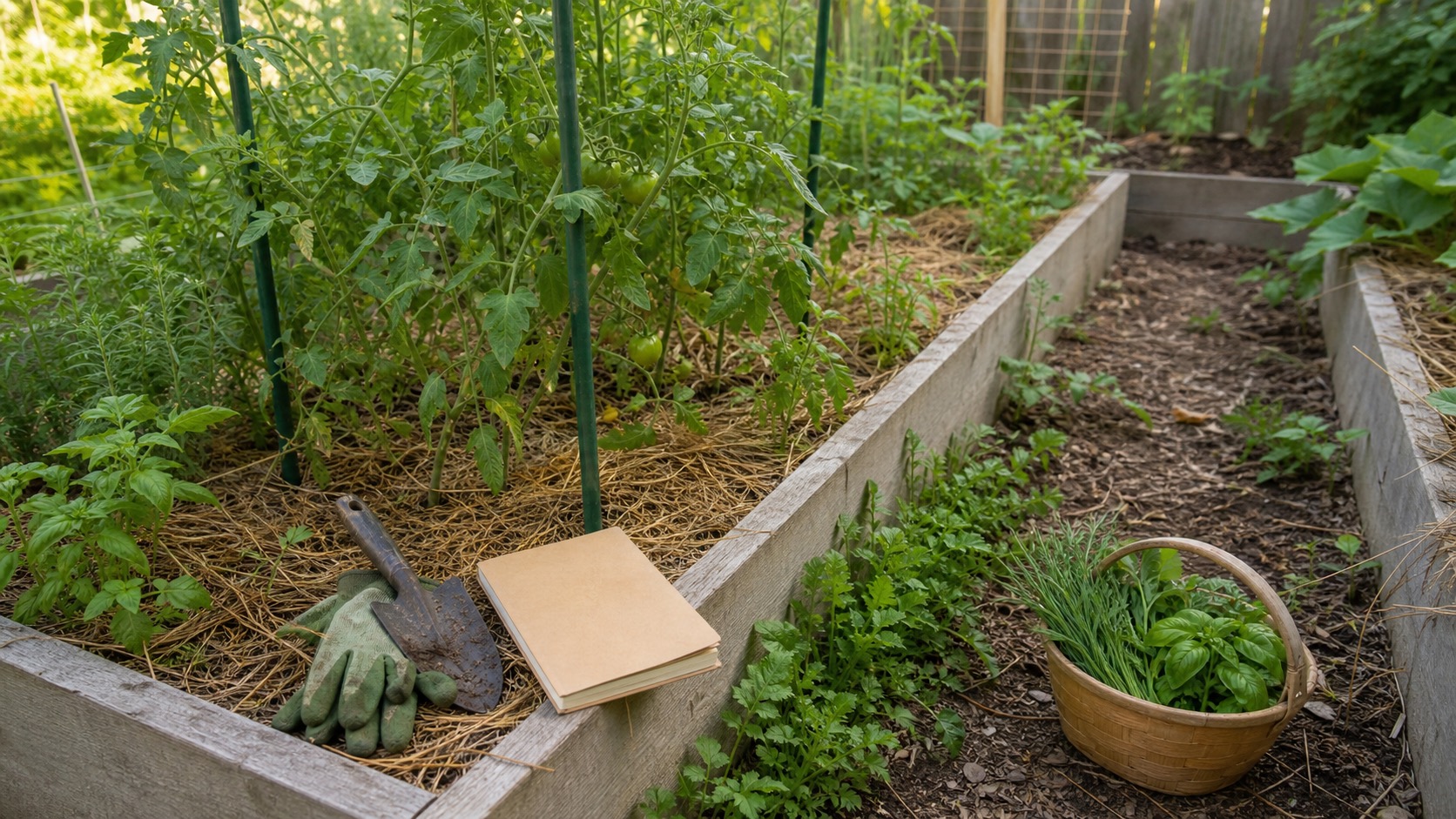
What to Do When Your First Garden Starts Looking Messy
A calm beginner guide for the moment your first vegetable garden starts looking messy: what to fix first, what to ignore, and how to recover without starting over.
Gardening
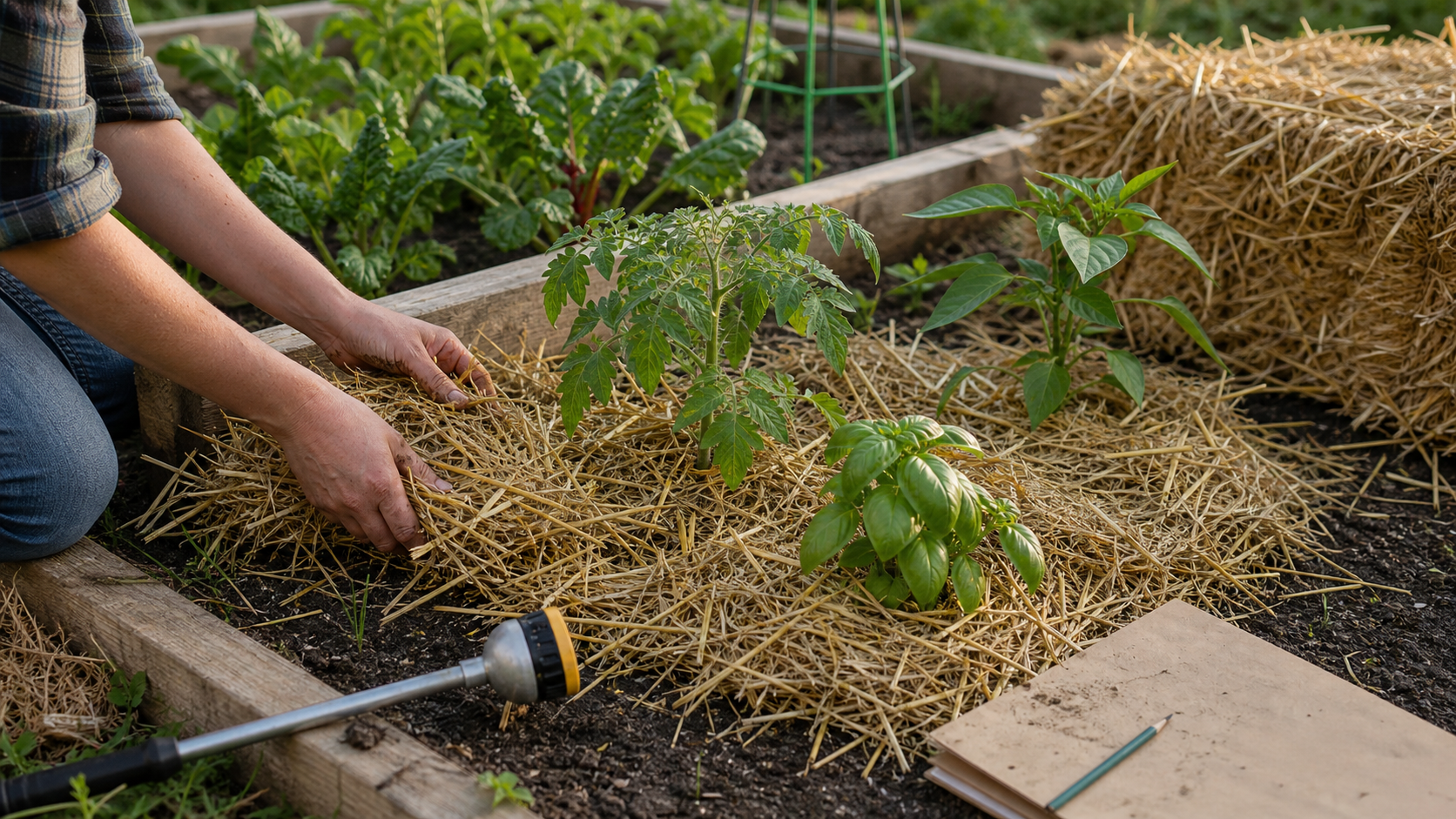
How to Mulch a Beginner Vegetable Garden Without Overthinking It
A practical beginner guide to mulching a first vegetable garden: what mulch to use, how deep to apply it, what to keep away from stems, and what can wait.
Gardening
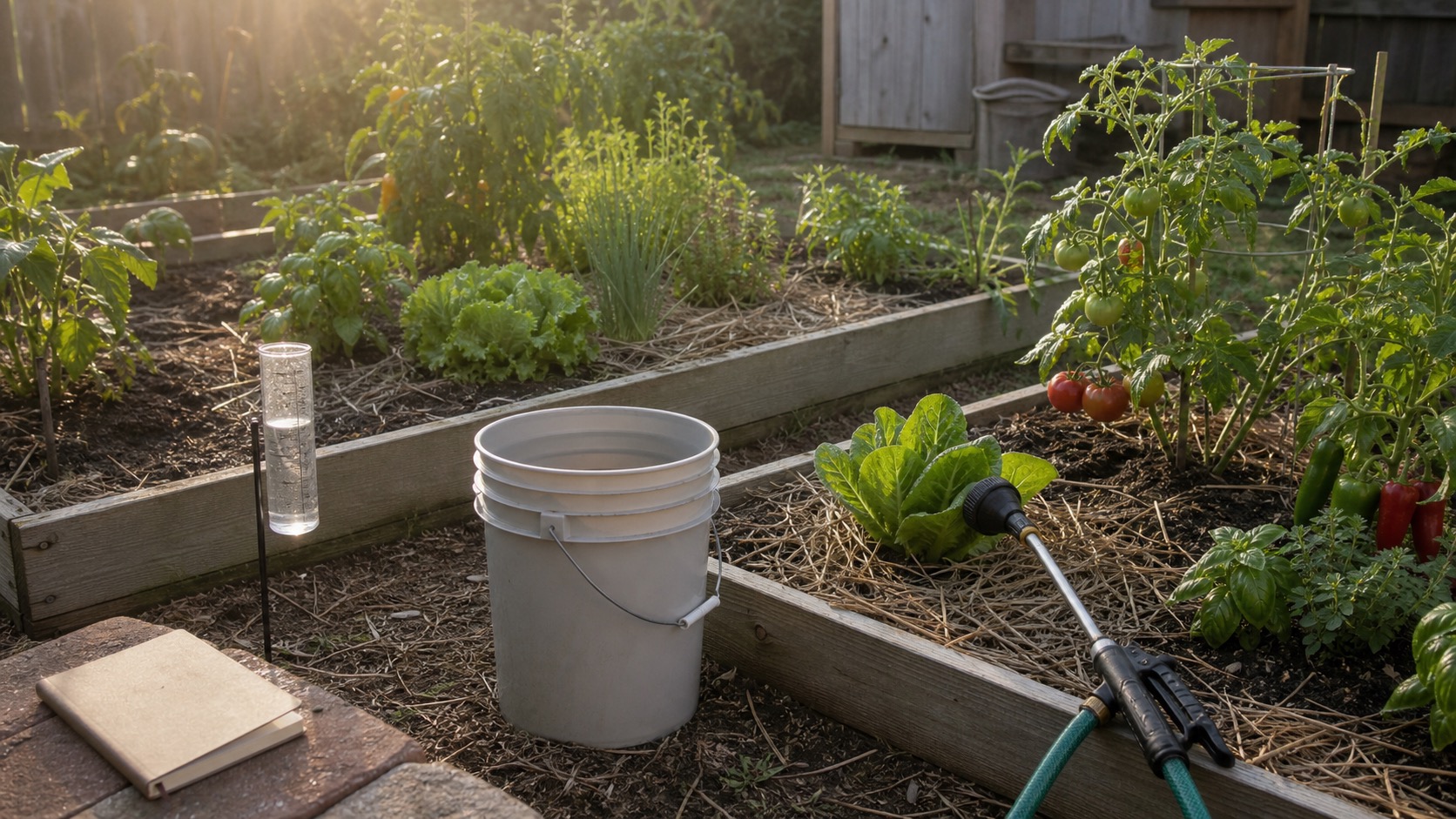
How to Water a Beginner Vegetable Garden Without Guessing
A practical beginner watering guide for small vegetable gardens: how much water plants need, how to check soil moisture, when to water, and what to stop doing.
Garden gear support
Get the buy-first guide before the first garden collects too much gear.
Use the guide to decide which early garden purchases earn money now, which ones can be borrowed, and which ones can wait until the routine proves itself.
Best for: Beginners who keep seeing useful things online and need a disciplined way to decide what actually earns a place.
- A buy now, borrow, wait, or skip framework
- Starter category shortlists
- A three-question purchase test
Garden planning notes, restrained gear decisions, and the guide first.
After signup, the download will unlock right here so you can save or print it.
About the author
William Mock
Founder, writer, and beginner homesteader
William writes from the beginner side of rebuilding after a layoff: homestead plans, family systems, budgets, tools, and the decisions that make a home feel less fragile.
Read why this site existsRelated Guides
Keep building context
Gardening
What to Do When Your First Garden Starts Looking Messy
A calm beginner guide for the moment your first vegetable garden starts looking messy: what to fix first, what to ignore, and how to recover without starting over.
Gardening
How to Mulch a Beginner Vegetable Garden Without Overthinking It
A practical beginner guide to mulching a first vegetable garden: what mulch to use, how deep to apply it, what to keep away from stems, and what can wait.
Gardening
How to Water a Beginner Vegetable Garden Without Guessing
A practical beginner watering guide for small vegetable gardens: how much water plants need, how to check soil moisture, when to water, and what to stop doing.