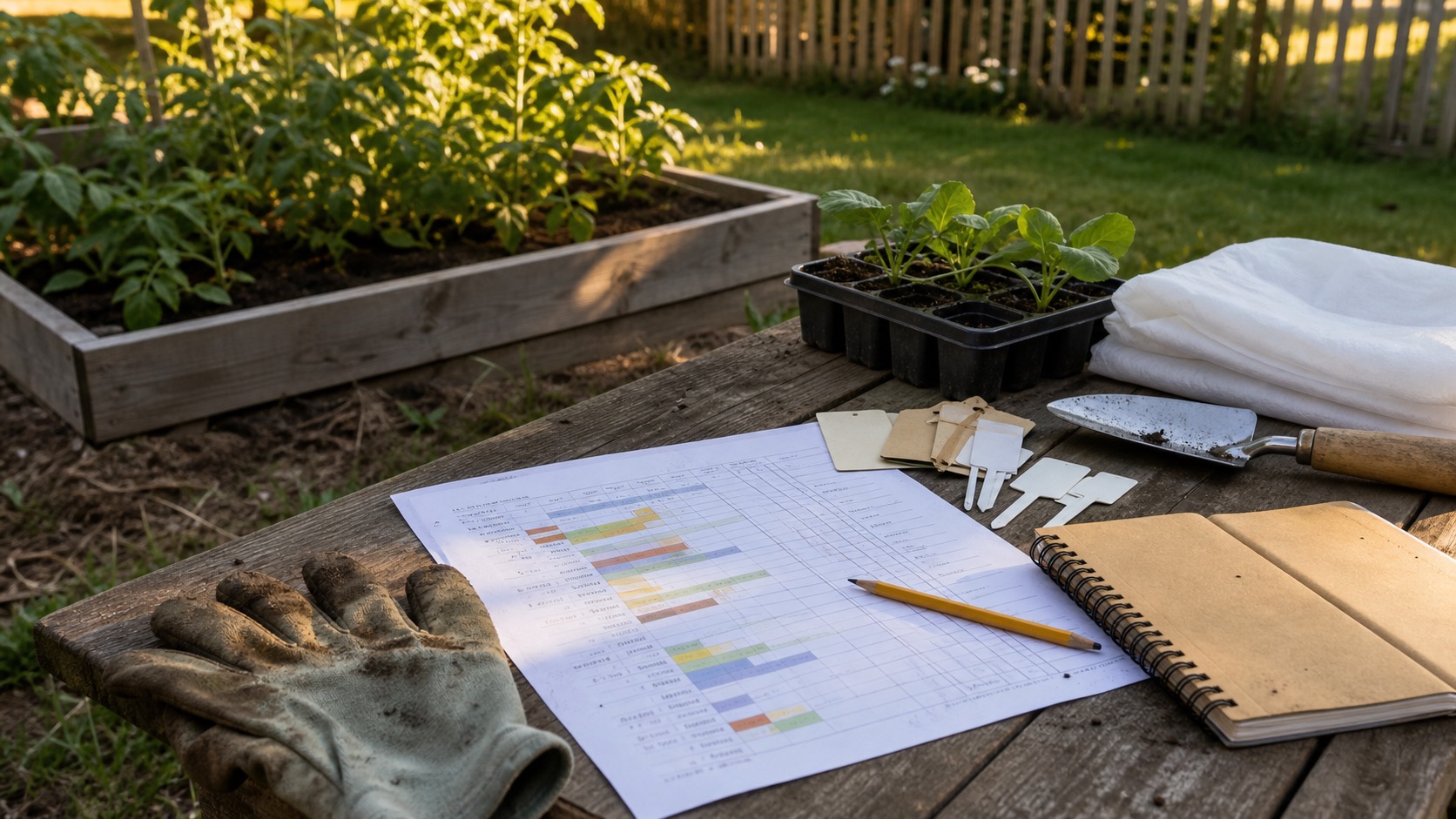
A fall garden sounds like something you can think about after summer calms down. That is the trap. By the time the heat finally breaks and the garden starts feeling pleasant again, a lot of the useful fall planting window may already be gone.
For beginners, the question is not just what can I plant in fall? The better question is when do I need to start so the crop has enough time to grow before frost, cold soil, and shorter days slow everything down?
The garden calendar sneaks up on you
The first time I really understood fall garden timing, it was not because I had some polished plan. It was because I looked around at a summer garden that still needed watering, weeding, tying up, harvesting, and rescuing from whatever had gone sideways that week, and realized the next season was already asking for attention.
That is a strange feeling. You are sweaty, the tomato plants are still demanding, the weeds have not received the memo that you are tired, and then a seed packet or planting chart quietly tells you that fall carrots or kale might need to be started now. It feels too early until you miss the window. Then it feels obvious.
That lesson has stuck with me because it applies to more than gardening. A fresh start works the same way. The next stable thing usually has to be started while the current messy thing is still happening. Waiting until life is calm sounds responsible, but sometimes calm arrives after the useful window has closed.
Start with your first frost date
Fall gardening starts with your average first frost date, not with a pretty crop list. University of Minnesota Extension frames midsummer planting for fall harvest around knowing your average first frost, choosing crops that can mature before damaging cold, and understanding which crops can tolerate some frost.
Your frost date is not a promise. It is an average. Some years run warm. Some years throw an early cold night into the middle of your plan. But it gives you a reasonable anchor so you are not planting lettuce, carrots, or broccoli by mood.
Why fall crops need a buffer
The seed packet may say a crop matures in 45 days, but fall is not spring with orange leaves. Virginia Cooperative Extension uses a fall factor of about two weeks because crops slow down as temperatures cool and days get shorter. That buffer matters.
This is where beginners get caught. A crop that technically has enough calendar days may still stall if it germinates poorly in hot soil, gets ignored during a dry week, or starts strong and then slows as daylight drops. A fall garden rewards boring margins.
What to plant first in a beginner fall garden
The best beginner fall garden is usually smaller than the one you imagine. Start with crops that fit cool weather, fit your meals, and have a realistic path to harvest. You are trying to build a second-season habit, not prove that you can run a market garden after dinner.
If you are unsure, choose three. One quick crop, one leafy crop, and one root crop will teach more than a bed full of half-started ambitions. A small fall planting also leaves room to improve the soil, mulch bare spaces, or rest a bed instead of forcing production from every square foot.
What I would do with one small bed
If I had one small bed and wanted the cleanest beginner fall garden, I would not fill it with every crop that sounds possible. I would split it into three simple zones: one strip of radishes or mustard greens, one strip of lettuce or kale, and one strip of carrots or beets. If the carrot strip matures into cold weather, use the separate decision guide before leaving carrots in the ground over winter.
That little plan gives you quick feedback, usable greens, and one slower crop that teaches patience. It also keeps the watering simple. You can walk out with a cup of coffee, look at one bed, and know what needs attention. That is a better beginner system than ten scattered experiments spread across the yard.
This connects back to the way I think about a first garden in general: make the system small enough that you can actually observe it. If you are still deciding what belongs in your first garden, start with the broader crop filter in the guide to what to plant first in a beginner homestead garden, then use this fall timing process to decide what still fits the season.
Do not ignore heat just because it is a fall garden
A fall garden often starts in summer conditions. That means the first battle may be heat, dry soil, and uneven germination, not frost. Seeds need steady moisture to germinate, and tiny seedlings do not care that the calendar says autumn is coming.
Before you plant, clean up the bed, remove exhausted plant debris, add compost if the soil needs it, and water deeply. After planting, keep the top layer consistently moist until seeds are up. This is one place where a small bed helps. It is much easier to protect and water one fall bed well than to babysit a sprawling second garden.
What is worth buying for a fall garden
Fall gardening can become another excuse to buy supplies, so I would keep the list short. Seeds matter if they fit your dates. Labels matter because every fall bed looks obvious on planting day and less obvious two weeks later. A notebook matters because timing lessons vanish fast if they are not written down.
Lightweight row cover can be useful, but I would not buy it before you know what you are protecting. It helps most when you have young greens or brassica seedlings in a defined bed and you are dealing with pests, harsh sun, or light cold. It does not turn a late planting into an on-time planting.
Recommendations
Useful fall garden supplies
Shop fall garden seeds
Cool-season vegetable seed assortment
Use this only if it keeps your fall crop list simple: greens, roots, and quick crops that fit your local window.
Best for: A focused first fall planting
A few specific packets are better than an oversized assortment.
Check current priceCompare row cover
Lightweight garden row cover
Helpful for a small bed of young fall crops when you need a little protection, but not required for every beginner garden.
Best for: Small beds with greens or brassicas
Wait until the bed and crop list are real.
Check current priceLook at garden planners
Garden notebook or planner
Use it to record frost date, seeding date, germination, weather problems, and what actually reached the kitchen.
Best for: Remembering timing lessons next season
A cheap notebook works if you will actually use it.
Check current priceWhat can wait until next year
You do not need a greenhouse, a full low-tunnel system, a complicated seed-starting rack, or a massive cover-crop plan to learn from a fall garden. Those tools can be useful later, but they are easy to use as a way to avoid the simpler question: what can I plant on time in one manageable space?
If the timing window is already tight, do not try to force a full second season. Plant one fast crop, mulch the rest, and write down what you would start earlier next year. That is not failure. That is exactly the kind of note that makes the next season calmer.
A simple decision for this week
This week, do not start with a seed order. Start with one date. Find your average first frost date and write it down. Then pick three crops your household will actually eat and count backward with a two-week fall buffer.
If the dates still work, plant one small bed. If they do not, plant one quick crop or put the bed to rest and call the note a win. The point is not to squeeze one more project into the year. The point is to learn the rhythm before the next season arrives.
Next step
Keep the fall garden small enough to manage
If you are still sorting out bed size, crop choice, and water access, use the first-garden planning guide before adding another planting window to the calendar.
Plan your first gardenRecommended next reads
Continue planning your beginner garden
Use these guides to keep the fall garden connected to a realistic first-season system.

Gardening
What to Plant First in a Beginner Homestead Garden
A practical crop-selection guide for first gardens: what to plant first, what to skip for now, and how to choose crops that teach useful skills without overwhelming the week.
Gardening
Small Vegetable Garden Layout for Beginners
A practical small vegetable garden layout for beginners, including bed width, paths, sun, water, tall crops, crop zones, and what not to squeeze into the first season.
Gardening
How to Water a Beginner Vegetable Garden Without Guessing
A practical beginner watering guide for small vegetable gardens: how much water plants need, how to check soil moisture, when to water, and what to stop doing.
Frequently asked questions
When should beginners start a fall garden?
Most beginners should start planning a fall garden in midsummer, then plant each crop by counting backward from the average first frost date, days to maturity, and a two-week fall growth buffer. In many areas that means some fall garden decisions happen in July or August.
What vegetables are easiest for a beginner fall garden?
Radishes, leaf lettuce, spinach, kale, mustard greens, turnips, beets, carrots, and peas are useful beginner candidates when they fit your local planting window. Choose a few crops your household will actually eat instead of trying every cool-season option.
Is July too early to think about a fall garden?
No. July can feel too early because the summer garden is still loud, but many fall crops need to be seeded or started in midsummer so they mature before hard cold and short days slow growth.
Do I need seed-starting equipment for a fall garden?
Not usually. Many fast fall crops can be direct-seeded. Seed-starting trays can help with crops like broccoli, cabbage, and kale, but a beginner can build a useful fall garden with direct-seeded greens, radishes, carrots, beets, and turnips.
Recommendations
Useful tools and resources for this decision
These are included only where they reduce repeated friction, clarify a next step, or help you avoid buying the wrong thing first.
Shop fall garden seeds
Cool-season vegetable seed assortment
A small seed assortment can be useful if it keeps you focused on greens, radishes, carrots, beets, turnips, and other realistic fall crops instead of a giant seed order.
Best for: Beginners who need a simple fall crop shortlist
Buy only what fits your frost window and meals. A smaller packet list beats a full seed box that never gets planted.
Check current priceCompare row cover
Lightweight garden row cover
Row cover can help protect young fall seedlings from harsh sun, some insects, and light cold, but it is not a magic fix for planting too late.
Best for: Small beds with young greens or brassica seedlings
Skip this until you know where the fall bed is going. It earns its place when you have a crop worth protecting.
Check current priceLook at garden planners
Simple garden notebook or planner
A plain notebook is enough to track first frost date, seeding dates, germination, harvest notes, and what you would change next season.
Best for: Families trying to stop repeating the same timing mistakes
You do not need a fancy planner. You need one place where dates and lessons do not disappear.
Check current priceRead the Extension guide
University of Minnesota Extension fall planting guide
A practical Extension guide for midsummer vegetable planting, first frost timing, days to maturity, and crop cold hardiness.
Best for: Checking fall crop timing from a research-backed source
View resourceRecommended next reads
Read next if it helps the decision
Move into the next guide only if it clarifies the next practical step.
Gardening
What to Plant First in a Beginner Homestead Garden
A practical crop-selection guide for first gardens: what to plant first, what to skip for now, and how to choose crops that teach useful skills without overwhelming the week.
Gardening
Small Vegetable Garden Layout for Beginners
A practical small vegetable garden layout for beginners, including bed width, paths, sun, water, tall crops, crop zones, and what not to squeeze into the first season.
Gardening
How to Water a Beginner Vegetable Garden Without Guessing
A practical beginner watering guide for small vegetable gardens: how much water plants need, how to check soil moisture, when to water, and what to stop doing.
Garden gear support
Get the buy-first guide before the first garden collects too much gear.
Use the guide to decide which early garden purchases earn money now, which ones can be borrowed, and which ones can wait until the routine proves itself.
Best for: Beginners who keep seeing useful things online and need a disciplined way to decide what actually earns a place.
- A buy now, borrow, wait, or skip framework
- Starter category shortlists
- A three-question purchase test
Garden planning notes, restrained gear decisions, and the guide first.
After signup, the download will unlock right here so you can save or print it.
About the author
William Mock
Founder, writer, and beginner homesteader
William writes from the beginner side of rebuilding after a layoff: homestead plans, family systems, budgets, tools, and the decisions that make a home feel less fragile.
Read why this site existsRelated Guides
Keep building context
Gardening
How to Plan Your First Homestead Garden Without Doing Too Much
A successful first garden is smaller, clearer, and less romantic than many beginners expect. That is a good thing.
Gardening
What to Plant First in a Beginner Homestead Garden
A practical crop-selection guide for first gardens: what to plant first, what to skip for now, and how to choose crops that teach useful skills without overwhelming the week.
Gardening
Small Vegetable Garden Layout for Beginners
A practical small vegetable garden layout for beginners, including bed width, paths, sun, water, tall crops, crop zones, and what not to squeeze into the first season.