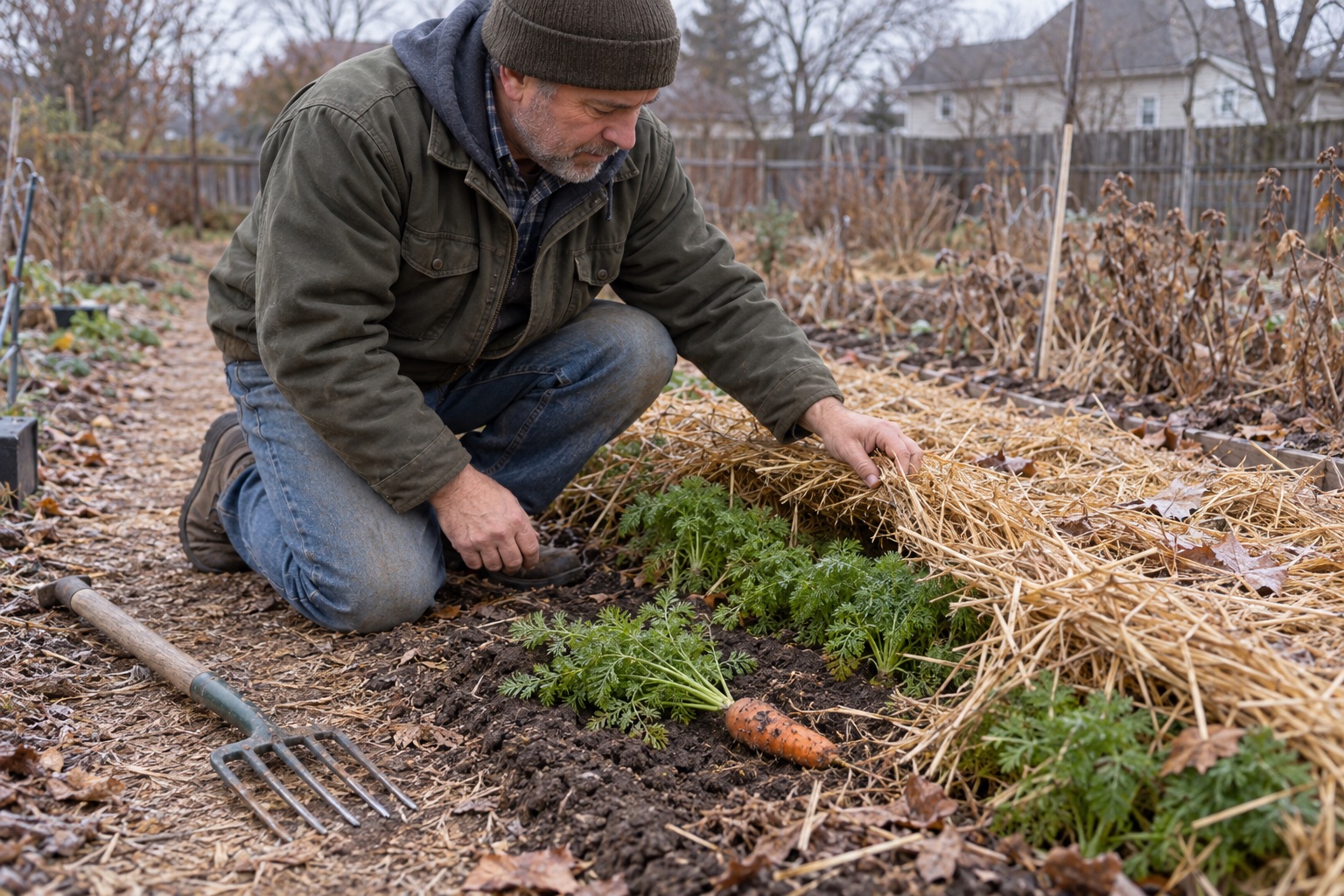
Yes, mature carrots can stay in well-drained garden soil after light frost, and some gardeners protect the row with clean mulch for winter harvest. But leaving carrots in the ground is not automatically safer than digging them. Harvest instead when the soil is likely to freeze solid, stay waterlogged, become inaccessible, or expose the roots to pests and disease. Test a few carrots first, use local Extension guidance, and make a retrieval plan before the bed turns into a frozen pantry with no door.
This is a focused decision inside the beginner gardening path. Use the broader first-frost garden guide to sort tender and hardy crops across the whole garden. This article begins after the carrots have earned a closer look.
The harvest plan that depended on January being convenient
When I built our first-frost plan, the useful rule was simple: harvest what cold could ruin, cover what another week could finish, and leave the hardy crops alone. That stopped the evening from becoming a rescue mission for every green leaf. Carrots fit neatly in the leave column.
Then I tested that tidy answer against an ordinary winter dinner. It is dark after work. The path is wet, frozen, or buried. A layer of mulch has to move somewhere. The soil may be harder than it was when the plan looked sensible in October. A carrot can be perfectly content underground while still being completely unavailable to the person who needs it beside the pot.
I have not spent a whole winter pulling our own carrots from beneath snow, and I am not going to turn the planning exercise into a harvest memory it was not. The personal lesson was still real: storage includes retrieval. If dinner requires a headlamp, a stiff gate, and garden archaeology, the carrots did not fail. The system did.
Decide whether this carrot row should stay
Start with the row in front of you, not a zone map by itself. Carrot variety, maturity, soil texture, drainage, pest pressure, bed construction, expected cold, snow cover, and safe access all matter. A method that works west of the Cascades is not a promise for a wind-exposed bed in Indiana or a container on a balcony.
Penn State Extension's root-vegetable guidance says carrots are especially good when left until frost but advises harvesting before the ground freezes. Utah State's carrot guide notes that many gardeners overwinter carrots under heavy mulch. Oregon State's regional winter-production guide adds the important limitation: soil pests and diseases can damage carrots, and the crop sometimes survives better after harvest than in the ground. Those statements are not contradictions. They describe different places and risk tolerances.
Pull a test carrot before building the mulch plan
Move the soil back from several shoulders in different parts of the row. Check size against the variety description, then harvest two or three samples. One impressive carrot beside the path does not represent a row with thin, split, or pest-damaged roots hiding six feet away.
The University of Minnesota carrot guide recommends pushing a garden fork into the soil near the plant and levering the root loose before pulling. Keep the tines outside the root line and keep hands and feet out of their path. If the soil is frozen or the tool is glancing off hard ground, wait for a workable window or use the harvest plan you made earlier.
Use mulch to keep the soil workable, not to make promises
Clean straw or loose leaves can slow temperature swings and delay soil freezing around the crop. Illinois Extension's carrot guide notes that heavy mulch allows winter carrot harvest in many areas, and Oregon State's vegetable-garden guide recommends mulching root crops to protect them from temperature fluctuations. The useful goal is not keeping the tops beautiful. It is protecting the root zone and preserving a workable harvest surface.
Do not copy one mulch depth without checking local guidance. Loose straw, shredded leaves, whole wet leaves, and snow do not behave the same way. Wind exposure, rain, soil moisture, and the severity and duration of cold change the result. Apply the clean material across the row and beyond its edges, then mark the row so you are not searching for it after the garden goes visually blank.
Check beneath the cover periodically. Mulch can shelter the soil and also make a comfortable place for pests. If roots begin disappearing, the soil stays sodden, or quality declines, the experiment has supplied its answer. Harvest what remains instead of adding another layer and hoping the carrots negotiate better terms.
Raised beds and containers change the risk
An in-ground row benefits from the surrounding soil mass. A raised bed has exposed sides, and a container can lose heat through nearly its entire surface. That does not make overwintering impossible, but it does make advice written for an open garden less transferable. Small containers may freeze through much faster than the nearby ground.
Use the guide to winterizing a raised bed to account for the frame, irrigation, paths, and unfinished sections around a living crop. Do not wrap a container with a random material, move a heavy planter, or place it against a building without checking weight, drainage, moisture, fire safety, and the needs of that exact site. Sometimes the calm answer is to harvest the carrots and close the bed.
Keep food safety separate from cold tolerance
A carrot surviving frost does not make every root safe to eat. Discard roots with soft rot, extensive decay, animal contamination, or other conditions that make them unfit. Do not taste a questionable root to settle the issue. Wash sound harvested carrots under clean running water before use and follow tested preservation guidance if they will be canned, frozen, or pickled.
Floodwater is a separate stop rule. Oregon State's winter vegetable guide states that crops whose edible portions contact floodwater should not be sold or eaten. Ordinary rain and contaminated floodwater are not the same thing. When sewage, fuel, chemicals, or floodwater may have reached the bed, use current local health and Extension guidance rather than trying to rescue the harvest with washing.
Make winter harvest easy enough to repeat
Harvest on a workable day before the next cold event instead of waiting until the recipe is already underway. Fold the mulch back only as far as needed, loosen the soil beside the roots, lift a meal-sized amount, and put the protection back. Keep the path clear without piling mulch where it creates a slipping or drainage problem.
A sound garden fork can make firm soil easier to loosen without pulling carrots apart by their tops. If you already own one with straight secure tines and a solid handle, use it. If you need one for repeated garden work, the Fiskars Ergo D-handle steel garden fork, model 333400-1001, is a researched option with a 47-inch steel construction and pointed tines. I have not personally tested this model, and one carrot row is not a reason to replace a safe tool already in the shed.
One small-bed example
Picture a family with one eight-foot carrot row in a well-drained in-ground bed. The first light frost has passed, the roots taste good, and the local Extension guidance supports protected late harvest. The bed is fifteen steps from the back door, but the narrow gate sticks once snow and mud collect around it. This is an example, not a report from our garden.
They leave half the row, cover it with the locally recommended clean mulch, mark both ends, and harvest the other half for the refrigerator. The outside portion becomes a small trial instead of the entire winter food plan. They schedule a check before the next hard cold and agree to lift the rest if the path becomes unsafe, pests appear, or the soil starts staying wet.
That split decision produces more useful information than gambling the whole crop. The family learns how the bed behaves, whether winter harvest really fits their week, and whether the carrots continue earning their place. A garden experiment should be allowed to answer no without taking every carrot with it.
What matters first, and what can wait
Leaving carrots in the ground can extend a harvest, but it should not turn the crop into a dare. Test the roots, test the access, and leave only the amount your soil and winter routine can honestly support. Carrots do not read hardiness-zone maps, and they will not remind you when the mulch has become a pest hotel. The check belongs on the calendar.
When the row is finished, return to the fall garden cleanup decision for the remaining residue and soil cover. The goal is not to prove that food stayed outside the longest. It is to bring good food into the house while the route is still safe, the roots are still sound, and the family still wants carrots for dinner.
Frequently asked questions
Can carrots stay in the ground after a frost?
Yes. Mature carrots can usually remain after a light frost, and cool conditions may improve flavor. Frost on the foliage is different from soil freezing around the root. Use local Extension guidance, your forecast, soil drainage, and a test harvest to decide how long the crop should remain.
Can carrots stay in the ground all winter?
Sometimes, but not in every garden. In-ground overwintering works best where mature carrots sit in well-drained soil, the row can be insulated appropriately, pests and disease are manageable, and the bed remains safely accessible. Harvest instead when the soil is likely to freeze solid, stay waterlogged, become inaccessible, or expose the crop to repeated losses.
How much mulch should go over carrots for winter?
Use enough clean, loose mulch to insulate the soil over and beyond the row, but follow regional Extension guidance rather than one national depth. Climate, snow cover, soil type, wind, and mulch material change the result. Keep a practical way to move the mulch aside for harvest and check beneath it for moisture and pest activity.
Can I overwinter carrots in a raised bed or container?
Possibly, but raised beds and containers lose heat through exposed sides and can freeze differently from in-ground soil. A small container may freeze through even when the nearby garden does not. Follow local guidance for the exact setup, and choose harvest plus refrigerator or other approved storage when the root zone cannot remain protected.
When should overwintered carrots be harvested?
Harvest before the bed becomes inaccessible or local guidance expects damaging soil freeze, and lift the remaining crop if roots show pest damage, cracking, soft rot, or declining quality. Do not let an eating crop drift unnoticed into spring regrowth; carrots are biennial, and root quality declines as the plant resumes growth and prepares to flower.
Recommendations
Useful tools and resources for this decision
These are included only where they reduce repeated friction, clarify a next step, or help you avoid buying the wrong thing first.
Researched digging-fork option
Fiskars Ergo D-handle steel garden fork
A 47-inch garden fork, model 333400-1001, with a welded boron-steel head, steel shaft, pointed tines, angled D-handle, and mid grip.
Best for: Loosening firm soil beside mature carrots when a sound fork is not already available
Check current priceCheck manufacturer details
Fiskars garden fork specifications
The manufacturer's current page for model 333400-1001, including its intended soil-loosening use, materials, handle design, length, and warranty.
Best for: Verifying the exact model and specifications independently from the retailer listing
View resourceRecommended next reads
Read next if it helps the decision
Move into the next guide only if it clarifies the next practical step.
Gardening
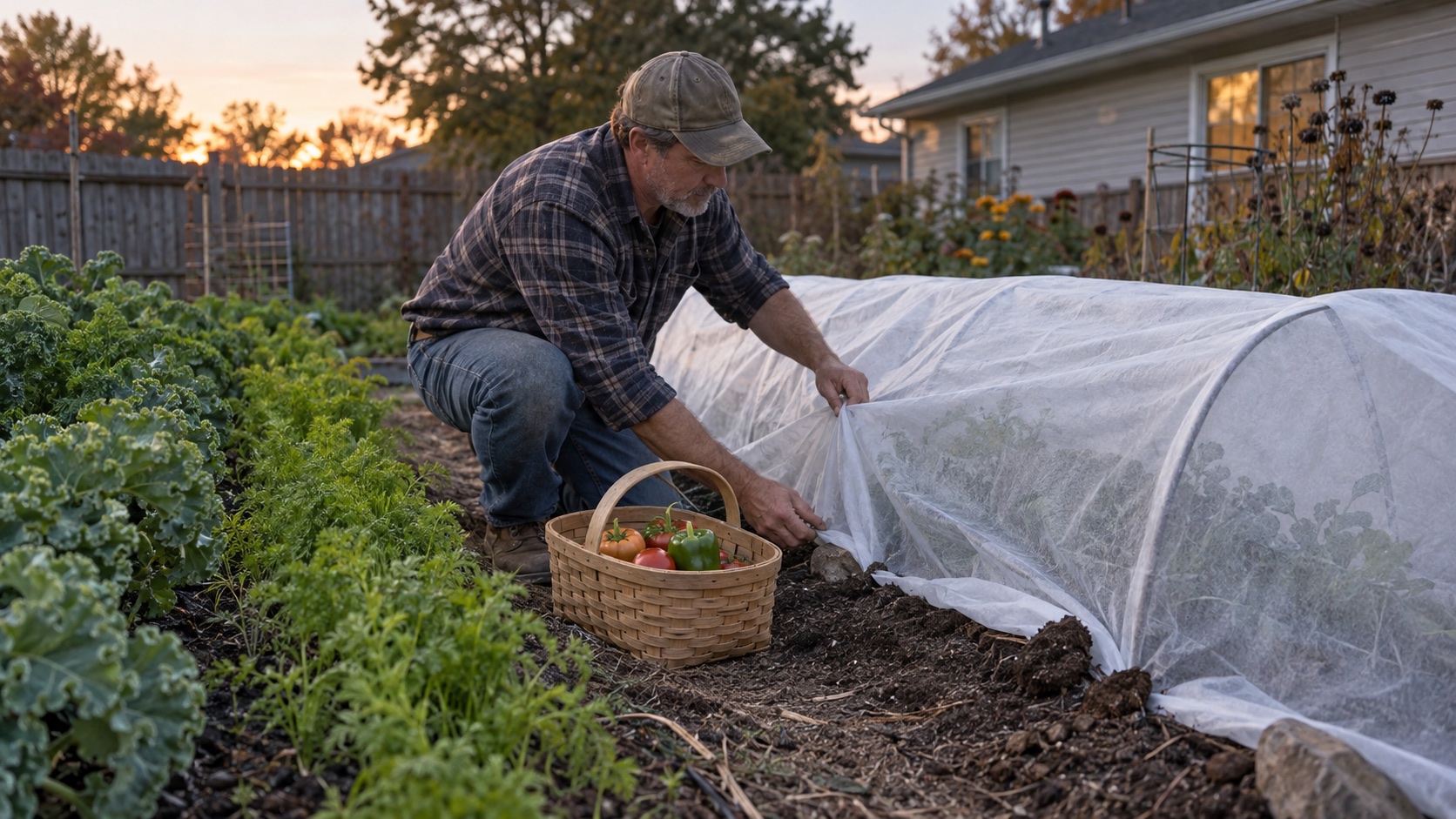
How to Protect a Vegetable Garden From the First Frost
Protect a vegetable garden from frost by harvesting tender crops first, covering only what is worth extending, and leaving cold-tolerant crops alone when conditions allow.
Gardening
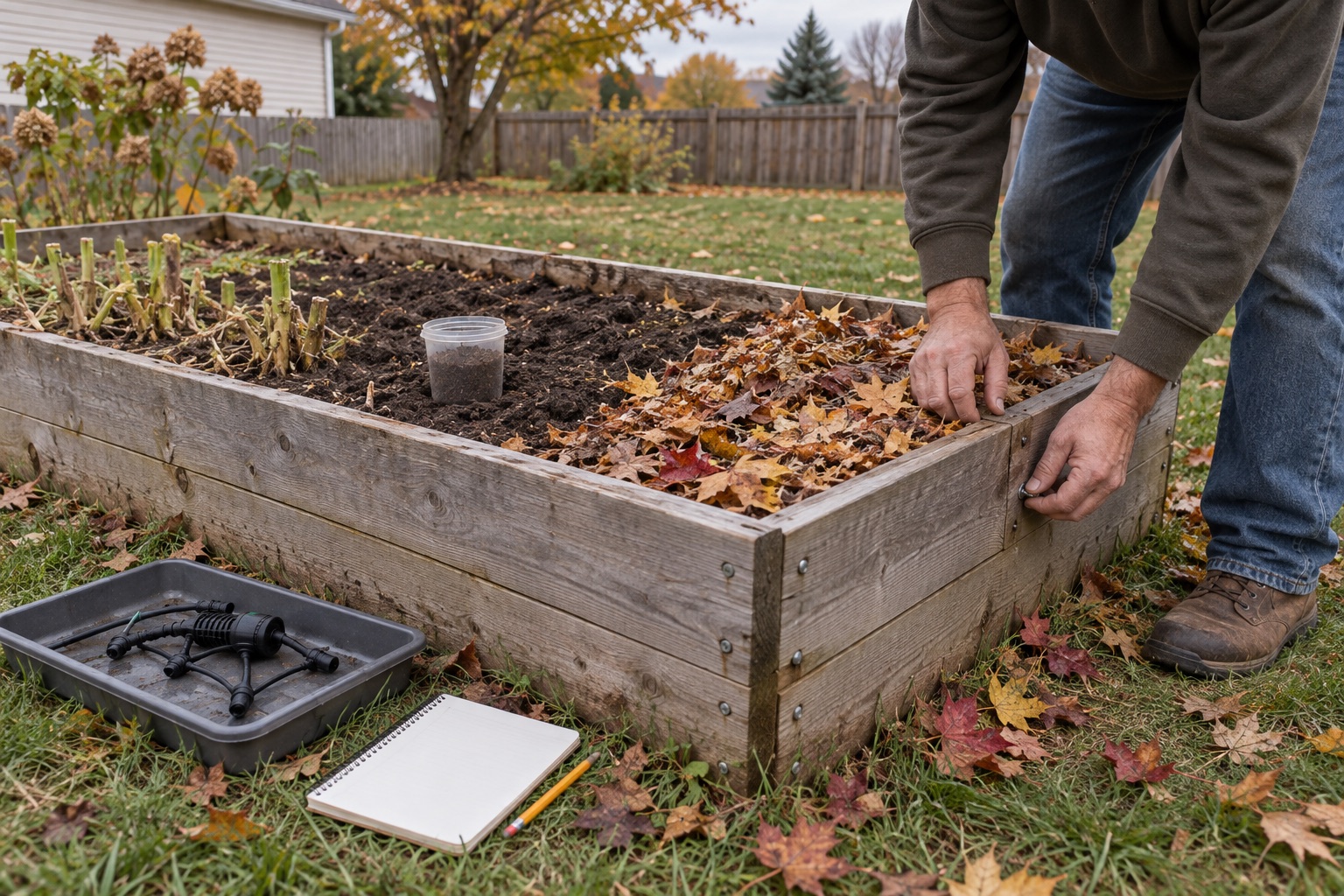
How to Winterize Raised Garden Beds
Winterize a raised garden bed by sorting plant residue, recording crop problems, protecting the soil, draining irrigation parts, and inspecting the frame before winter.
Gardening
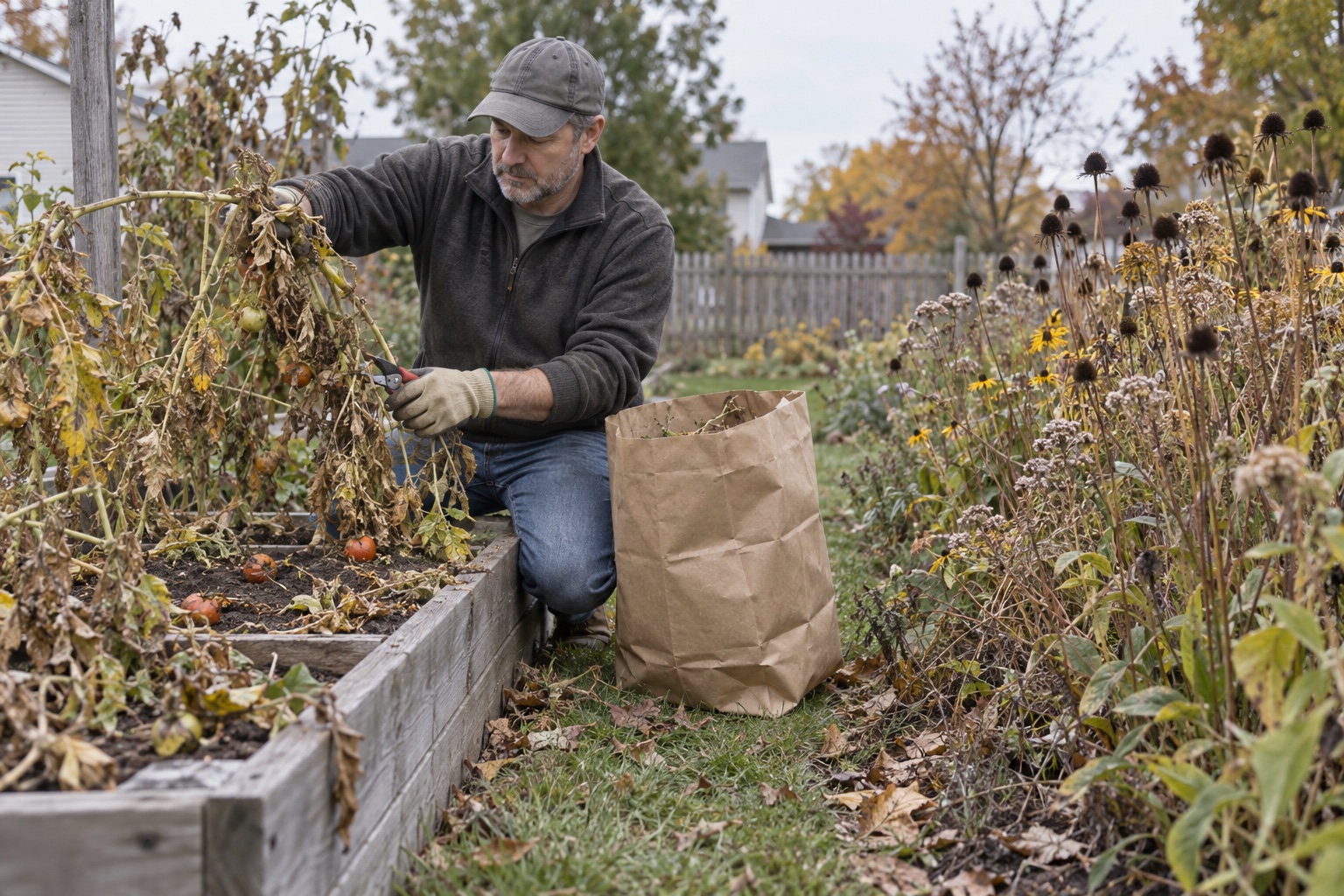
Fall Garden Cleanup for Beginners: What to Remove and Leave
Remove spent vegetable plants, diseased debris, fallen fruit, and seed-heavy weeds, but leave healthy perennial stems and some leaf litter where they support winter habitat.
Garden gear support
Get the buy-first guide before the first garden collects too much gear.
Use the guide to decide which early garden purchases earn money now, which ones can be borrowed, and which ones can wait until the routine proves itself.
Best for: Beginners who keep seeing useful things online and need a disciplined way to decide what actually earns a place.
- A buy now, borrow, wait, or skip framework
- Starter category shortlists
- A three-question purchase test
Garden planning notes, restrained gear decisions, and the guide first.
After signup, the download will unlock right here so you can save or print it.
About the author
William Mock
Founder, writer, and beginner homesteader
William writes from the beginner side of rebuilding after a layoff: homestead plans, family systems, budgets, tools, and the decisions that make a home feel less fragile.
Read why this site existsRelated Guides
Keep building context
Gardening
How to Protect a Vegetable Garden From the First Frost
Protect a vegetable garden from frost by harvesting tender crops first, covering only what is worth extending, and leaving cold-tolerant crops alone when conditions allow.
Gardening
When to Start a Fall Garden for Beginners
A practical fall garden timing guide for beginners: how to work backward from first frost, choose cool-season crops, and plant a small second season without guessing.
Gardening
How to Winterize Raised Garden Beds
Winterize a raised garden bed by sorting plant residue, recording crop problems, protecting the soil, draining irrigation parts, and inspecting the frame before winter.