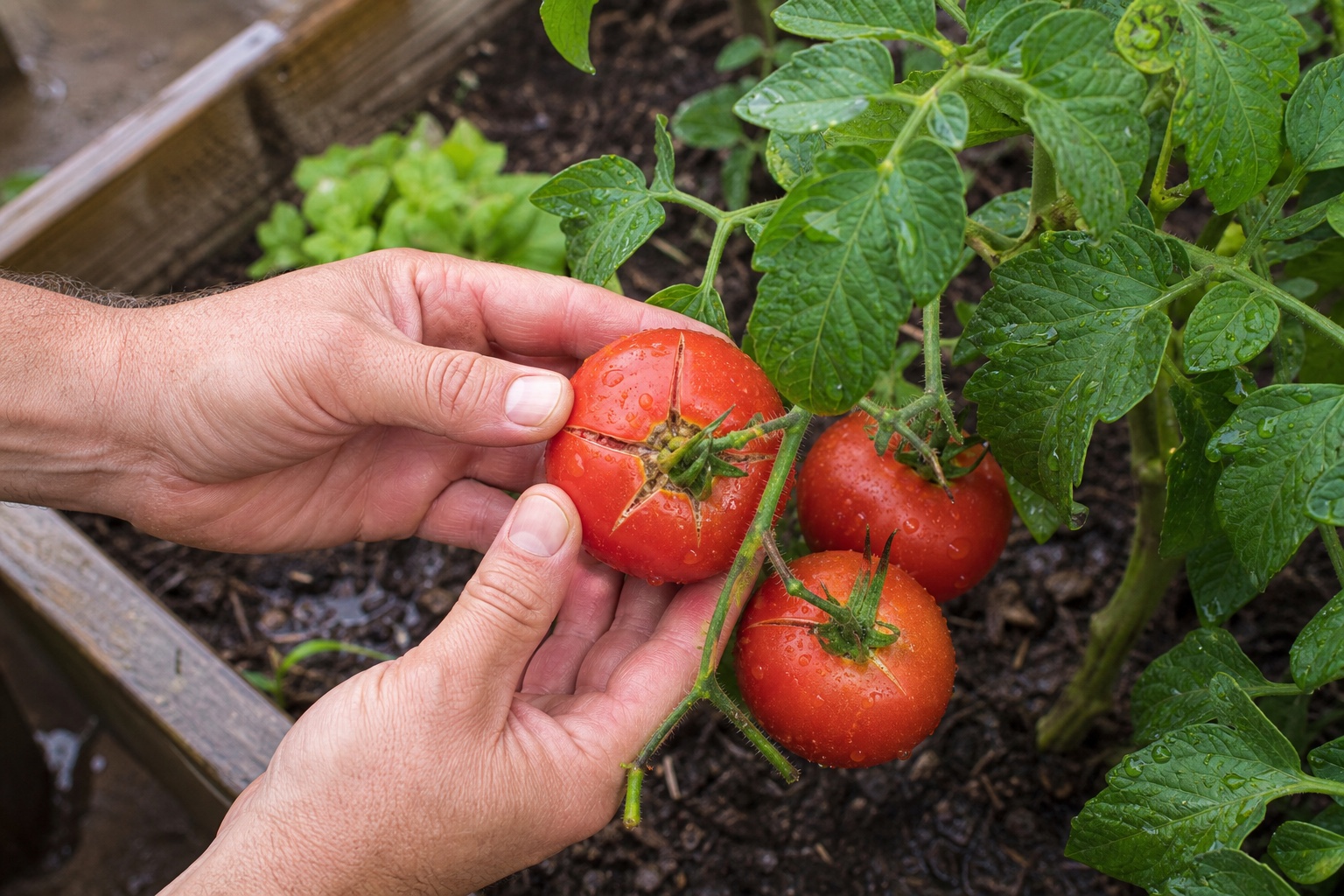
A tomato that splits after rain can make it look like the storm ruined a perfectly healthy crop overnight. Usually, the rain is only the last part of the story. The bigger problem is the swing from dry soil to a sudden rush of water while the fruit is already growing and ripening.
The tomato that looked fine until I turned it over
After a hard summer rain, I have learned not to judge the garden from the path. One red tomato can look perfect from three feet away, then turn in your hand and show a split running down from the stem like somebody pulled a zipper through the skin. The frustrating part is how close it was to the kitchen.
My first instinct is still to blame the storm. It is cleaner to say one bad rain did it. But the useful lesson is usually in the week before the storm: hot days, soil drying more than I realized, a watering routine that got uneven, and ripe fruit left outside because I wanted one more day of vine color. The storm did not create every weakness. It exposed the moisture swing.
That is a better story to carry into the next week because it gives me something to change. I cannot negotiate with the forecast. I can check the soil, protect it with mulch, pick nearly ripe fruit before a downpour, and stop treating a split tomato like proof that the whole garden is going badly.
Why tomatoes crack after rain
Tomato cracking is a growth problem, not automatically a disease. Penn State Extension explains that when water moves rapidly into a developing fruit, the flesh can expand faster than the skin stretches. Ripening fruit are especially vulnerable because the skin becomes less flexible as the tomato matures.
The classic setup is a dry period followed by heavy rain or heavy irrigation. Heat and direct sun can add stress. Fruit exposed because a plant has lost leaves or has been pruned too aggressively may experience sharper temperature swings. Some varieties also crack more easily than others, especially large, thin-skinned fruit.
What to do right after you find a split tomato
Do not confuse cracking with other tomato problems
A split near the stem is different from a dark sunken patch on the blossom end, a pale leathery patch on the sunny side, or a spreading soft rot. Growth cracks usually radiate from the stem or circle the shoulder. Blossom-end rot forms at the opposite end. Sunscald appears where exposed fruit overheats.
That distinction matters because the fixes are different. Adding calcium does not repair a rain split. Spraying a fungicide does not correct a dry-to-wet moisture swing. Naming the problem before buying the cure is one of the quiet skills that makes a first garden less expensive.
How to reduce the next round of cracking
You cannot make every tomato weatherproof. The goal is to reduce sharp changes around the fruit, not to promise a crack-free harvest. Start with the parts of the system that make ordinary weeks steadier.
Watering without overcorrecting
The answer to cracking is not less water. It is steadier water. Letting plants get bone-dry and then giving them a huge drink can reproduce the same swing as a thunderstorm. A soaker hose or drip line can help, but only if you check that it reaches the actual root zone and runs long enough to wet more than the surface.
A plain rain gauge is useful for the same reason. Summer rain is deceptive. A loud storm can drop less water than you think, while a slow quiet rain can do real work. Measure the rain, check the soil, and let those two pieces of information make the watering decision.
What can wait
A cracked tomato does not justify a shopping spree. Shade structures, elaborate irrigation controllers, moisture sensors, specialty fertilizer, and a full bed rebuild can wait. If the problem happened once after unusual weather, harvest what you can and keep notes. If it keeps happening, improve the cheapest repeated bottleneck first.
For most small gardens, that bottleneck is not technology. It is exposed soil, inconsistent hand watering, overripe fruit left through a storm, or a variety that keeps cracking under local conditions. Fixing one of those is more useful than buying a device that gives the same uncertain routine a battery.
After the storm
Check the whole garden without making wet soil worse
Use the heavy-rain garden recovery guide to inspect drainage, mulch, leaning plants, soil splash, and standing water in the right order.
Use the after-rain checklistThe useful lesson in a split tomato
A split tomato is disappointing, but it is also unusually clear feedback. It tells you the fruit was close, the plant was moving water fast, and the garden may need a steadier rhythm before the next storm. That is not a failed season. It is one damaged tomato handing you a better question.
Pick the fruit, inspect it honestly, protect the rest of the cluster, and make one practical change. That is how a beginner garden gets better: not through perfect weather, but through noticing what the weather revealed.
Recommended next reads
Keep the summer garden steady
These guides cover the next useful decisions after tomato cracking: storm recovery, root-zone watering, and moisture-saving mulch.
Gardening
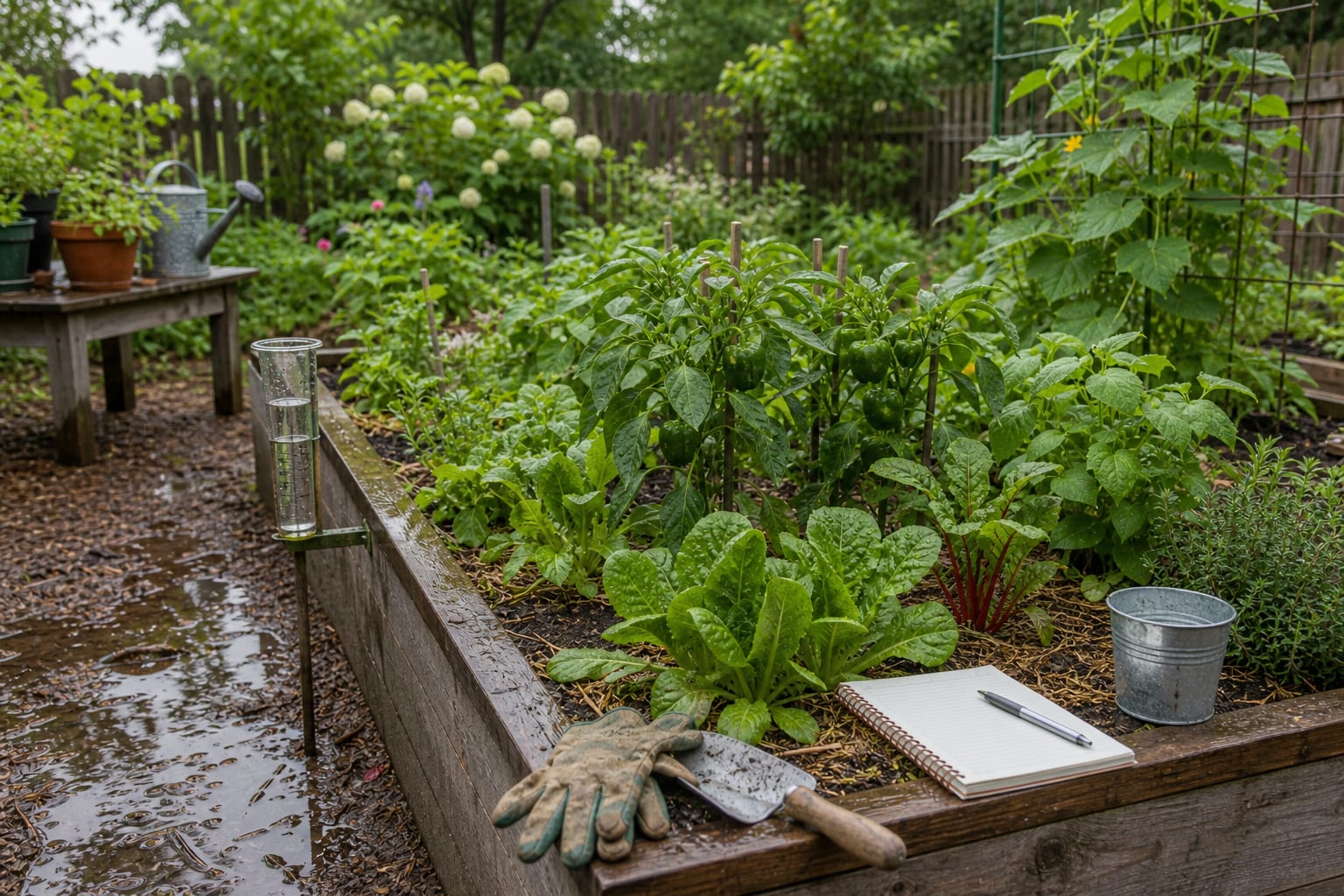
What to Do After Heavy Rain in a Beginner Vegetable Garden
A calm beginner guide for checking a vegetable garden after heavy rain: puddles, washed mulch, soil splash, leaning plants, drainage clues, and what can wait.
Gardening
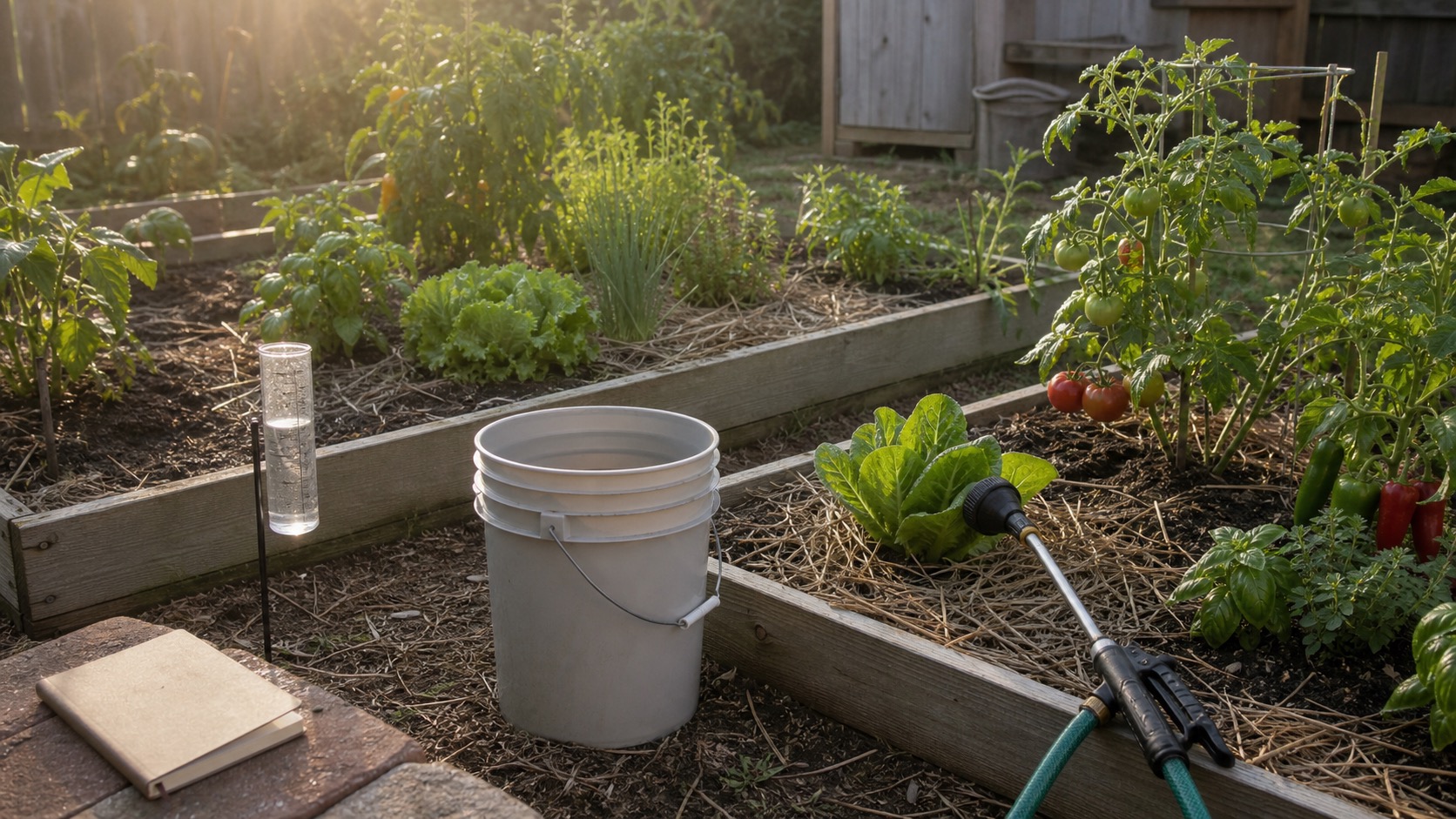
How to Water a Beginner Vegetable Garden Without Guessing
A practical beginner watering guide for small vegetable gardens: how much water plants need, how to check soil moisture, when to water, and what to stop doing.
Gardening
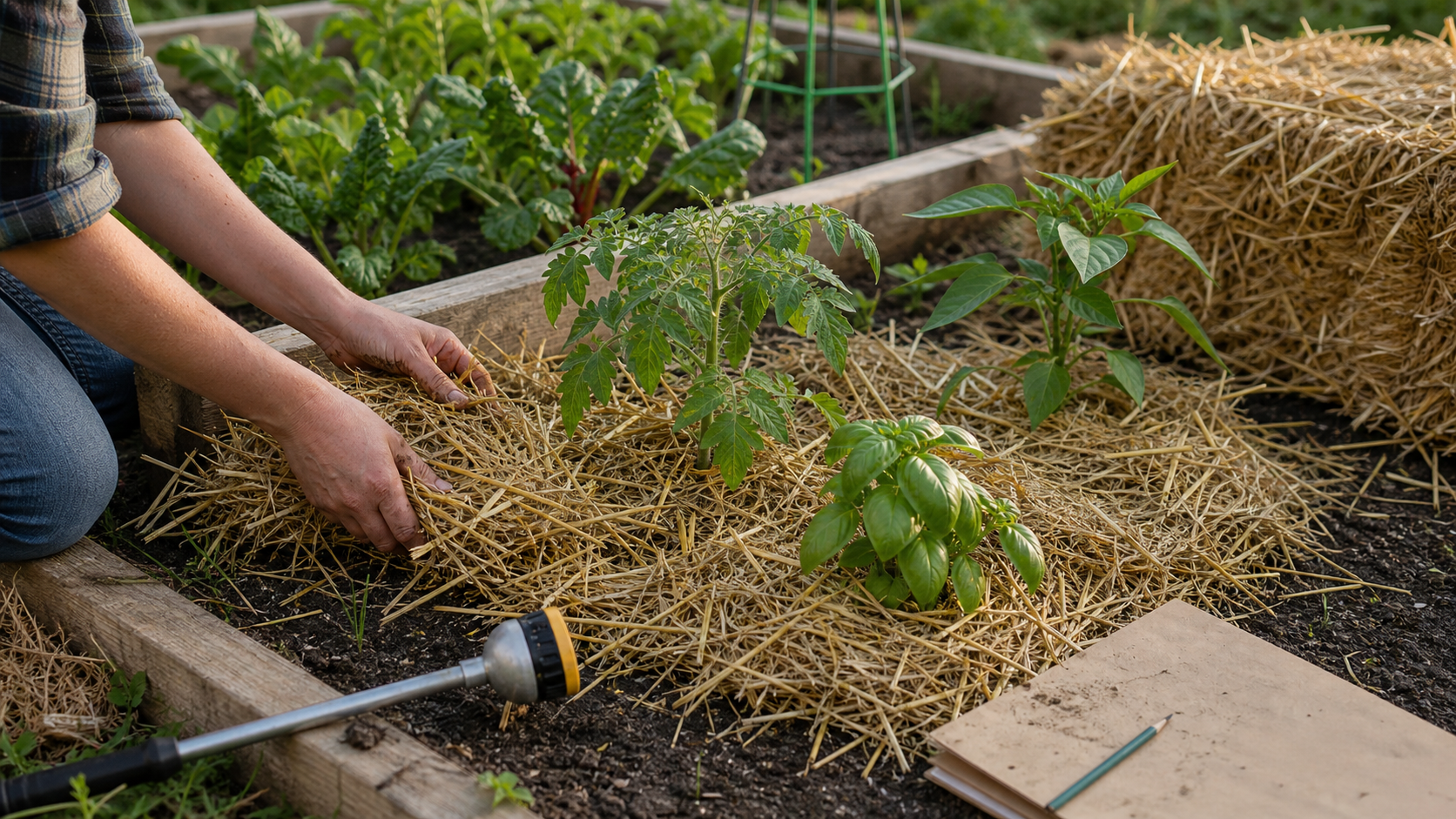
How to Mulch a Beginner Vegetable Garden Without Overthinking It
A practical beginner guide to mulching a first vegetable garden: what mulch to use, how deep to apply it, what to keep away from stems, and what can wait.
Keep it practical
Build a first garden you can keep up with
Get the beginner homestead checklist and use it to choose a smaller first system, set a realistic budget boundary, and keep the next season from becoming ten projects at once.
Practical notes from the work in progress. Low-noise and easy to leave.
Frequently asked questions
Why do tomatoes split after heavy rain?
Tomatoes often split when a plant moves quickly from dry conditions to abundant water. The fruit expands faster than its skin can stretch, especially as it ripens. Heavy rain after a dry spell is a common trigger, but uneven irrigation, heat, fruit exposure, and variety also affect the risk.
Should I pick tomatoes before heavy rain?
If tomatoes have reached the breaker or pink stage and a soaking rain is coming after dry weather, picking them can reduce the chance of late-stage cracking. Let them finish ripening indoors in a single layer. Leave hard green fruit unless weather, disease, or another clear risk gives you a reason to harvest it.
Can a cracked tomato stay on the vine?
Pick a cracked tomato promptly. An open split gives insects and decay organisms an easier path into the fruit, and the crack will not seal into sound skin. Inspect it carefully rather than leaving it through another hot or wet day.
Can I use cracked tomatoes for home canning?
Use only sound, high-quality tomatoes for home canning and follow a current research-tested recipe. University of Minnesota Extension advises against canning damaged tomatoes because tissue damage can create a food-safety risk. Freeze sound portions for cooked dishes instead when appropriate, and discard fruit with rot, mold, off odors, or uncertain damage.
Does mulch keep tomatoes from splitting?
Mulch can reduce cracking risk by slowing soil-moisture swings, but it cannot prevent every split. It works best with consistent ground-level watering, healthy leaf cover, timely harvest, and a variety that is not unusually prone to cracking.
Recommendations
Useful tools and resources for this decision
These are included only where they reduce repeated friction, clarify a next step, or help you avoid buying the wrong thing first.
Compare rain gauges
Simple outdoor rain gauge
A basic gauge tells you whether a storm supplied a useful amount of water or only made the garden surface look wet.
Best for: Beginners trying to keep tomato watering more consistent
Choose one that is easy to read and empty. A complicated weather station is not necessary for this job.
Check current priceCompare watering setups
Soaker hose or basic drip kit
Ground-level irrigation can deliver water more steadily and with less leaf and fruit splash than quick overhead watering.
Best for: Tomato beds that repeatedly swing from dry to soaked
Check the soil after the first few uses. A hose can run for a long time and still miss part of the root zone if placement or pressure is uneven.
Check current priceRead the Extension guide
Penn State Extension tomato cracking guide
A current research-backed explanation of radial and concentric cracking, moisture swings, leaf cover, harvest stage, and cultivar differences.
Best for: Understanding why cracking happens and which prevention steps have the best support
View resourceReview tomato disorders
University of Minnesota Extension tomato disorders guide
A practical visual guide for distinguishing growth cracks from sunscald, blossom-end rot, and other common tomato problems.
Best for: Checking whether the damage is really a growth crack
View resourceRecommended next reads
Read next if it helps the decision
Move into the next guide only if it clarifies the next practical step.
Gardening
What to Do After Heavy Rain in a Beginner Vegetable Garden
A calm beginner guide for checking a vegetable garden after heavy rain: puddles, washed mulch, soil splash, leaning plants, drainage clues, and what can wait.
Gardening
How to Water a Beginner Vegetable Garden Without Guessing
A practical beginner watering guide for small vegetable gardens: how much water plants need, how to check soil moisture, when to water, and what to stop doing.
Gardening
How to Mulch a Beginner Vegetable Garden Without Overthinking It
A practical beginner guide to mulching a first vegetable garden: what mulch to use, how deep to apply it, what to keep away from stems, and what can wait.
Garden gear support
Get the buy-first guide before the first garden collects too much gear.
Use the guide to decide which early garden purchases earn money now, which ones can be borrowed, and which ones can wait until the routine proves itself.
Best for: Beginners who keep seeing useful things online and need a disciplined way to decide what actually earns a place.
- A buy now, borrow, wait, or skip framework
- Starter category shortlists
- A three-question purchase test
Garden planning notes, restrained gear decisions, and the guide first.
After signup, the download will unlock right here so you can save or print it.
About the author
William Mock
Founder, writer, and beginner homesteader
William writes from the beginner side of rebuilding after a layoff: homestead plans, family systems, budgets, tools, and the decisions that make a home feel less fragile.
Read why this site existsRelated Guides
Keep building context
Gardening
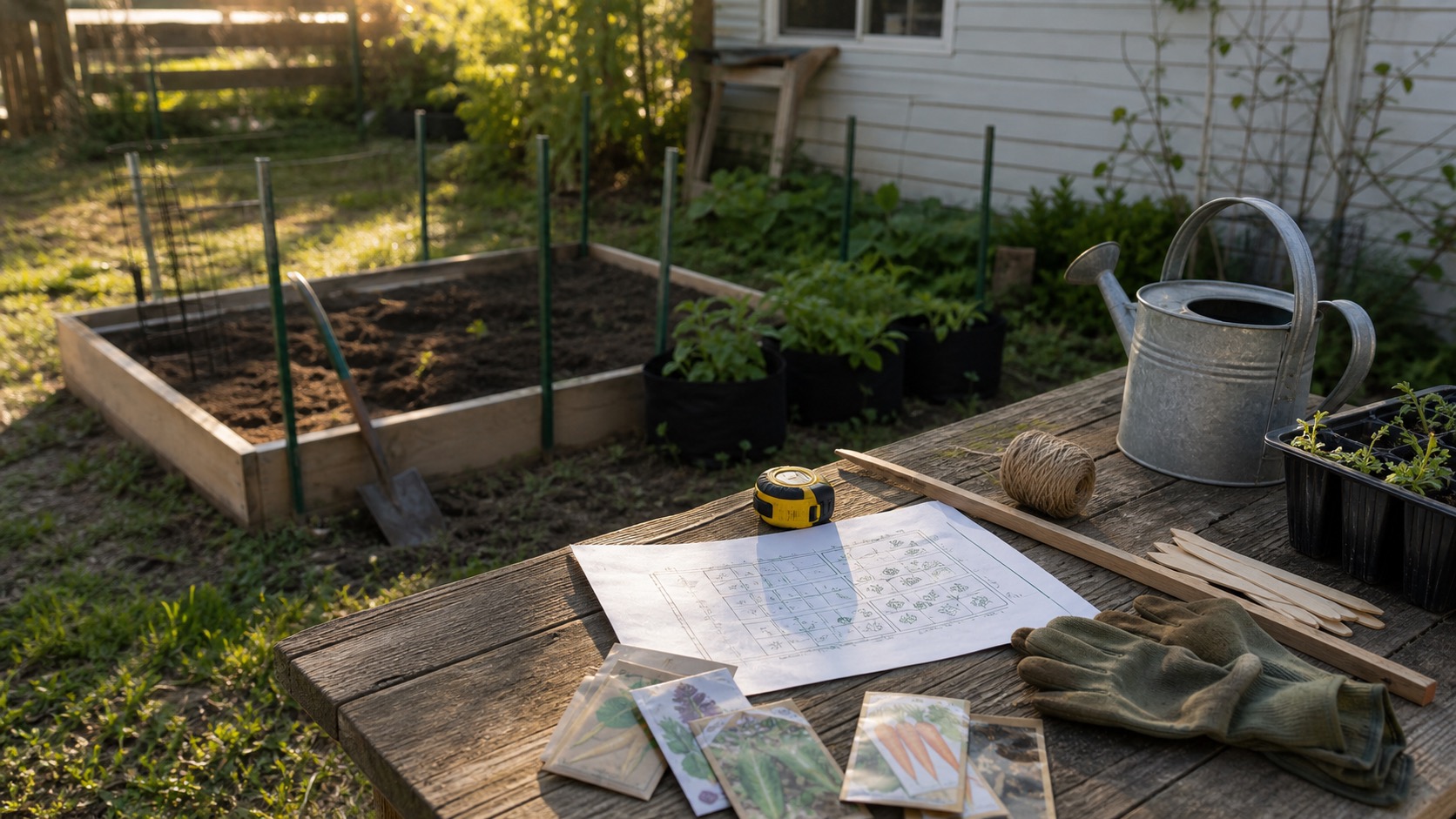
How to Plan Your First Homestead Garden Without Doing Too Much
A successful first garden is smaller, clearer, and less romantic than many beginners expect. That is a good thing.
Gardening
What to Do After Heavy Rain in a Beginner Vegetable Garden
A calm beginner guide for checking a vegetable garden after heavy rain: puddles, washed mulch, soil splash, leaning plants, drainage clues, and what can wait.
Gardening
How to Water a Beginner Vegetable Garden Without Guessing
A practical beginner watering guide for small vegetable gardens: how much water plants need, how to check soil moisture, when to water, and what to stop doing.