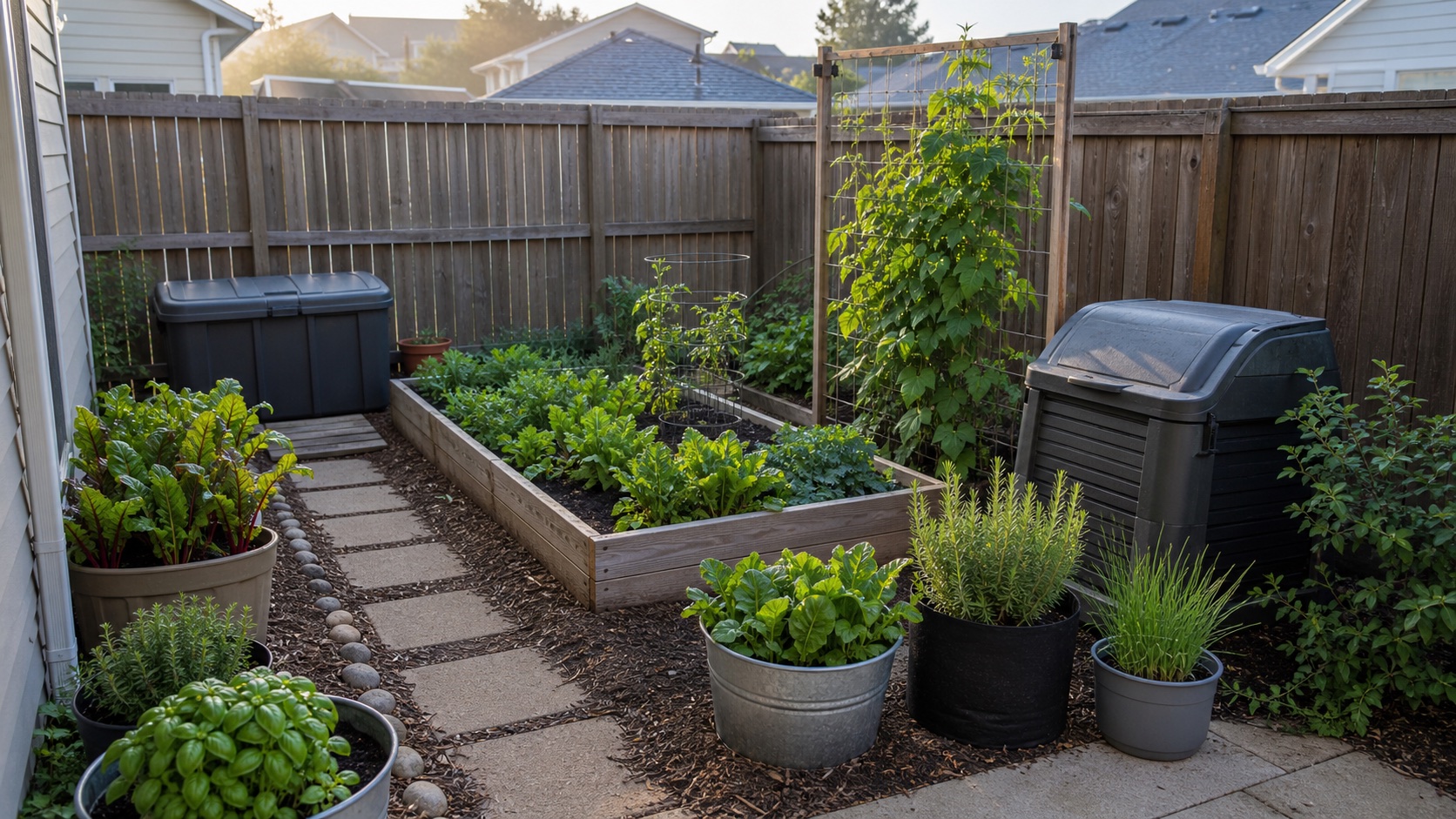
You can start homesteading in a small backyard, but the plan has to be built around limits instead of pretending the yard is a smaller version of acreage. Start with one food system, one simple way to handle organic waste, one defined storage area, and enough clear space that the household can still use the yard.
The goal is not to fit every homestead feature into the fence line. The goal is to build skills and systems that make the household a little more capable without turning every square foot into another chore.
The tape-measure walk that made the plan smaller and better
The small-yard plan changed for me when I stopped looking at the backyard as empty opportunity and started walking it as a place the family already used. The sunny strip looked perfect for food. The fence looked ready for something vertical. The corner near the house looked like storage. On paper, every spot seemed available.
Then I paid attention to the ordinary movement. A gate needed to open. A hose had to cross the yard without becoming a trip line. Rainwater had to go somewhere. The table, the walking path, and the part of the yard that made the house feel less boxed in were not wasted space. They were part of the system.
That walk made the plan smaller, and the smaller plan was better. One useful growing area with a clean path and a real watering routine had more value than six clever ideas competing for the same corner.
The real decision is what the yard needs to keep doing
A small backyard may need to hold more than a homestead project. Children play there. Dogs move through it. People carry groceries, drag trash bins, sit outside, open gates, maintain utilities, and need a clear path during wet weather.
Before choosing projects, write down what the yard already does for the household. Then identify the areas that truly are available: the sunny food zone, a contained compost spot, a narrow storage edge, and any vertical surface that can be used without blocking light or access.
Start with one food system
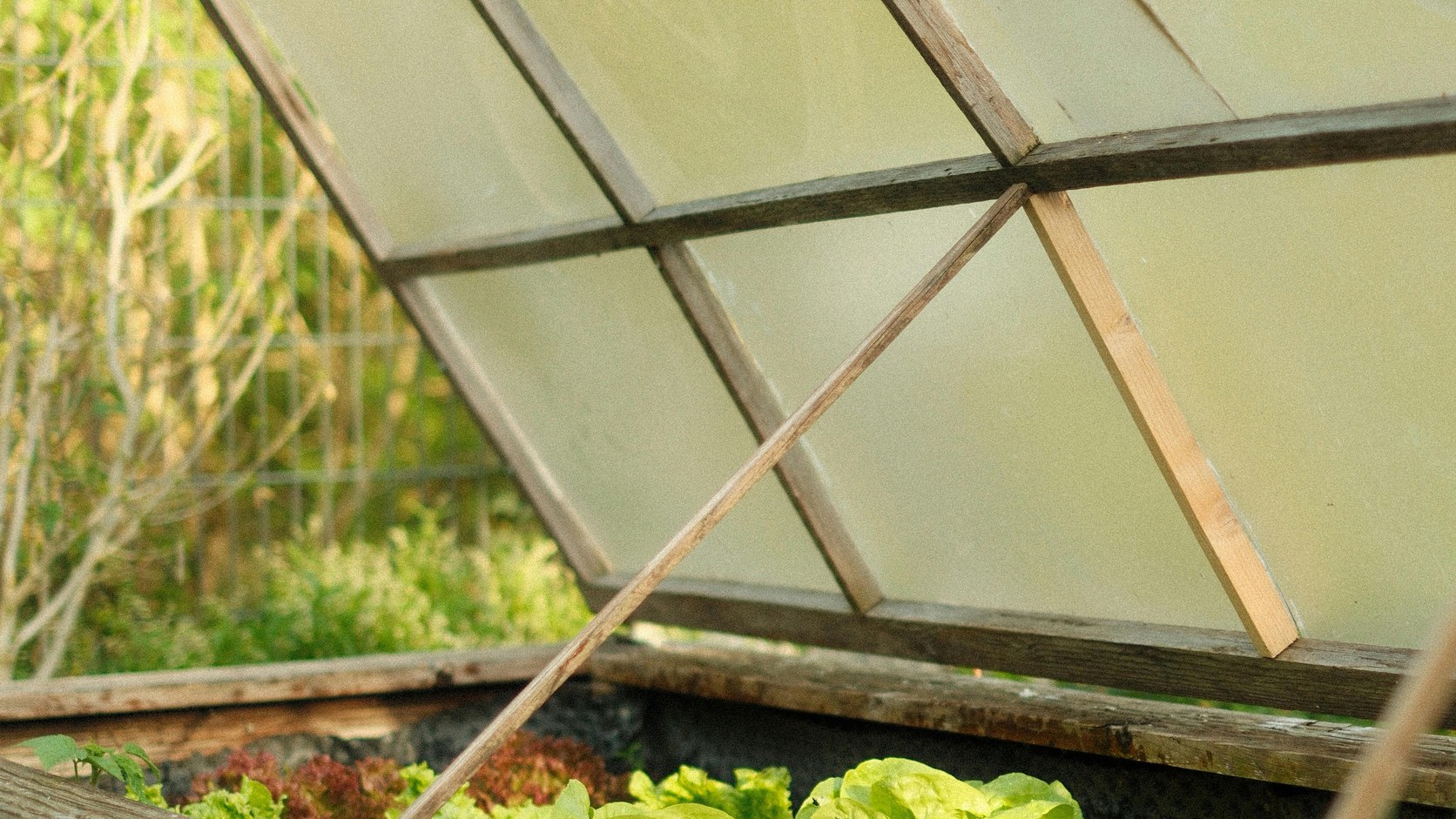
The first food system should fit the sun, water, budget, and time you actually have. In a small backyard, that usually means containers, one modest raised bed, or one small in-ground bed. It does not mean all three in the first season.
Choose crops the household already eats and that make sense for the space. Herbs, greens, peppers, bush beans, compact tomatoes, or climbing crops may earn their place. A sprawling crop can still be worthwhile, but it should not take over the only path because the seed packet made it sound easy.
Use vertical space without making a wall
Vertical growing is common small-space advice because it sounds like free square footage. It is useful, but height changes sunlight, wind exposure, visibility, and access. A trellis on the wrong side of a bed can shade shorter crops for much of the day.
Use vertical space for a crop that naturally climbs, place it where the shade makes sense, and make sure you can reach both sides for harvesting. Do not build a tall structure just because the yard is small. The structure has to earn its footprint and its shadow.
Add one waste system
A small backyard homestead gets more useful when some household waste becomes a resource. Compost can turn appropriate kitchen scraps and yard material into soil improvement, but only when the system is managed well.
In a tight space, containment matters. A compact bin, tumbler, worm system, or carefully managed container may fit better than a loose pile. The right choice depends on available browns, climate, moisture, pests, household volume, and whether someone will actually mix and monitor it.
Storage is part of the layout
Small-yard plans often account for the bed and forget everything that supports it: gloves, hand tools, hose fittings, potting mix, mulch, stakes, twine, empty containers, harvest baskets, and whatever is waiting to be repaired.
Give those items one home before they scatter. A garage shelf, weather-resistant tote, deck box, wall rack, or lidded bucket can work. Keep fertilizers, pesticides, animal medications, fuels, and other regulated or hazardous products in appropriate original containers and storage conditions rather than mixing them into a casual tool bin.
Water access decides whether the plan is livable
A small garden can still become a burden when the hose does not reach, containers sit where they dry too fast, or every watering trip requires moving furniture and stepping over tools. Watering friction shows up repeatedly, so it deserves attention before decorative details.
Place the first growing area where watering is realistic. Protect the path. Use mulch where appropriate. If you consider collecting rainwater, check local rules, roof-material suitability, mosquito control, overflow, and safe use before installing a system. Rain barrels are not automatically the right first purchase in every location.
What about backyard chickens?
Chickens can fit some small backyards, but they should not be treated like a compact garden feature. They add daily care, feed storage, manure, noise, predator protection, coop and run space, neighbor impact, and legal requirements.
Check city or county ordinances, homeowners-association rules, setbacks, flock limits, rooster restrictions, permit requirements, and nuisance standards before buying birds or a coop. Then measure the usable footprint and cleaning path. If the flock would consume the only flexible part of the yard, starting with plants and skills may be the better small-space homestead.
A realistic beginner layout
Picture a fenced backyard behind a normal house. One side gets good morning and midday sun. The back corner stays partly shaded. The hose reaches, but only if the center path stays clear. The family still wants a small table and enough open space to use the yard.
That last step matters. Open space gives you room to observe before committing. It also protects the household from a backyard that feels like an unfinished project everywhere you look.
A weekly small-yard rhythm
What I would buy and what I would improvise
I would improvise the first growing containers and storage whenever the material is safe for the intended use. I would use an existing bucket, tote, shelf, or simple tool caddy before buying matching outdoor storage. I would also prove the sun and watering routine before investing in a permanent bed.
I would consider buying a sturdy trellis when a climbing crop has already earned the space, an enclosed compost bin when containment is the real obstacle, or a weather-resistant storage box when tools are repeatedly getting wet or scattered. Each purchase should solve a problem that has already shown up.
Recommendations
Small-space tools that can earn their place
Use vertical space carefully
Sturdy vertical garden trellis
A simple trellis can move beans, cucumbers, peas, and other suitable crops upward while keeping the bed footprint modest.
Best for: Small sunny beds where suitable climbing crops are using too much ground space
Check current priceAdd after the food system
Compact enclosed compost bin
An enclosed bin can keep a small compost system more contained than a loose pile when space, appearance, pets, or neighbors matter.
Best for: Small yards where a loose pile would be awkward or difficult to manage
Check current priceUseful when storage is the bottleneck
Weather-resistant deck storage box
A modest outdoor storage box can give hand tools, watering parts, gloves, and empty containers one protected home.
Best for: Beginners without a shed whose small tools are migrating across the porch and yard
Check current priceWhat can wait
The bottom line
A small backyard can be a real homestead classroom. It can teach food production, compost, water awareness, tool care, storage discipline, seasonal observation, and the habit of making useful decisions within limits.
Start with one food system, one waste system, and one storage rule. Keep the paths clear and leave some room unused. A yard that still works for the household will teach you more than a crowded yard that looks committed for one season.
Start With One System
Choose the first food system before filling the yard.
Compare a pantry, modest garden, and chickens through the real constraints of money, space, time, and daily care.
Choose the first food systemRecommended next reads
Keep going
These guides help turn the small-yard plan into one manageable first season.
Homesteading
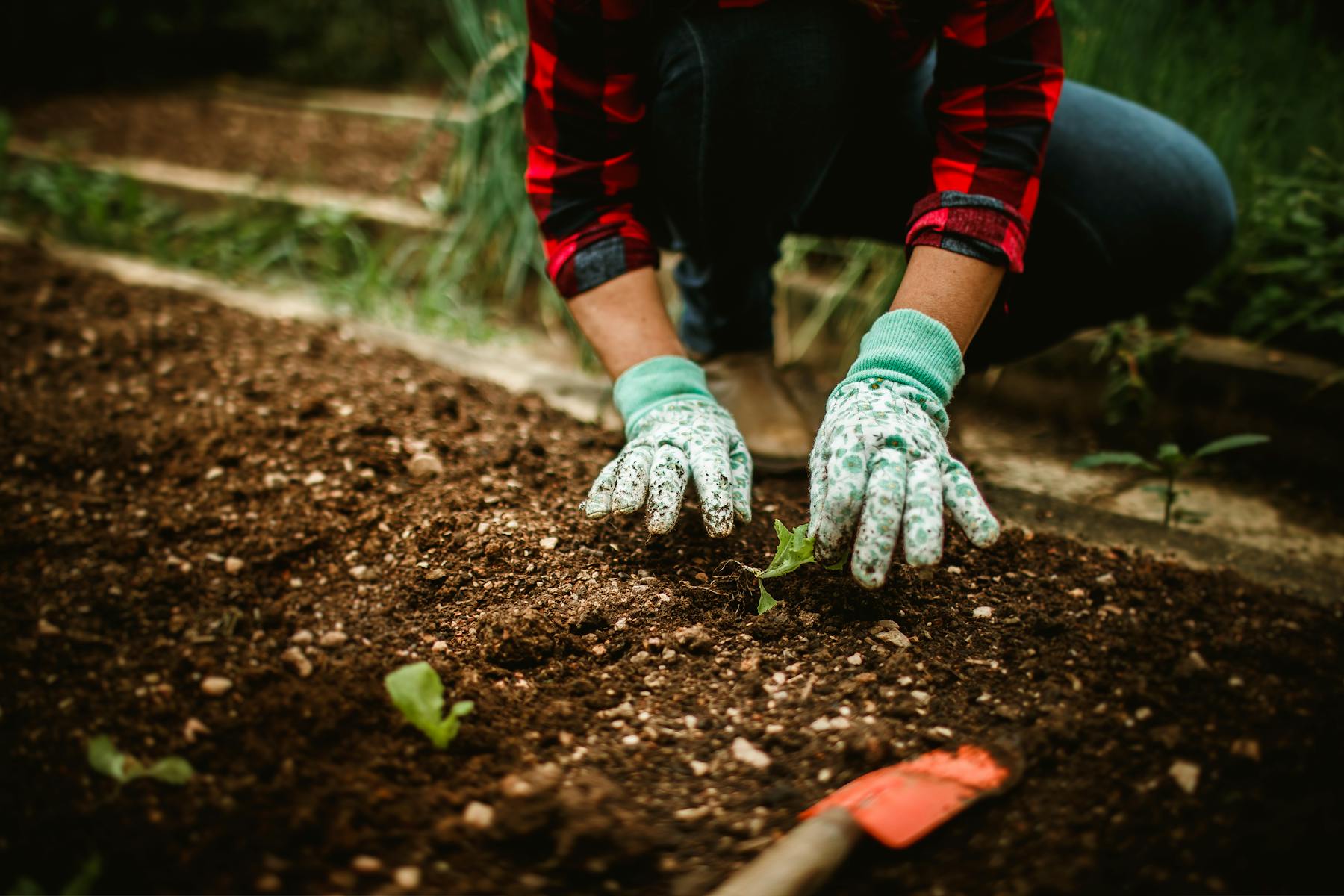
Beginner Homesteading: Where to Start When You Feel Overwhelmed
If homesteading feels meaningful but overwhelming, start with a simpler order of operations instead of trying to do everything at once.
Gardening
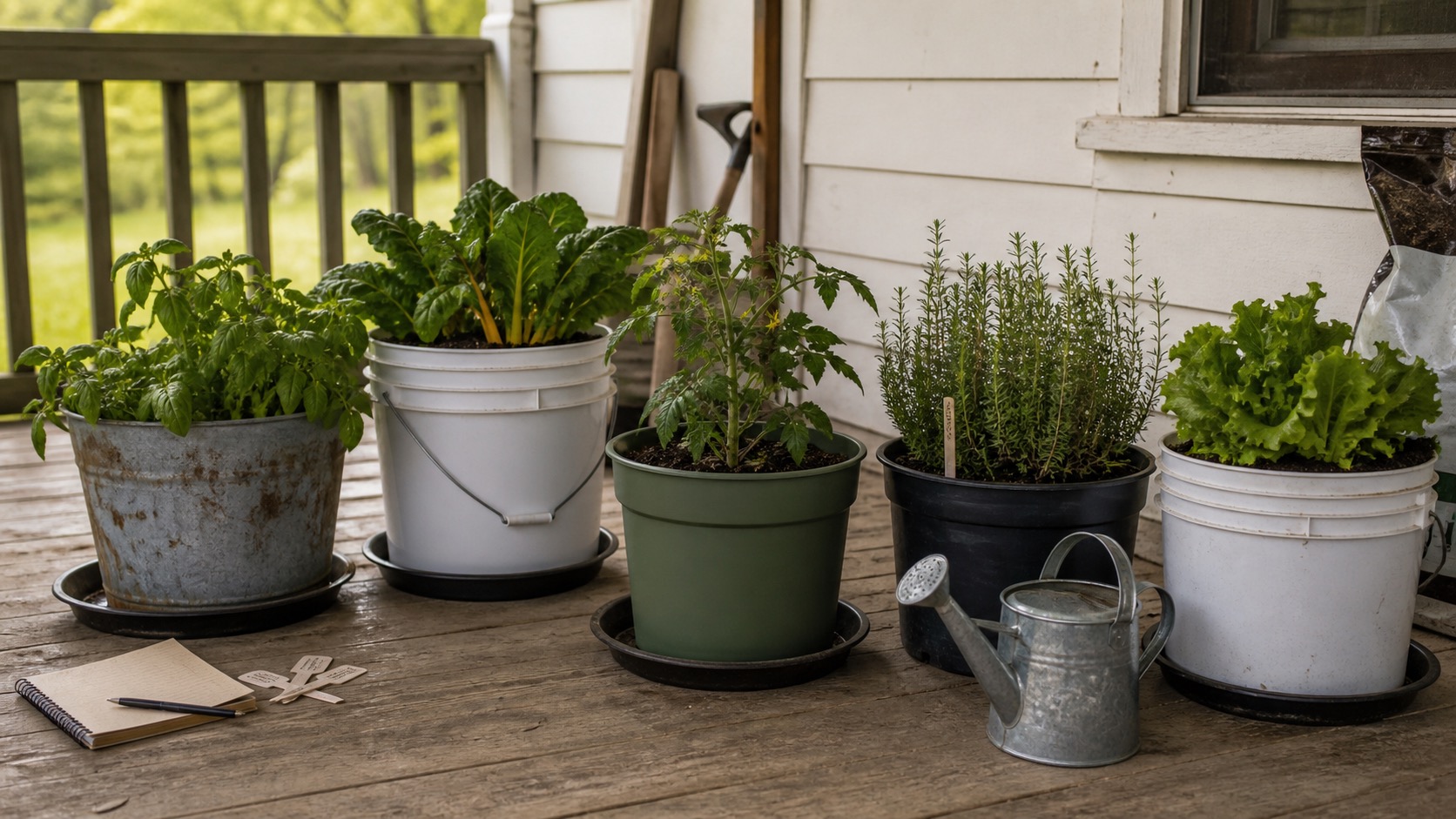
Container Gardening for the Future Homesteader
A practical guide to using container gardening as a real training ground for future homestead life instead of treating it like a lesser version.
Gardening
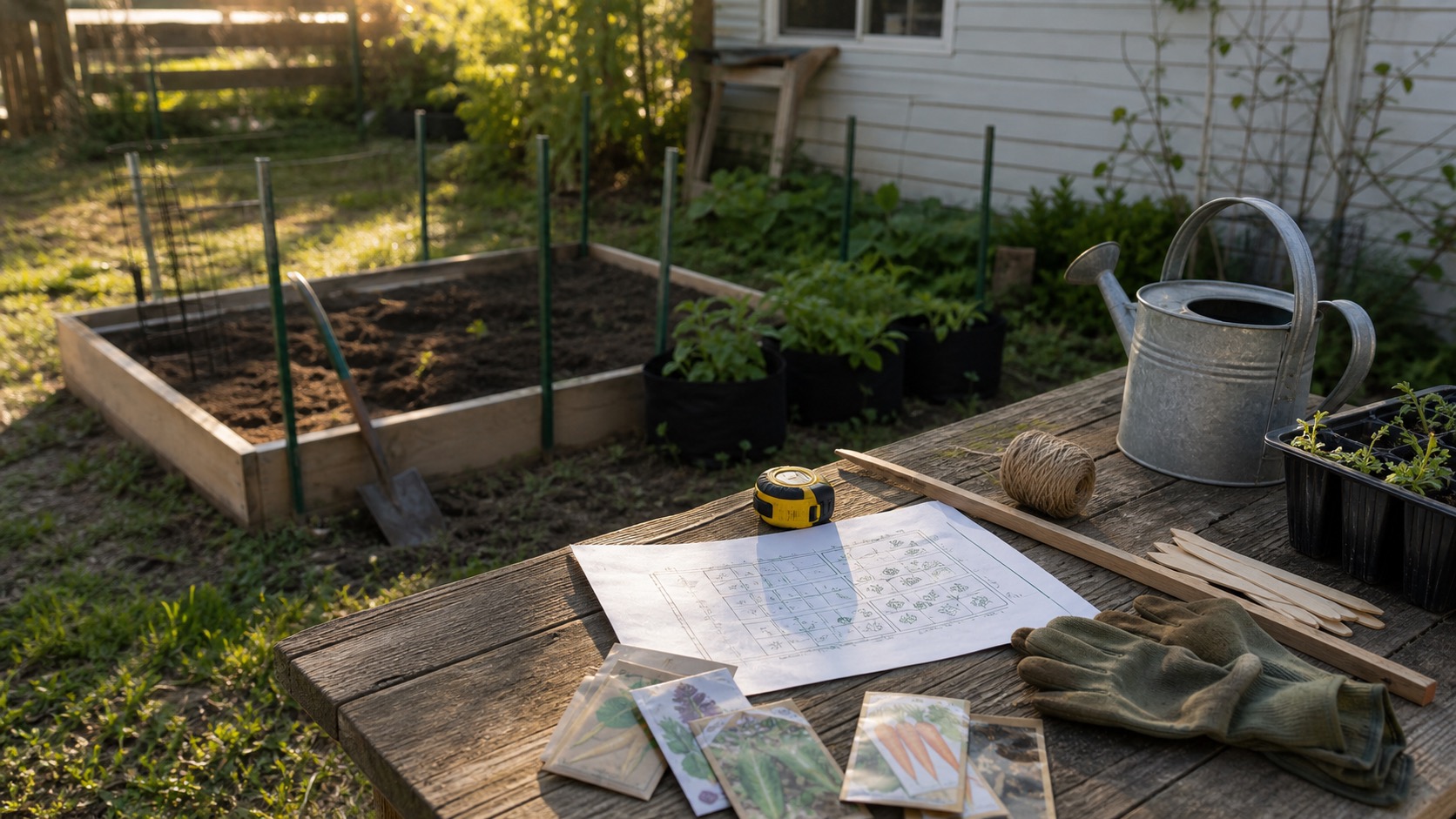
How to Plan Your First Homestead Garden Without Doing Too Much
A successful first garden is smaller, clearer, and less romantic than many beginners expect. That is a good thing.
Frequently asked questions
Can you really homestead in a small backyard?
Yes, if homesteading means building useful household skills and systems rather than copying a large rural property. A small yard can support herbs, vegetables, compost, food storage habits, rain-aware watering, tool care, and other practical skills.
What should I add first to a small backyard homestead?
Start with one food system that fits the sun and your weekly capacity. For many beginners, that is one small bed or a few containers. Add compost, storage, or another system only after the first one is easy to maintain.
Should I get chickens for a small backyard homestead?
Only after checking local rules, setbacks, flock limits, noise concerns, predator protection, coop space, feed storage, waste management, and neighbor impact. A small yard does not automatically make a small flock simple.
How do I keep a small backyard homestead from looking cluttered?
Limit active systems, protect clear paths, use one defined storage area, keep compost contained, and require every new project to have a maintenance plan and permanent home before it enters the yard.
Recommendations
Useful tools and resources for this decision
These are included only where they reduce repeated friction, clarify a next step, or help you avoid buying the wrong thing first.
Use vertical space carefully
Sturdy vertical garden trellis
A simple trellis can move beans, cucumbers, peas, and other suitable crops upward while keeping the bed footprint modest.
Best for: Small sunny beds where suitable climbing crops are using too much ground space
Check current priceAdd after the food system
Compact enclosed compost bin
An enclosed bin can keep a small compost system more contained than a loose pile when space, appearance, pets, or neighbors matter.
Best for: Small yards where a loose pile would be awkward or difficult to manage
Check current priceUseful when storage is the bottleneck
Weather-resistant deck storage box
A modest outdoor storage box can give hand tools, watering parts, gloves, and empty containers one protected home.
Best for: Beginners without a shed whose small tools are migrating across the porch and yard
Check current priceRecommended next reads
Read next if it helps the decision
Move into the next guide only if it clarifies the next practical step.
Homesteading
Beginner Homesteading: Where to Start When You Feel Overwhelmed
If homesteading feels meaningful but overwhelming, start with a simpler order of operations instead of trying to do everything at once.
Gardening
Container Gardening for the Future Homesteader
A practical guide to using container gardening as a real training ground for future homestead life instead of treating it like a lesser version.
Gardening
How to Plan Your First Homestead Garden Without Doing Too Much
A successful first garden is smaller, clearer, and less romantic than many beginners expect. That is a good thing.
First-Step Support
Get the first-step checklist before the bigger idea turns into too many projects.
A practical worksheet for choosing one system, setting a first-stage budget, and narrowing the next move while the picture is still forming.
Best for: Beginners who need a first-season plan with limits, not more tabs or more gear.
- A first-season decision checklist
- A one-system starter plan
- A buy-now versus wait-later filter
Beginner-friendly notes, useful guides, and the checklist first.
After signup, the download will unlock right here so you can save or print it.
About the author
William Mock
Founder, writer, and beginner homesteader
William writes from the beginner side of rebuilding after a layoff: homestead plans, family systems, budgets, tools, and the decisions that make a home feel less fragile.
Read why this site existsRelated Guides
Keep building context
Homesteading
Beginner Homesteading: Where to Start When You Feel Overwhelmed
If homesteading feels meaningful but overwhelming, start with a simpler order of operations instead of trying to do everything at once.
Gardening
Container Gardening for the Future Homesteader
A practical guide to using container gardening as a real training ground for future homestead life instead of treating it like a lesser version.
Gardening
How Big Should a Beginner Vegetable Garden Be?
A practical guide to choosing a beginner vegetable garden size your time, watering routine, harvest goals, and actual meals can support.