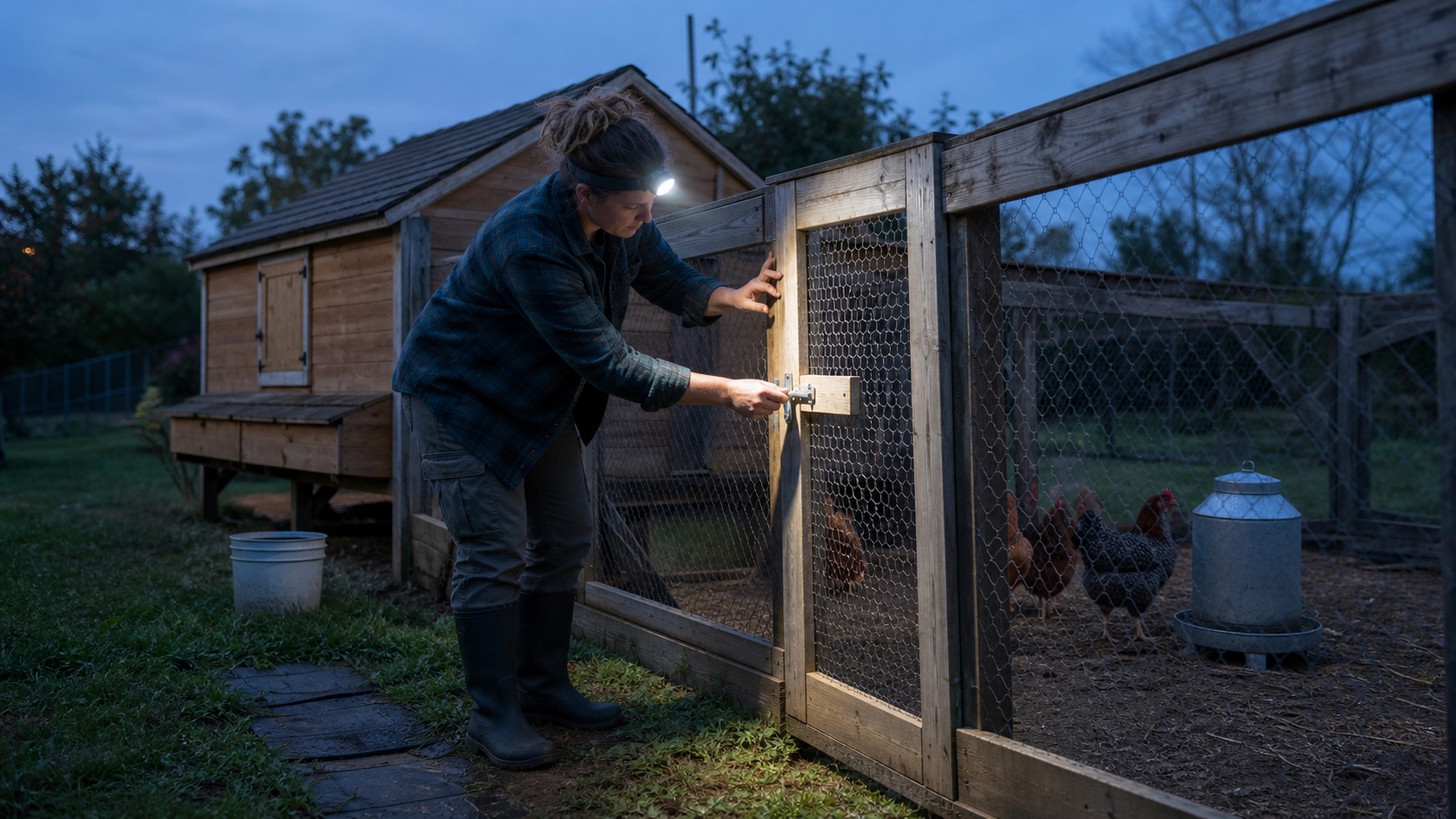
The best headlamp for homestead chores is not automatically the brightest one. For most beginners, it is a comfortable light with an even close-range beam, controls you can use with cold or dirty hands, a dependable low setting, a clear battery plan, and enough weather resistance for the conditions you will actually work in. A 300- to 500-lumen model with flood and red modes is usually a more practical starting point than a heavy searchlight.
Keep the tool decision grounded
See the tools I would put ahead of specialty gear
The tools I actually use guide explains the same filter: buy for repeated work, not for the picture of homesteading in your head.
See the practical tool listThe light that can quietly create a second shift
There is an evening trap I know well from trying to build this life around a full workday. The laptop closes, the useful daylight is nearly gone, and part of me wants one outside job big enough to prove the dream did not sit still all day. A coop check, one loose latch, or a bucket that needs moving can sound small. Then one task finds another, and the calmer life I am trying to build starts looking like a second shift performed in the dark.
That is why I do not judge a headlamp only by how much more work it lets me squeeze out of the day. The right one supports chores that truly have to happen after dark and helps me finish them without juggling a phone or working half-blind. It should not turn tiredness into ambition. A headlamp buried with camping equipment solves nothing; a modest light charged beside the boots can close the necessary loop and help me come back inside.
After the layoff, I became more suspicious of purchases that tried to look like progress. A headlamp can be another one of those purchases if the real problem is a loose latch that should be repaired in daylight or a chore schedule that always runs too late. But when winter darkness, early work hours, animal checks, storm cleanup, or a long property path make low-light work repeatable, hands-free light earns a very plain job: let both hands do the work while your eyes can see the next safe step.
Choose the chore before the headlamp
Write down what actually happens after dark. Closing a coop door, checking a latch, carrying water, finding a dropped fastener, walking between the house and shed, and scanning a fence line are not the same lighting job. Close work benefits from a broad flood beam and useful low mode. Walking needs even light at your feet. A distance check needs a focused beam for a short period. Repairs need color and detail, not just glare.
Lumens are a ceiling, not the whole light
The largest number on the package describes maximum output, not how useful the lamp will feel during a ten-minute chore. Beam shape, brightness steps, distance, runtime, tilt, and control memory determine whether that output helps. A broad 100-lumen setting can be easier around a coop than a 500-lumen center spot bouncing off pale walls, metal, dust, or a waterer.
Maximum-output runtime can also mislead if it is read as all-night steady brightness. Manufacturers test and report performance under defined standards, and output may step down as heat and battery conditions change. Compare the setting you expect to use most, not only the headline number. Petzl, for example, publishes seven hours at its 100-lumen standard setting for the current ACTIK CORE rechargeable pack, while its 625-lumen maximum setting is listed at two hours.
The battery plan matters more than rechargeable versus AAA
Rechargeable is convenient only when charging has a home. If the lamp comes off your head and lands in a random drawer, the battery system is not finished. Give the light one hook or shelf near the normal entry point, keep its cable there, and choose a charging trigger such as Sunday planning or the first low-battery indication. Do not leave lithium-powered equipment charging unattended or use damaged batteries, housings, ports, or cables; follow the manufacturer instructions.
Replaceable batteries make sense for a backup lamp, long storage, or a place where charging is unreliable. Store compatible spares according to their instructions and do not mix old and new cells or battery types. Hybrid power is useful when the same lamp handles daily chores and needs a field backup, but pay for that flexibility only if you will maintain both sides of the plan.
Three headlamp options that fit different beginners
I have not personally worn these three models through a season of chores, so I am not going to turn manufacturer specifications into a durability story. This is a researched shortlist based on current published features, the jobs above, replacement flexibility, and price position. Confirm the current model, included battery, charging connection, warranty, seller, and return terms before buying because products change.
Why the Spot 400-R is my best specification fit
For ordinary homestead chores, the Spot 400-R puts the useful features in a light package without making maximum output the main event. Black Diamond lists close and distance modes, dimming, red night vision, brightness memory, a digital lock, battery-status indicator, 400-lumen maximum output, 86-gram weight, and IP67 testing. That combination fits latches, paths, water checks, and short distance work better than a bulkier searchlight would.
The tradeoff is the integrated rechargeable system and micro-USB connection. If the household is likely to forget charging or wants one lamp that can be revived immediately with common batteries, I would spend more for the ACTIK CORE's hybrid design instead. If the need is only a few storm checks or occasional chores, I would buy the less expensive Energizer first and keep fresh compatible batteries in the household plan.
Red light is useful, but it is not magic
Red mode is helpful when you want to preserve your own night vision and avoid flooding a small dark space with bright white light. It can make a quiet first check less jarring. But red light can hide color and detail. Switch to an appropriate white setting when you need to assess an animal, identify blood or discoloration, read instructions, inspect hardware, or walk across uncertain ground.
A headlamp also follows your eyes, which means it can shine directly at another person or create glare on wire and metal. Look away before speaking face to face, lower the beam around helpers, and do not assume the light makes you visible to vehicles or equipment operators. Petzl specifically notes that its headlamp is not a substitute for required road lighting.
What matters first and what can wait
The most important upgrade may not be a new lamp. It may be moving the light you already own to the door, charging it on a schedule, repairing the latch in daylight, or shifting the chore earlier. That is the same reason I keep coming back to a small evening reset: a calm system often beats another object. Use the lamp to remove unavoidable friction, not to normalize work that would be safer and easier tomorrow.
Build the handoff into tomorrow
Use the 20-minute evening reset
Stage the first tool, close one loose loop, and make tomorrow's first move obvious before the tired version of the night decides for you.
Try the evening resetA simple first-week test
If the lamp stays comfortable, makes the footing visible, leaves both hands free, returns to the same place, and is ready the next time, it is doing the job. If it stays in a drawer because the controls are irritating or the charging routine never happens, more lumens will not fix it.
The goal is not to make the homestead look capable after dark. It is to close the gate, check the water, find the path, and get back inside without turning one ordinary chore into a scramble. That is a small promise for a tool, which is exactly why it is a useful one.
Keep the next purchase honest
Use the free What to Buy First guide
Rank the purchase by safety, repeated use, time saved, current need, and the new maintenance it creates before it enters the budget.
Open the free buying guideFrequently asked questions
How many lumens does a headlamp need for homestead chores?
Most close chores do not require maximum output. A lower or medium setting with a broad, even beam is usually more useful for latches, waterers, feed, and footing, while a higher setting helps with occasional distance checks. Buy usable beam choices and runtime rather than treating the largest lumen number as the whole decision.
Is a red-light mode useful around a chicken coop?
A red mode can preserve the user's night vision and reduce the harsh transition caused by a bright white beam. It is useful for quiet close checks, but it is not a substitute for enough white light to identify an injury, repair a latch, read a label, or walk safely. Use the lowest mode that still lets you do the job correctly.
Should a homestead headlamp use rechargeable or replaceable batteries?
Choose rechargeable power when the lamp will live on a charging hook and be used often. Choose replaceable batteries when long storage, simple field replacement, or unreliable charging matters more. A hybrid model can use a rechargeable pack for normal chores and standard batteries as a backup, but it costs more and still needs a charging and spare-battery routine.
What water-resistance rating should a chore headlamp have?
For ordinary damp-weather chores, start by checking for a published rating and reading the manufacturer's limits. IPX4 is designed around splashing, while a correctly stated IP67 rating includes dust protection and temporary immersion testing under specified conditions. No rating excuses an open charging port, damaged housing, neglected instructions, or unsafe use around electricity.
Can a headlamp replace permanent coop or barn lighting?
No. A headlamp is useful for routine checks and unexpected after-dark tasks, but it should not replace code-compliant fixed lighting where a building or repeated work requires it. It also does not replace daylight inspection, emergency lighting, reflective clothing near traffic, or task-specific safety equipment.
Recommendations
Useful tools and resources for this decision
These are included only where they reduce repeated friction, clarify a next step, or help you avoid buying the wrong thing first.
Best specification fit
Black Diamond Spot 400-R rechargeable headlamp
A compact 400-lumen rechargeable model with adjustable white light, red night vision, a lockout, battery indicator, and a published IP67 rating.
Best for: Regular evening chores where weather resistance, a broad close beam, red mode, and a dedicated charging habit matter
Check current priceHybrid-power option
Petzl ACTIK CORE
A 625-lumen hybrid-power headlamp that accepts its rechargeable CORE battery or three standard AAA batteries and includes wide, mixed, and red lighting.
Best for: Households willing to pay more for rechargeable daily use with a standard-battery backup path
View resourceBudget battery option
Energizer Vision HD+ Focus headlamp
A budget-oriented 400-lumen, three-AAA model with spot, flood, combined, low, and red modes plus an IPX4 splash-resistance rating.
Best for: Occasional chores, a household backup, or beginners who prefer replaceable batteries and simple replacement cost
View resourceFederal safety source
CPSC battery safety overview
Federal background on consumer battery and charger hazards, testing, recalls, and why a battery, product, and charger need to work as a safe system.
Best for: Checking battery and charging risks before putting a rechargeable light into a household routine
View resourceFree decision guide
What to Buy First guide
A free worksheet for separating tools that remove weekly friction from equipment that only supports a future project.
Best for: Beginners deciding whether a headlamp belongs in this month's budget at all
Read the guideRecommended next reads
Read next if it helps the decision
Move into the next guide only if it clarifies the next practical step.

Tools
Tools I Actually Use on Our Homestead
A small list of genuinely useful tools beats a big fantasy shopping cart. These are the kinds of things that keep earning their place.

Systems
The 20-Minute Evening Reset That Protects the Next Homestead Day
A practical evening reset for homestead households: 20 minutes to lower morning friction, stage first chores, protect meals, and keep tomorrow from starting behind.
Chickens
How to Keep Backyard Chickens Calm During Fireworks
A practical beginner guide to helping backyard chickens through fireworks with a calm evening routine, secure coop checks, water, ventilation, and next-morning observation.
Buy-first support
Get the buy-first guide before you add another tool.
Use the buy-first guide to decide what earns money now, what can be borrowed, and what belongs on the wait list.
Best for: Beginners who keep seeing useful things online and need a disciplined way to decide what actually earns a place.
- A buy now, borrow, wait, or skip framework
- Starter category shortlists
- A three-question purchase test
Practical tool notes, restrained gear decisions, and one disciplined guide first.
After signup, the download will unlock right here so you can save or print it.
About the author
William Mock
Founder, writer, and beginner homesteader
William writes from the beginner side of rebuilding after a layoff: homestead plans, family systems, budgets, tools, and the decisions that make a home feel less fragile.
Read why this site existsRelated Guides
Keep building context
Tools
Tools I Actually Use on Our Homestead
A small list of genuinely useful tools beats a big fantasy shopping cart. These are the kinds of things that keep earning their place.
Systems
The 20-Minute Evening Reset That Protects the Next Homestead Day
A practical evening reset for homestead households: 20 minutes to lower morning friction, stage first chores, protect meals, and keep tomorrow from starting behind.
Chickens
How to Keep Backyard Chickens Calm During Fireworks
A practical beginner guide to helping backyard chickens through fireworks with a calm evening routine, secure coop checks, water, ventilation, and next-morning observation.