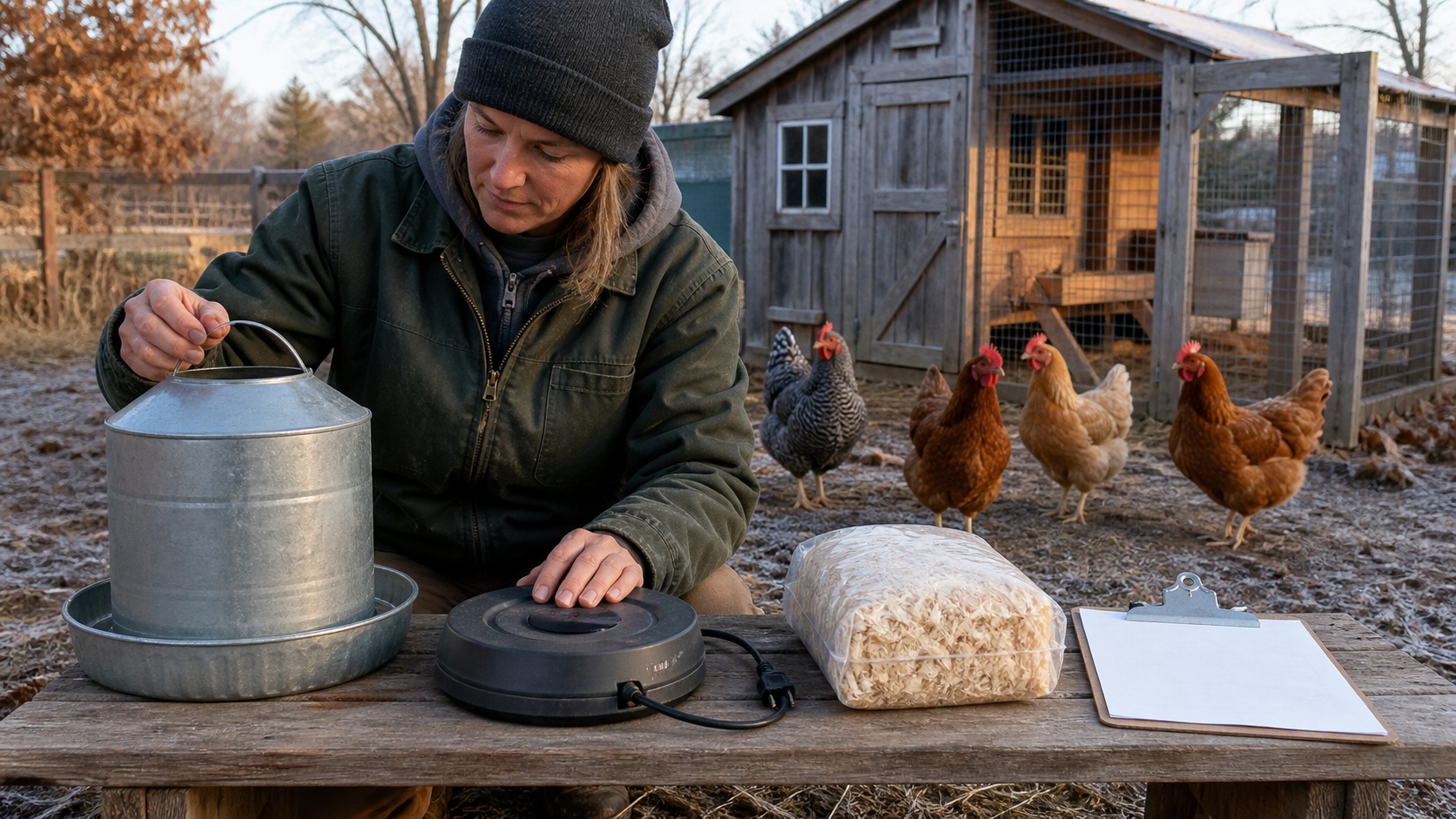
The extra cost of keeping chickens in winter is usually the increase above your normal flock budget: additional feed, more bedding, an unfrozen-water plan, electricity for approved equipment when needed, cold-weather repairs, and a small failure reserve. There is no honest national average because winter length, climate, flock size, feed price, coop condition, water system, utility rate, and existing equipment change the answer. Build the number from your own baseline instead.
The summer water question that became a winter budget
In July, it felt a little ridiculous to stand in a hot yard and ask what we would do when the chicken water froze. The hose worked. The daylight lasted. Nobody needed gloves to check a waterer. But after the layoff, I had started paying more attention to the ordinary systems that become expensive at exactly the wrong time, and frozen water was the winter failure I could picture most clearly.
Once I tried to put a price beside that question, one line labeled winter stopped working. Manual water swaps might require a second fount and more time. A heated base required the right waterer, safe power, electricity, and a backup. Then feed, bedding, roof edges, wet spots, and latches each wanted their own line. The season was not one expense. It was a stress test for every ordinary part of the flock system.
That hot-weather exercise changed the budget before it changed the coop. The useful lesson was not to buy winter equipment in July. It was to name the boring failure before cold weather turned it into an urgent purchase. Price unfrozen water, the feed margin, dry bedding, and the repair already waiting. Then let the care plan decide whether any winter product earns a place.
Separate normal chicken costs from the winter premium
Feed, water, bedding, and maintenance exist all year. Calling the whole December feed bill a winter expense makes the seasonal premium look larger than it is and hides whether the baseline flock was affordable to begin with. Use two columns: what the flock would normally consume during those months and what cold weather adds. That distinction also makes spring review more useful.
Set the normal baseline
Calculate monthly chicken feed costs first
Use flock size, daily consumption, local price per pound, and a measured waste margin before adding the winter allowance.
Build the monthly feed estimateThe five winter chicken budget lines
Keep veterinary care and the household emergency fund separate from this ordinary seasonal plan. A winter reserve can cover a failed waterer or urgent latch repair. It should not be treated as a substitute for professional animal care, safe electrical work, insurance, or a broader emergency fund.
Build the winter feed allowance from real use
University of New Hampshire Extension says chickens have been known to eat up to 25% more feed during cold weather. University of Minnesota Extension also notes that winter feed consumption may increase. That does not mean every flock automatically needs 25% more for the whole season. Treat 25% as an upper planning allowance, then compare bags opened, feed remaining, body condition, waste, and weather with the normal baseline.
Also separate consumption from waste. Feed scattered into wet bedding, reached by pests or wild birds, stored poorly, or billed out of a bad feeder is not a cold-weather nutrition need. Fix the leak before making the flock number larger. A scale, bag count, or dated note gives you better evidence than a guess at the end of winter.
Price unfrozen water three ways
The Farm Innovators three-gallon HPF-100 waterer was listed at $55.99 by Tractor Supply when checked August 16, 2026. That is a dated price reference, not a universal recommendation. The affiliate option in this guide is the HP-125 heated base for a compatible metal fount. These are different products. Choose only after checking the exact container, location, instructions, climate, and power setup.
Recommendations
One winter purchase that may earn its place
Farm Innovators HP-125 poultry heated base
A thermostatically controlled base for compatible metal poultry founts.
Best for: Regular freezing, compatible equipment, and properly installed protected power
Skip it when manual swaps work reliably or the electrical setup is not appropriate.
Check current priceCalculate electricity without pretending the thermostat is a promise
Use the nameplate wattage, actual operating behavior, days in service, and your utility's all-in rate. The basic ceiling formula is watts divided by 1,000, multiplied by hours, days, and price per kilowatt-hour. A 100-watt device running continuously for 90 days would use 216 kilowatt-hours. A thermostatically controlled device should not run continuously under every condition, so that figure is a calculation ceiling, not a predicted bill.
Do not guess at permanent coop wiring. University of Minnesota Extension advises keeping wires away from poultry, water, and flammable litter, using extension cords only short term, and working with a professional electrician when installing electricity in a coop. If safe power requires professional work, get a property-specific quote and treat that as infrastructure, not a surprise accessory cost.
A transparent six-hen winter budget example
This example is a worksheet, not a national average. Assume six hens normally use about 45 pounds per 30-day month, based on a quarter pound per hen per day. Assume a local 50-pound bag costs $25. Over 90 days, the normal feed baseline is about 135 pounds, or $67.50. That baseline belongs in the ordinary chicken budget.
A household using manual swaps could remove the $55.99 waterer line. A flock that does not use the full feed allowance should replace $16.88 with measured use. A coop needing roof, drainage, ventilation, or electrical work could cost much more. The value of the example is not the total. It is showing which assumptions change it.
What matters first and what can wait
Build the care plan first
Use the complete first-freeze chicken checklist
Review water, ventilation, dry bedding, roosts, feed access, bird condition, and power safety before deciding what belongs in the budget.
Prepare chickens for winterReview the number after the first cold month
At the end of the first cold month, record feed opened, bedding used, device run time if known, utility change, water failures, repairs, and the minutes the care route added. Also note whether every bird could reach feed and water, whether bedding stayed dry, and whether the coop showed condensation or other warning signs. Care observations matter more than hitting the estimate.
A winter chicken budget is useful when it makes care more dependable and future flock decisions more honest. It is not useful when it becomes a reason to underfeed, improvise power, seal ventilation, or buy heat without understanding the actual condition. Before adding that line item, use the full guide to decide whether winter coop heat fits the flock and housing. Name the baseline, fund the premium, keep a backup, and let the first freeze teach you which number was real.
Protect the structure too
Keep winter costs beside the annual coop reserve
Roof, hardware cloth, latches, wood, drainage, and other repairs belong in a maintenance plan instead of hiding inside one cold-weather month.
Plan annual coop maintenance costsRecommended next reads
Keep the winter plan connected
These guides connect the seasonal budget with cold-weather care, ordinary feed costs, and the repair reserve that protects the coop year-round.
Chickens
Winter Chicken Care for Beginners: Prepare Before the First Freeze
A practical first-winter checklist for unfrozen water, dry bedding, useful ventilation, safe power, flock checks, feed, frostbite risk, and cold-weather routines.
Chickens
Chicken Feed Costs for Beginners: Monthly Numbers That Actually Matter
A practical guide to monthly chicken feed costs for beginners, including feed math, flock size, waste, storage, and the recurring costs that make egg math more honest.
Budgeting
How Much Does Chicken Coop Maintenance Cost Each Year?
A realistic way to budget for annual chicken coop maintenance without confusing structural repairs, ordinary bedding, flock care, and optional upgrades.
Frequently asked questions
How much extra does it cost to keep chickens in winter?
There is no reliable national average. The extra cost is usually the winter increase in feed, additional bedding, a method for keeping water unfrozen, electricity if approved equipment is used, weatherproofing repairs, and a reserve for failures. Calculate the premium above the flock's normal feed and care baseline instead of counting the entire winter feed bill as a new seasonal cost.
Do chickens eat more feed in winter?
Feed use can rise in cold weather, but the change depends on temperature, breed, body condition, housing, waste, flock dynamics, and other conditions. University of New Hampshire Extension says chickens have been known to eat up to 25% more during cold weather. Use that as an upper planning allowance, then replace it with your own measured use.
Is a heated chicken waterer worth the cost?
It may be worthwhile when freezing is frequent, manual water swaps are unreliable, and the exact product can be used with a properly installed, protected electrical supply. It is not an automatic purchase for mild climates or coops without suitable power. Compatibility, manufacturer instructions, daily checks, and a backup water plan still matter.
Should supplemental coop heat be included in the winter budget?
Treat supplemental heat as a separate animal-care and fire-safety decision, not a standard budget line. Guidance varies with conditions, birds, and housing. Follow current local Extension and veterinary guidance, use only appropriately listed equipment as directed, and have a qualified electrician handle permanent coop power. Do not buy a heat source merely because a generic budget includes one.
What winter chicken expenses can wait?
Decorative insulation, novelty treats, a larger feeder that does not solve a measured problem, supplemental lighting for production goals, backup gadgets without a use plan, and heating equipment bought without a condition-specific need can usually wait. Protect water, feed access, dry ventilated housing, bird condition, safe power, and essential repairs first.
Recommendations
Useful tools and resources for this decision
These are included only where they reduce repeated friction, clarify a next step, or help you avoid buying the wrong thing first.
Optional winter water tool
Farm Innovators HP-125 poultry heated base
A thermostatically controlled heated base designed for compatible metal poultry founts.
Best for: Keepers who already use a compatible metal fount, experience regular freezes, and have properly installed protected power
Confirm current instructions, compatibility, placement, and electrical requirements before buying. Skip it if manual water swaps are dependable or the coop lacks suitable power.
Check current priceCold-weather care source
University of Minnesota Extension cold-weather chicken guide
Detailed guidance on water, ventilation, bedding, manure, bird condition, frostbite risk, heat, and electrical safety.
Best for: Reviewing the care and safety decisions behind the budget
View resourceWinter flock source
University of New Hampshire Extension winter chicken guide
Practical guidance on winter housing, ventilation, roosts, water, feed use, breeds, and supplemental-heat tradeoffs.
Best for: Planning feed margin and evaluating cold-weather housing
View resourceManufacturer instructions
Farm Innovators HP-125 instructions
The manufacturer's installation and use instructions for the specific heated base recommended here.
Best for: Checking compatible founts and operating requirements before use
View resourceCurrent non-affiliate price reference
Farm Innovators 3-gallon heated poultry waterer
A current retail reference for a complete 100-watt thermostatically controlled heated waterer, listed at $55.99 when checked August 16, 2026.
Best for: A dated price reference when comparing a complete heated waterer with a base for an existing metal fount
Price and availability change. This is a budgeting snapshot, not a claim that this model fits every coop.
View resourceRecommended next reads
Read next if it helps the decision
Move into the next guide only if it clarifies the next practical step.
Chickens
Winter Chicken Care for Beginners: Prepare Before the First Freeze
A practical first-winter checklist for unfrozen water, dry bedding, useful ventilation, safe power, flock checks, feed, frostbite risk, and cold-weather routines.
Chickens
Chicken Feed Costs for Beginners: Monthly Numbers That Actually Matter
A practical guide to monthly chicken feed costs for beginners, including feed math, flock size, waste, storage, and the recurring costs that make egg math more honest.
Budgeting
How Much Does Chicken Coop Maintenance Cost Each Year?
A realistic way to budget for annual chicken coop maintenance without confusing structural repairs, ordinary bedding, flock care, and optional upgrades.
Budget support
Get the budget worksheet before the next purchase.
Use the worksheet to sort purchases into buy now, borrow first, batch later, or skip for now while the first season is still taking shape.
Best for: Households trying to align purchases with this season's actual money, time, and attention.
- A spending-cap worksheet
- A buy, borrow, batch-later filter
- A quick review page for next-month decisions
Budget-first notes, honest tradeoffs, and the worksheet first.
After signup, the download will unlock right here so you can save or print it.
About the author
William Mock
Founder, writer, and beginner homesteader
William writes from the beginner side of rebuilding after a layoff: homestead plans, family systems, budgets, tools, and the decisions that make a home feel less fragile.
Read why this site existsRelated Guides
Keep building context
Chickens
Winter Chicken Care for Beginners: Prepare Before the First Freeze
A practical first-winter checklist for unfrozen water, dry bedding, useful ventilation, safe power, flock checks, feed, frostbite risk, and cold-weather routines.
Chickens
Chicken Feed Costs for Beginners: Monthly Numbers That Actually Matter
A practical guide to monthly chicken feed costs for beginners, including feed math, flock size, waste, storage, and the recurring costs that make egg math more honest.
Budgeting
How Much Does Chicken Coop Maintenance Cost Each Year?
A realistic way to budget for annual chicken coop maintenance without confusing structural repairs, ordinary bedding, flock care, and optional upgrades.