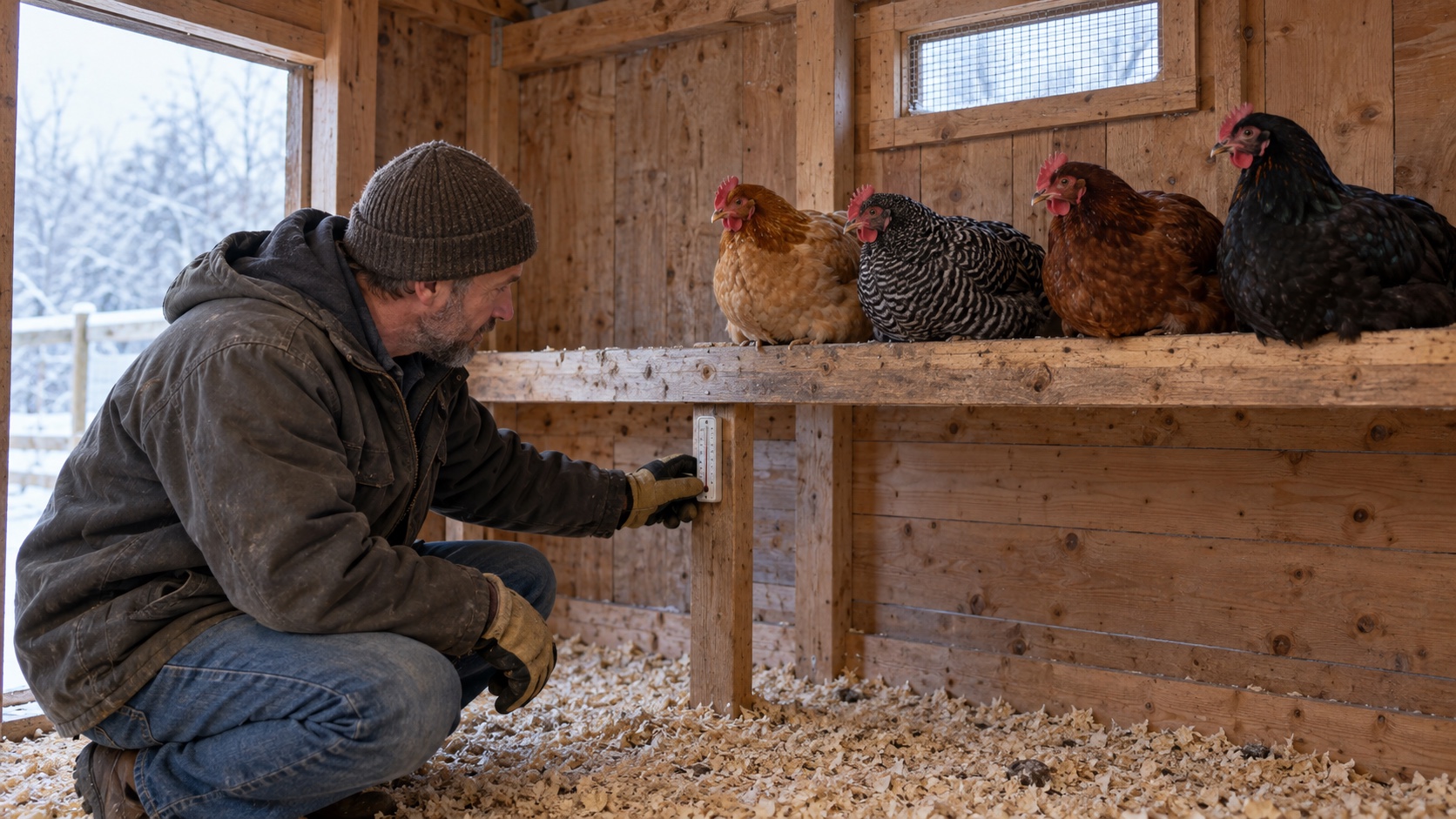
Most healthy, fully feathered adult chickens should not have a coop heated simply until it feels comfortable to a person. That does not mean every flock should follow a blanket no-heat rule. Current Extension recommendations differ, and real risk changes with breed, age, health, feather condition, acclimation, wind, moisture, housing, measured coop temperature, local weather, and the reliability of the electrical setup. Start by fixing water, wet bedding, direct drafts, poor ventilation, feed access, and weak bird condition. Then use local expert guidance to decide whether supplemental heat belongs in your specific plan.
The coop cleanout that changed the heater question
During a coop cleanout, I loaded the old bedding into a wheelbarrow. Once the loose material was gone, the building stopped looking like one tidy wooden box. The floor showed where moisture had settled. Corners, the roost area, and the path around the waterer became a map of how the flock and the structure actually worked. I first wrote about that cleanout in my garden cart versus wheelbarrow comparison, but the winter lesson stayed with me.
A heater could raise the number on a thermometer without repairing a leak, removing damp litter, opening feed access for a lower-ranking hen, or moving a roost out of direct wind. Seeing the coop stripped back made the heat question feel less like an appliance decision and more like a systems decision. Warmth can matter. It just cannot do every other winter job while wearing a tiny electrician's belt.
That distinction also keeps me honest about experience. I have not run a controlled test of heated and unheated coops through an Indiana winter, and I am not presenting one flock's outcome as a universal rule. What I can do is connect a real lesson from the work with current poultry guidance: expose the conditions first, identify the vulnerable bird, and solve the problem that is actually present.
Why good winter chicken-care sources disagree about heat
This is one of those topics where repeating the loudest internet sentence is especially unhelpful. University of New Hampshire Extension generally advises against supplemental coop heat in most circumstances because a heat source around combustible bedding can create fire risk. Its recommendation assumes a properly constructed shelter that blocks precipitation and direct wind while preserving ventilation.
University of Minnesota Extension, in guidance reviewed in 2026, recommends supplemental heat when temperatures at nest-box or lower-roost height fall below 35 degrees Fahrenheit. It also says to use equipment approved around poultry or livestock, follow fire warnings, protect wiring from birds, water, and litter, avoid long-term extension-cord use, and involve a professional electrician when supplying power.
The disagreement is not permission to choose whichever answer makes the shopping cart happiest. It is a reason to call your local Extension office or a poultry-aware veterinarian with real details: breed, age, health, feather condition, local low temperatures, coop construction, ventilation, roost height, measured indoor temperature, and power setup. A recommendation written for Minnesota may not map perfectly onto a damp coastal winter, a windy exposed yard, or a small prefab coop.
Fix these winter basics before adding heat
Supplemental heat should never be asked to cover for missing fundamentals. A warm corner does not make frozen water drinkable. It does not dry a leaking roof safely, create feeder access, restore lost body condition, or remove ammonia. Work through the complete winter chicken-care checklist first, then return to the narrower heat decision.
The focused guide to winter coop ventilation versus roost-level drafts will help with the part beginners most often find contradictory. Closing every opening can trap moisture and ammonia. Leaving uncontrolled gaps aimed at resting birds can strip away the warm air held in their feathers. The useful target is protected air exchange above or away from the flock.
Judge the birds, not your fingers
A person opening the coop before sunrise arrives with bare facial skin, a warm house in recent memory, and very strong opinions about January. A fully feathered hen arrives wearing all the clothes she owns. Our discomfort matters because it prompts us to check, but it is not a poultry diagnostic tool.
University of Minnesota Extension lists huddling, holding a foot against the breast, and feather puffing as signs that chickens may be cold. Read those signs in context. A bird that is repeatedly isolated, losing weight, unable to reach feed, staying inactive, or showing changed tissue on the comb, wattles, or feet needs more attention than a single quick observation can provide. Illness, injury, bullying, molt, and poor nutrition can also change posture and behavior.
Measure the coop where the chickens live
Outdoor weather apps are useful for planning, but they do not know your coop. A south-facing wall, wind exposure, flock size, ventilation, insulation, roof leaks, and the mass of the building can all change interior conditions. Place a reliable thermometer in a dry, protected spot near the height identified by the guidance you are following, where birds cannot peck it and where it is not warmed by sun, a light, or a heat source.
Record more than one convenient afternoon reading. Check the overnight low, the reading near dawn, humidity trends if the device provides them, bedding condition, condensation, odor, and bird behavior. One number is evidence, not a verdict. A thermometer cannot interview the shy hen, inspect the breaker, or tell you the waterer froze at 4:00 a.m.
Use a heat decision, not a heat reflex
If the right column describes one bird rather than the whole flock, ask whether a safe temporary care space makes more sense than changing the environment for every healthy, acclimated bird. That is a veterinary and management question, especially when illness, injury, low weight, or frostbite may be involved. Do not move a bird repeatedly between dramatically different temperatures without expert guidance.
If heat is recommended, treat it as installed equipment
Do not turn a clamp lamp, a household space heater, or a long extension cord into a permanent livestock system. Dust, feathers, dry bedding, curious birds, water, rodents, vibration, and unattended hours make a coop different from a spare bedroom. Use only a heat source approved for the intended poultry or livestock setting, mount it exactly as directed, preserve required clearances, protect every wire and connection, and keep it away from water and combustible material.
If those answers are not ready, the heater is not ready. The purchase is the quick part. The installation, observation, cleaning, power, and outage plan are the actual system.
The one small tool that can make the conversation clearer
You do not need a new gadget to notice wet bedding, feel a roost-level draft, watch birds eat, or call Extension. If you lack any reliable way to measure inside the coop, a basic thermometer can make the discussion more specific. I have not personally tested the ThermoPro TP50 in a chicken coop. I selected it as a researched, inexpensive option because the manufacturer lists temperature and humidity readings, daily high-low records, and a 10-second refresh rate.
It is sold as an indoor monitor, so it belongs only in a dry, protected location where birds cannot reach it. Skip it if you already own a reliable protected thermometer, need a weatherproof remote sensor, or expect a humidity reading to diagnose ventilation for you. The monitor can document a pattern. It cannot decide whether your birds need heat.
Recommendations
Research and measurement resources
Read the Minnesota guidance
University of Minnesota Extension cold-weather chicken guide
Current 2026 guidance covering cold stress, breed differences, roosts, drafts, supplemental heat, ventilation, bedding, water, frostbite, and electrical safety.
Best for: Reviewing the case for heat and identifying vulnerable birds
View resourceRead the New Hampshire guidance
University of New Hampshire Extension winter chicken guide
Practical cold-climate guidance that generally advises against supplemental heat in most properly constructed coops because of fire risk.
Best for: Understanding the no-heat position and its housing assumptions
View resourceReview the housing guidance
Penn State Extension small-scale poultry housing guide
Housing guidance for keeping poultry dry and draft-protected while preserving ventilation and controlling moisture.
Best for: Checking whether the coop itself is creating the cold-weather problem
View resourceCheck the current TP50 listing
ThermoPro TP50 indoor thermometer-hygrometer
A small local-display monitor with temperature and humidity readings, daily high-low records, and a 10-second refresh rate. It is an indoor device, not weatherproof poultry equipment.
Best for: Adding a repeatable reading in a dry, protected location near the occupied zone
Check current priceA realistic beginner plan for the first hard freeze
Picture a family with six fully feathered standard hens, a modest wooden coop, school and work in the morning, and a forecast that suddenly drops well below the week's normal temperatures. The useful response is not an emergency late-night order. Two days ahead, they clean wet spots, confirm high vents remain open, check for direct wind at the roost, verify every hen's body condition and access to feed, prepare the proven water routine, and start a temperature record near the occupied height.
They call their county Extension office with the breed list, bird conditions, coop readings, housing description, and forecast. If the local answer is no supplemental heat, they still increase physical checks and follow the water, bedding, ventilation, and bird-observation plan. If the answer is heat for this flock or one vulnerable bird, they do not improvise. They use the professional guidance, approved equipment, safe power, and backup location already arranged.
That plan is less dramatic than declaring one temperature magical. It is also more useful at 6:15 a.m., when the water, the lowest-ranking hen, and the actual coop conditions all get a vote.
What matters first and what can wait
The best winter plan is not the warmest coop or the toughest-sounding no-heat rule. It is the plan that keeps this flock dry, watered, fed, observed, protected from direct wind, and supported through the weather your area actually gets. Measure before guessing, ask for local guidance where reputable sources diverge, and make the power-outage plan before a device becomes part of daily care. For the separate daytime decision, use the guide to safe snow-day outdoor access for chickens.
Build the whole cold-weather system
Use the complete winter chicken-care checklist next
Heat is only one decision. Finish the plans for water, ventilation, bedding, roosts, feed, eggs, vulnerable birds, supplies, and outages before the first hard freeze.
Open the winter chicken checklistRecommended next reads
Continue your winter flock plan
These guides connect the heat decision to the two systems most likely to fail first: moisture control and unfrozen water.
Chickens
Winter Chicken Care for Beginners: Prepare Before the First Freeze
A practical first-winter checklist for unfrozen water, dry bedding, useful ventilation, safe power, flock checks, feed, frostbite risk, and cold-weather routines.
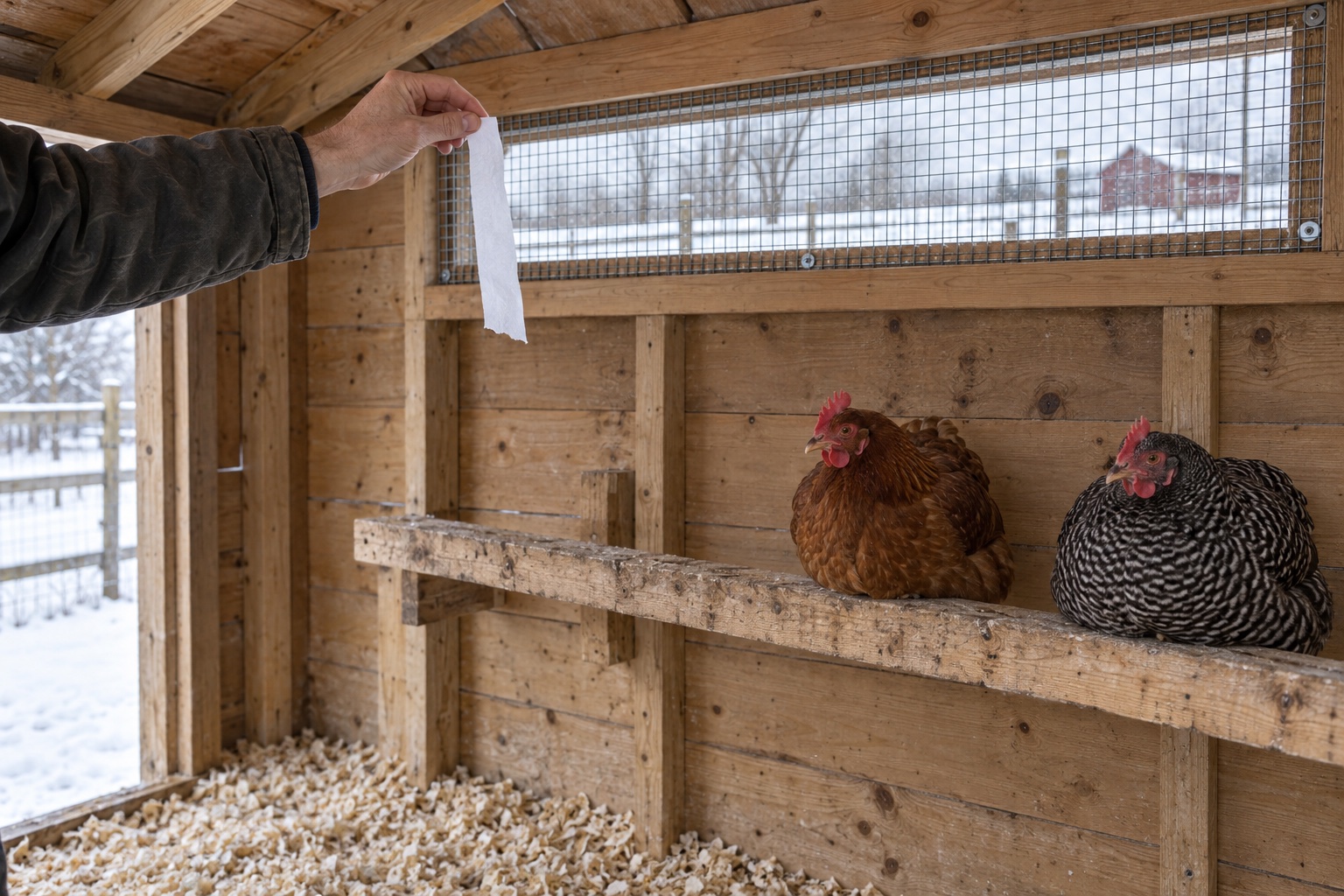
Chickens
Chicken Coop Ventilation in Winter: Drafts vs. Airflow
Ventilate a chicken coop in winter by letting damp, stale air escape high above the roost while blocking direct wind across resting birds and fixing moisture at its source.
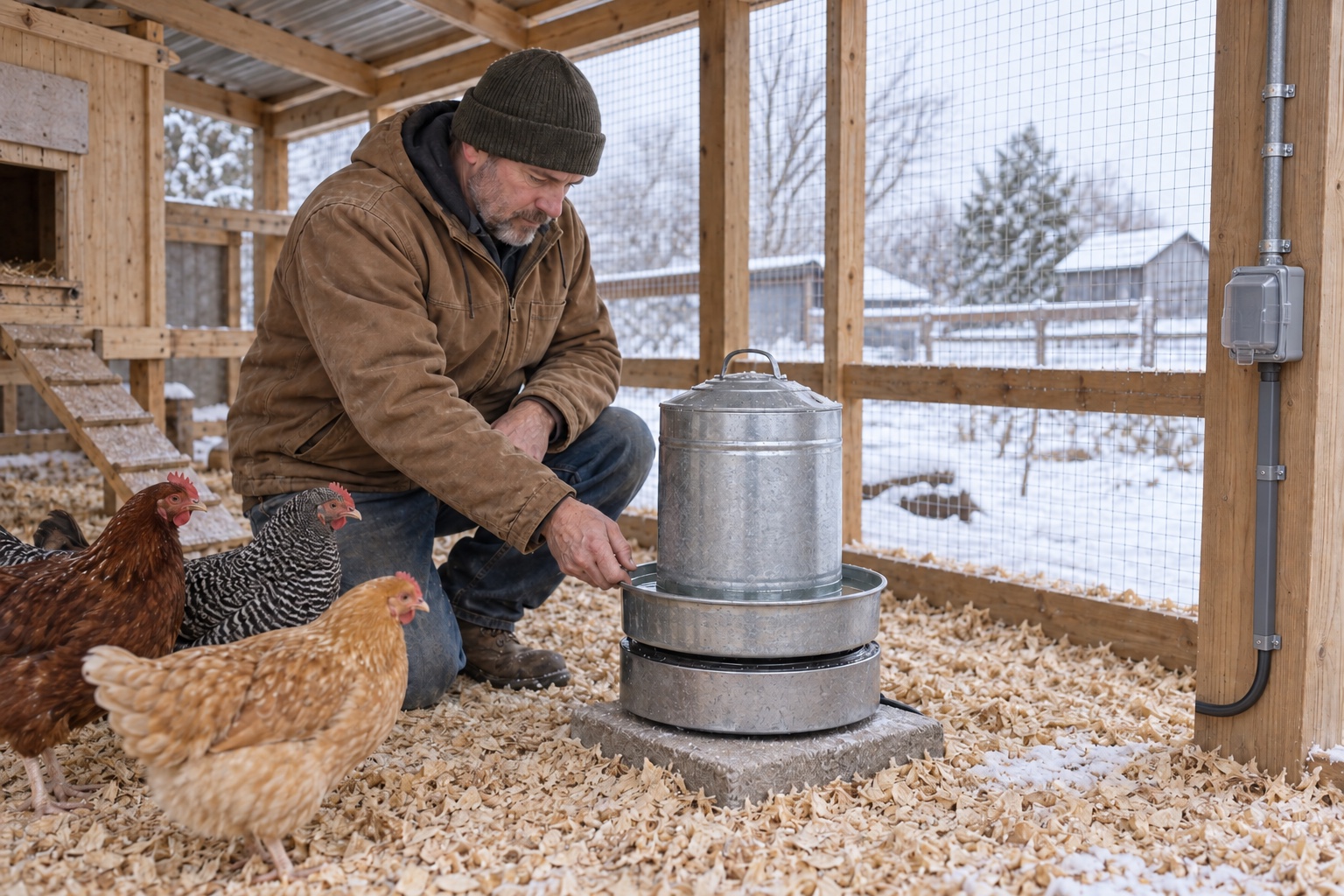
Chickens
Heated Chicken Waterer vs. Heated Base: What Beginners Need for Winter
Compare a heated chicken waterer, a heated base, and manual bowl swaps so you can keep winter water available without buying the wrong setup.
Frequently asked questions
Do chickens need heat in the coop during winter?
There is no universal yes-or-no rule. Current extension guidance differs: University of New Hampshire Extension generally advises against supplemental coop heat in most properly built, dry, ventilated coops, while University of Minnesota Extension recommends supplemental heat below 35 degrees Fahrenheit at nest-box or lower-roost height. Breed, age, health, feather condition, acclimation, moisture, wind protection, local climate, electrical safety, and bird behavior all belong in the decision.
What temperature is too cold for chickens?
One number cannot describe every flock. A fully feathered, cold-acclimated standard hen in a dry, draft-protected coop is not the same case as a bantam, an underweight or ill bird, a bird in molt, or a flock facing wet conditions and direct wind. Measure inside the occupied zone, observe individual birds, and ask your local Extension office or poultry veterinarian for region-specific guidance.
Is a heat lamp safe in a chicken coop?
A heat lamp adds serious installation, electrical, and fire-management demands around dust and combustible bedding. Do not treat a clamp lamp or extension cord as a casual winter fix. If a qualified local source recommends supplemental heat, use equipment approved for poultry or livestock, follow every manufacturer warning and mounting requirement, protect wiring from birds and water, and use a properly installed electrical supply.
How can I tell whether a chicken is struggling with cold?
Huddling, repeatedly holding a foot against the body, persistent feather puffing, reduced activity, poor feed or water access, weight loss, and changes in comb, wattle, or foot tissue deserve attention. Some of those signs can have more than one cause, so check the bird, flock dynamics, water, feed, bedding, moisture, wind, and housing together. Contact a poultry-aware veterinarian when a bird appears ill, injured, frostbitten, or unable to maintain normal behavior.
What happens if heated-coop power fails?
A flock that depends on powered heat needs a written outage plan before the coldest night. Know how quickly the coop cools, where vulnerable birds can be moved safely, who can check the flock, and how water will remain available. Never improvise indoor combustion, unsafe cords, or an unapproved heater during an outage.
Recommendations
Useful tools and resources for this decision
These are included only where they reduce repeated friction, clarify a next step, or help you avoid buying the wrong thing first.
Read the Minnesota guidance
University of Minnesota Extension cold-weather chicken guide
Current 2026 guidance covering cold stress, breed differences, roosts, drafts, supplemental heat, ventilation, bedding, water, frostbite, and electrical safety.
Best for: Reviewing the case for heat and identifying vulnerable birds
View resourceRead the New Hampshire guidance
University of New Hampshire Extension winter chicken guide
Practical cold-climate guidance that generally advises against supplemental heat in most properly constructed coops because of fire risk.
Best for: Understanding the no-heat position and its housing assumptions
View resourceReview the housing guidance
Penn State Extension small-scale poultry housing guide
Housing guidance for keeping poultry dry and draft-protected while preserving ventilation and controlling moisture.
Best for: Checking whether the coop itself is creating the cold-weather problem
View resourceCheck the current TP50 listing
ThermoPro TP50 indoor thermometer-hygrometer
A small local-display monitor with temperature and humidity readings, daily high-low records, and a 10-second refresh rate. It is an indoor device, not weatherproof poultry equipment.
Best for: Adding a repeatable reading in a dry, protected location near the occupied zone
Check current priceRecommended next reads
Read next if it helps the decision
Move into the next guide only if it clarifies the next practical step.
Chickens
Winter Chicken Care for Beginners: Prepare Before the First Freeze
A practical first-winter checklist for unfrozen water, dry bedding, useful ventilation, safe power, flock checks, feed, frostbite risk, and cold-weather routines.
Chickens
Chicken Coop Ventilation in Winter: Drafts vs. Airflow
Ventilate a chicken coop in winter by letting damp, stale air escape high above the roost while blocking direct wind across resting birds and fixing moisture at its source.
Chickens
Heated Chicken Waterer vs. Heated Base: What Beginners Need for Winter
Compare a heated chicken waterer, a heated base, and manual bowl swaps so you can keep winter water available without buying the wrong setup.
Chicken setup support
Get the chicken setup checklist before you buy more flock gear.
Use the first-year checklist to price the flock honestly, cover the starter essentials, and delay the upgrades that can wait.
Best for: Readers trying to price a first flock honestly and avoid a scattered chicken setup.
- A pre-chick setup checklist
- A recurring-cost planning section
- A simple weekly flock-care rhythm
Chicken setup notes, beginner flock lessons, and the checklist first.
After signup, the download will unlock right here so you can save or print it.
About the author
William Mock
Founder, writer, and beginner homesteader
William writes from the beginner side of rebuilding after a layoff: homestead plans, family systems, budgets, tools, and the decisions that make a home feel less fragile.
Read why this site existsRelated Guides
Keep building context
Chickens
Winter Chicken Care for Beginners: Prepare Before the First Freeze
A practical first-winter checklist for unfrozen water, dry bedding, useful ventilation, safe power, flock checks, feed, frostbite risk, and cold-weather routines.
Chickens
Chicken Coop Ventilation in Winter: Drafts vs. Airflow
Ventilate a chicken coop in winter by letting damp, stale air escape high above the roost while blocking direct wind across resting birds and fixing moisture at its source.
Chickens
Heated Chicken Waterer vs. Heated Base: What Beginners Need for Winter
Compare a heated chicken waterer, a heated base, and manual bowl swaps so you can keep winter water available without buying the wrong setup.