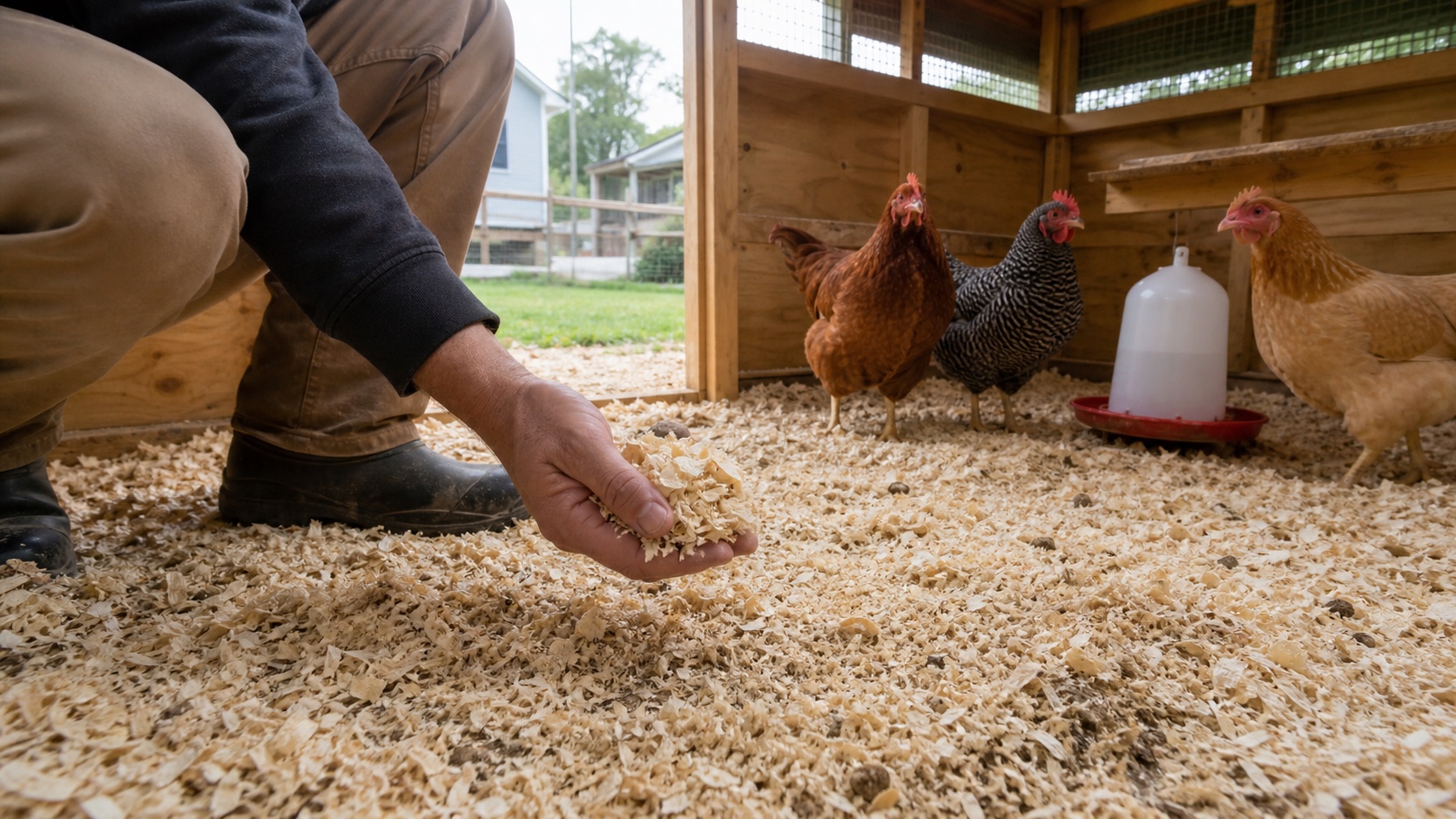
For many first backyard coops, dry large-flake pine shavings are the most practical bedding to try first. They are commonly recommended by Extension sources, widely available, easy to spread, and simple to remove when wet. Hemp is a reasonable premium test when dust or cleanup friction justifies the cost. Straw and sand can work, but they ask more specific questions about moisture, climate, floor construction, cleaning, and disposal.
Price the whole flock
Put bedding inside the real chicken budget
Housing, predator protection, feed, water, bedding, repairs, and backup care all belong in the decision before chicks come home.
See the real cost of backyard chickensThe line item that was too small on paper
After the layoff, I started noticing how often a plan looked affordable because I had priced the object and ignored the repetition. The shelf had a price. The tool had a price. The coop had a price. The little word 'supplies' sat underneath the project and quietly held everything the household would need to buy again.
When I began putting future chicken costs on paper, bedding was exactly that kind of line. It looked too ordinary to deserve much thought beside lumber, hardware cloth, feed, and a waterer. But bedding is not a one-time setup photo. Someone has to carry it home, keep it dry, notice the wet patch, move the soiled material, decide where it goes next, and open another bag without turning the coop into a monthly emergency.
That changed the question for me. I stopped asking which bedding sounded best and started asking which complete routine our budget, storage, coop, and ordinary week could support. The least expensive bag can be wasteful if half of it gets wet in storage. The premium bag can be wasteful if the real problem is a roof leak. The material matters, but the repeatable loop matters more.
What chicken coop bedding actually needs to do
Bedding becomes litter after it mixes with manure, feathers, spilled feed, and water. University of Georgia Extension describes excess-moisture absorption as a central litter function and warns that alternative materials have to be evaluated for performance and possible contaminants. That is why free material is not automatically safe material. Source, treatment, storage, particle size, mold, chemical residue, and moisture all matter.
Pine shavings are the practical default
Penn State Extension recommends pine shavings or straw for small-flock bedding and says to clean out wet or compacted litter. Its current poultry-housing guide prefers clean, dry pine shavings in nest boxes. Those recommendations do not make every bag identical, but they give beginners a defensible place to start.
Look for clean, dry flakes from a known animal-bedding source. Compare expanded volume and usable coverage, not just the compressed package. Open the first bag where you can observe dust and odor. Store the rest off damp ground and away from ignition sources. If a product is unusually dusty, damp, moldy, strongly scented, contaminated, or from an unknown wood or treatment process, do not solve the uncertainty by putting birds on it.
Hemp is a premium experiment, not a requirement
Processed hemp bedding is marketed as absorbent, compostable, and low dust. Those features can be worth testing when a keeper has already fixed leaks, water spills, ventilation, crowding, and cleaning access but still dislikes the dust or replacement rhythm of local pine. The honest comparison is not one bag against another. It is delivered cost per usable volume, storage space, amount added, amount removed, cleanout time, and coop condition over the same length of time.
I would not make a large premium bale the first answer to a sharp-smelling or damp coop. Ammonia odor is an inspection signal. University of Minnesota Extension advises increasing ventilation and cleaning manure when ammonia or moisture buildup appears in winter housing. A different fiber may change how the floor behaves, but it cannot make stale air, a leak, or accumulated manure harmless.
Straw and sand need a more specific plan
Clean chopped straw can fit some systems, especially where it is local, dry, properly stored, and actively managed. The tradeoff is that straw tends to cake and can support mold when moisture gets ahead of the routine. Long, tangled material may also be less pleasant to remove through a small cleanout door. Do not use hay simply because it is nearby, and do not use any plant bedding that is damp, moldy, chemically treated, or of uncertain origin.
Sand deserves its own property-level decision. It adds substantial weight, behaves differently in freezing conditions, does not join an ordinary carbon-rich compost stream, and asks for frequent scooping rather than the same replacement rhythm as shavings. The particle source and size matter because fine dusty products create a different risk than suitable coarse material. Before ordering tons or loading a raised wooden floor, check structural capacity, drainage, local climate, disposal, and current local poultry guidance.
The coop floor, run, and nest boxes are not the same job
A material that works on a protected coop floor may fail in an uncovered muddy run. Nest boxes need clean, dry cushioning and frequent checks for manure, broken eggs, pests, and dampness. Outdoor runs need drainage, erosion, roof runoff, stocking density, and local soil conditions addressed before another layer is added. The winter chicken-run preparation guide puts those fixes in order before you add more material. Buying one material for every surface is convenient, but convenience is not proof that every surface has the same moisture problem.
Fix the source of odor
Work through summer coop smell in the right order
Check concentrated manure, wet bedding, spills, leaks, crowding, ventilation, and run drainage before reaching for a scented cover-up.
Troubleshoot chicken coop odorChoose a cleaning method before buying a material
Run a 30-day bedding test before buying in bulk
What is worth buying and what can wait
Buy enough conventional bedding to prove the routine, plus the simple cleaning tool and dry storage you already know you need. A premium material earns a test when it addresses measured dust, storage, or labor friction. Odor powders, nesting herbs, automatic subscriptions, decorative nest material, and a year's supply can wait. None of those purchases outranks a dry roof, stable waterer, safe ventilation, adequate space, and cleanout access.
Recommendations
Two bedding products worth comparing
Start here
Tractor Supply flake pine shavings
A conventional local-price baseline with published expanded volume and coverage information.
Best for: Most beginners proving a simple pine-shaving routine first
Inspect the actual bag for dryness, dust, flake size, odor, and contamination. Price and stock vary by location.
View resourcePremium test
RentACoop premium hemp bedding, 300 L
A specific premium hemp bale to compare when an established coop routine has a real dust or cleanup problem.
Best for: Keepers with a dry, ventilated coop who have calculated the delivered cost and can store a large bale
Do not buy it to cover a leak, ammonia odor, crowding, or delayed cleaning. Manufacturer performance statements should be tested against your own records.
Check current priceThis article contains an Amazon affiliate link. If you buy through it, Fresh Start Homestead may earn a commission at no extra cost to you. The pine baseline is intentionally listed first because the honest beginner answer is usually to prove the ordinary local option before paying for a premium bale.
The best bedding is part of a routine you can see
The floor should tell you what is happening. You should be able to find the wet place, notice the caked place, smell the warning, see what the waterer is doing, and remove the material without turning the job into a seasonal crisis. A bedding system that hides those clues is not easier just because it delays the cleanout.
Start with dry large-flake pine shavings unless your coop, climate, local guidance, or a measured problem gives you a reason to choose differently. Keep one month of notes. Let the birds, the floor, the compost or disposal path, the storage corner, and the family budget all vote. That answer will be more useful than any bag claiming to be best for every chicken keeper.
Prepare for the next season
Make bedding part of the winter coop check
Cold-weather bedding only works beside unfrozen water, high ventilation, dry shelter, safe power decisions, and a backup care plan.
Use the winter chicken checklistRecommended next reads
Build the rest of the coop routine
These guides connect bedding with the real flock budget, summer moisture and odor control, and the cold-weather housing check.

Chickens
The Real Cost of Getting Started With Backyard Chickens
Backyard chickens can be a strong first step into homesteading, but the startup costs and recurring work deserve an honest look.
Chickens
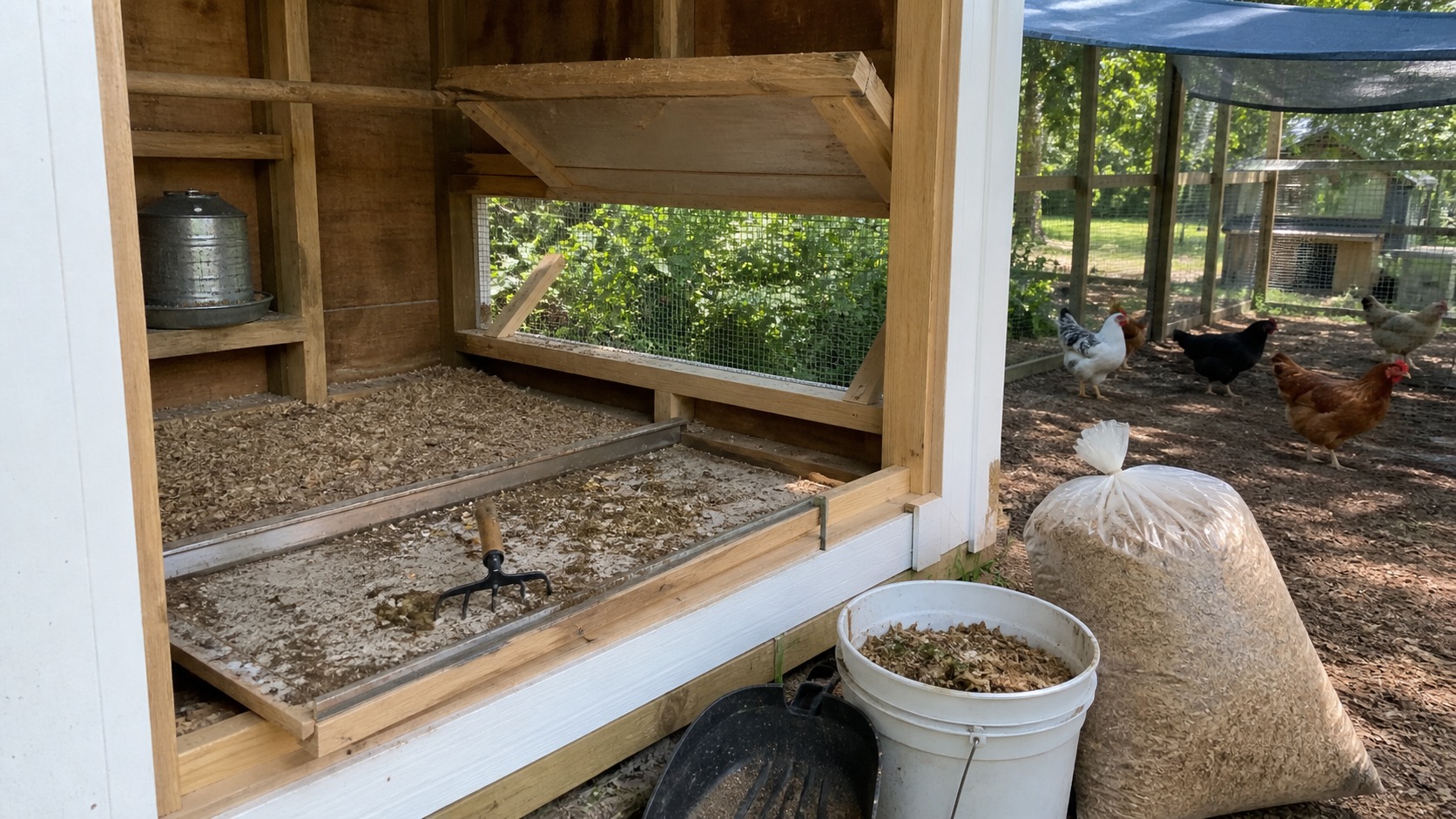
How to Keep a Chicken Coop From Smelling Bad in Summer
A practical summer coop odor guide for beginners: ventilation, dry bedding, manure under roosts, water leaks, run drainage, ammonia warning signs, and what not to cover up.
Chickens
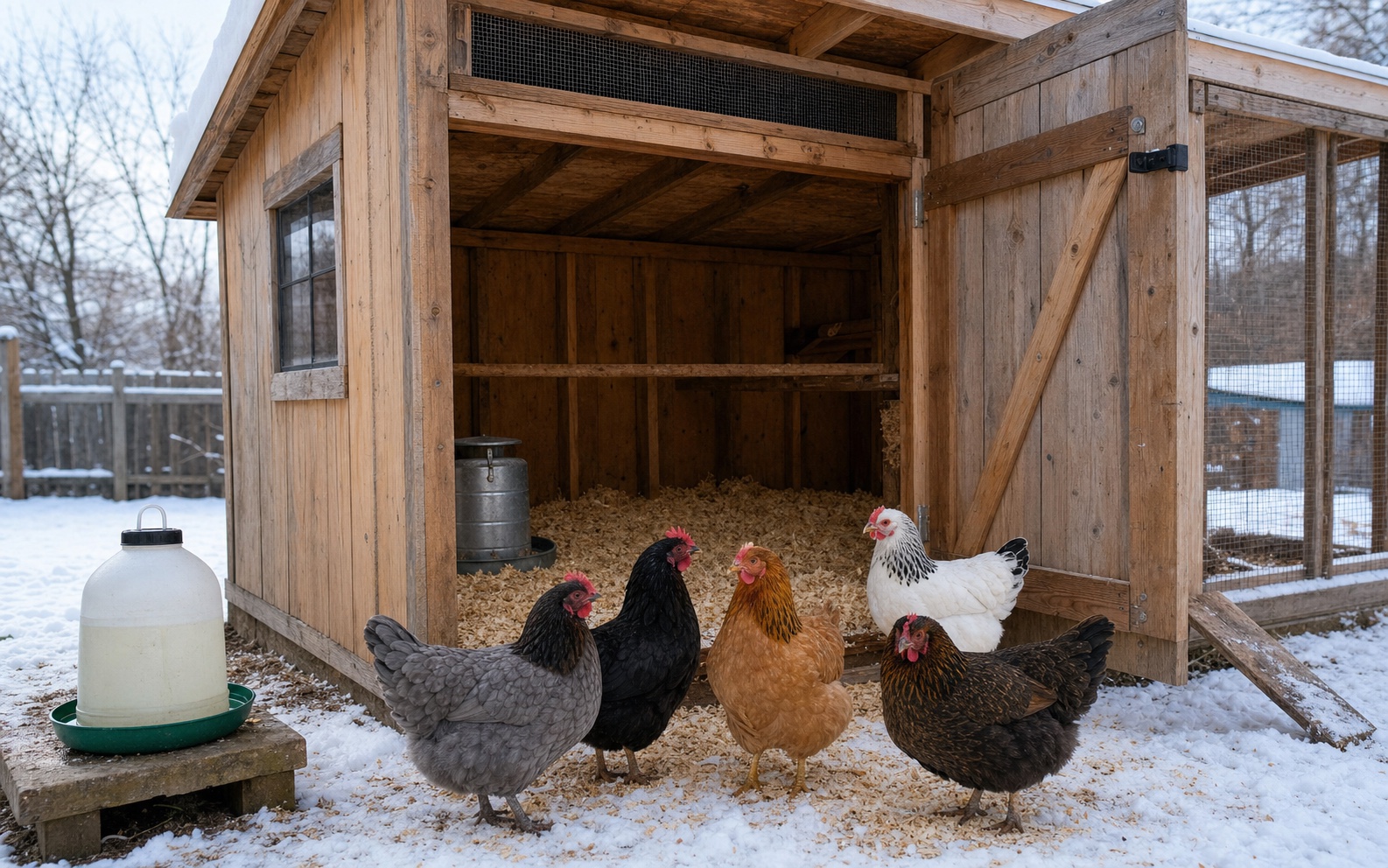
Winter Chicken Care for Beginners: Prepare Before the First Freeze
A practical first-winter checklist for unfrozen water, dry bedding, useful ventilation, safe power, flock checks, feed, frostbite risk, and cold-weather routines.
Frequently asked questions
What is the best bedding for a chicken coop?
Dry large-flake pine shavings are a practical starting point for many beginner coops because Extension sources commonly recommend pine shavings, they are widely available, and they are easy to inspect and replace. Hemp may suit a keeper willing to pay more for a lower-dust alternative. Straw and sand can work in specific setups, but neither should be chosen without considering moisture, climate, floor construction, cleaning method, disposal, and local availability.
How deep should chicken coop bedding be?
The right depth depends on the material and management method. Penn State guidance describes three inches of pine shavings in one small-flock sanitation context, while University of Minnesota Extension describes four to six inches of straw or shavings as one winter deep-bedding option. Those figures are not interchangeable rules for every coop. Follow local Extension guidance, the material instructions, and the routine you can actually inspect and maintain.
How often should chicken bedding be changed?
Remove wet, moldy, heavily soiled, or compacted areas promptly instead of waiting for a calendar date. Full-cleanout timing varies with flock size, coop area, ventilation, weather, water spills, bedding depth, and management method. Ammonia odor, condensation, persistent dampness, caking, or dirty birds and eggs are reasons to inspect the whole system rather than simply adding another clean layer.
Are pine shavings or straw better for chickens?
Pine shavings are the simpler default for many small coops because they are absorbent, easy to spread, and specifically recommended by multiple Extension sources. Straw can be locally affordable and useful in some dry, deliberately managed setups, but research-oriented Extension material notes that chopped straw tends to cake and can support mold when moisture is poorly controlled. Buy clean, dry material and judge it by the condition it creates in your coop.
Can I use sand as chicken coop bedding?
Sand is a different floor-management system, not a direct bag-for-bag replacement for shavings. It is heavy, does not compost like plant bedding, can affect floor loading and cold-weather conditions, and requires suitable particle size, drainage, ventilation, cleaning tools, and disposal. Get local poultry guidance and make sure the coop structure and climate suit the plan before bringing in a large quantity.
Recommendations
Useful tools and resources for this decision
These are included only where they reduce repeated friction, clarify a next step, or help you avoid buying the wrong thing first.
Small-flock source
Penn State Extension small-flock guide
Beginner flock guidance covering dry housing, pine shavings or straw, wet and compacted litter removal, nest material, and sanitation.
Best for: Checking the basic bedding and housing functions before comparing products
View resourceLitter research
UGA Extension litter-quality guide
A research-oriented poultry guide explaining moisture control and the tradeoffs of pine, hardwood material, straw, sand, hulls, and processed paper.
Best for: Understanding why material choice and moisture management cannot be separated
This guide is written for commercial broiler production, so use it for material principles rather than copying a commercial-house routine into a backyard coop.
View resourceCold-weather source
University of Minnesota winter coop guidance
Small-flock guidance on ventilation, moisture, manure, spot cleaning, and one deep-bedding option for winter.
Best for: Cold-weather keepers deciding whether a deeper bedding routine fits
View resourcePractical default
Tractor Supply flake pine shavings
A current retail example of widely available flake pine bedding with published expanded volume and coverage information.
Best for: Beginners pricing a conventional pine-shaving baseline locally
Availability, price, dust level, flake size, and package condition vary. Inspect the exact bag and compare expanded volume rather than package dimensions alone.
View resourcePremium alternative
RentACoop premium hemp bedding, 300 L
A specific premium hemp option for keepers comparing a processed, low-dust alternative with ordinary pine shavings.
Best for: An established small-flock keeper whose dry coop and cleaning routine already work and who wants to test whether premium hemp reduces dust or cleanup friction
This is a large, expensive bale. Manufacturer absorbency and odor-control statements are product claims, not the basis for the animal-care guidance in this article. Compare delivered cost, expanded volume, storage, and your own measured use before subscribing or buying repeatedly.
Check current priceRecommended next reads
Read next if it helps the decision
Move into the next guide only if it clarifies the next practical step.
Chickens
The Real Cost of Getting Started With Backyard Chickens
Backyard chickens can be a strong first step into homesteading, but the startup costs and recurring work deserve an honest look.
Chickens
How to Keep a Chicken Coop From Smelling Bad in Summer
A practical summer coop odor guide for beginners: ventilation, dry bedding, manure under roosts, water leaks, run drainage, ammonia warning signs, and what not to cover up.
Chickens
Winter Chicken Care for Beginners: Prepare Before the First Freeze
A practical first-winter checklist for unfrozen water, dry bedding, useful ventilation, safe power, flock checks, feed, frostbite risk, and cold-weather routines.
Chicken setup support
Get the chicken setup checklist before you buy more flock gear.
Use the first-year checklist to price the flock honestly, cover the starter essentials, and delay the upgrades that can wait.
Best for: Readers trying to price a first flock honestly and avoid a scattered chicken setup.
- A pre-chick setup checklist
- A recurring-cost planning section
- A simple weekly flock-care rhythm
Chicken setup notes, beginner flock lessons, and the checklist first.
After signup, the download will unlock right here so you can save or print it.
About the author
William Mock
Founder, writer, and beginner homesteader
William writes from the beginner side of rebuilding after a layoff: homestead plans, family systems, budgets, tools, and the decisions that make a home feel less fragile.
Read why this site existsRelated Guides
Keep building context
Chickens
The Real Cost of Getting Started With Backyard Chickens
Backyard chickens can be a strong first step into homesteading, but the startup costs and recurring work deserve an honest look.
Chickens
How to Keep a Chicken Coop From Smelling Bad in Summer
A practical summer coop odor guide for beginners: ventilation, dry bedding, manure under roosts, water leaks, run drainage, ammonia warning signs, and what not to cover up.
Chickens
Winter Chicken Care for Beginners: Prepare Before the First Freeze
A practical first-winter checklist for unfrozen water, dry bedding, useful ventilation, safe power, flock checks, feed, frostbite risk, and cold-weather routines.