Chickens can eat some kitchen scraps, but beginners need a better rule than "chickens eat everything." Scraps are treats and management decisions, not a replacement for balanced feed. If that distinction gets blurry, the flock can end up with poor nutrition, pests, dirty ground, and a routine that feels cheaper for about two weeks before it starts costing you in other ways.
The better approach is simple: keep complete poultry feed as the foundation, offer clean produce scraps in small amounts, remove leftovers, and treat the scrap routine like part of flock care instead of a way to empty the refrigerator without thinking.
The watermelon rind that looked like a system
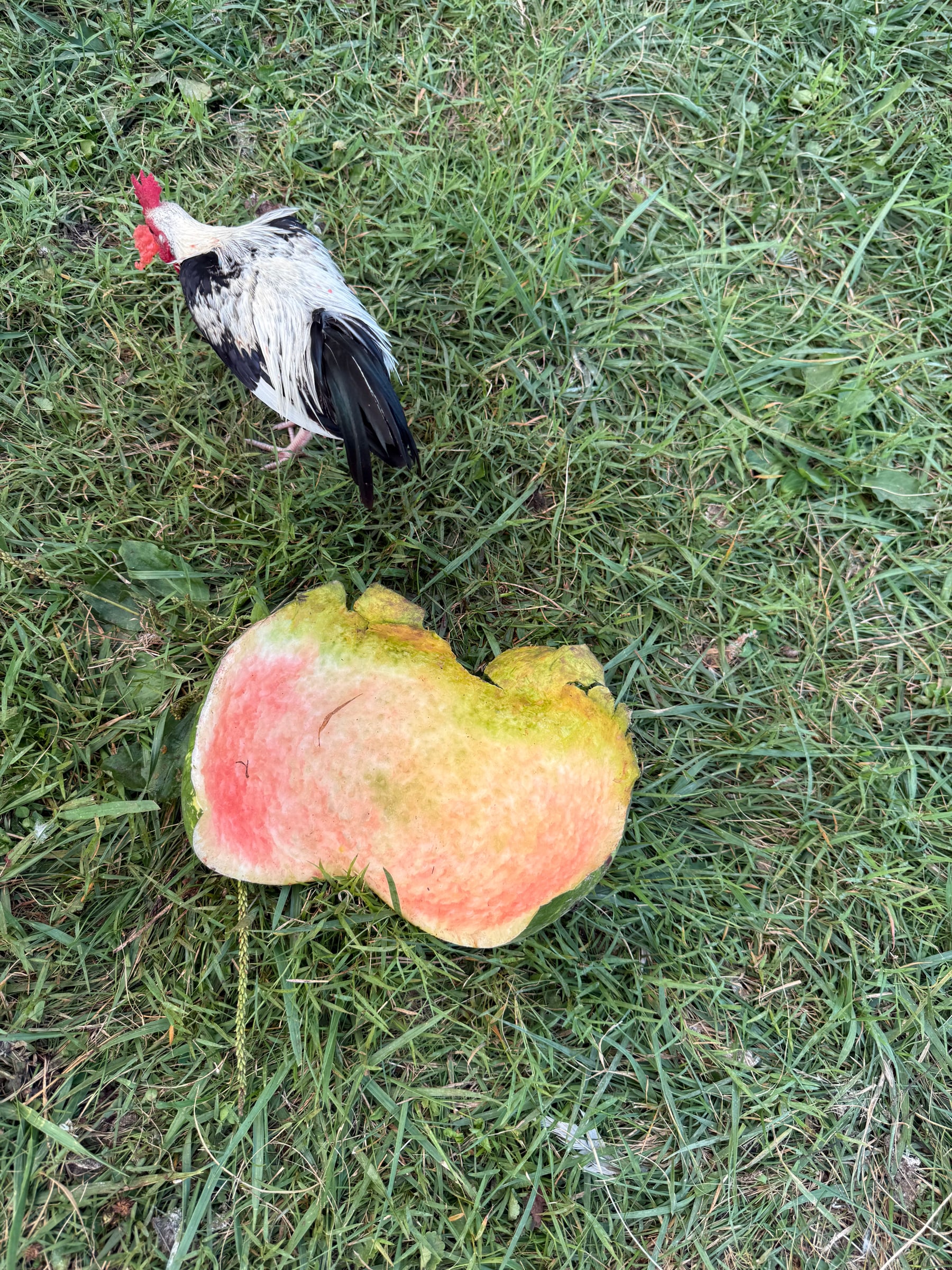
The watermelon rind in the photo is the kind of thing that makes chicken keeping feel wonderfully practical. You finish the good part, carry the rind outside, and a bird acts like you delivered a holiday. It feels thrifty, simple, and connected in the way homesteading is supposed to feel.
But that is also where I have to slow myself down. A good moment is not automatically a good system. One clean watermelon rind on a summer day is different from turning every leftover into chicken food. The first feels useful. The second can become a messy excuse to stop thinking carefully.
That is the line this article is about. I like the old-fashioned instinct of wasting less. I also want the flock's actual needs to outrank the warm feeling I get from tossing scraps into the yard.
Feed is the foundation
A good poultry feed is designed around the bird's age, purpose, and nutritional needs. Chicks, growing pullets, laying hens, and meat birds are not all eating the same plan. North Dakota State University Extension points beginners back to feed formulated for each type and stage of bird, and it specifically warns against using alternative feeds as chick starter.
That matters because kitchen scraps are inconsistent. One day it is watermelon. Another day it is lettuce ends. Another day it is rice, old vegetables, or something salty that should not be part of the flock routine at all. Scraps cannot reliably provide protein, calcium, energy, vitamins, minerals, or the stage-specific balance birds need.
Use simple scrap rules
The best beginner rules are boring on purpose. Offer small amounts. Keep it fresh. Make it easy to clean up. Do not make the run a compost pile. If you would not want it sitting in the yard tomorrow morning, do not toss so much that it can sit there overnight.
Make a family scrap filter
Kitchen scraps become confusing fast when everyone in the house has a different rule. One person thinks chickens can eat anything. One person is trying to reduce waste. One kid wants to carry every plate outside. Someone else is just glad the watermelon rind is not going in the trash.
A simple filter helps. Before anything goes to the flock, ask three questions: is it fresh, is it simple, and is it small? If the answer is no, it goes to compost or trash instead. That is not wasteful. It is caring for the birds and the system.
Hygiene belongs in the system
Scraps connect the kitchen and the coop, so hygiene has to be part of the plan. CDC guidance is clear that backyard poultry can carry germs that make people sick, and handwashing matters after touching birds, their food, equipment, eggs, or anything where they live and roam.
That does not mean the flock needs to feel scary. It means the routine needs boundaries. Keep poultry equipment outside. Do not clean coop items in the kitchen. Supervise kids. Wash hands. Keep the scrap container separate from meal prep. These habits are not dramatic; they are what make the system livable.
What can wait
You do not need a complicated chicken treat station, a long approved-food chart taped to the fridge, or a basket of special treat products to start. Most beginners need fewer moving parts, not more.
A realistic beginner scenario
Say your family has four hens and finishes a watermelon on a hot week. A good beginner move is to take one reasonable rind section outside, place it where it will not create mud or block the waterer, let the birds enjoy it for a short window, and remove what remains. The regular feed stays available. The kids wash hands. The rind is a treat, not dinner. The same boundary matters when cold weather makes corn and warm extras feel more essential; the winter chicken feeding guide keeps the complete ration, grit, calcium, water, and treats in their proper roles.
A weaker version is tossing the whole pile of rinds into the run, leaving it there because it feels natural, and calling it savings. That is how a small treat turns into sticky ground, pests, odor, and a flock routine that is harder to manage.
The real rule
The real rule is not that chickens can or cannot eat scraps. The real rule is that the flock's needs come before our desire to feel efficient. Balanced feed does the nutritional work. Clean water, a safe yard, and steady chores do the daily-care work. Scraps are just a small extra when they fit the system.
That is still a good thing. A watermelon rind on a summer day can be useful, funny, and satisfying. It just should not become a shortcut around the boring basics that keep chickens healthy.
Keep feed costs honest
Before scraps become your budget plan, understand the monthly feed numbers.
The chicken feed cost guide will help you plan recurring costs without pretending kitchen scraps can carry the flock.
Read the feed cost guideRecommended next reads
Read the next chicken care guides
These guides connect treats, feed costs, daily chores, and keeping the coop clean.
Chickens
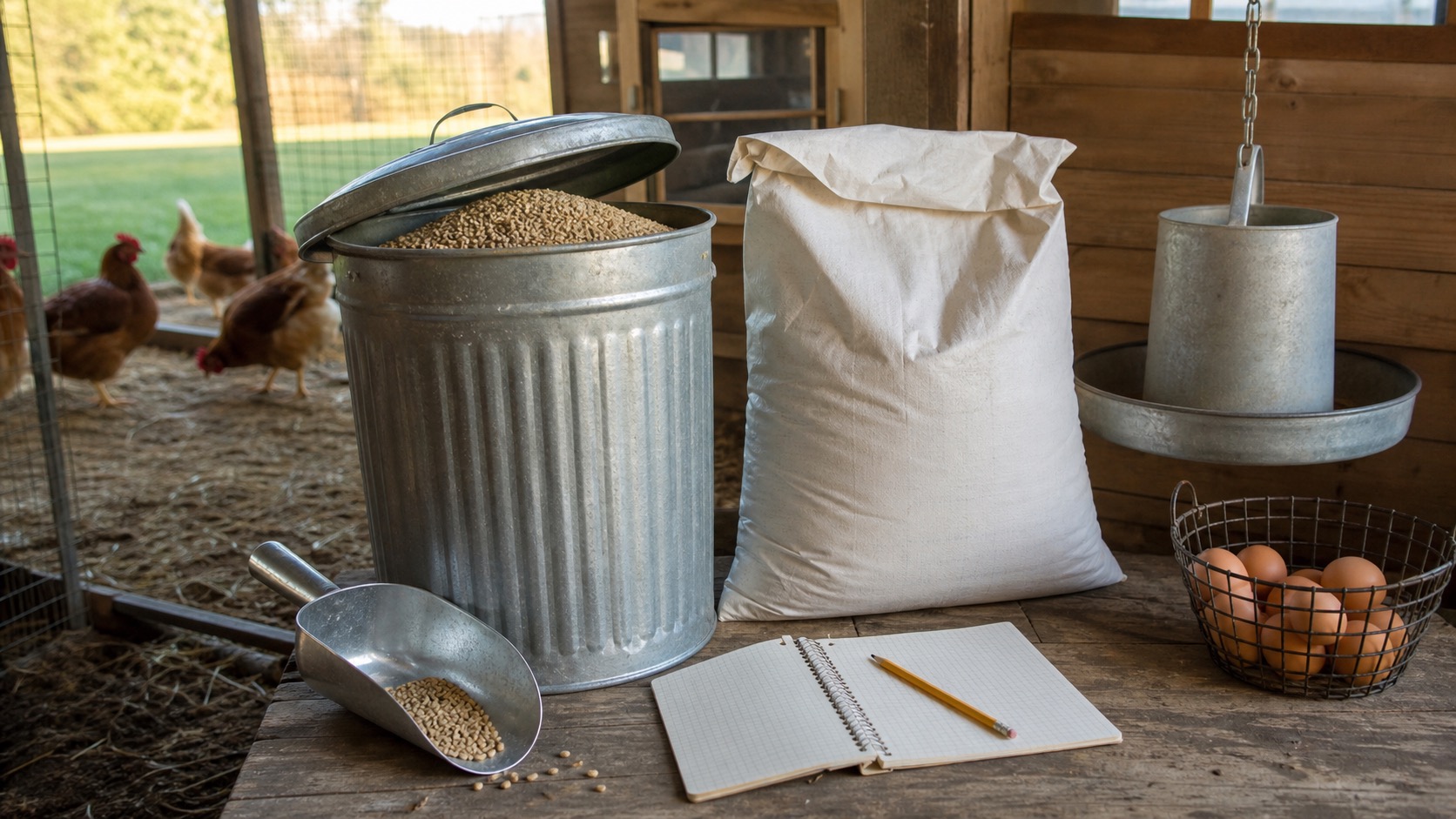
Chicken Feed Costs for Beginners: Monthly Numbers That Actually Matter
A practical guide to monthly chicken feed costs for beginners, including feed math, flock size, waste, storage, and the recurring costs that make egg math more honest.
Chickens
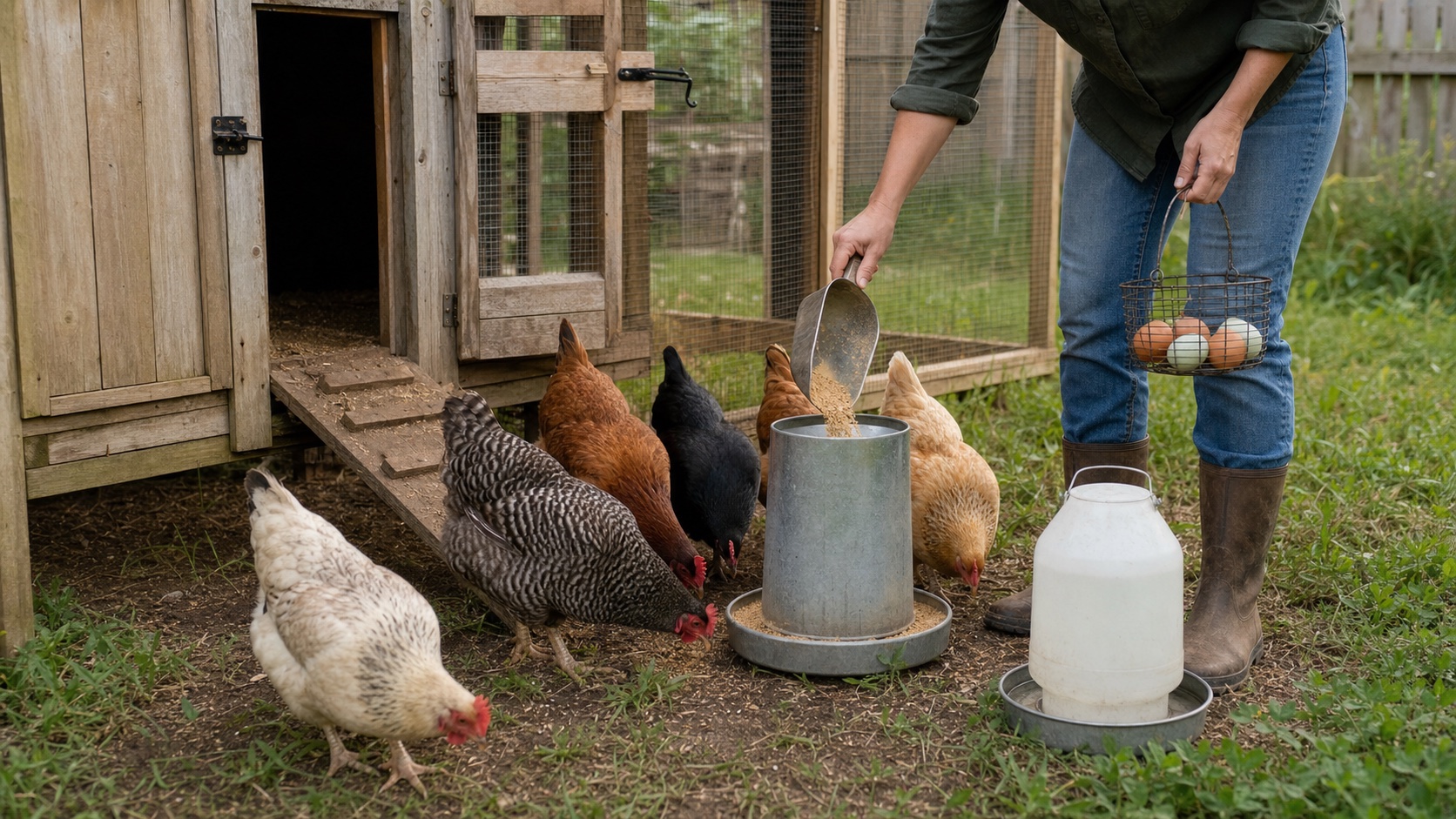
Daily Chicken Care Routine for Busy Families
A realistic morning and evening chicken-care routine built around fresh water, feed, eggs, observation, a secure coop, and the few checks busy families should not skip.
Chickens
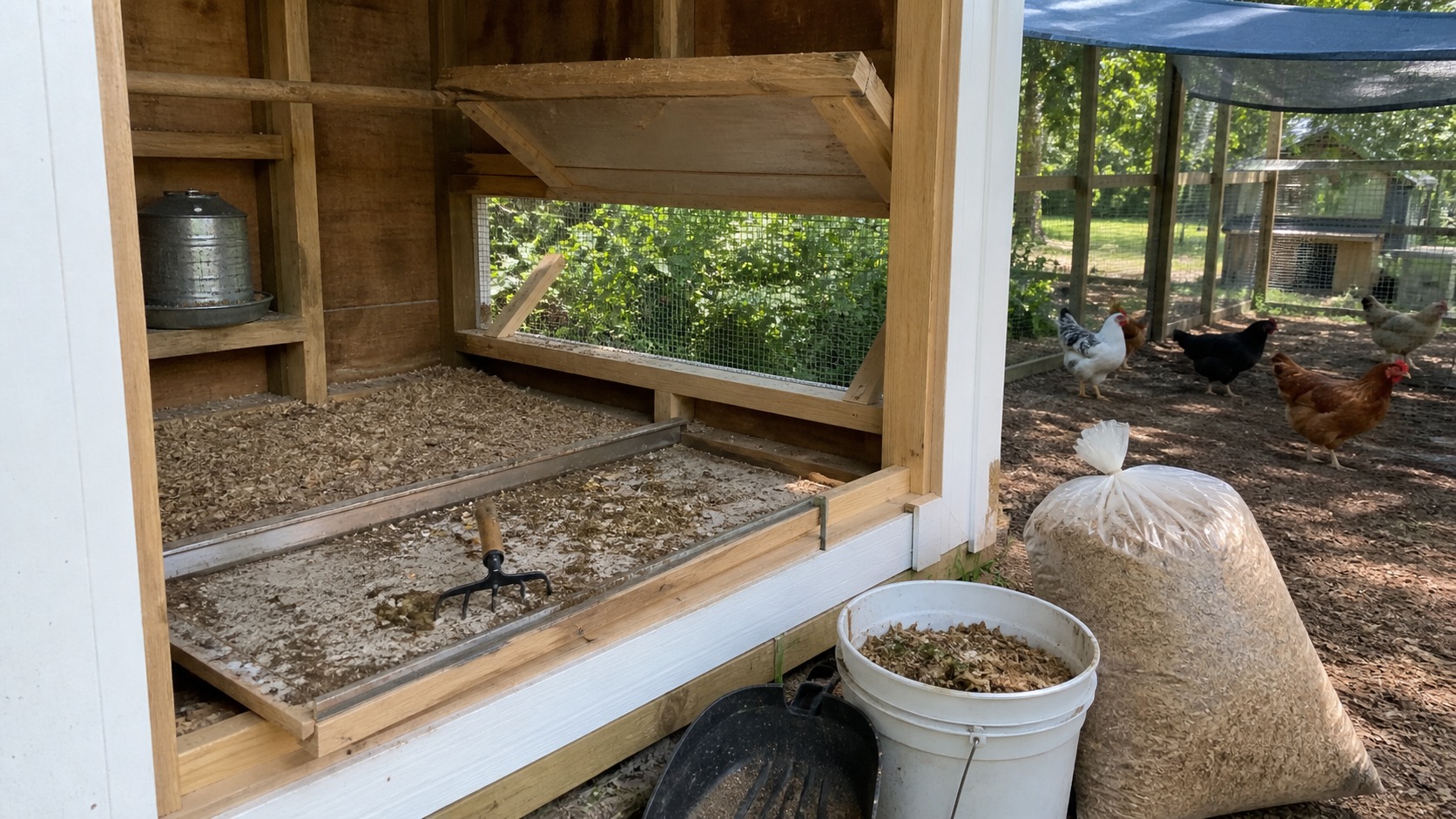
How to Keep a Chicken Coop From Smelling Bad in Summer
A practical summer coop odor guide for beginners: ventilation, dry bedding, manure under roosts, water leaks, run drainage, ammonia warning signs, and what not to cover up.
Frequently asked questions
Can chickens eat kitchen scraps?
Chickens can eat some clean kitchen scraps as occasional treats, but scraps should not replace a complete poultry feed. Use scraps as a small supplement, remove leftovers, and avoid spoiled, moldy, salty, greasy, or questionable foods.
Can kitchen scraps replace chicken feed?
No. A balanced feed should stay the foundation because poultry feeds are formulated for the bird's stage of life and production needs. Scraps are too inconsistent to carry nutrition, especially for chicks, pullets, layers, or meat birds.
How much kitchen scrap should I give chickens?
Start small enough that the flock cleans it up quickly without leaving a mess. If scraps are sitting around, attracting pests, replacing feed, or changing droppings and behavior, reduce the amount or stop.
Should children handle chicken scraps and treats?
Children should be supervised around poultry and should wash their hands after touching birds, feed, waterers, eggs, or anything in the flock's environment. Keep the scrap routine outdoors and do not treat poultry areas like kitchen space.
Recommendations
Useful tools and resources for this decision
These are included only where they reduce repeated friction, clarify a next step, or help you avoid buying the wrong thing first.
Optional kitchen helper
Small lidded kitchen scrap pail
A small covered pail keeps produce scraps contained until you decide what belongs in the compost, trash, or chicken treat bowl.
Best for: Families that want a cleaner way to collect scraps without leaving bowls open on the counter
Check current priceHygiene support
Dedicated poultry chore gloves
A washable glove pair kept near the coop helps separate poultry chores from kitchen tasks and reminds everyone to keep the routine outside.
Best for: Households with kids helping carry scraps, water, or feed outdoors
Check current priceFree Extension reference
NDSU beginner chicken guide
North Dakota State University Extension explains that poultry feed is formulated by bird type and stage, and that starter feed should not be replaced by alternative feeds.
Best for: Checking the nutrition basics before treating scraps like a feed plan
View resourceFree safety guidance
CDC backyard poultry hygiene guidance
CDC guidance covers handwashing, keeping poultry and equipment outside, supervising kids, and reducing illness risk around backyard flocks.
Best for: Families setting rules for kids, scraps, eggs, and coop chores
View resourceRecommended next reads
Read next if it helps the decision
Move into the next guide only if it clarifies the next practical step.
Chickens
Chicken Feed Costs for Beginners: Monthly Numbers That Actually Matter
A practical guide to monthly chicken feed costs for beginners, including feed math, flock size, waste, storage, and the recurring costs that make egg math more honest.
Chickens
Daily Chicken Care Routine for Busy Families
A realistic morning and evening chicken-care routine built around fresh water, feed, eggs, observation, a secure coop, and the few checks busy families should not skip.
Chickens
How to Keep a Chicken Coop From Smelling Bad in Summer
A practical summer coop odor guide for beginners: ventilation, dry bedding, manure under roosts, water leaks, run drainage, ammonia warning signs, and what not to cover up.
Chicken setup support
Get the chicken setup checklist before you buy more flock gear.
Use the first-year checklist to price the flock honestly, cover the starter essentials, and delay the upgrades that can wait.
Best for: Readers trying to price a first flock honestly and avoid a scattered chicken setup.
- A pre-chick setup checklist
- A recurring-cost planning section
- A simple weekly flock-care rhythm
Chicken setup notes, beginner flock lessons, and the checklist first.
After signup, the download will unlock right here so you can save or print it.
About the author
William Mock
Founder, writer, and beginner homesteader
William writes from the beginner side of rebuilding after a layoff: homestead plans, family systems, budgets, tools, and the decisions that make a home feel less fragile.
Read why this site existsRelated Guides
Keep building context
Chickens
Chicken Feed Costs for Beginners: Monthly Numbers That Actually Matter
A practical guide to monthly chicken feed costs for beginners, including feed math, flock size, waste, storage, and the recurring costs that make egg math more honest.
Chickens
Daily Chicken Care Routine for Busy Families
A realistic morning and evening chicken-care routine built around fresh water, feed, eggs, observation, a secure coop, and the few checks busy families should not skip.
Chickens
Beginner Chicken Yard Setup: What to Put Inside the Run
A practical beginner guide to setting up a chicken yard or run with shade, water, dust bathing, fencing, storage, and daily-care access that actually works.