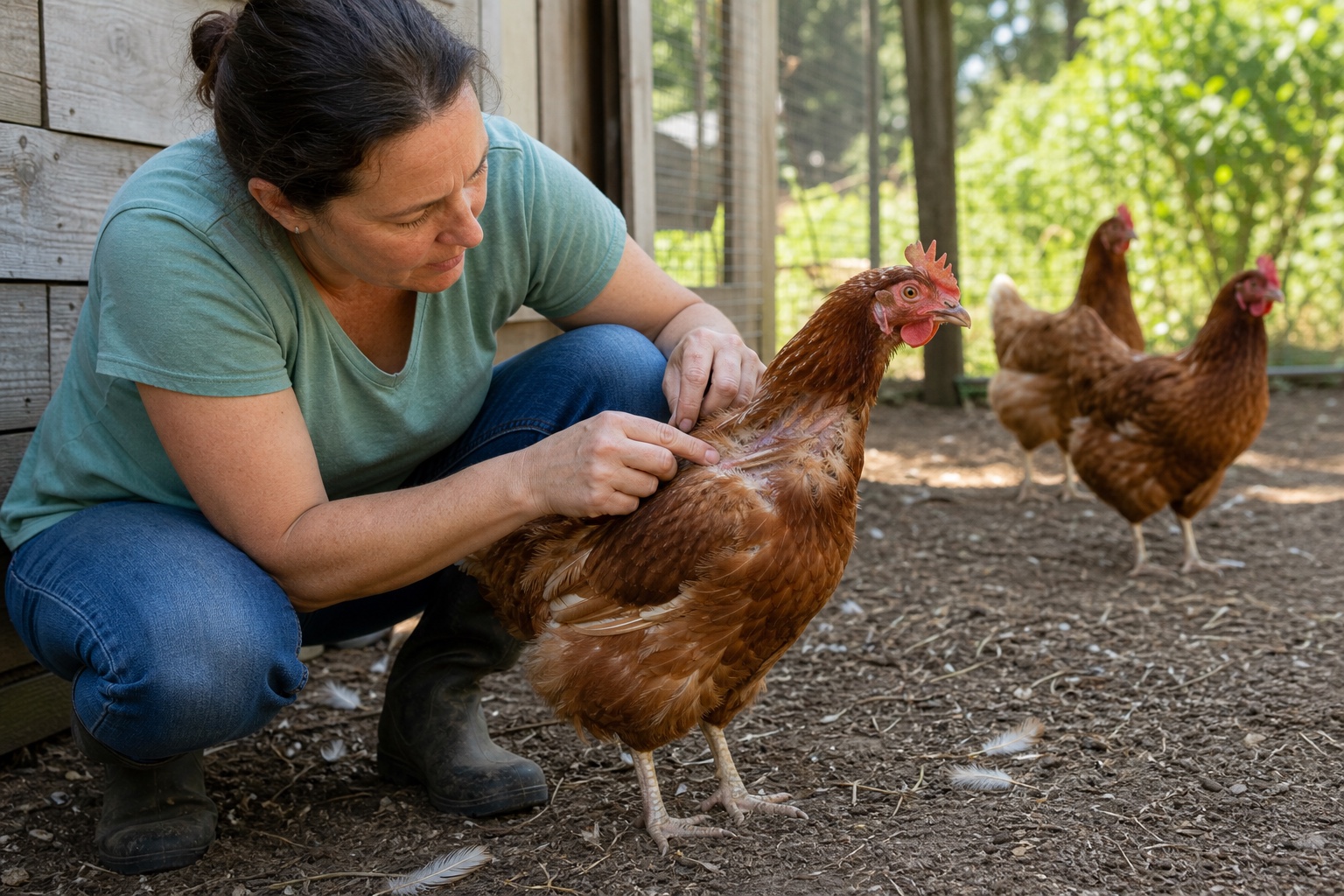
A normal chicken molt is an organized replacement of old feathers, not just random baldness. Adult hens often lose feathers first around the head and neck, then across the breast, body, wings, and tail. Egg laying commonly slows or stops while new feathers grow. Your first job is to confirm orderly regrowth and a hen who is otherwise alert, eating, drinking, and moving normally.
The quiet morning that taught me not to force a reset
One of the strangest mornings after the layoff was how normal the house looked while almost nothing felt normal. There were bills and benefits details on the table, job questions waiting, and a blank stretch on the calendar where the old routine used to be. My first instinct was to fill that blank immediately. I wanted a new plan big enough to make the slowdown feel productive.
What helped was not forcing the old output back into place. It was checking the facts: what had actually changed, what was still working, what needed attention now, and what simply needed time. That quieter inventory did more for us than a dramatic reinvention would have.
That lesson belongs in the chicken yard too. When feathers cover the coop floor and the egg basket gets lighter, the visible slowdown can make a beginner reach for supplements, lights, treatments, or a new bag of feed before identifying the change. A molt is not a failure of the hen. It is a rebuilding season. The responsible response is still an inspection, because parasites and illness can look similar from ten feet away, but the goal is understanding before fixing.
What normal chicken molting looks like
Mississippi State Extension describes a fairly definite molt order: head, neck, breast, body, wings, and tail. Real backyard hens do not always look like a diagram, and several stages can overlap, but an organized sequence plus visible regrowth is reassuring. Clean pin feathers are evidence that the replacement process has started.
Some hens drop feathers quickly and look rough almost overnight. Others replace only a few at a time. Mississippi State notes that a faster molt may finish in roughly two to three months while a gradual one can stretch four to six months. Breed, age, laying history, daylight, nutrition, and individual biology all affect the pace.
Why molting hens stop laying eggs
Feathers are not decoration. Replacing them requires substantial protein, energy, and other nutrients. Many hens redirect resources away from egg production while they rebuild plumage. At the same time, shorter fall days reduce the light signal that supports laying. Those two changes often arrive together, which is why the egg basket may become noticeably lighter.
Do not judge a molting hen by her normal laying rate. Keep recording the flock's total eggs, but note which birds are visibly molting and watch the trend over weeks. Age and season still matter after feathers return, so production may not snap back to the exact number you remember. Before trying to change that seasonal pattern, review whether supplemental winter light fits the flock and why active molt is not a problem to rush past.
When the egg basket changes
Check the whole flock before blaming one cause
Use the summer egg-production guide to work through heat, water, feed, hidden nests, broodiness, molt, age, and illness in a sensible order.
Read the egg-production checklistMolting or a different feather problem?
Mites and lice deserve a physical check, not a guess. University of Minnesota Extension notes that northern fowl mites may be found around vent feathers, while red mites often leave birds during the day and hide in nest boxes, perch joints, and coop cracks. Inspect several birds and check the coop after dark. One clean hen does not prove the whole flock is clear.
What to feed chickens during a molt
Start with the bag already doing the nutritional work: a fresh, complete commercial ration appropriate for the flock's age and production stage. Complete feed is formulated to supply amino acids, energy, vitamins, and minerals together. A handful of one high-protein ingredient cannot replace that balance.
Protein matters because feathers are largely protein, but more is not automatically better and percentage alone does not tell you whether the amino-acid balance fits the bird. The common internet move is to pile on mealworms, fish, cat food, or another protein-rich treat. Those extras can displace the complete ration and create a different imbalance. If your current feed is appropriate and fresh, consistency may be the best first move.
Make the coop easier on a molting hen
A molting hen may be less interested in handling because developing feathers are tender. That does not mean skipping a needed health check. It means making the check brief, supporting the bird securely, and using your eyes more than your fingers. Do not pull loose-looking feathers or break the sheath around a new feather.
What matters first and what can wait
The two products in this guide are intentionally narrow. A headlamp earns its place if it helps you inspect after dark. A solid reference book earns its place if you will use it across years of flock decisions. Neither one grows feathers. Feed, water, time, safe housing, and correct diagnosis do the real work.
When feather loss needs qualified help
Call a poultry veterinarian, Extension office, or state diagnostic lab when the bird is losing weight, refusing feed or water, weak, breathing abnormally, unable to walk, bleeding, swollen, or passing abnormal droppings. Get help when several birds change at once, when wounds or vent pecking appear, or when feather loss keeps spreading without clean regrowth.
A normal molt can make a healthy hen look surprisingly rough. That visual change is exactly why the rest of the bird matters. Alert eyes, purposeful movement, steady eating and drinking, intact skin, and visible new feathers tell a different story than a bird fading along with her plumage.
Let the flock have a rebuilding season
Homesteading teaches patience in places where buying another solution would be easier. A molting hen makes that lesson visible. She may look worse before she looks better, and the egg basket may slow down while the work happens somewhere else.
The right response is not neglect and it is not panic. Check the pattern. Check the bird. Keep the basics dependable. Get qualified help when the evidence does not fit a normal molt. Then give the rebuilding time to finish.
Recommended next reads
Keep the whole flock visible
These guides help you build the routine, feed budget, and realistic flock size that make seasonal changes easier to notice and manage.
Chickens
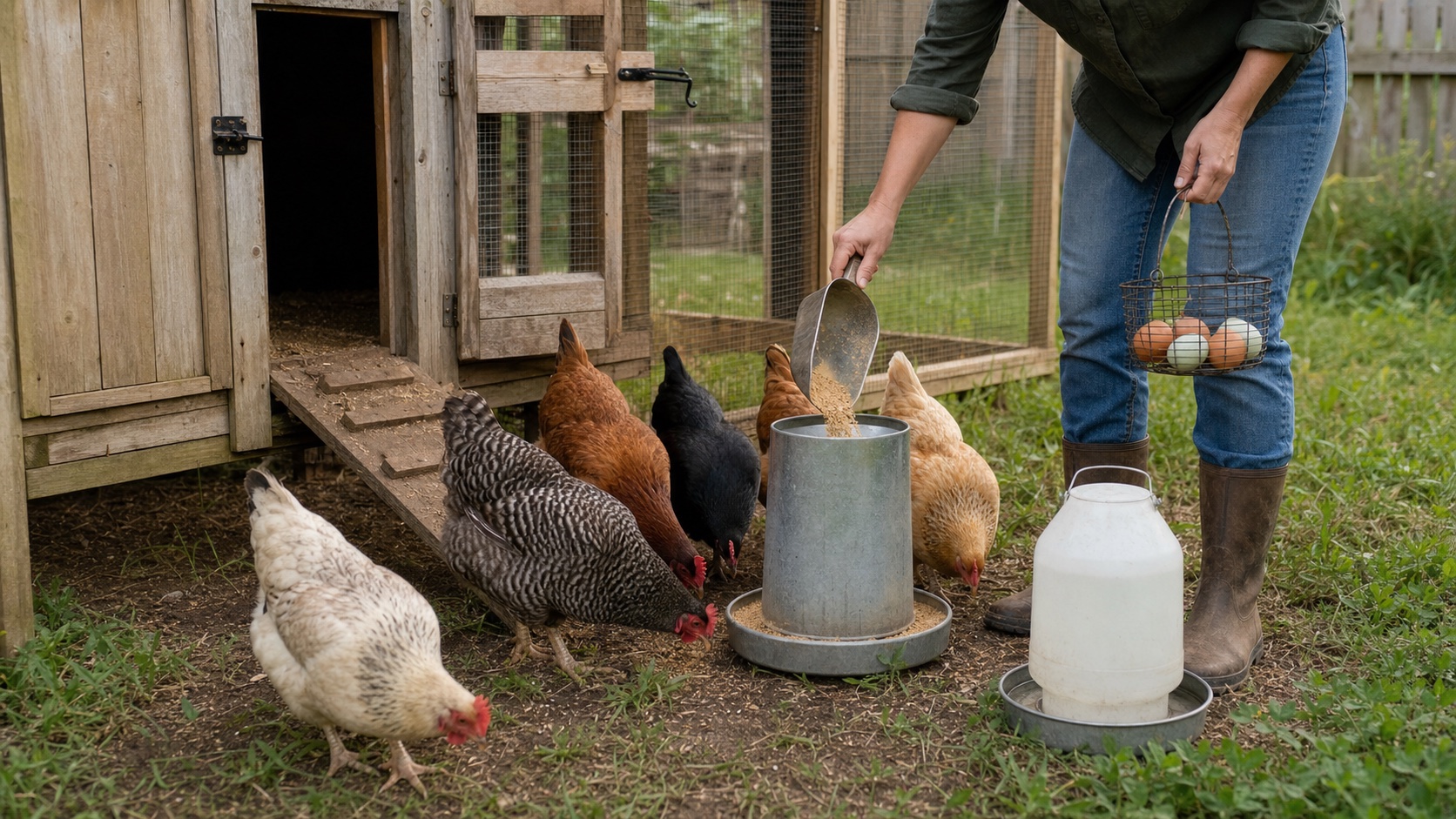
Daily Chicken Care Routine for Busy Families
A realistic morning and evening chicken-care routine built around fresh water, feed, eggs, observation, a secure coop, and the few checks busy families should not skip.
Chickens
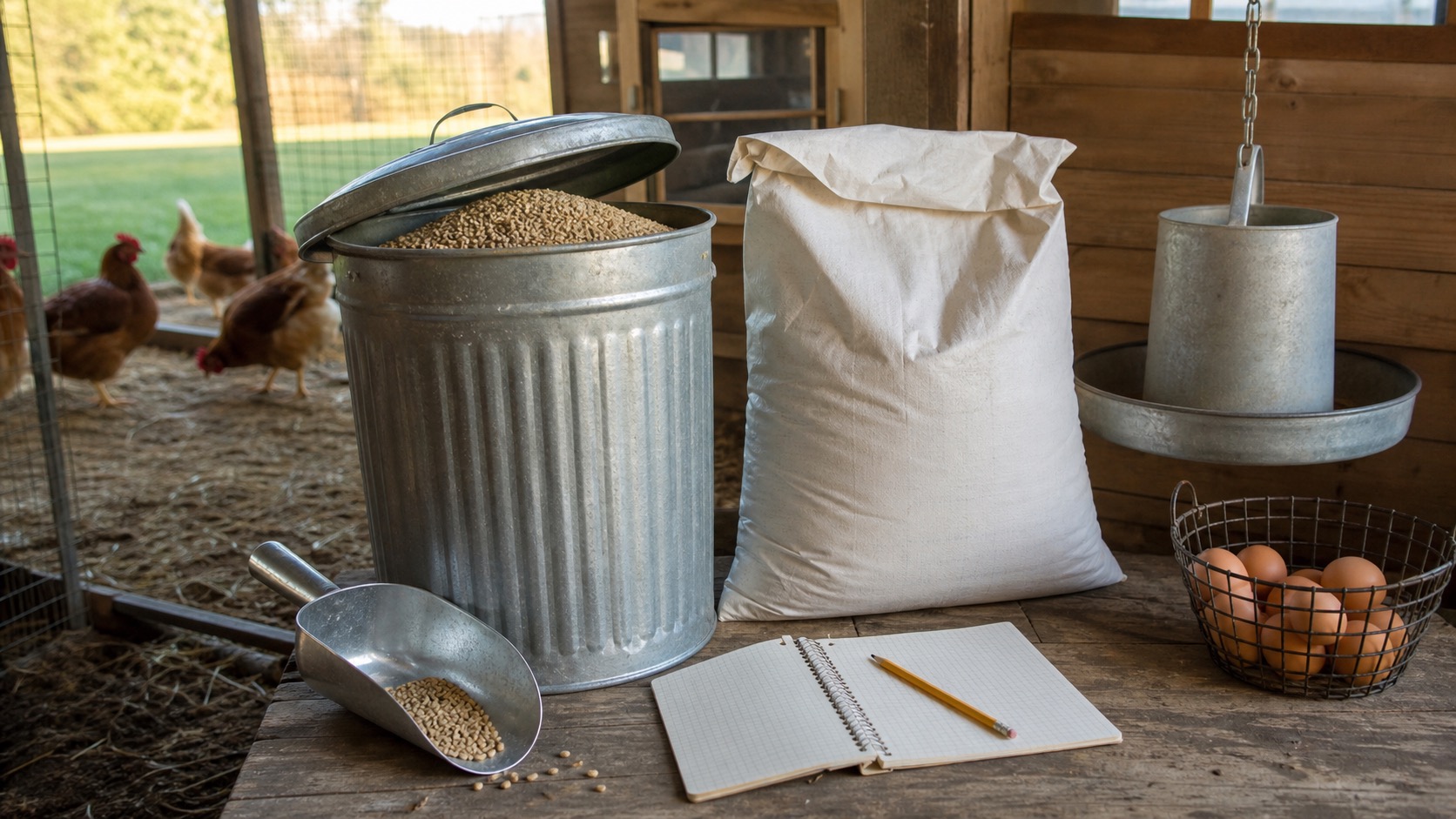
Chicken Feed Costs for Beginners: Monthly Numbers That Actually Matter
A practical guide to monthly chicken feed costs for beginners, including feed math, flock size, waste, storage, and the recurring costs that make egg math more honest.
Chickens
How Many Chickens Should a Beginner Start With?
A practical, beginner-first guide to choosing a first flock size without overcommitting on coop space, feed, chores, or your actual week.
Keep it practical
Price and plan the first flock before it arrives
Get the beginner chicken checklist and use it to cover feed, water, housing, predator protection, recurring costs, and the daily routine before birds come home.
Practical notes from the work in progress. Low-noise and easy to leave.
Frequently asked questions
What does a normal chicken molt look like?
A normal adult molt often begins around the head and neck, then moves across the breast, body, wings, and tail. You may see loose feathers in the coop, uneven or ragged plumage, pale new pin feathers, and a temporary drop or stop in egg production. The hen should still be alert, able to walk normally, and interested in food and water.
How long does chicken molting last?
The visible molt commonly takes roughly two to three months, but the pace varies by bird. Mississippi State Extension notes that gradual molts can take four to six months while faster late molts may finish in two to three months. Use the bird's progress and overall condition, not one fixed calendar promise.
Do chickens stop laying eggs when they molt?
Many hens slow down or stop laying during a molt because feather replacement requires substantial energy and nutrients. Shorter fall daylight can reduce laying at the same time. Production usually resumes after the molt, although age, breed, health, season, and lighting also affect the return.
What should I feed chickens during a molt?
Keep a fresh, complete commercial ration appropriate for the birds' age and production stage as the dietary base, with constant clean water. Do not dilute that balanced ration with large amounts of scratch, corn, scraps, or treats. Ask your feed manufacturer, poultry veterinarian, or Extension office before making a major protein or feed-stage change.
Is molting painful for chickens?
New pin feathers can be tender and easily damaged, so many molting hens do not want to be picked up or stroked along the new growth. Handle only when a health check requires it, support the bird calmly, and avoid pressing or pulling developing feathers.
How can I tell molting from mites or lice?
Molting usually follows an organized replacement pattern and produces clean new pin feathers. Parasites are more likely when you find moving insects, eggs or debris attached around feather shafts, dark staining near the vent, scabs, persistent irritation, weight loss, or ragged damage without orderly regrowth. Check several birds and the coop, especially after dark for red mites.
When should feather loss be checked by a veterinarian?
Seek qualified help when feather loss comes with bleeding, open wounds, severe pecking, weakness, weight loss, diarrhea, breathing trouble, swelling, poor appetite, inability to walk, or several birds becoming sick. Sudden localized baldness without new feather growth also deserves investigation rather than an automatic molt diagnosis.
Recommendations
Useful tools and resources for this decision
These are included only where they reduce repeated friction, clarify a next step, or help you avoid buying the wrong thing first.
Compare rechargeable headlamps
Rechargeable headlamp with red-light mode
A hands-free light makes it easier to inspect roosting birds, vent feathers, perch joints, and coop cracks after dark when some mites are easier to find.
Best for: Keepers investigating whether feather damage is a normal molt or a nighttime parasite problem
Skip it if you already own a reliable flashlight or headlamp. Light helps you inspect; it does not identify a parasite or replace label-directed treatment.
Check current priceCompare editions and formats
Storey's Guide to Raising Chickens
A broad poultry reference is useful when molt, nutrition, parasites, housing, and egg production overlap instead of fitting one simple internet answer.
Best for: Beginners who want one durable flock reference beside their local Extension and veterinary contacts
A current library copy is enough if you only need the molting section. Local Extension guidance should still lead on regional disease and treatment questions.
Check current priceRead the molting guide
Mississippi State Extension molting guide
A direct explanation of molt order, replacement feathers, egg-production changes, and why individual hens molt at different speeds.
Best for: Checking whether feather replacement is following a normal adult molt pattern
View resourceReview healthy-hen guidance
University of Minnesota healthy laying-hen guide
Current backyard-flock guidance on normal behavior, individual observation, fall molt, egg production, housing, and routine care.
Best for: Comparing the molting hen with her normal eating, movement, and laying baseline
View resourceReview the disease reference
University of Minnesota poultry disease reference
Detailed signs for mites, lice, respiratory disease, and other conditions that can overlap with feather loss or reduced laying.
Best for: Investigating feather loss that does not look like an orderly molt
View resourceRead the feather-pecking guide
Mississippi State feather-pecking guide
A practical reference for separating social feather damage from normal flock behavior and understanding management factors that can make pecking worse.
Best for: Flocks with broken feathers, targeted bald areas, wounds, or birds actively pulling feathers
View resourceRecommended next reads
Read next if it helps the decision
Move into the next guide only if it clarifies the next practical step.
Chickens
Daily Chicken Care Routine for Busy Families
A realistic morning and evening chicken-care routine built around fresh water, feed, eggs, observation, a secure coop, and the few checks busy families should not skip.
Chickens
Chicken Feed Costs for Beginners: Monthly Numbers That Actually Matter
A practical guide to monthly chicken feed costs for beginners, including feed math, flock size, waste, storage, and the recurring costs that make egg math more honest.
Chickens
How Many Chickens Should a Beginner Start With?
A practical, beginner-first guide to choosing a first flock size without overcommitting on coop space, feed, chores, or your actual week.
Chicken setup support
Get the chicken setup checklist before you buy more flock gear.
Use the first-year checklist to price the flock honestly, cover the starter essentials, and delay the upgrades that can wait.
Best for: Readers trying to price a first flock honestly and avoid a scattered chicken setup.
- A pre-chick setup checklist
- A recurring-cost planning section
- A simple weekly flock-care rhythm
Chicken setup notes, beginner flock lessons, and the checklist first.
After signup, the download will unlock right here so you can save or print it.
About the author
William Mock
Founder, writer, and beginner homesteader
William writes from the beginner side of rebuilding after a layoff: homestead plans, family systems, budgets, tools, and the decisions that make a home feel less fragile.
Read why this site existsRelated Guides
Keep building context
Chickens
How Many Chickens Should a Beginner Start With?
A practical, beginner-first guide to choosing a first flock size without overcommitting on coop space, feed, chores, or your actual week.
Chickens
Daily Chicken Care Routine for Busy Families
A realistic morning and evening chicken-care routine built around fresh water, feed, eggs, observation, a secure coop, and the few checks busy families should not skip.
Chickens
Why Chickens Lay Fewer Eggs in Summer: What to Check
Summer heat can reduce a hen's feed intake, egg size, shell quality, and laying rate. Use this beginner checklist to separate a normal hot-weather dip from a flock problem that needs attention.