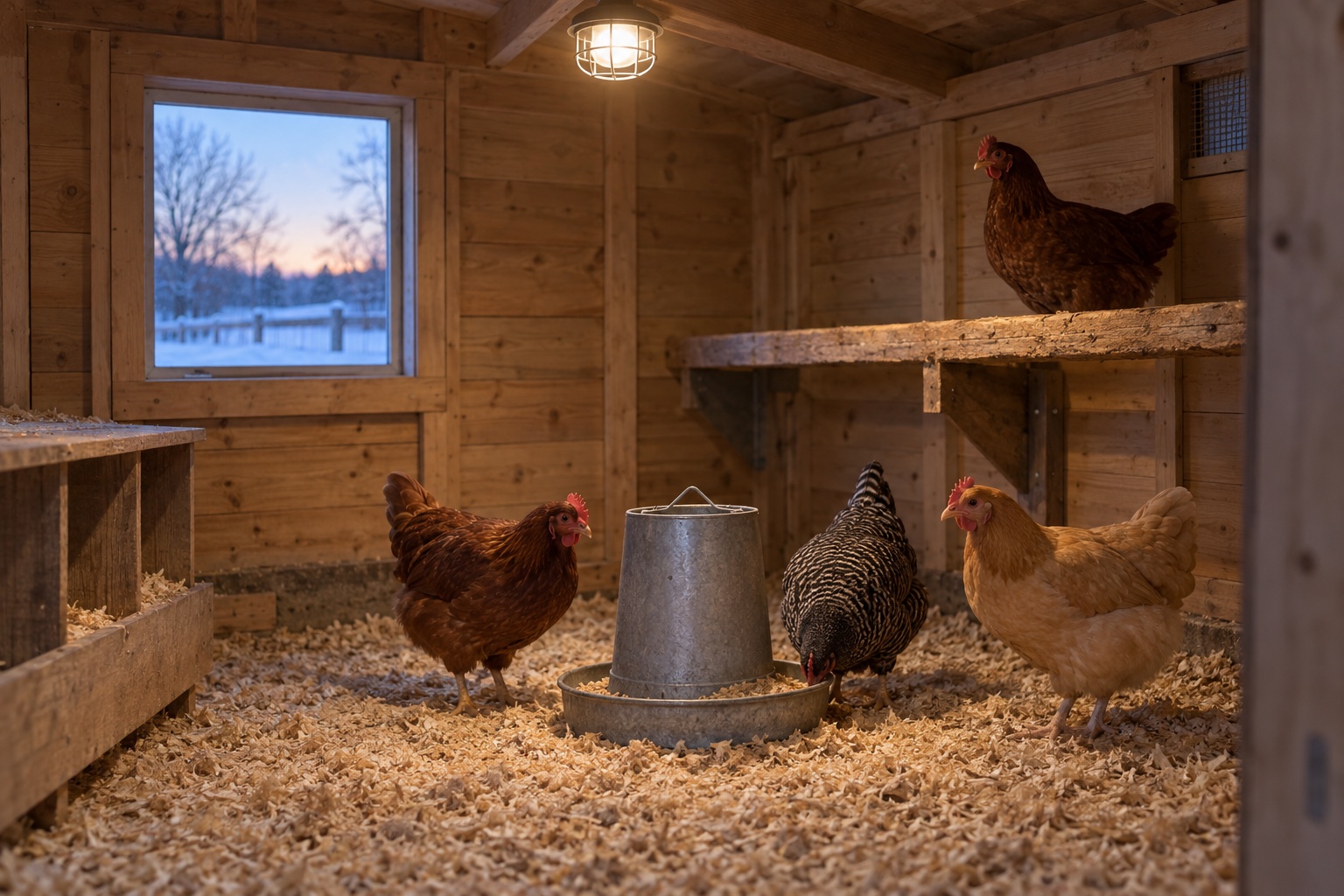
Chickens do not need supplemental light simply to stay alive or healthy through winter. Artificial light is an optional management tool for mature laying hens when steady winter egg production is one of your goals. If you use it, count natural and artificial light together, build toward roughly 14 to 16 total hours gradually, never exceed 16 hours, preserve a reliable dark period, add the extra time before sunrise, and make electrical safety nonnegotiable.
Letting a flock follow the natural shortening days is also a responsible choice. Egg production may slow sharply or stop, especially when shorter days overlap with molt, age, cold stress, or another flock change. That seasonal pause does not automatically mean the hens are unhealthy or that the coop needs another device.
The extra hour that became a second shift
In my headlamp guide for homestead chores, I wrote about an evening trap I know from trying to build this life around a full workday. The laptop closes, useful daylight is nearly gone, and part of me wants one outside job big enough to prove the dream did not sit still all day. One latch or bucket becomes another task, and the simpler life starts looking like a second shift performed in the dark.
Supplemental coop light raises a similar question from the other side. We can add hours to a hen's day and sometimes keep more eggs coming, but the extra output is not free just because the bulb is small. It creates a schedule that must stay consistent, an electrical system that must stay safe in dust and bedding, and another daily promise the household has to keep.
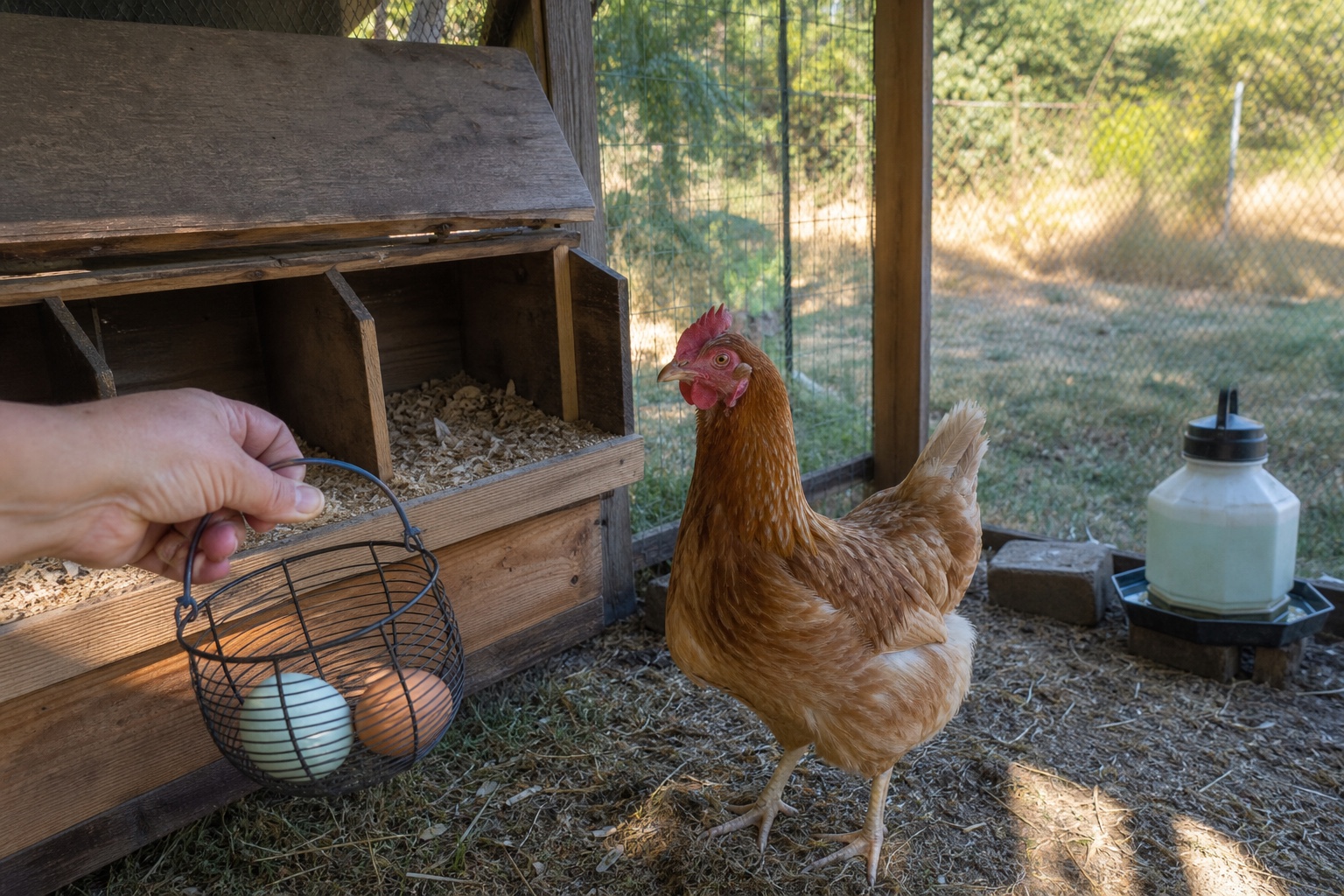
That does not make winter lighting wrong. It makes the reason important. I would rather accept a lighter basket than add a system out of impatience. If our household truly needs steadier production and the flock is ready, then light can have one measured job. The lesson I keep carrying from dark chores is that more usable hours should serve the system; they should not quietly become the system.
Why shorter days change egg production
Day length, or photoperiod, helps regulate the reproductive hormones involved in laying. Penn State Extension explains that decreasing photoperiod is a primary reason hens reduce or stop production in fall and winter. Shorter days also commonly arrive during molt, when hens redirect resources toward replacing feathers.
Light is still only one part of the answer. A young high-production hen, an older hen, a bird in active molt, and a hen recovering from stress will not respond identically. Breed, body condition, health, nutrition, water, housing, and individual biology all matter. Mississippi State Extension notes that even with supplemental light, some hens may stop in late fall and resume later. Treat light as a management signal, not an egg switch.
Rule out the problems a light cannot fix
Do not install a light because the egg count fell for a week. Start with the birds and the ordinary care system. A flock can slow because natural days shortened, but the same basket can reflect active molt, frozen or inadequate water, a feed change, too many treats, age, broodiness, hidden nests, predator pressure, illness, parasites, stress, or eggs freezing before collection.
The beginner guide to chicken molting helps separate normal feather replacement from a pattern that deserves a closer look. Do not use light, protein treats, calcium, or a shelf of supplements to push an actively molting or unwell hen back into production before identifying what is happening.
Decide whether steadier winter eggs are worth another system
A household that depends on flock eggs for regular meals may value steadier winter production. A family keeping a few hens mainly for enjoyment, learning, and seasonal food may be comfortable buying eggs or using fewer until spring. Neither choice proves more commitment to homesteading. The right question is whether the added production justifies the setup and daily responsibility in your actual household.
Build the lighting plan on paper first
Before buying or switching on anything, record local sunrise and sunset, the current natural day length, the target total, and the age and molt status of the birds. Penn State's current home-flock guidance uses 16 total hours for mature laying hens, while University of Minnesota describes about 14 hours and other Extension guidance gives a 14-to-16-hour range. That variation is a reason to use local poultry guidance, not a reason to choose the biggest number.
Use morning light and protect real darkness
Morning supplementation is practical because natural sunset gives chickens a gradual signal to return to the roost. University of Minnesota Extension warns that birds do not see well in the dark; when an evening light clicks off after sunset, a hen still on the floor may not find the roost. A dimming system can change that equation, but it adds complexity a beginner does not need to create.
Darkness is not unused production time. Penn State advises never exceeding 16 hours and emphasizes that hens need sleep. A program that runs too long or changes abruptly can contribute to stress, restlessness, flightiness, or pecking. More light is not the better version of enough light.
Aim for useful low intensity, not a bright coop
Penn State's 2025 guide recommends warm light below 3500K and notes that mature hens need only about 0.5 foot-candle, or 5 lux, for production stimulation. The point is not to make the coop look like a workshop. Excessive brightness can increase stress and pecking risk. The entire relevant area should receive usable, even light without harsh glare or a dark corner that defeats the plan.
Do not select a modern LED by copying an old incandescent wattage alone. Wattage measures power use, not the light level at bird height, and fixture height, shade, wall color, coop size, dust, and bulb output all change the result. Use the source's intensity guidance and get local help with fixture selection and placement. A phone light-meter app may offer a rough comparison, but it is not a calibrated poultry-lighting plan.
Put electrical safety ahead of egg output
A chicken coop combines combustible bedding, dust, moisture, rodents, curious birds, and routine cleaning. University of Minnesota Extension advises using extension cords only as a short-term solution and working with a professional electrician for coop electricity. A permanent winter program should not depend on a cord pinched through a door, a household lamp balanced on a shelf, or an exposed timer within pecking reach.
This is why I am not placing an affiliate timer or bulb into this guide. A product link cannot tell me whether your coop circuit, fixture location, dust load, moisture, local code, or installation is suitable. Start with the flock goal and the electrical reality. A timer is the easy part after those questions are honestly answered.
A six-hen beginner scenario
Picture six mature hens entering October. Two are visibly molting, the egg basket has dropped from several eggs to one or two on many days, sunrise is getting later, and the coop has no permanent electricity. The family would enjoy more eggs, but they can adjust meals and buy a carton when needed.
The responsible first plan is not an extension cord and clamp light. Confirm the feather loss looks like normal molt, keep complete feed and liquid water dependable, check body condition and behavior, collect eggs before freezing, and accept the lighter basket while the birds and infrastructure are not ready for a lighting program. Natural daylight is a complete decision, not a failure to optimize.
If those hens finish molt, the household decides steadier eggs truly matter, and a qualified electrician installs suitable coop power, the family can then build a gradual morning schedule with local Extension guidance. The sequence protects the birds and the house from a rushed answer to a grocery inconvenience.
What matters first, and what can wait
Keep a seven-day observation log before changing the light
One week will not diagnose every laying change, but it will stop a vague worry from making the purchase. It gives a local educator or veterinarian a clearer picture too. If the birds look well and the pattern follows shorter days, you can decide between natural winter production and a deliberate lighting program with more confidence.
Choose the winter system you can keep
Supplemental light is neither required care nor an automatic mistake. It is a production tool with biological, scheduling, and electrical consequences. Use it only when the flock is ready, the household values the likely benefit, and the setup can remain gradual, consistent, dark at night, and physically safe.
For the rest of the cold-weather plan, continue with the winter chicken-care checklist. It puts light in its proper place beside unfrozen water, feed, ventilation, bedding, roosts, bird checks, egg collection, and power-outage planning. The backyard chickens for beginners hub can then route you to the next flock decision without turning one lighter egg basket into a winter shopping list.
Frequently asked questions
Do chickens need supplemental light to stay healthy in winter?
No. Mature chickens do not need artificial light simply to survive winter. Supplemental light is a management choice used to support egg production as natural days shorten. Dry shelter, ventilation, liquid water, complete feed, predator security, and flock observation come first.
How many hours of light do laying hens need in winter?
Extension recommendations commonly use a total day length of about 14 to 16 hours for mature laying hens, counting both natural and artificial light. Do not exceed 16 hours, and preserve a predictable dark period for rest. A local poultry educator can help adapt the program to your flock, latitude, and housing.
Should a chicken-coop light come on in the morning or evening?
Morning supplementation is usually the cleaner beginner approach. The timer adds hours before sunrise, then natural sunset allows birds to settle and find the roost normally. A light that switches off abruptly after sunset can leave chickens away from the roost in darkness.
Can I start supplemental light while my chickens are molting?
Do not treat light as a shortcut around an active molt. Molting hens are replacing feathers and often pause laying. First confirm that feather loss is a normal molt and that birds are eating, drinking, and otherwise well. Allowing a natural molt does not harm the flock; ask local Extension or a poultry veterinarian when to begin a gradual lighting program for your specific birds.
Will supplemental light guarantee eggs all winter?
No. Light affects reproductive signaling, but production also varies with age, breed, molt, health, nutrition, water access, stress, weather, and individual biology. A timer cannot correct frozen water, inadequate feed, illness, parasites, or a hen that is actively molting.
Recommendations
Useful tools and resources for this decision
These are included only where they reduce repeated friction, clarify a next step, or help you avoid buying the wrong thing first.
Read the lighting guide
Penn State Extension artificial-lighting guide
Current poultry guidance covering photoperiod, gradual schedule changes, morning lighting, warm bulb color, low intensity, darkness, and coop electrical safety.
Best for: Building a mature-hen lighting plan instead of improvising with a bulb and timer
View resourceReview winter chicken care
University of Minnesota Extension cold-weather chicken guide
Winter flock guidance on morning supplemental light, timer adjustment, water, manure, ventilation, roosts, egg collection, frostbite, and electrical safety.
Best for: Keeping lighting inside the whole winter-care system
View resourceLearn why hens stop laying
Mississippi State Extension winter laying overview
A plain-language explanation of how declining day length affects reproduction and why a consistent lighting program matters for mature laying hens.
Best for: Understanding the biological reason winter egg production falls
View resourceRecommended next reads
Read next if it helps the decision
Move into the next guide only if it clarifies the next practical step.
Chickens
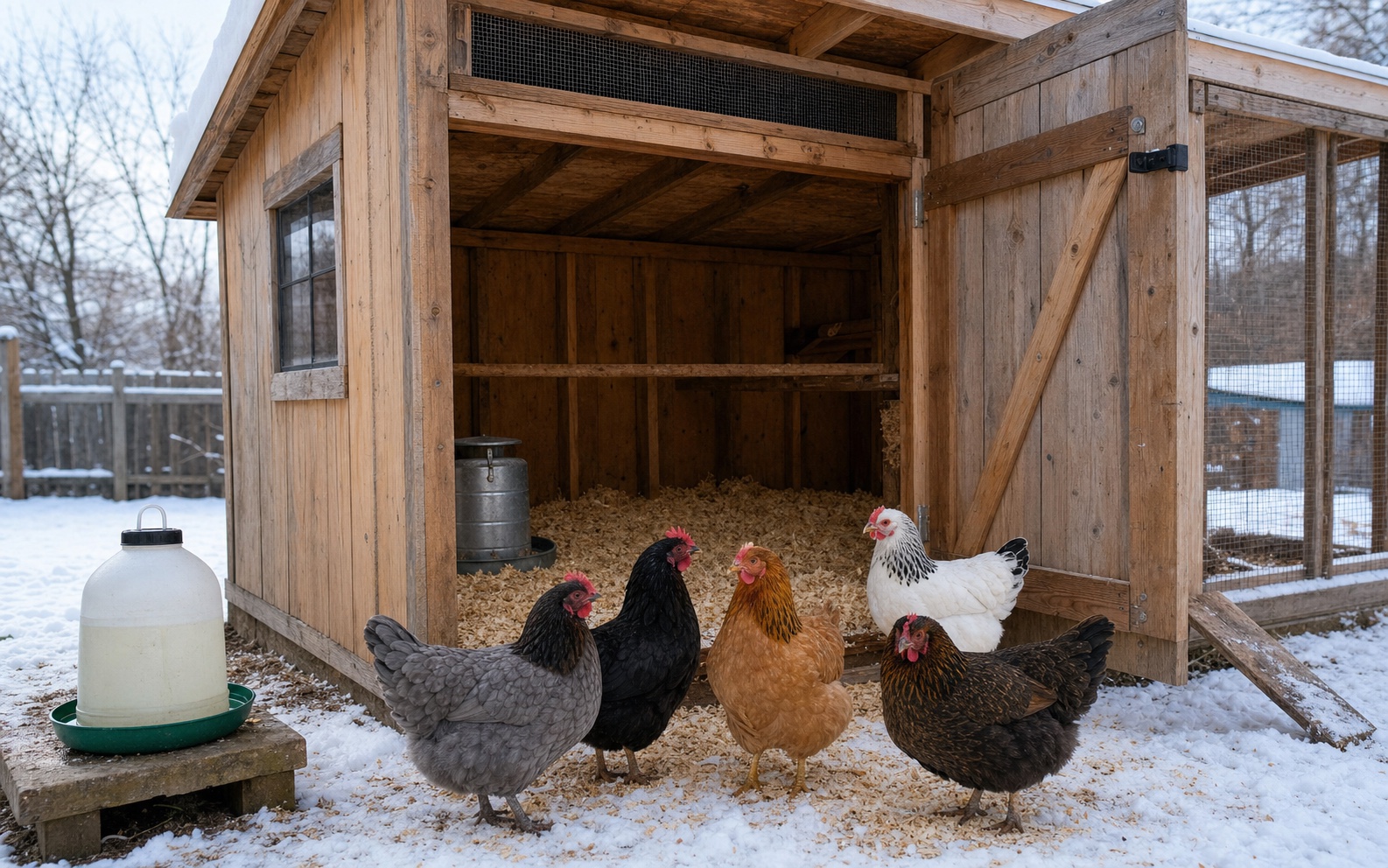
Winter Chicken Care for Beginners: Prepare Before the First Freeze
A practical first-winter checklist for unfrozen water, dry bedding, useful ventilation, safe power, flock checks, feed, frostbite risk, and cold-weather routines.
Chickens
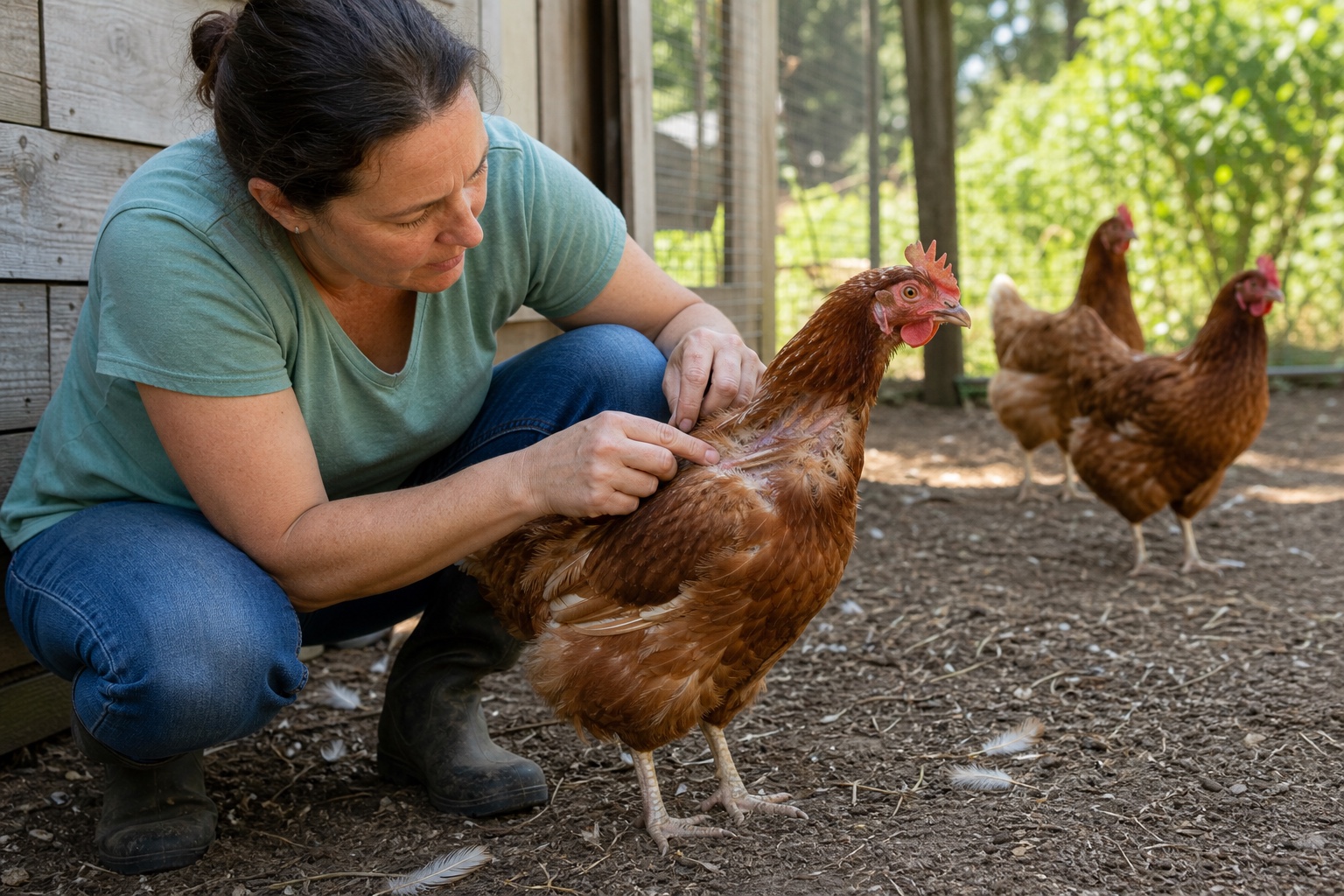
Chicken Molting for Beginners: What Is Normal and What to Check
Normal chicken molting replaces old feathers in a recognizable pattern and often pauses egg laying. Learn what to check before assuming every bare patch is harmless.
Chickens
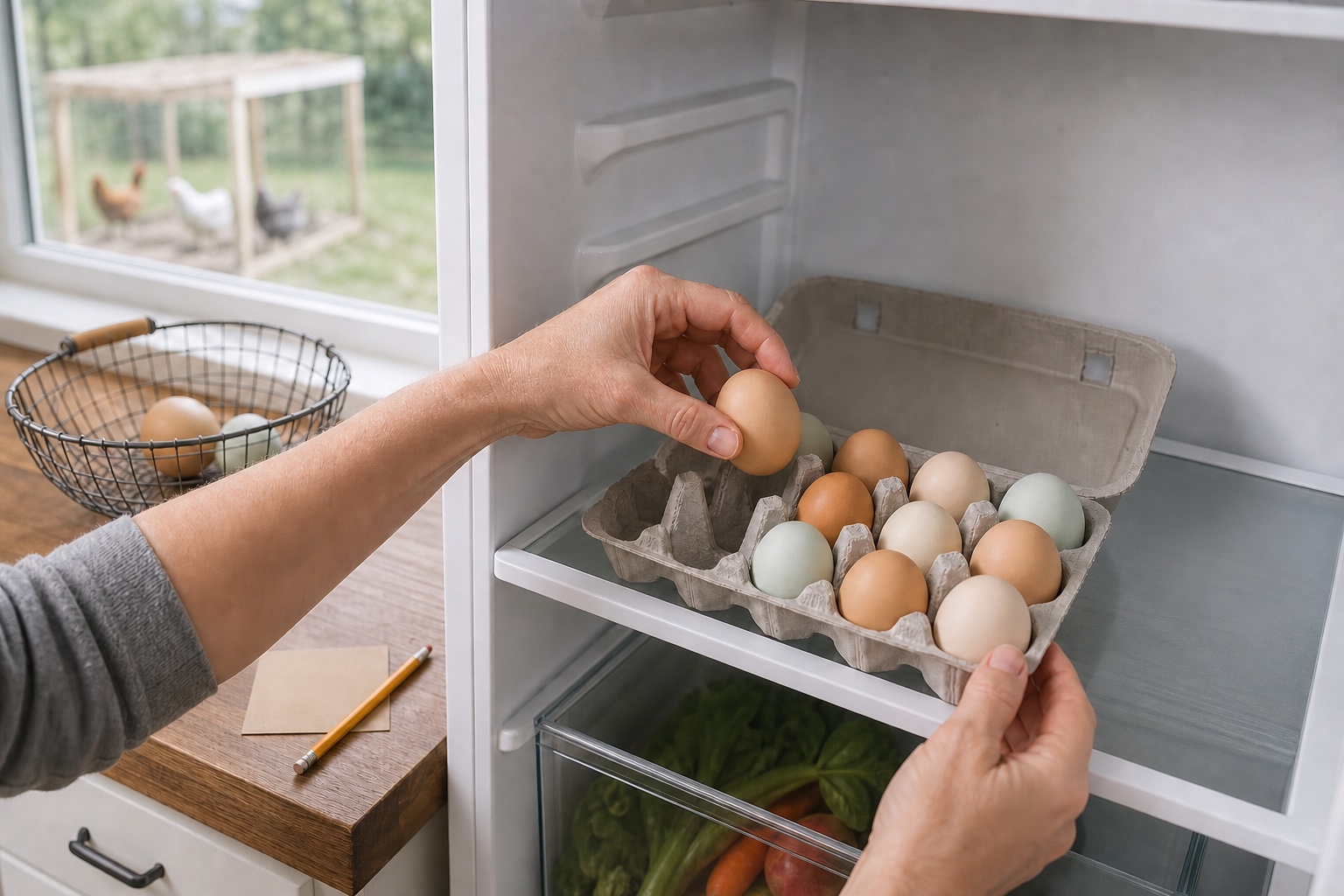
How to Store Fresh Eggs From Backyard Chickens Safely
A safe fresh-egg routine starts before the refrigerator: collect often, keep nests clean, reject cracked shells, dry-clean light soil, date the carton, and refrigerate promptly.
Chicken setup support
Get the chicken setup checklist before you buy more flock gear.
Use the first-year checklist to price the flock honestly, cover the starter essentials, and delay the upgrades that can wait.
Best for: Readers trying to price a first flock honestly and avoid a scattered chicken setup.
- A pre-chick setup checklist
- A recurring-cost planning section
- A simple weekly flock-care rhythm
Chicken setup notes, beginner flock lessons, and the checklist first.
After signup, the download will unlock right here so you can save or print it.
About the author
William Mock
Founder, writer, and beginner homesteader
William writes from the beginner side of rebuilding after a layoff: homestead plans, family systems, budgets, tools, and the decisions that make a home feel less fragile.
Read why this site existsRelated Guides
Keep building context
Chickens
Winter Chicken Care for Beginners: Prepare Before the First Freeze
A practical first-winter checklist for unfrozen water, dry bedding, useful ventilation, safe power, flock checks, feed, frostbite risk, and cold-weather routines.
Chickens
Chicken Molting for Beginners: What Is Normal and What to Check
Normal chicken molting replaces old feathers in a recognizable pattern and often pauses egg laying. Learn what to check before assuming every bare patch is harmless.
Chickens
Why Chickens Lay Fewer Eggs in Summer: What to Check
Summer heat can reduce a hen's feed intake, egg size, shell quality, and laying rate. Use this beginner checklist to separate a normal hot-weather dip from a flock problem that needs attention.