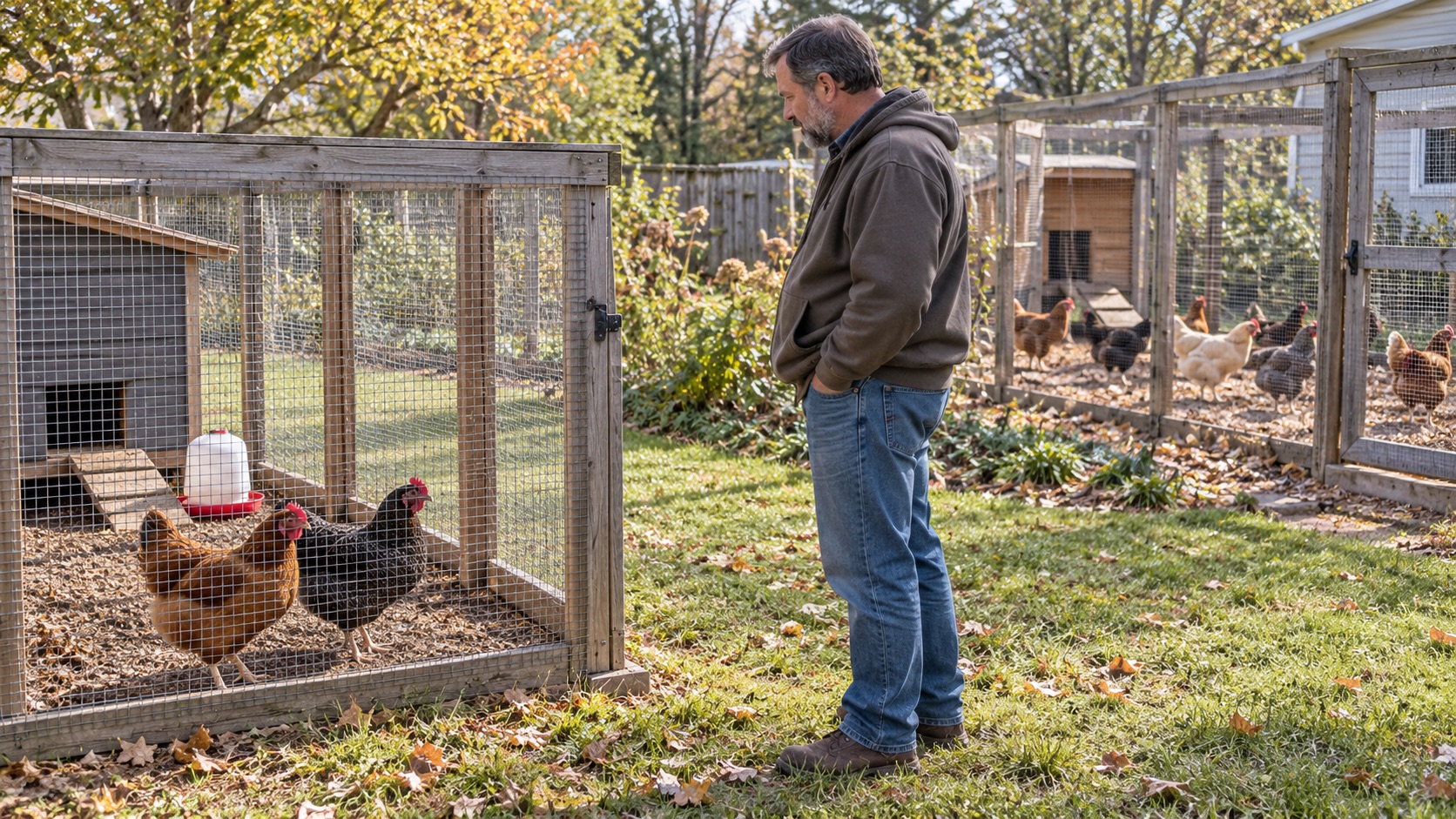
Introduce new chickens to an existing flock in two separate stages: quarantine newcomers for at least 30 days, then let healthy birds see one another through a secure barrier before supervised contact. Do not put new birds straight into the coop, even when they came from a trusted source. Separation reduces disease risk; a gradual introduction gives the flock time to adjust its pecking order.
Quarantine and flock introduction are different jobs
People often use the word introduction for the entire process, but it helps to separate the health step from the social step. Quarantine is physical isolation intended to reduce the chance of bringing disease or parasites into the established flock. A fence between two groups in the same run is useful later for gradual contact, but it is not a substitute for quarantine.
USDA APHIS recommends keeping new birds separate from the flock for 30 days. Penn State Extension describes three to four weeks of isolation, and Minnesota Extension also advises at least 30 days. For a small backyard flock, a clear 30-day minimum is easy to remember. If the birds become sick, the calendar does not make them safe to mix; get advice before moving them.
My useful lesson came from watching the flock, not integrating one
The first time I really watched our chickens spread through a yard, I had a tidy picture in my head of where they would go. The birds immediately voted for their own routes. One spot mattered because it had shade; another mattered because the ground and cover felt right. The poultry netting had to be set correctly, and a young tree was trying to become useful shade at the same time.
That was not an integration story, and I have not personally managed a quarantine program. It did teach me to watch what birds actually do before deciding what the setup needs. In an introduction, that means noting who can reach the feeder, who gets cornered, and whether every bird can leave a tense moment. A flock has a pecking order; it does not need a committee meeting about it, but the keeper does need to pay attention.
I wrote about that yard lesson in the guide to letting chickens choose safe outdoor access. It applies here in a different way: make the environment safe, then observe the actual birds instead of assuming the plan worked because the gate closed.
Before you bring new chickens home
Make the separation plan first. If the only available option is a crate in the established coop, wait until you can arrange appropriate separate housing or talk with a poultry veterinarian about a safer plan. Birds sharing air, dust, droppings, people, or equipment can share more than a view. A wire divider inside one building may be useful after quarantine for gradual social contact, but it does not create a reliable biosecurity boundary by itself.
Keep new birds separate for at least 30 days
Start the quarantine clock when the birds arrive in your care. Keep them in separate housing for at least 30 days, with no direct contact with the established flock and as much separation as your property and local veterinary advice allow. Quarantine lowers risk; it cannot guarantee that a bird is disease-free. Some conditions are not obvious at first, which is why observation and source selection both matter.
The USDA APHIS biosecurity basics explain how shoes, clothing, equipment, wildlife, and visitors can move disease. Penn State Extension also recommends dedicated clothing and shoes, cleaning equipment, and caring for birds in a consistent order. Keep the routine simple enough that every person helping with chores can follow it.
After quarantine, start with a secure barrier
If the birds are healthy and the quarantine period is complete, move to visual contact. Penn State Extension recommends splitting the pen with a wire wall for at least a week. Each group should have its own feed and water, enough room to move away from the barrier, and a secure place to rest. Check that birds cannot reach through and injure one another, and make sure the barrier itself cannot tip or create a gap.
A see-but-don't-touch week is a starting point, not a timer that forces a successful introduction. Watch the birds at ordinary feeding and roosting times. If they are persistently lunging at the barrier, pacing, refusing food, or unable to rest, increase distance or visual cover and give them more time. Quiet curiosity is a better sign than frantic contact.
Supervise first contact and make it easy to step away
Choose a calm period when you can stay nearby. Use a roomy, familiar area with more than one route away from the group. Avoid introducing birds in a cramped coop where a newcomer can be trapped against a wall or nest box. Keep separate feed and water available, and do not make the birds compete over one doorway or one favorite perch.
Penn State Extension notes that adding or removing birds disrupts the pecking order, recommends a wire-wall period, and says to supervise introductions and intervene if birds are getting hurt. It may take a week or more for a new order to settle. That is not permission to let injury continue for a week. If birds are being harmed, separate them and reassess the space, group size, age and size match, and introduction plan.
Age, size, and flock size change the plan
A young pullet joining mature hens has a different vulnerability than adult birds of similar size. Chicks should not be put into a mature flock just because they have feathers; they need an age-appropriate transition and a protected area where adults cannot reach them. Use the separate guide to moving chicks outdoors for the brooder-to-coop step, and ask a poultry professional when age, health, or vaccination status makes the plan uncertain.
One newcomer may receive focused attention from several established birds. Adding a compatible small group can spread some of that attention, but it also means more birds, space, feed, and care. Do not buy extra chickens just to solve a social problem without checking the housing first. The guides to choosing a beginner flock size and planning usable coop and run space help you decide whether your setup can support the change.
What can wait, and what cannot
This is one of those jobs where the useful purchase may be the separate feeder and waterer you already own, cleaned and kept with the new birds. Spend money only if the existing setup cannot provide safe separation. The same goes for footwear: keep a washable pair at the poultry area if you have one. If you do not, the Muck Chore Classic Mid is one specifications-based option for repeated wet chores; fit is personal, and this is not a product I claim to have tested. A compact wire panel can help with the later see-but-don't-touch stage, but it is not a quarantine building and should not be treated as one.
A simple introduction plan to follow
If you are still planning the flock, return to the backyard chickens for beginners hub and work through bird count, space, daily care, and predator protection first. The best introduction is the one you can supervise with a setup that gives every bird a safe place to eat, drink, rest, and get away.
Sources and further reading
This guide draws on current USDA APHIS backyard biosecurity materials and poultry Extension guidance. Quarantine reduces risk but cannot diagnose or guarantee the health status of a bird. Follow state movement rules and ask a poultry veterinarian or state animal health official about illness, testing, or a flock-specific quarantine plan.
Planning the whole flock
Make sure the coop and daily routine can support the birds you want to add.
Check flock size, usable space, and the everyday care plan before committing to another bird.
Browse beginner chicken guidesFrequently asked questions
How long should new chickens be quarantined before joining a flock?
Keep new birds physically separate for at least 30 days before introducing them, following USDA APHIS backyard poultry guidance. Penn State Extension gives a three-to-four-week isolation range. If illness appears, do not end quarantine on the calendar; ask a poultry veterinarian or state animal health official what to do.
Can I quarantine new chickens in a crate inside the coop?
A crate in the same coop is not reliable quarantine. It may allow shared air, dust, droppings, equipment, and direct contact. Use separate housing with separate equipment and enough distance to reduce exposure, and follow current state or veterinary guidance for your flock.
How long should chickens see each other through a fence before mixing?
Penn State Extension recommends splitting the pen with a wire wall for at least a week so birds can get to know one another. Treat that as a starting point, supervise first contact, and allow more time if stress or aggression remains high.
Is some pecking normal when chickens are introduced?
Brief investigation and ordinary rank-setting can happen, but repeated chasing, cornering, blocked access to food or water, wounds, blood, or a bird unable to rest are reasons to separate and reassess. Supervise introductions and intervene before a bird is injured.
Can I add one chicken to an established flock?
You can, but one newcomer may face concentrated attention from several established birds. A compatible small group, adequate separate space, visual contact before mixing, and multiple routes away from conflict can make the transition easier. Never skip quarantine to avoid buying or setting up separate housing.
Recommended next reads
Read next if it helps the decision
Move into the next guide only if it clarifies the next practical step.
Chickens
Best Chicken Breeds for Beginners
A practical beginner guide to choosing chicken breeds by temperament, climate, egg goals, local rules, and daily care instead of chasing every egg color at once.
Chickens
How Many Chickens Should a Beginner Start With?
A practical, beginner-first guide to choosing a first flock size without overcommitting on coop space, feed, chores, or your actual week.

Chickens
How Much Space Do Backyard Chickens Really Need?
Plan coop and run space before choosing a flock. See practical square-foot ranges, quick math for 3, 4, or 6 hens, and what to measure.
Chicken setup support
Get the chicken setup checklist before you buy more flock gear.
Use the first-year checklist to price the flock honestly, cover the starter essentials, and delay the upgrades that can wait.
Best for: Readers trying to price a first flock honestly and avoid a scattered chicken setup.
- A pre-chick setup checklist
- A recurring-cost planning section
- A simple weekly flock-care rhythm
Chicken setup notes, beginner flock lessons, and the checklist first.
After signup, the download will unlock right here so you can save or print it.
About the author
William Mock
Founder, writer, and beginner homesteader
William writes from the beginner side of rebuilding after a layoff: homestead plans, family systems, budgets, tools, and the decisions that make a home feel less fragile.
Read why this site existsRelated Guides
Keep building context
Chickens
How Many Chickens Should a Beginner Start With?
A practical, beginner-first guide to choosing a first flock size without overcommitting on coop space, feed, chores, or your actual week.
Chickens
How Much Space Do Backyard Chickens Really Need?
Plan coop and run space before choosing a flock. See practical square-foot ranges, quick math for 3, 4, or 6 hens, and what to measure.
Chickens
Daily Chicken Care Routine for Busy Families
A realistic morning and evening chicken-care routine built around fresh water, feed, eggs, observation, a secure coop, and the few checks busy families should not skip.