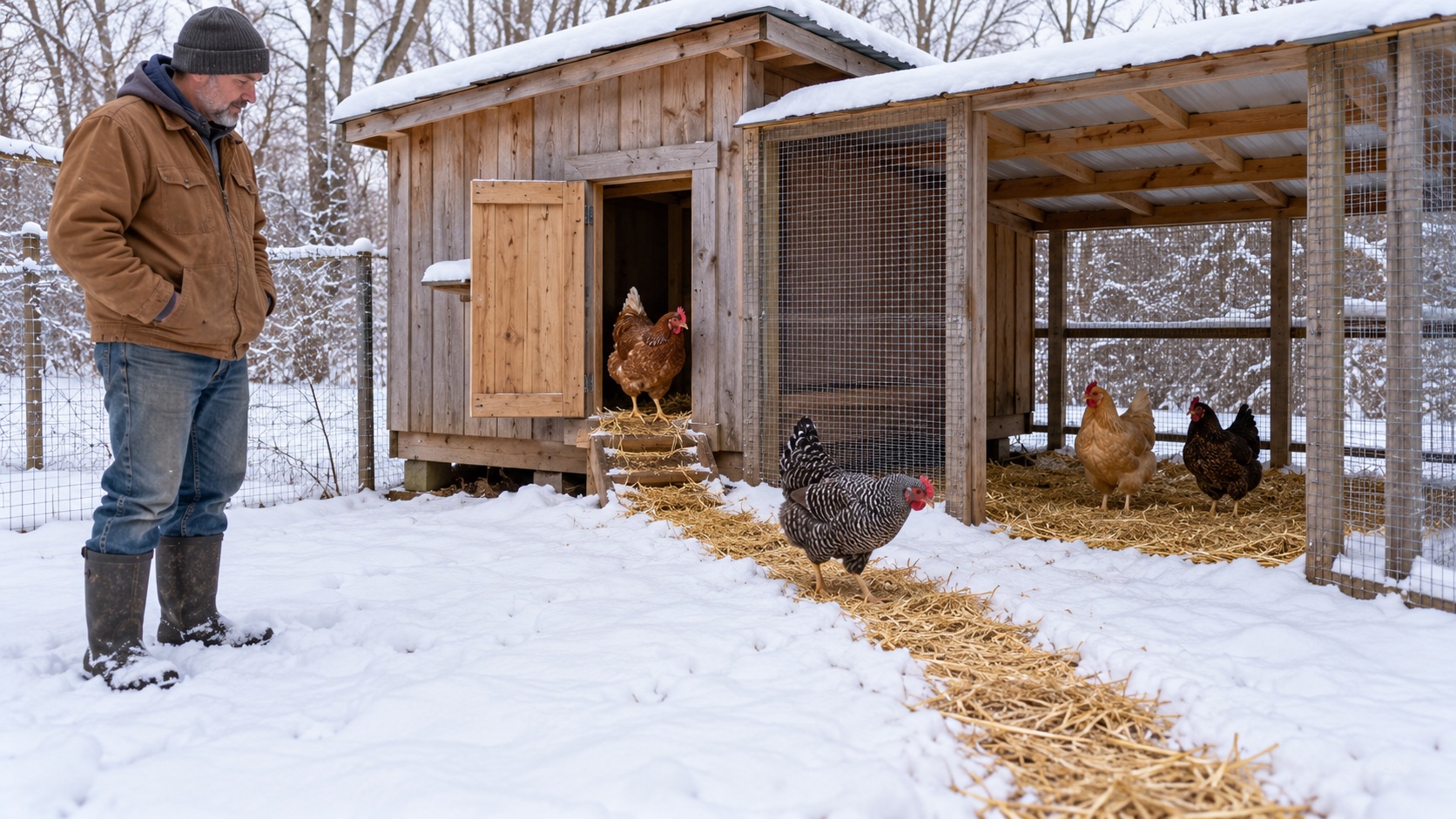
Healthy, fully feathered adult chickens can usually be offered access to a secure run when there is light snow, provided they can choose to return to a dry, draft-protected coop. Do not treat snow as the only decision. Check wind, wetness, ice, depth, footing, shelter, liquid water, bird condition, and the flock's actual behavior. Clear a path or add clean, dry footing when needed, open the route, and let the chickens vote with their feet.
The yard taught me to watch the birds before defending the plan
The first time I really watched our chickens spread through a yard, the useful part was how little respect they showed for the tidy version I had pictured. The young tree was trying to become shade. The poultry netting had to sit correctly. The grass was already negotiating its future. And the birds kept choosing the place that made sense to them, not the place that looked best in my head.
I wrote about that lesson in the guide to setting up a beginner chicken yard. It carries into winter. A flock may pause at a white doorway, follow one confident hen onto a straw path, or decide that today is an indoor meeting. The keeper's job is to make the available choices safe and then observe, not to deliver a motivational speech about fresh air. Chickens are famously unmoved by quarterly goals.
I also want to be precise about the limit of that story: I have not compared several flocks across measured snow depths, wind speeds, breeds, and health conditions. This guide combines the observation habit our birds taught me with current University Extension guidance. That is a more honest foundation than pretending one photograph, one winter, or one confident hen settles the question for everyone.
Snow is a footing and exposure question, not just a temperature question
A calm 28-degree morning with shallow dry snow, a covered run, and a clear path is a different problem from a 28-degree afternoon with freezing rain, direct wind, glazed ice, and wet feathers. A temperature number cannot describe footing, precipitation, wind exposure, or whether a timid bird can reach shelter. This is why a universal 'below this temperature, never open the door' rule is less useful than a short site-and-bird inspection.
Current University of Illinois Extension guidance says to remove snow from a run or scatter straw to protect chickens' feet when birds go outside. University of Minnesota Extension notes that chickens tend to avoid snow and suggests laying a little hay in the run to encourage them to go outside and forage. University of New Hampshire Extension recommends bedding in an enclosed run and emphasizes protection from precipitation and wind.
Use this seven-point check before opening the coop
Make a dry path, not a wet bedding trap
A little clean straw can make an unfamiliar white surface usable. It gives the flock visual contrast, traction, and a drier route to a covered area. Think narrow route first: coop threshold to shelter, shelter to water, and water back to the coop. You do not need to carpet the entire run like the chickens have requested winter valet parking.
Straw is temporary footing, not drainage infrastructure. A thick layer over standing water can hide the problem and become a wet, contaminated mat. If roof runoff lands in the run, the gate area turns to ice, or the ground stays saturated, return to the broader guide on preparing a chicken run for winter. Fix runoff, traffic pressure, cover, and drainage instead of continuously adding material to a failing surface.
Let the flock choose, then watch the chicken who did not
Some chickens step onto a prepared path quickly. Others study snow as if the yard floor has been deleted. That variation is useful. Offer safe access, but keep feed, water, and shelter arranged so staying inside does not mean losing basic care. Do not use treats to lure birds farther than they would otherwise go during questionable weather.
The flock average can also hide the bird who needs help. A confident hen scratching under cover does not prove that the molting bird at the back, the bantam at the doorway, or the lower-ranking hen beside the feeder is comfortable. Watch individuals eat, drink, walk, settle, and return. University of Minnesota Extension identifies huddling, holding a foot against the breast, and feather puffing as possible cold-stress signs. Those behaviors need context, but they deserve a closer look.
Give vulnerable birds a separate winter plan
Breed, size, feather condition, age, body condition, health, acclimation, comb and wattle size, and flock rank all affect cold-weather risk. Feather-footed breeds can also collect ice and snow on foot feathers, according to University of Wisconsin Extension guidance. The question is not whether chickens as a species can walk through snow. It is whether this bird should use this run in these conditions today.
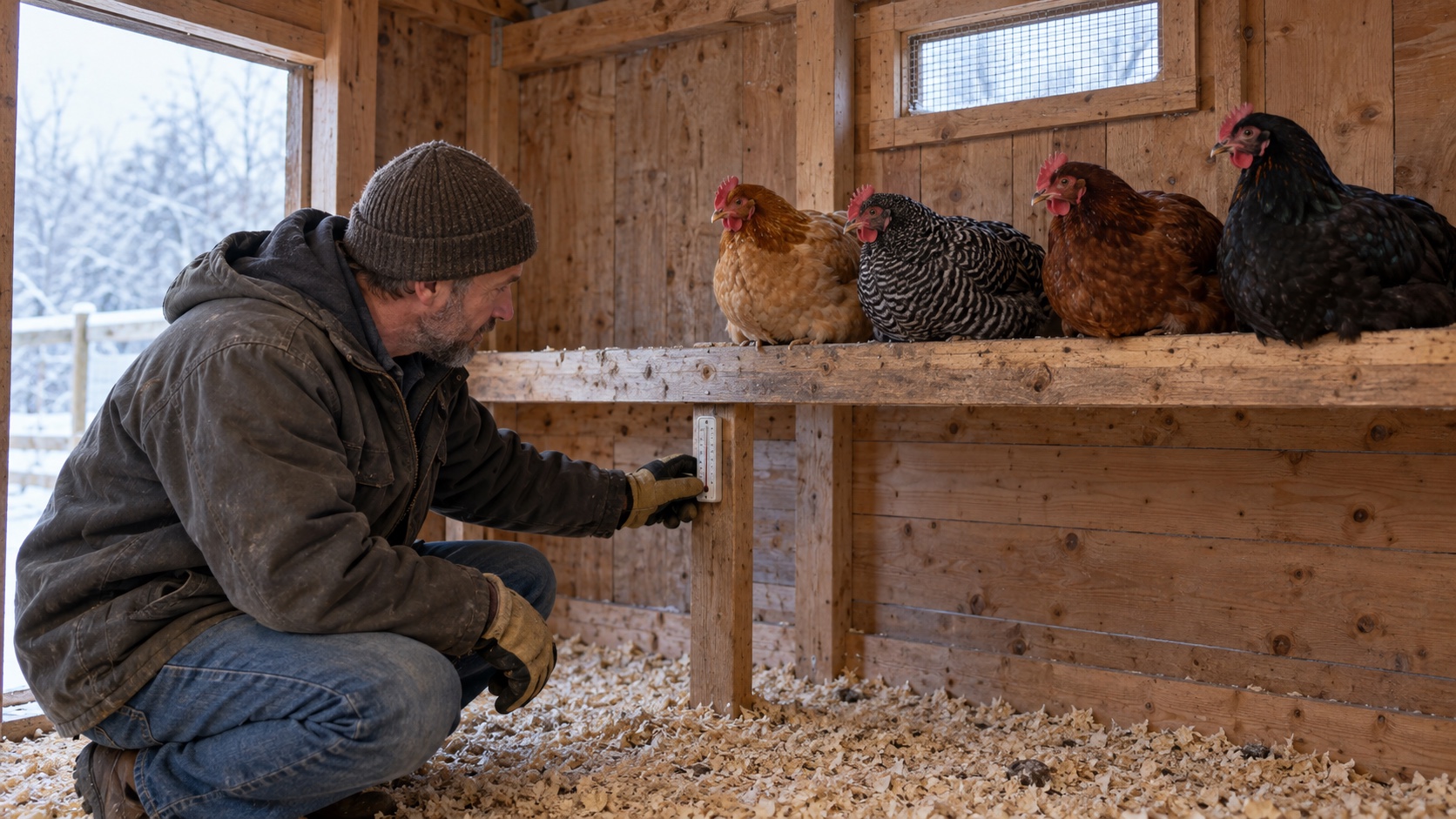
If cold tolerance itself is the unresolved question, use the separate guide on whether chickens need supplemental heat. That page explains why current Extension recommendations differ and how to consider measured coop temperature, breed, condition, moisture, electrical safety, and outage planning without turning one threshold into a national rule.
Keep food, liquid water, grit, and shelter available
Outdoor access does not replace the winter basics. Chickens need complete feed and fresh liquid water, and snow is not a dependable drinking-water plan. Minnesota Extension notes that feed intake may rise during cold weather and recommends free-choice poultry grit in winter because snow cover and limited outdoor access reduce opportunities to find suitable small stones. Treats remain treats; they should not displace balanced ration.
Place food and water where every bird can reach them without standing in direct wind or creating wet bedding. If freezing water is the weak link, compare a complete unit, compatible heated base, and manual bowl swaps in the winter chicken-water decision guide. Safe power and a backup routine matter more than the word heated on a box.
A realistic first-snow morning
Imagine six healthy adult hens after two inches of overnight snow. The wind is light, precipitation has stopped, and the covered run is dry. You walk the route and find one glazed patch beneath the gate where yesterday's runoff froze. You cover the patch with coarse traction material for yourself, clear the threshold, lay a narrow dry-straw route to the covered section, and confirm that water is liquid and feed is accessible.
When the pop door opens, two hens use the path, one stands at the threshold, and three stay under cover. That is not a failed outing. The setup allowed choice without making basic care depend on bravery. You recheck before the weather changes, remove any wet bedding, and note the ice source for a permanent runoff fix. The useful result is not six birds posing in snow. It is six birds with safe options and one less surprise tomorrow.
Keep the flock protected when conditions outrun the setup
Do not improvise structural repairs beneath a loaded roof or climb onto a snowy coop. Keep people out of slip and falling-snow zones, and use qualified help when the structure, wiring, or drainage problem is beyond ordinary ground-level maintenance. The caretaker has to remain upright for the chicken plan to work.
What matters first and what can wait
The simple rule I would use tomorrow morning
I would not decide from the weather app or the calendar alone. I would walk the route, make one dry path to one protected destination, confirm food and liquid water, open the coop, and watch the birds. If the footing, weather, structure, or an individual bird made the choice questionable, I would protect the flock and try again under better conditions.
That is less dramatic than declaring that chickens either love snow or must never touch it. It is also more useful. Build the safe choice, let the flock show you what it will use, and keep your attention on the hen whose feet are giving a different answer. Then use the complete winter chicken-care checklist to make sure the rest of the cold-weather system is ready too.
Frequently asked questions
Can chickens go outside when there is snow on the ground?
Many healthy, fully feathered adult chickens can be offered access to a secure run during light snow if they can return to a dry, draft-protected coop. Clear snow or provide clean, dry footing such as straw where appropriate, protect the run from direct wind and precipitation, and watch each bird. Do not force chickens outside, and keep vulnerable birds in a safer setup based on local Extension or veterinary guidance.
Do chickens like walking on snow?
Some chickens will cross shallow snow, while others stop at the doorway or use only a cleared path. Snow is unfamiliar, cold, reflective footing, so reluctance is not unusual. Let behavior inform the plan instead of carrying or chasing birds onto snow. A dry path and a covered destination can make outdoor access easier.
Should I put straw over snow in the chicken run?
University Extension guidance recommends removing snow or scattering straw to protect chickens' feet, and other Extension guidance supports bedding in an enclosed winter run. Use clean, dry material in a thin, manageable layer, keep it from becoming wet or moldy, and remove contaminated material. Straw is temporary footing, not a repair for drainage, roof runoff, or standing water.
When should chickens stay inside during winter weather?
Keep or bring chickens into protected shelter when the run has dangerous ice, deep or drifting snow, strong direct wind, freezing rain, wet footing, poor visibility, predator or structural damage, or no dependable food and liquid water. Also make a separate plan for bantams, birds in molt, underweight or ill birds, injured birds, and any chicken showing cold stress or abnormal behavior.
How can I tell whether a chicken is too cold outside?
Repeatedly lifting a foot, persistent huddling or feather puffing, unusual inactivity, refusal to move, reduced eating or drinking, isolation, or changes to comb, wattle, or foot tissue deserve attention. These signs can have several causes. Move the bird to an appropriate protected setting, inspect the whole care system, and contact a poultry-aware veterinarian for suspected cold injury, illness, or abnormal behavior.
Recommendations
Useful tools and resources for this decision
These are included only where they reduce repeated friction, clarify a next step, or help you avoid buying the wrong thing first.
Read the Minnesota guide
University of Minnesota Extension cold-weather chicken guide
Current guidance on winter housing, cold stress, feed, grit, water, snow avoidance, and using hay in the run to encourage activity.
Best for: Checking bird behavior and the whole winter-care system
View resourceRead the Illinois guide
University of Illinois Extension winter chicken guide
Practical winter flock guidance that specifically recommends removing snow from the run or scattering straw to protect chickens' feet.
Best for: Planning safer footing when chickens use a snowy run
View resourceRead the New Hampshire guide
University of New Hampshire Extension winter chicken guide
Cold-climate guidance on weather protection, run bedding, unfrozen water, ventilation, roosts, and signs that birds may be struggling with cold.
Best for: Reviewing shelter and individual-bird risk before opening the run
View resourceReview the Purdue guidance
Purdue Extension backyard poultry winter guidance
Indiana-oriented poultry material covering winter airflow, outdoor access, cold tolerance, and frostbite risk from wind chill.
Best for: Adding local context for an Indiana or Midwestern flock
View resourceRecommended next reads
Read next if it helps the decision
Move into the next guide only if it clarifies the next practical step.
Chickens
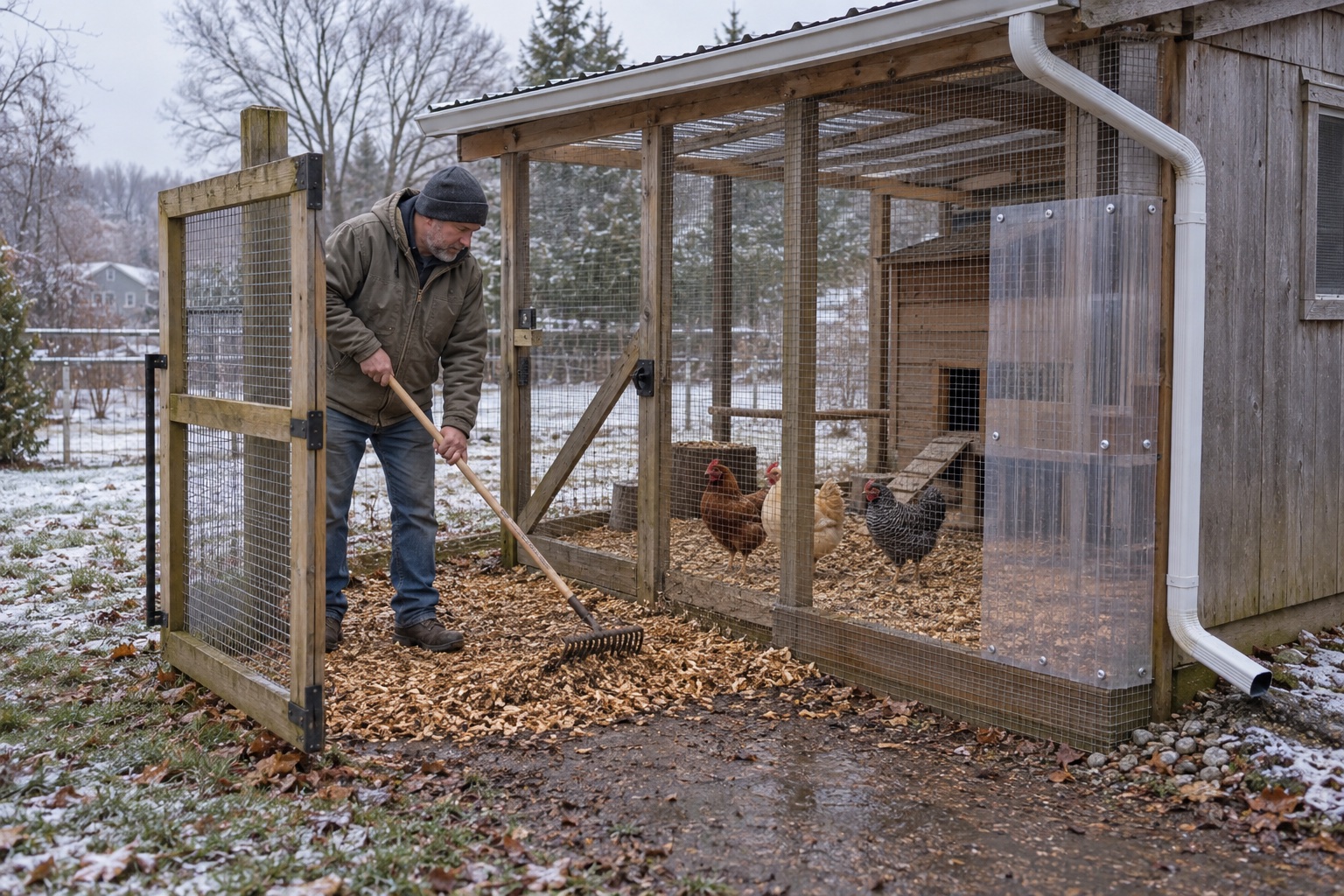
How to Prepare a Chicken Run for Winter
Prepare a chicken run for winter by fixing drainage, protecting one dry area, blocking direct wind safely, checking the structure, and simplifying cold-weather chores.
Chickens
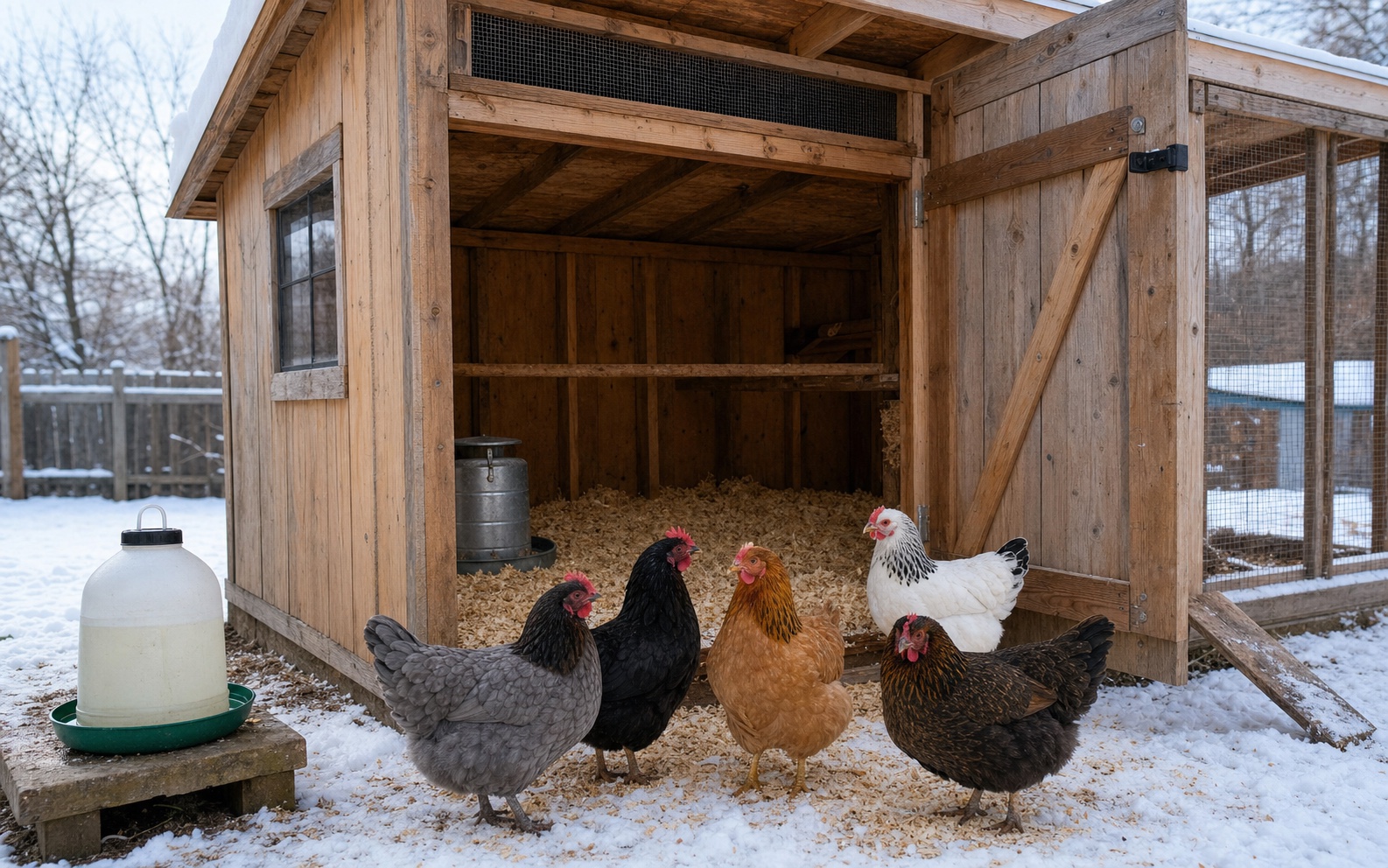
Winter Chicken Care for Beginners: Prepare Before the First Freeze
A practical first-winter checklist for unfrozen water, dry bedding, useful ventilation, safe power, flock checks, feed, frostbite risk, and cold-weather routines.
Chickens
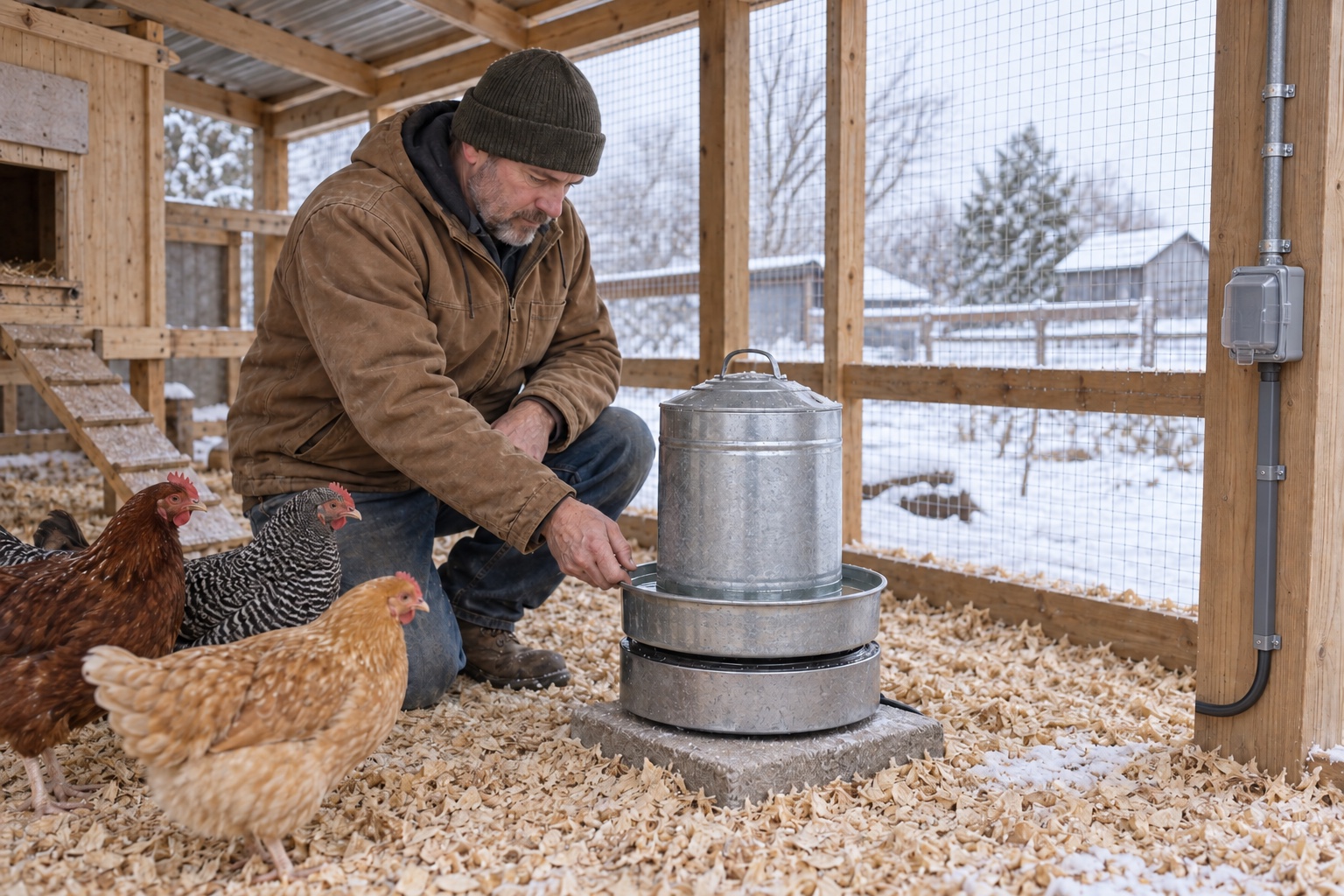
Heated Chicken Waterer vs. Heated Base: What Beginners Need for Winter
Compare a heated chicken waterer, a heated base, and manual bowl swaps so you can keep winter water available without buying the wrong setup.
Chicken setup support
Get the chicken setup checklist before you buy more flock gear.
Use the first-year checklist to price the flock honestly, cover the starter essentials, and delay the upgrades that can wait.
Best for: Readers trying to price a first flock honestly and avoid a scattered chicken setup.
- A pre-chick setup checklist
- A recurring-cost planning section
- A simple weekly flock-care rhythm
Chicken setup notes, beginner flock lessons, and the checklist first.
After signup, the download will unlock right here so you can save or print it.
About the author
William Mock
Founder, writer, and beginner homesteader
William writes from the beginner side of rebuilding after a layoff: homestead plans, family systems, budgets, tools, and the decisions that make a home feel less fragile.
Read why this site existsRelated Guides
Keep building context
Chickens
Winter Chicken Care for Beginners: Prepare Before the First Freeze
A practical first-winter checklist for unfrozen water, dry bedding, useful ventilation, safe power, flock checks, feed, frostbite risk, and cold-weather routines.
Chickens
How to Prepare a Chicken Run for Winter
Prepare a chicken run for winter by fixing drainage, protecting one dry area, blocking direct wind safely, checking the structure, and simplifying cold-weather chores.
Chickens
Do Chickens Need Heat in Winter? How to Decide Safely
Most adult chickens do not need a coop warmed for human comfort, but cold tolerance varies. Use bird condition, coop moisture, wind, measured temperature, and local guidance to make the decision safely.