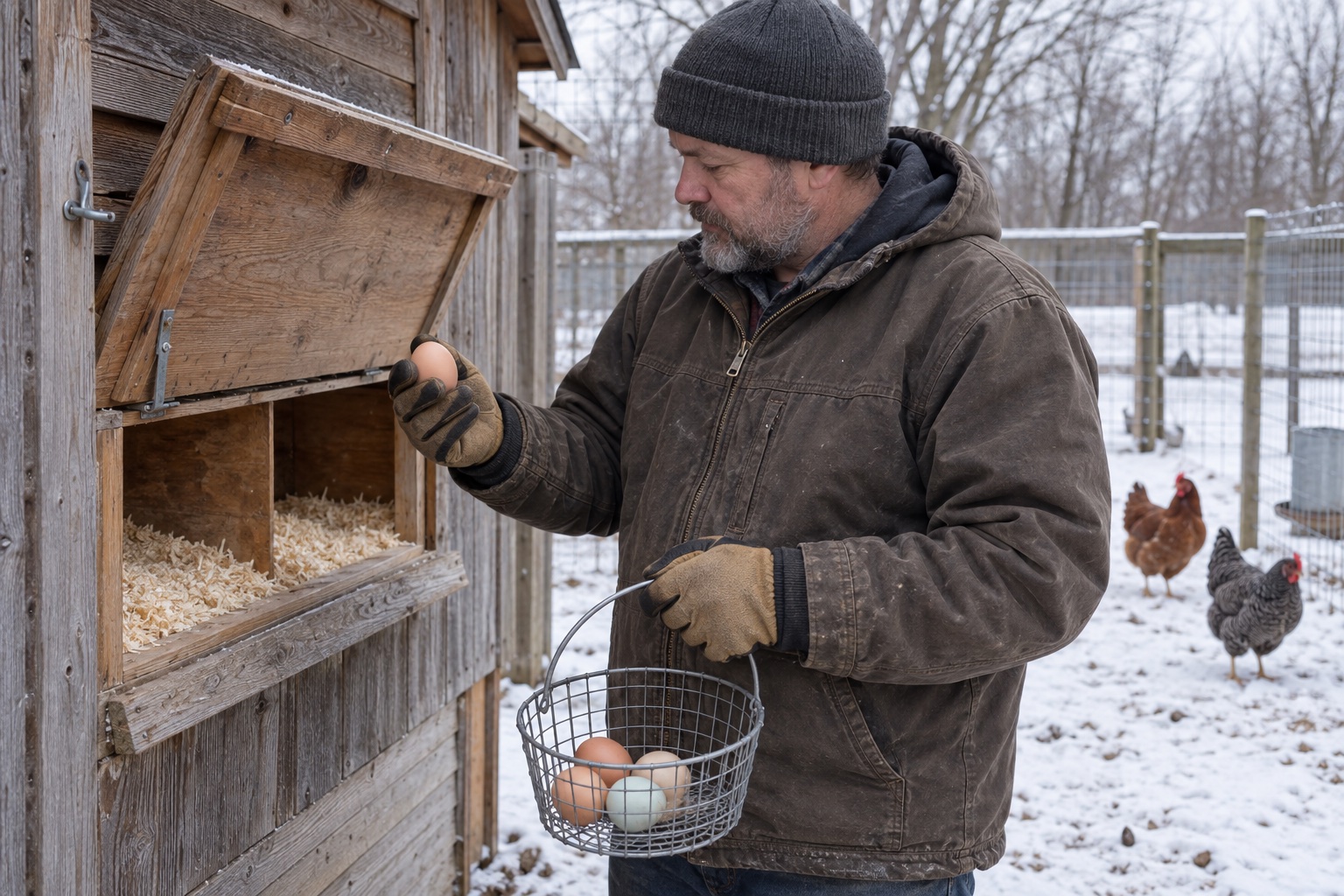
The most reliable way to keep chicken eggs from freezing is to collect them more often during freezing weather, especially from late morning through evening, while keeping nest boxes clean, dry, protected from direct weather, and supplied with enough nesting material to keep eggs off cold bare surfaces. Inspect every shell when you collect. If a frozen egg is cracked, discard it.
Do not make an improvised heater the first answer. The egg does not need a tiny spa. It needs a person to reach the nest before cold has enough time to do its work.
The first blue egg changed how I saw the work
I still remember standing outside with the first blue egg from our flock in my hand. The picture has worn concrete under it, a little grass at the edge, and the chicken setup blurred behind my fingers. Nothing about the scene looks staged. That is why I like it. One small blue egg made all the feed, water, bedding, latches, cleaning, and checking feel visible.
The excitement also made me hold that egg as if it had filed important paperwork. I wanted everybody to see it. That moment became the personal thread in my guide to blue, brown, green, and white chicken eggs. The shell color was memorable, but the lesson was bigger: the egg is the result; the routine is what makes the result usable.
Winter puts that lesson on a clock. A beautiful egg is still mostly water inside a thin shell, and it has no sentimental attachment to the photograph. If it sits long enough in a freezing nest, it can crack or change texture. I have not built this guide around a dramatic frozen-egg rescue story because I do not have one to claim. I am building it around the reason I would rather not need one: a plain schedule the family can follow before the temperature drops.
When do chicken eggs freeze in the coop?
Penn State Extension identifies 31 degrees Fahrenheit as the freezing point of a whole egg. That number is useful, but it is not a timer. An egg laid into deep dry material in a protected nest may cool differently from one touching a bare cold box in moving air. Egg size, shell condition, moisture, nest exposure, and the time since laying all change the practical window.
University of Minnesota Extension notes that a freshly laid egg starts warm and that most hens finish laying before noon. The practical implication is not that every flock follows office hours. Chickens remain firmly outside the payroll system. It means your most valuable collection may be late morning or midday, after many hens have laid but before eggs spend the coldest possible stretch sitting in the nest.
Use the forecast as a trigger, then use the nest box as evidence. If eggs are extremely cold, slushy, frozen, or cracked at a certain interval, the interval is too long for those conditions. Shorten it. A weather app can be dramatic, but the shell gives you local information.
Build a winter collection route the family can repeat
The hardest part is usually not understanding that eggs should be collected. It is making the check happen in the middle of work, school, errands, short daylight, and the rest of winter chicken care. Put egg collection beside a chore that already occurs: a water check, lunch break, school arrival, feed check, or the first trip home.
The site's daily chicken-care routine for busy families helps assign water, feed, observation, egg collection, and lockup without relying on everybody to remember everything. Shared chores work best when each person knows what done means.
Keep nest boxes dry, clean, and out of direct weather
Clean, dry nesting material gives an egg a better landing place and separates it from a bare cold surface. Replace material when it becomes wet, manure-soiled, compressed, or too sparse to hold the egg. Repair roof or wall leaks and stop precipitation from blowing directly into the box. If one nest is consistently colder or wetter than the rest, close it only if the flock still has enough suitable boxes and can use the alternatives without crowding.
Do not confuse protecting the nest with sealing the coop. Winter ventilation still has to remove moisture and ammonia without sending a direct draft across roosting birds. Use the focused guide to winter coop ventilation and bird-level drafts before covering openings or changing airflow.
Do not turn the nest box into a heating experiment
A heat lamp, household heating pad, chemical hand warmer, hot-water container, loose extension cord, or improvised heated nest is not a sensible egg-protection shortcut. Nesting material is combustible, poultry housing is dusty, birds investigate equipment, and outdoor moisture complicates electricity. Protecting a few eggs does not justify creating a fire, burn, entanglement, or electrical hazard.
If the flock itself may need supplemental heat, that is a separate animal-care and electrical decision based on climate, breed, health, acclimation, housing, current Extension or veterinary guidance, suitable equipment, and professional installation where required. The broad winter chicken-care checklist explains that decision in context. Do not install heat solely to make the egg schedule more convenient.
What to do when you find a frozen egg
Inspect the shell before the egg joins any other eggs. Freezing expands the contents and can crack the shell, including hairline damage that is easy to miss. Use good light and turn the egg slowly. Do not wash it, warm it in hot water, or leave it on the counter while you decide.
After an intact egg is handled according to the frozen-egg guidance, continue with the full fresh backyard egg storage routine for shell inspection, refrigeration, dating, cleaning, and cooking. That guide also explains why a float test is not a safety test.
A realistic winter plan for a working family
Imagine a six-hen flock that usually lays from midmorning into early afternoon. Both adults leave before daylight. One person can step out at lunch on two weekdays, a teenager gets home at 3:30 on the others, and everyone is home on weekends. The forecast calls for three days that never rise above 25 degrees.
The useful plan is not to hope evening comes fast. The lunch visitor collects near noon on the days available. The teenager collects immediately after getting home on the other weekdays. An adult checks again during evening water and lockup. On the weekend, two or three checks reveal whether any hen consistently lays after the first collection. If the 3:30 eggs are already freezing, the family needs an earlier backup for the coldest days. The flock, inconveniently, will not move laying to a shared calendar invite.
The only tool worth considering is the one that helps the trip happen
A clean bowl, small bucket, or basket you already own is enough. If winter gloves, multiple eggs, water checks, and latches keep turning the return trip into a juggling act, the Little Giant large wire egg basket is one specific simple option. I have not personally tested that basket through years of winter chores; the recommendation is based on its open, washable shape and fit for this one task.
Skip it if your current container works. The basket cannot collect eggs by itself, inspect a crack, repair wet bedding, or make the afternoon visit fit the family schedule. That places it where homestead gear belongs: behind the routine, not in front of it.
A small routine protects more eggs than a complicated fix
Cold-weather egg care is a short chain: know when the hens lay, collect before eggs sit too long, keep nests dry, inspect shells, discard cracks, and refrigerate intact eggs promptly. When an intact egg accidentally freezes, keep it frozen until you can thaw it in the refrigerator and use it right away, knowing the texture may be different.
That first blue egg reminded me why the work matters. Winter adds the less romantic half of the lesson: useful results survive because ordinary people build ordinary routines around them. Start with the next freezing forecast, assign the midday check, and let the backyard chickens for beginners hub guide the next flock decision after the eggs are safely inside.
Frequently asked questions
At what temperature do chicken eggs freeze?
Penn State Extension identifies about 31 degrees Fahrenheit as the freezing point of a whole egg. That is not an exact outdoor countdown because nest temperature, airflow, egg size, shell condition, bedding, and how recently the egg was laid affect how quickly it cools. Treat forecasts near and below freezing as a reason to collect more often.
Can you eat a chicken egg that froze in the coop?
USDA says to discard an accidentally frozen egg if its shell cracked during freezing. If the shell is intact, keep the egg frozen until needed, thaw it in the refrigerator, and use it immediately after thawing. Expect quality changes, especially a thickened yolk that may not mix normally. When shell condition or handling history is uncertain, discard the egg.
How often should I collect chicken eggs in freezing weather?
Collect as soon as practical and add checks based on your flock's laying pattern and the forecast. University of Minnesota Extension notes that most chickens finish laying before noon, so a late-morning or midday collection can be especially useful, followed by another check before evening during hard freezes. Observe your own flock rather than relying on one universal clock.
Should I put a heater or heat lamp near the nest boxes?
Do not improvise heat around combustible bedding just to protect eggs. Frequent collection, dry nests, repaired weather leaks, and a workable family schedule are safer first steps. Any poultry-house electrical or heating system must be suitable for the environment, installed according to current instructions and local requirements, and evaluated with fire and outage risks in mind.
Will extra nest-box bedding stop eggs from freezing?
Clean, dry nesting material helps protect eggs from cold surfaces and drafts, but it will not keep an egg warm indefinitely. Replace wet, soiled, sparse, or broken-down bedding, stop leaks and direct weather, and collect eggs more often. Do not keep piling clean material over a wet nest or block necessary coop ventilation.
Recommendations
Useful tools and resources for this decision
These are included only where they reduce repeated friction, clarify a next step, or help you avoid buying the wrong thing first.
Optional collection tool
Little Giant large wire egg basket
A simple open wire basket for collecting and carrying eggs without turning winter egg gathering into a decorative gear project.
Best for: Small-flock keepers who regularly carry several eggs while wearing gloves or managing another chore
Check current priceFrozen egg safety source
USDA guidance for accidentally frozen shell eggs
Federal food-safety guidance explaining when to discard a frozen egg and how to thaw an intact accidentally frozen egg.
Best for: Making the keep-or-discard decision after an egg has frozen
View resourceEgg quality reference
Penn State Extension freezing and egg-quality guide
A current explanation of the whole-egg freezing point, shell cracking, yolk gelation, quality changes, and prevention priorities.
Best for: Understanding what freezing physically changes inside an egg
View resourceWinter flock reference
University of Minnesota Extension cold-weather chicken guide
Winter flock guidance covering nest-box upkeep, prompt egg collection, cracked shells, water, ventilation, and cold-weather observation.
Best for: Putting frozen-egg prevention into the broader winter care routine
View resourceRecommended next reads
Read next if it helps the decision
Move into the next guide only if it clarifies the next practical step.
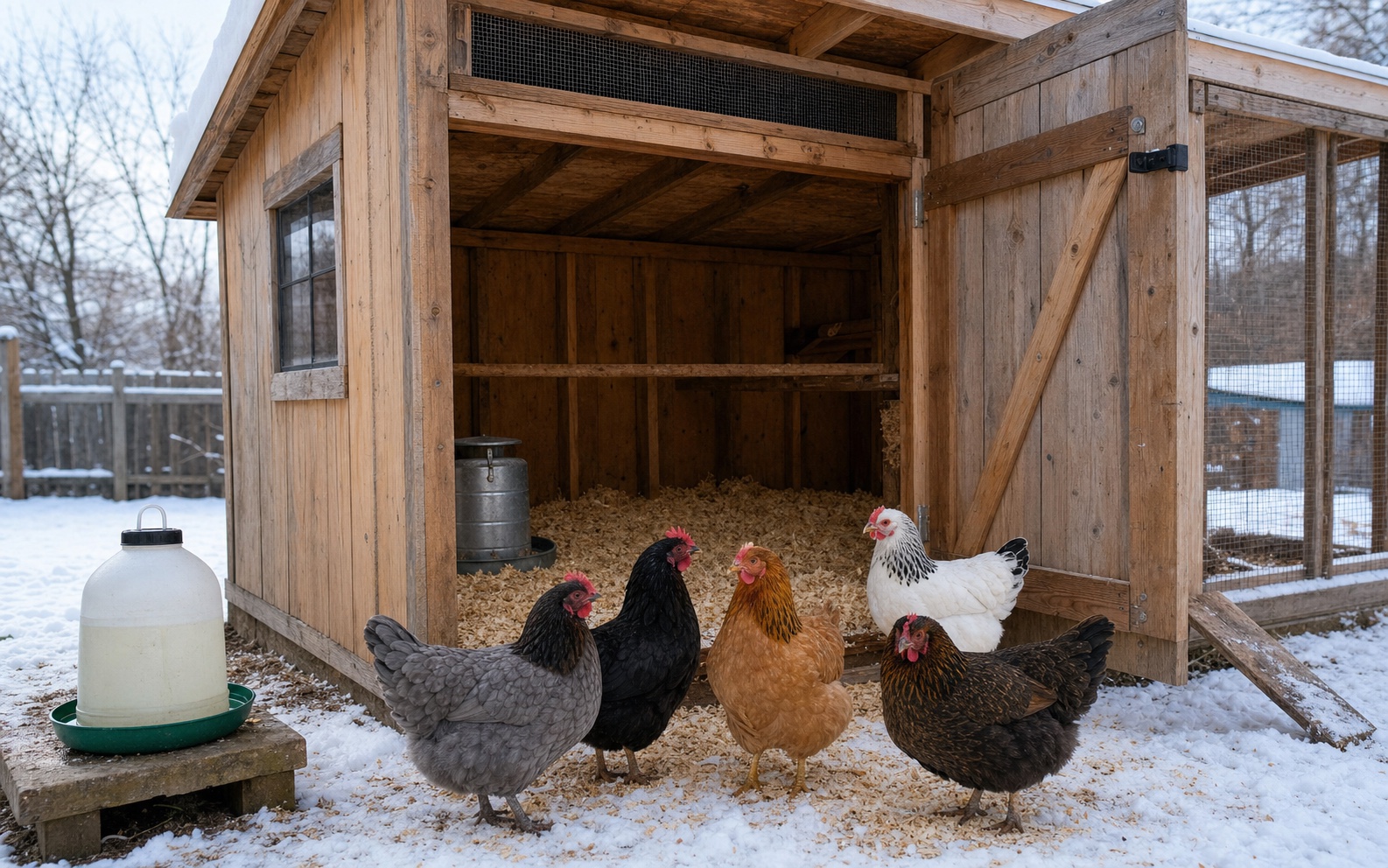
Chickens
Winter Chicken Care for Beginners: Prepare Before the First Freeze
A practical first-winter checklist for unfrozen water, dry bedding, useful ventilation, safe power, flock checks, feed, frostbite risk, and cold-weather routines.
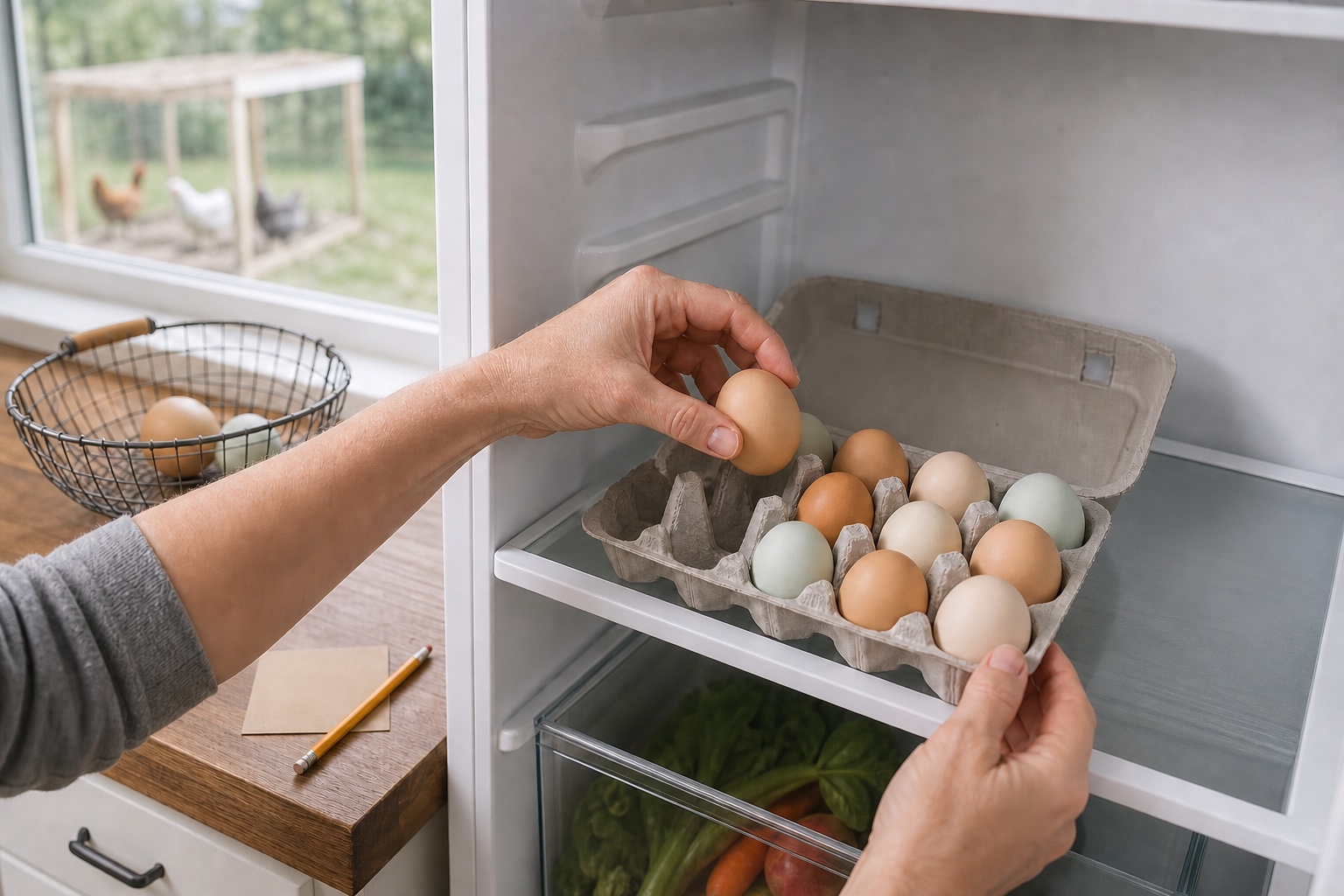
Chickens
How to Store Fresh Eggs From Backyard Chickens Safely
A safe fresh-egg routine starts before the refrigerator: collect often, keep nests clean, reject cracked shells, dry-clean light soil, date the carton, and refrigerate promptly.
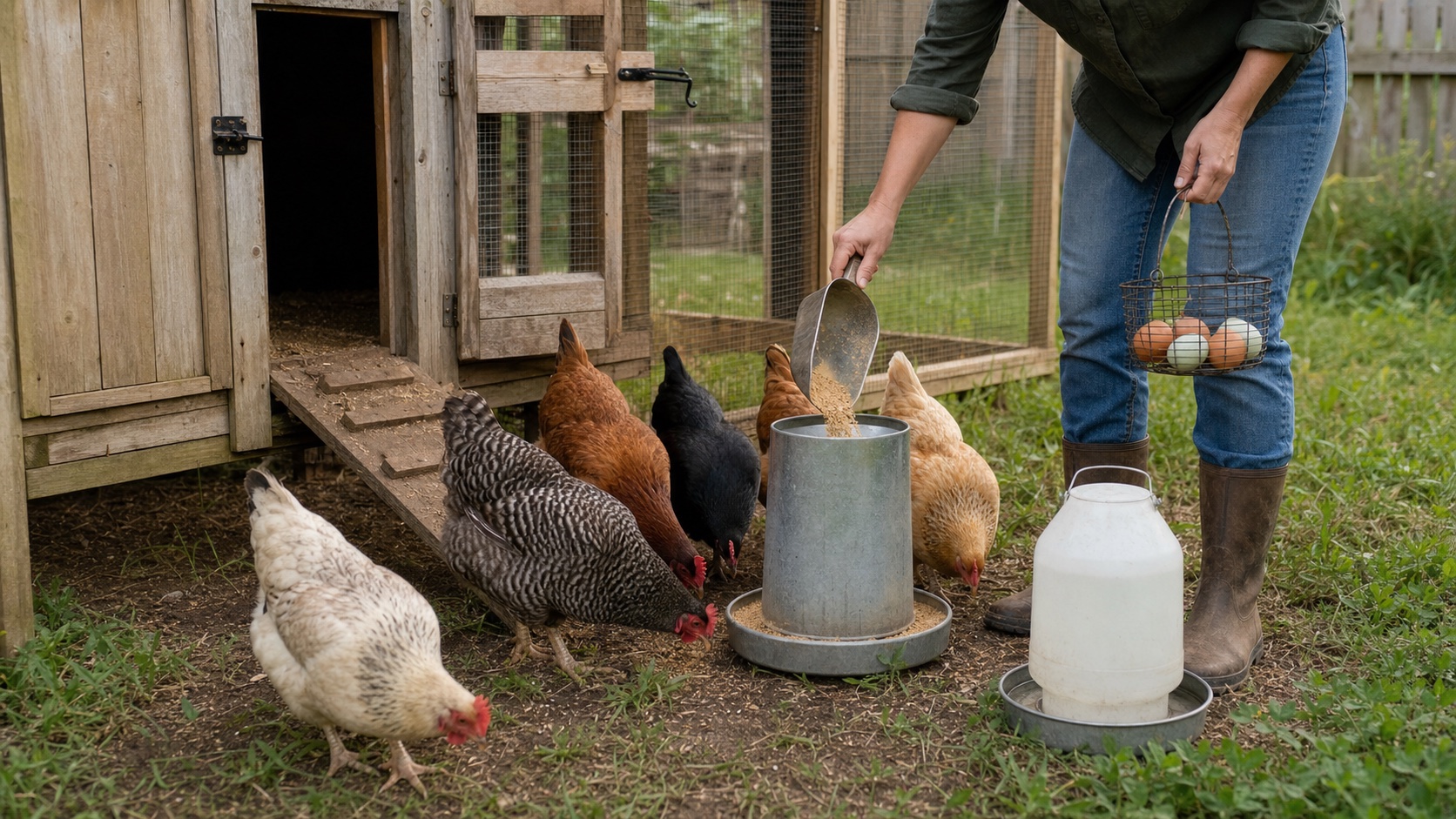
Chickens
Daily Chicken Care Routine for Busy Families
A realistic morning and evening chicken-care routine built around fresh water, feed, eggs, observation, a secure coop, and the few checks busy families should not skip.
Chicken setup support
Get the chicken setup checklist before you buy more flock gear.
Use the first-year checklist to price the flock honestly, cover the starter essentials, and delay the upgrades that can wait.
Best for: Readers trying to price a first flock honestly and avoid a scattered chicken setup.
- A pre-chick setup checklist
- A recurring-cost planning section
- A simple weekly flock-care rhythm
Chicken setup notes, beginner flock lessons, and the checklist first.
After signup, the download will unlock right here so you can save or print it.
About the author
William Mock
Founder, writer, and beginner homesteader
William writes from the beginner side of rebuilding after a layoff: homestead plans, family systems, budgets, tools, and the decisions that make a home feel less fragile.
Read why this site existsRelated Guides
Keep building context
Chickens
Winter Chicken Care for Beginners: Prepare Before the First Freeze
A practical first-winter checklist for unfrozen water, dry bedding, useful ventilation, safe power, flock checks, feed, frostbite risk, and cold-weather routines.
Chickens
How to Store Fresh Eggs From Backyard Chickens Safely
A safe fresh-egg routine starts before the refrigerator: collect often, keep nests clean, reject cracked shells, dry-clean light soil, date the carton, and refrigerate promptly.
Chickens
Daily Chicken Care Routine for Busy Families
A realistic morning and evening chicken-care routine built around fresh water, feed, eggs, observation, a secure coop, and the few checks busy families should not skip.