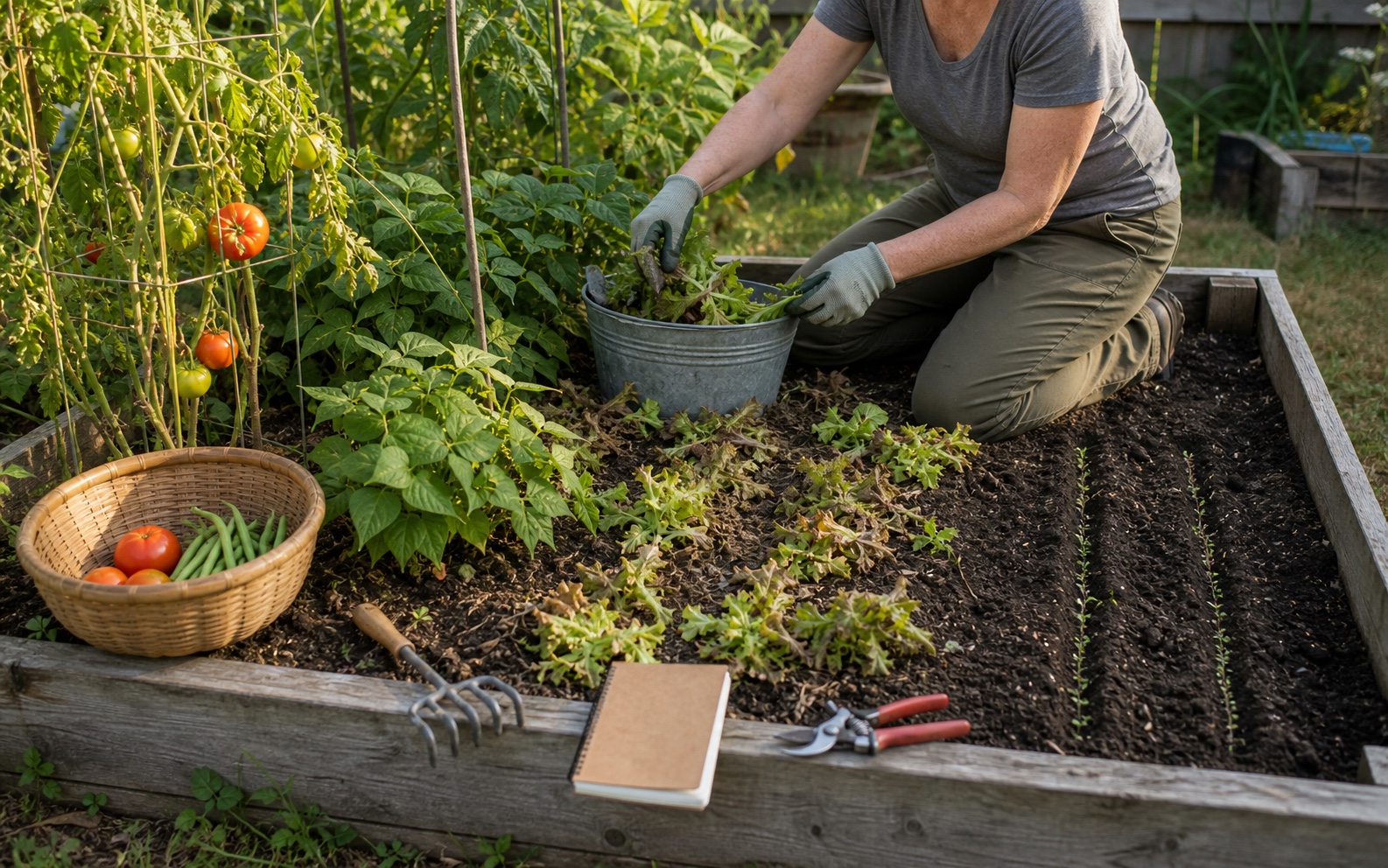
An August vegetable garden usually needs three decisions: what should keep producing, what is truly finished, and whether one small fall planting still fits. Harvest first, maintain the healthy crops that are earning their space, clear failed or completed plants, and calculate fall planting from your local first-frost date instead of a national calendar.
The goal is not to make the whole garden look new again. August is a working transition month. A good garden can hold ripe tomatoes, tired squash, open soil, fresh seedlings, weeds, and unfinished decisions at the same time.
The garden that looked half-finished and was actually telling the truth
August is the month when I can walk into the garden and see three different stories in ten feet. One tomato plant is finally doing what I hoped it would do. The beans need picking again. A tired patch of greens looks like it has been negotiating its exit for a week. Beside all of it is a bare strip that makes a packet of fall seed feel like an accusation.
My first impulse is to make the picture consistent. Either clean everything out and feel ahead, or keep everything alive and call it perseverance. Both choices are easier than looking at each section honestly. A productive plant, a finished plant, and open soil do not need the same answer just because they share one bed.
That has become the August lesson I trust: the garden does not have to be in one season at a time. The useful work is sorting. Keep what is feeding the family or still has a realistic path. Clear what is costing attention without giving anything back. Replant only when the frost window, water, and week can carry it.
Keep the first garden realistic
Build around the work an ordinary week can carry
The beginner garden plan connects bed size, crop count, watering, harvest, and family capacity before the season gets too large.
Read the beginner garden planStart with a three-lane August garden walk
Walk the garden before carrying tools, fertilizer, or seed packets into it. Put every crop or section into one temporary lane: keep producing, clear now, or decide after checking timing. This turns a visually messy bed into a shorter list of decisions.
Harvest before cleanup creates accidental waste
University of Minnesota Extension puts regular harvesting high on its August checklist. That matters because beans toughen, cucumbers hide, zucchini enlarge quickly, herbs flower, and ripe fruit can split, rot, or attract wasps when it stays outside too long.
Pick first so you do not crush useful fruit while pulling vines or lose tomorrow's dinner under a cleanup pile. Bring the harvest inside, sort it, and give it a destination. Eat now, refrigerate, preserve, share, or discard honestly. A full basket on the counter is not food security until the household has a plan for it.
When everything looks ready at once
Learn which beginner crops should come inside first
Use crop texture, size, ripeness, and how quickly quality declines to set a practical harvest order.
Use the beginner harvest guideKeep productive crops working without trying to restart June
Healthy summer crops do not need an August makeover. They need steady basics: water at the root zone when the soil needs it, mulch that still covers exposed soil without touching stems, supports that are carrying the load, and enough leaf cover to protect fruit from harsh sun.
Avoid aggressive pruning just to make mature tomato plants look orderly. Remove broken, dead, soil-dragging, or clearly diseased growth with clean tools when appropriate, but do not strip away the healthy canopy that shades fruit and powers the plant. Tie heavy branches gently rather than forcing them into a perfect shape.
Do not fertilize the whole garden because leaves look tired on a hot afternoon. Heat, dry soil, waterlogged roots, mature growth, disease, insects, and nutrient problems can produce overlapping symptoms. Check the pattern and crop guidance before buying a cure.
When heat is still the main pressure
Prepare the garden before another hot week arrives
Prioritize water reliability, mulch, harvest timing, temporary shade only where justified, and the plants most likely to struggle first.
Use the hot-week checklistClear plants that are finished, not plants that are merely imperfect
A plant can look rough and still have a useful harvest left. Another can look green while producing nothing and sheltering a growing disease problem. Decide from the whole pattern: plant health, current flowers or fruit, severity of damage, remaining weather, and whether the crop is worth the attention it still requires.
Sort residue rather than treating every plant the same. Healthy annual material may fit a managed compost system or another locally appropriate soil-building plan. Diseased material deserves more caution because some pathogens can survive on residue. Follow local Extension guidance for disposal instead of assuming a cool home compost pile will make every disease disappear.
Plant by the frost window, not by the word August
August is not one planting zone. University of Minnesota Extension notes that some roots, greens, and other cool-season vegetables can be planted in midsummer for fall harvest, but the calculation starts with average first frost, days to maturity, and cold tolerance. Purdue's Indiana calendar is one example of the local detail that a state Extension source can provide.
A radish in one climate may have plenty of time while a slower cabbage in another is already late. Fall growth also slows as daylight decreases, so the packet's maturity number should not be treated like a guarantee. Add a buffer and choose fewer crops than the calendar technically allows.
Do the timing math once
Calculate when to start a fall garden without guessing
Use first frost, days to maturity, a slower-growth buffer, and crop cold tolerance to find the last practical planting window.
Read the fall garden timing guideOpen soil does not automatically need another vegetable
If a fall crop fits, prepare only the strip it needs. If the planting window has closed or the household is already stretched, the open section can be mulched, rested, or planted with a locally appropriate cover crop. University of Minnesota Extension notes that late-summer cover crops can protect soil, retain or add nutrients, and contribute organic matter, but species and timing still depend on location.
Rest is a legitimate garden decision. Bare soil should be protected from erosion and weeds, but that protection does not have to create a new harvest obligation. A managed mulch layer may be the stronger choice when fall watering, thinning, pest checks, and harvest will not fit the family calendar.
A four-week August rhythm for a small garden
The calendar below is a workload sequence, not a planting calendar. Move the jobs around for weather, harvest, and family life. The point is to stop one giant August reset from swallowing a weekend.
What matters in August and what can wait
Where one August tool may earn its place
August cleanup can expose the weakness in a dull or uncomfortable pair of shears. A clean bypass cut is useful for live tomato stems, herb harvest, finished bean vines, and other growth that should not be torn away from neighboring plants. But soft weeds and loose dead material do not need premium pruners.
The ARS HP-VS8Z is a specific eight-inch bypass pruner with replaceable parts and a sharp cutting action. It is a better fit for repeated cleanup and medium-to-larger hands than for someone making three small cuts a month. Use and sharpen what you own first. Skip this model if your current tool cuts cleanly, your hand is smaller, or the real bottleneck is simply making time for the garden walk.
Recommendations
One optional tool and the sources behind this checklist
Optional cleanup tool
ARS HP-VS8Z bypass pruner
A sharp eight-inch bypass pruner for repeated live-stem cleanup, harvesting, and removing finished garden growth with controlled cuts.
Best for: Gardeners whose dull or uncomfortable shears make regular August cleanup harder than it needs to be
Clean, sharp bypass shears you already own are enough. This model may feel large in smaller hands, and it is unnecessary for soft stems that can be harvested safely by hand.
Check current priceAugust reference
University of Minnesota Extension August garden checklist
Seasonal guidance covering regular vegetable harvest, watering, stressed plants, and other practical August garden work.
Best for: A broad late-summer garden review from a university source
View resourceFall planting reference
University of Minnesota Extension midsummer planting guide
A crop-by-crop guide to planting vegetables in midsummer for fall harvest using first-frost dates, maturity time, and cold tolerance.
Best for: Checking whether an August planting can realistically mature
View resourceLocal calendar example
Purdue Extension Indiana vegetable planting calendar
A state-specific planting calendar showing why August crop choices should be checked against local conditions rather than copied nationally.
Best for: Indiana readers confirming local planting windows
View resourceLet August sort the season instead of judging it
A half-finished garden is not a failed garden. In August, it may be the most accurate picture of the work: some crops paying off, some lessons ending, and a little space asking whether the family really wants another round.
Harvest what is ready. Keep the healthy plants that still have a job. Clear one finished section without turning cleanup into punishment. Plant only what the frost window and household can carry. That is enough for one month, and it leaves the garden more useful than a frantic reset ever could.
Keep learning
Use the gardening hub for the next seasonal decision
Connect August work to fall timing, watering, harvest, tomato care, preservation, weather recovery, and next season's smaller plan.
Browse beginner gardening guidesRecommended next reads
Your next late-summer garden decisions
These guides help with fall timing, harvest order, and the heat management that still matters while August changes the bed.
Gardening
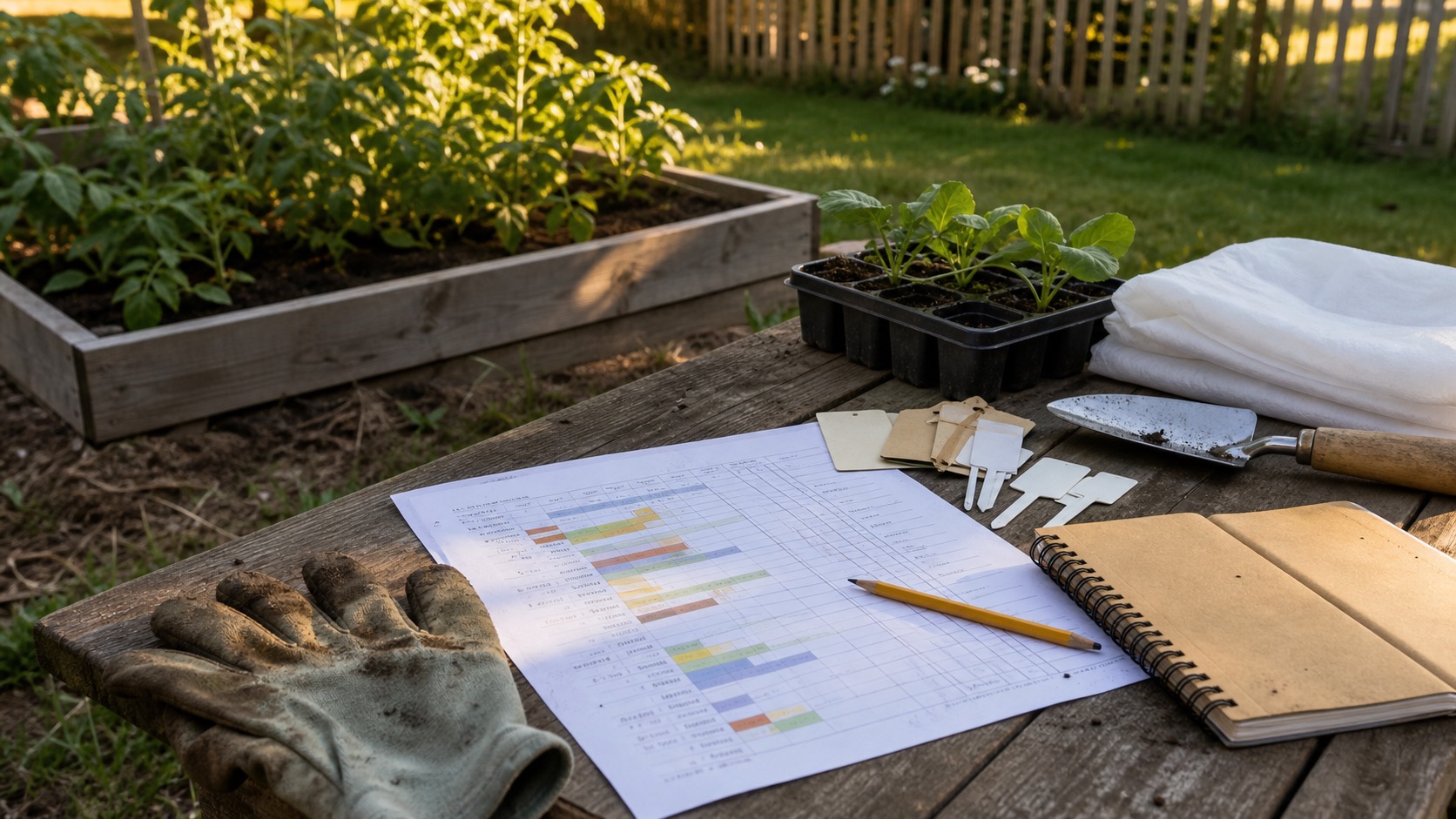
When to Start a Fall Garden for Beginners
A practical fall garden timing guide for beginners: how to work backward from first frost, choose cool-season crops, and plant a small second season without guessing.
Gardening
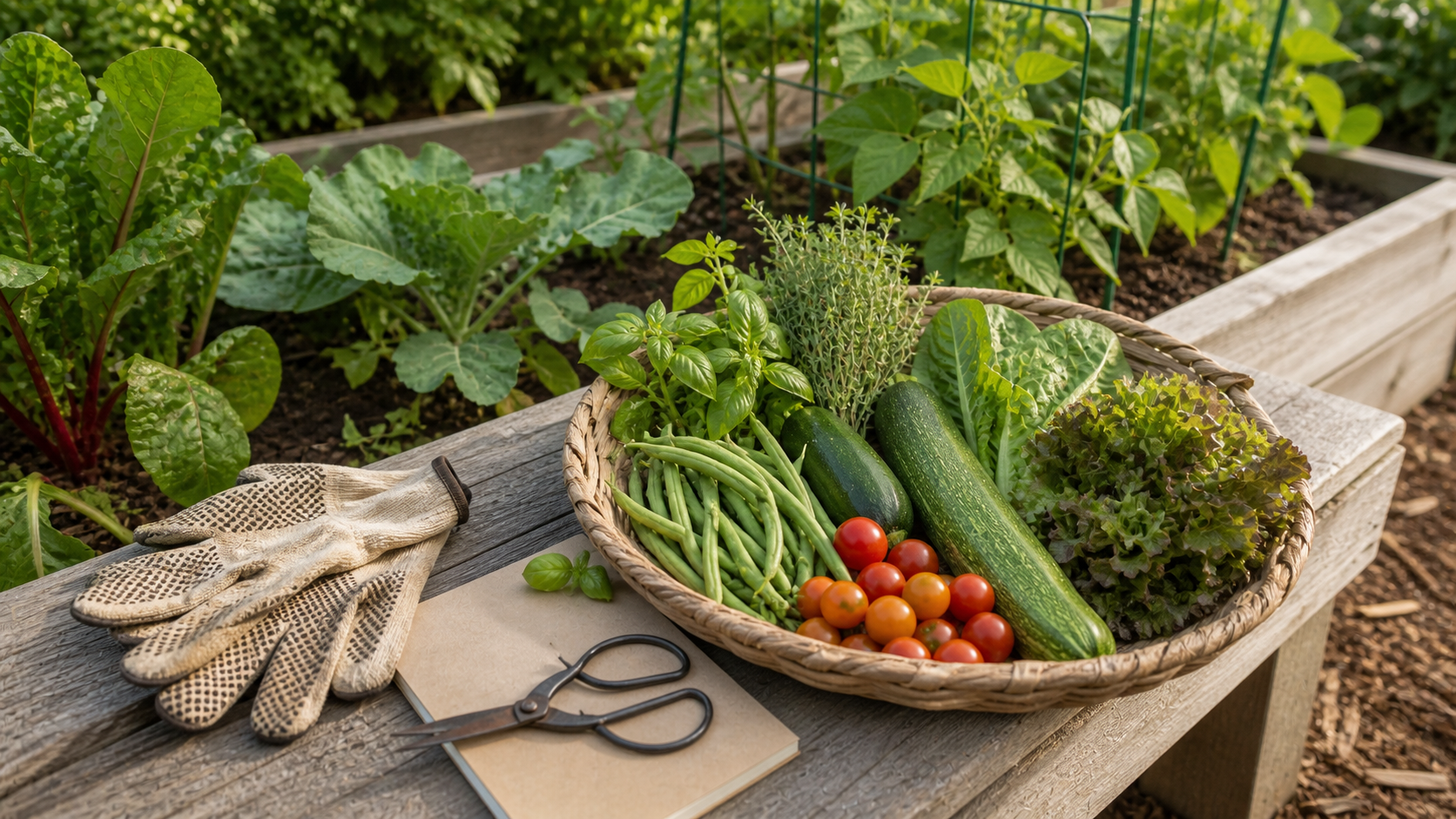
What to Harvest First in a Beginner Vegetable Garden
A practical beginner guide to the first garden harvest: what to pick early, what to leave longer, how to avoid waste, and how to build confidence without overthinking it.
Gardening
What to Do Before a Hot Week Hits Your Beginner Garden
A calm beginner garden heat plan: what to water, shade, mulch, harvest, delay, and check before a hot week turns into garden panic.
Frequently asked questions
What should I do in my vegetable garden in August?
Harvest ripe crops regularly, keep productive plants watered and supported, remove plants that are truly finished or diseased, and evaluate open soil for a small fall crop or cover crop. Use your local first-frost date and Extension planting calendar rather than following a national August planting list.
What vegetables can I plant in August?
The answer depends on location, first-frost timing, crop variety, and whether the crop tolerates cool weather. In some regions, fast radishes, leafy greens, turnips, spinach, kale, or other cool-season vegetables can fit. Count backward from first frost using days to maturity plus extra time for slower fall growth, then confirm the choice with local Extension guidance.
Should I pull out tomato and pepper plants in August?
Not simply because the calendar changed. Keep healthy plants that are flowering, setting fruit, or ripening a worthwhile crop. Remove a plant when disease is advancing, production has clearly ended, damage is severe, or keeping it blocks a more useful next step. Do not confuse a tired-looking hot afternoon with a finished plant.
Should I fertilize my vegetable garden in August?
Do not fertilize the whole garden automatically. Mature summer crops, new fall plantings, containers, and depleted beds have different needs. Check plant symptoms, watering, soil condition, crop guidance, and any soil-test recommendations before adding fertilizer. Too much fertilizer can create growth that does not solve the actual problem.
Is August too late to start a fall garden?
Not always, but the remaining window must be calculated. Find your average first-frost date, subtract the variety's days to maturity, add a fall-growth buffer, and account for cold tolerance. Some quick crops may fit while slower crops are already too late.
Recommendations
Useful tools and resources for this decision
These are included only where they reduce repeated friction, clarify a next step, or help you avoid buying the wrong thing first.
Optional cleanup tool
ARS HP-VS8Z bypass pruner
A sharp eight-inch bypass pruner for repeated live-stem cleanup, harvesting, and removing finished garden growth with controlled cuts.
Best for: Gardeners whose dull or uncomfortable shears make regular August cleanup harder than it needs to be
Clean, sharp bypass shears you already own are enough. This model may feel large in smaller hands, and it is unnecessary for soft stems that can be harvested safely by hand.
Check current priceAugust reference
University of Minnesota Extension August garden checklist
Seasonal guidance covering regular vegetable harvest, watering, stressed plants, and other practical August garden work.
Best for: A broad late-summer garden review from a university source
View resourceFall planting reference
University of Minnesota Extension midsummer planting guide
A crop-by-crop guide to planting vegetables in midsummer for fall harvest using first-frost dates, maturity time, and cold tolerance.
Best for: Checking whether an August planting can realistically mature
View resourceLocal calendar example
Purdue Extension Indiana vegetable planting calendar
A state-specific planting calendar showing why August crop choices should be checked against local conditions rather than copied nationally.
Best for: Indiana readers confirming local planting windows
View resourceRecommended next reads
Read next if it helps the decision
Move into the next guide only if it clarifies the next practical step.
Gardening
When to Start a Fall Garden for Beginners
A practical fall garden timing guide for beginners: how to work backward from first frost, choose cool-season crops, and plant a small second season without guessing.
Gardening
What to Harvest First in a Beginner Vegetable Garden
A practical beginner guide to the first garden harvest: what to pick early, what to leave longer, how to avoid waste, and how to build confidence without overthinking it.
Gardening
What to Do Before a Hot Week Hits Your Beginner Garden
A calm beginner garden heat plan: what to water, shade, mulch, harvest, delay, and check before a hot week turns into garden panic.
Garden gear support
Get the buy-first guide before the first garden collects too much gear.
Use the guide to decide which early garden purchases earn money now, which ones can be borrowed, and which ones can wait until the routine proves itself.
Best for: Beginners who keep seeing useful things online and need a disciplined way to decide what actually earns a place.
- A buy now, borrow, wait, or skip framework
- Starter category shortlists
- A three-question purchase test
Garden planning notes, restrained gear decisions, and the guide first.
After signup, the download will unlock right here so you can save or print it.
About the author
William Mock
Founder, writer, and beginner homesteader
William writes from the beginner side of rebuilding after a layoff: homestead plans, family systems, budgets, tools, and the decisions that make a home feel less fragile.
Read why this site existsRelated Guides
Keep building context
Gardening
When to Start a Fall Garden for Beginners
A practical fall garden timing guide for beginners: how to work backward from first frost, choose cool-season crops, and plant a small second season without guessing.
Gardening
What to Harvest First in a Beginner Vegetable Garden
A practical beginner guide to the first garden harvest: what to pick early, what to leave longer, how to avoid waste, and how to build confidence without overthinking it.
Gardening
What to Do Before a Hot Week Hits Your Beginner Garden
A calm beginner garden heat plan: what to water, shade, mulch, harvest, delay, and check before a hot week turns into garden panic.