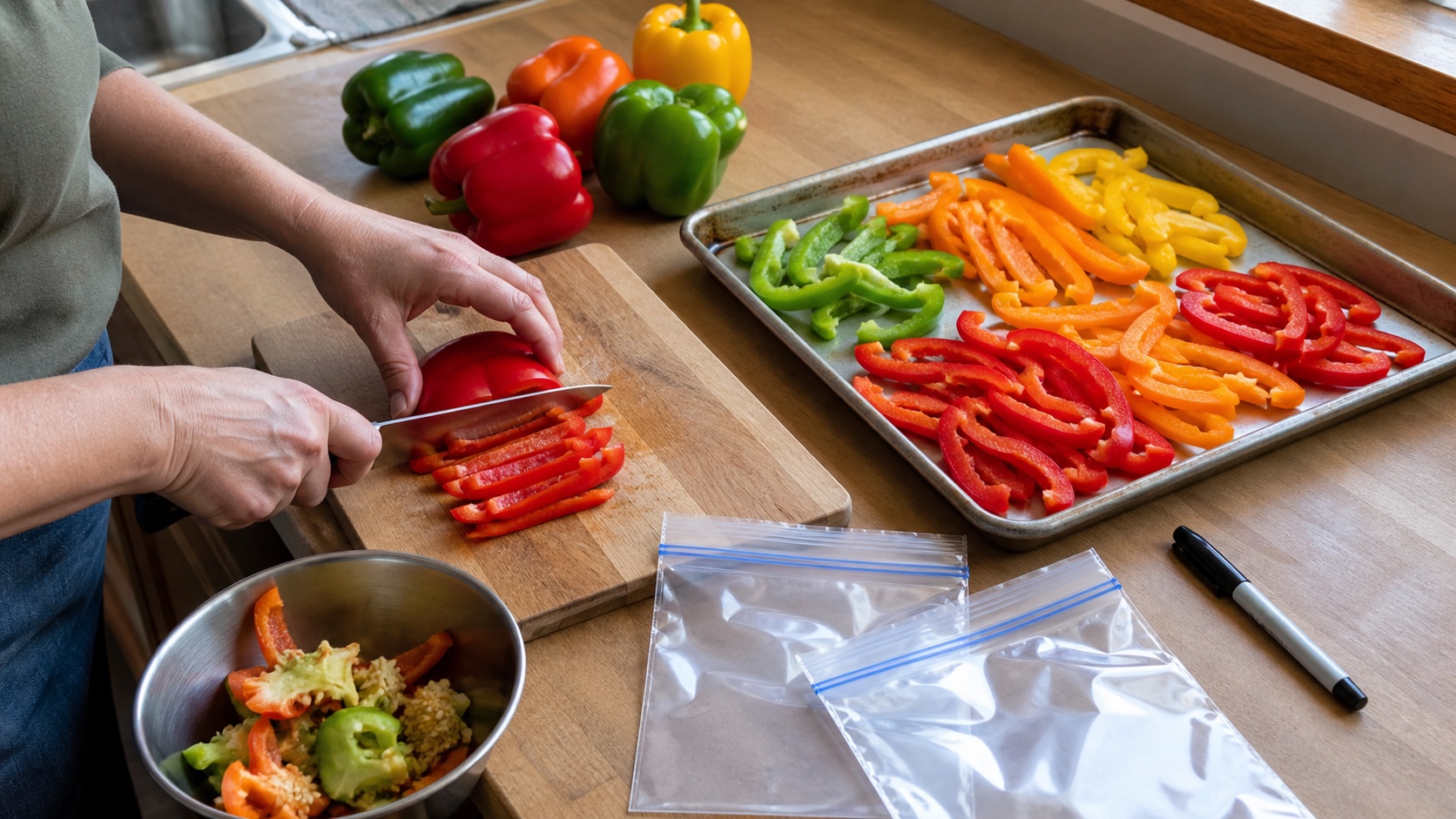
You can freeze bell peppers without blanching. Select crisp, sound peppers; wash them under running water; remove stems, seeds, and membranes; cut them into the pieces your meals use; package them raw in freezer-safe bags or containers with no headspace; seal, label, and freeze promptly. An optional single-layer tray freeze keeps pieces loose, but the tested direct-pack method does not require it.
Start with the whole harvest
Sort extra garden produce before choosing five projects
Use the 24-hour plan to move sound produce into eat, store, preserve, or share lanes while quality is still high.
Use the surplus-produce planThe afternoon one finished bag was enough
After the layoff, I had a habit of asking every useful project to prove that the whole fresh start was working. A few good peppers on the counter could become a much bigger assignment in my head: preserve all of them, learn another method, make the freezer look organized, waste nothing, and somehow turn an ordinary late-summer afternoon into evidence that we were becoming more self-reliant.
The kitchen did not need that performance. Dinner still had to happen, the cutting board still had to be washed, and the peppers only needed a future meal. I cut them the way we would actually cook them, spread one layer on a pan, labeled one bag, and stopped. There was no shelf of jars and no dramatic preservation day. There was simply one loose end that no longer lived on the counter.
That smaller finish taught me something I keep needing: preservation is useful when it returns food to family life. The goal is not to make a harvest look impressive. The goal is to make a Tuesday skillet easier without creating a Saturday project nobody has room to finish.
Choose raw or blanched peppers by the future use
The National Center for Home Food Preservation provides both methods. Its unheated method packages prepared peppers raw with no headspace and describes them as useful in uncooked or cooked foods. Its heated method is aimed at cooking: water-blanch halves for three minutes or strips and rings for two minutes, cool promptly, drain, package with one-half inch of headspace, seal, and freeze.
For an ordinary beginner batch headed toward cooked family meals, I would usually choose the raw method because it closes the loop with fewer steps. Use the blanching times exactly when you choose the heated method. Underblanching and overblanching both reduce quality, and blanching guidance for another vegetable should not be borrowed for peppers.
Start with sound, crisp peppers
Preserve peppers while they are still worth preserving. Choose firm, crisp bell peppers without rot, mold, serious insect damage, or contamination. Ordinary color variation is not the issue: green peppers are less mature, while red, yellow, and orange peppers have ripened further. Use the colors your household will eat, but do not ask freezing to rescue produce already breaking down.
FDA guidance applies to homegrown peppers too. Washing can reduce bacteria, but it does not sterilize produce. Freezing also does not sterilize food. USDA FSIS explains that microbes can become active again after thawing, so frozen peppers still need clean handling and appropriate cooking or serving practices.
Cut peppers for a meal you already make
Remove the stem, cut the pepper in half, and remove seeds and the pale inner membranes. NCHFP suggests one-half-inch strips or rings when cutting is desired. Diced pieces also work when current Extension directions allow them. The useful size is the one that can leave the freezer and go directly into a meal without another cutting step.
Direct-pack the peppers or use an optional tray freeze
Direct packing is the tested, lower-equipment route. If you want loose pieces that pour from one larger bag, arrange dry cut peppers in one layer on a clean rimmed tray, freeze promptly until firm, then transfer them quickly into freezer-safe packaging. Remove excess air, seal, label, and return the package to the freezer before the pieces soften. Tray freezing is a convenience step, not a safety requirement or a reason to buy a special pan.
Package against air and forgetfulness
Use bags, rigid containers, or other packaging designed for freezing. Thin sandwich bags allow more air and moisture movement than freezer packaging and can encourage freezer burn. Package only as much as one meal needs, remove excess air where the container allows it, seal completely, and make the label readable by someone who did not stand at the cutting board.
Use frozen peppers without expecting fresh crunch
Water inside plant cells expands into ice crystals during freezing. That damages structure, so a thawed bell pepper will not behave like a crisp fresh pepper from the garden. Raw freezing can preserve a relatively crisper texture than blanching, but it does not suspend the pepper in its original condition. That is a quality tradeoff, not evidence that the batch failed.
For cooked meals, take out the amount you need and add it while still frozen unless the recipe requires something different. A hot skillet helps moisture leave rather than collect. For a cold use, thaw safely in the refrigerator and judge whether the softer texture fits. Do not thaw produce on the counter, and handle thawed peppers as perishable food.
Freezing peppers is not a shortcut to canning them
Bell peppers are a low-acid vegetable. A bag of raw peppers can go into a working freezer using the tested freezing method; a jar of plain peppers cannot go onto a pantry shelf by borrowing those steps. Shelf-stable peppers require a current research-tested pressure-canning, pickling, or other approved recipe followed exactly for pepper type, ingredient ratios, jar size, processing method, time, and elevation.
What to buy and what can wait
Use the knife, cutting board, rimmed tray, marker, freezer-safe bags, and rigid containers already in the kitchen if they are clean and functional. A vacuum sealer, vegetable chopper, specialty pepper corer, dedicated blanching pot, silicone portion tray, and second freezer can wait. The first batch should prove that the family uses frozen peppers before the preservation shelf grows another appliance.
Recommendations
One optional tool and four methods worth keeping
Optional multi-use pan
Nordic Ware Naturals half-sheet pans, two-pack
Plain rimmed aluminum pans for households that need everyday baking and roasting pans and repeatedly freeze loose produce in a single layer.
Best for: A kitchen with freezer shelves large enough for a half sheet and a repeated need beyond one pepper batch
Measure first and use any clean rimmed pan you already own. Skip this purchase for direct packing, a small freezer, or occasional preservation.
Check current priceUse this method
National Center for Home Food Preservation pepper method
The raw and heated methods, including preparation, blanching times, and headspace.
Best for: Keeping the preservation method visible while you work
View resourceCompare methods
Penn State Extension pepper guide
Current freezing guidance plus separate cautions for hot peppers, pickling, and canning.
Best for: Deciding whether freezing is the right preservation lane
View resourceThis article contains one Amazon affiliate link. If you buy through it, Fresh Start Homestead may earn a commission at no extra cost to you. The pan is optional, and the direct-pack method exists specifically so a useful batch does not depend on buying one more thing.
Build a smaller first garden
Plan only the harvest your week can carry
Connect bed size and crop count to watering, meals, preservation capacity, and the ordinary weeks when the garden still needs a finish line.
Read the beginner garden planFreeze one future meal, not a vague bag of good intentions
The easiest way to lose peppers in the freezer is to save them without deciding what they are for. A flat bag labeled '2 cups strips - fajitas' already belongs to a meal. A thick block labeled only 'peppers' belongs to another decision that will probably arrive on a busy night.
Wash and cut one manageable batch. Choose raw or blanched by the future use. Package it in the amount the household already cooks, freeze it promptly, and stop while the job is still small enough to finish well. That quiet bag in the freezer is not a dramatic harvest story. It is something better: dinner has one less loose end.
Recommended next reads
Keep closing the late-summer harvest loop
These guides help sort a crowded harvest, freeze tomatoes for future sauce, and preserve zucchini for the cooked dishes your household already makes.
Gardening
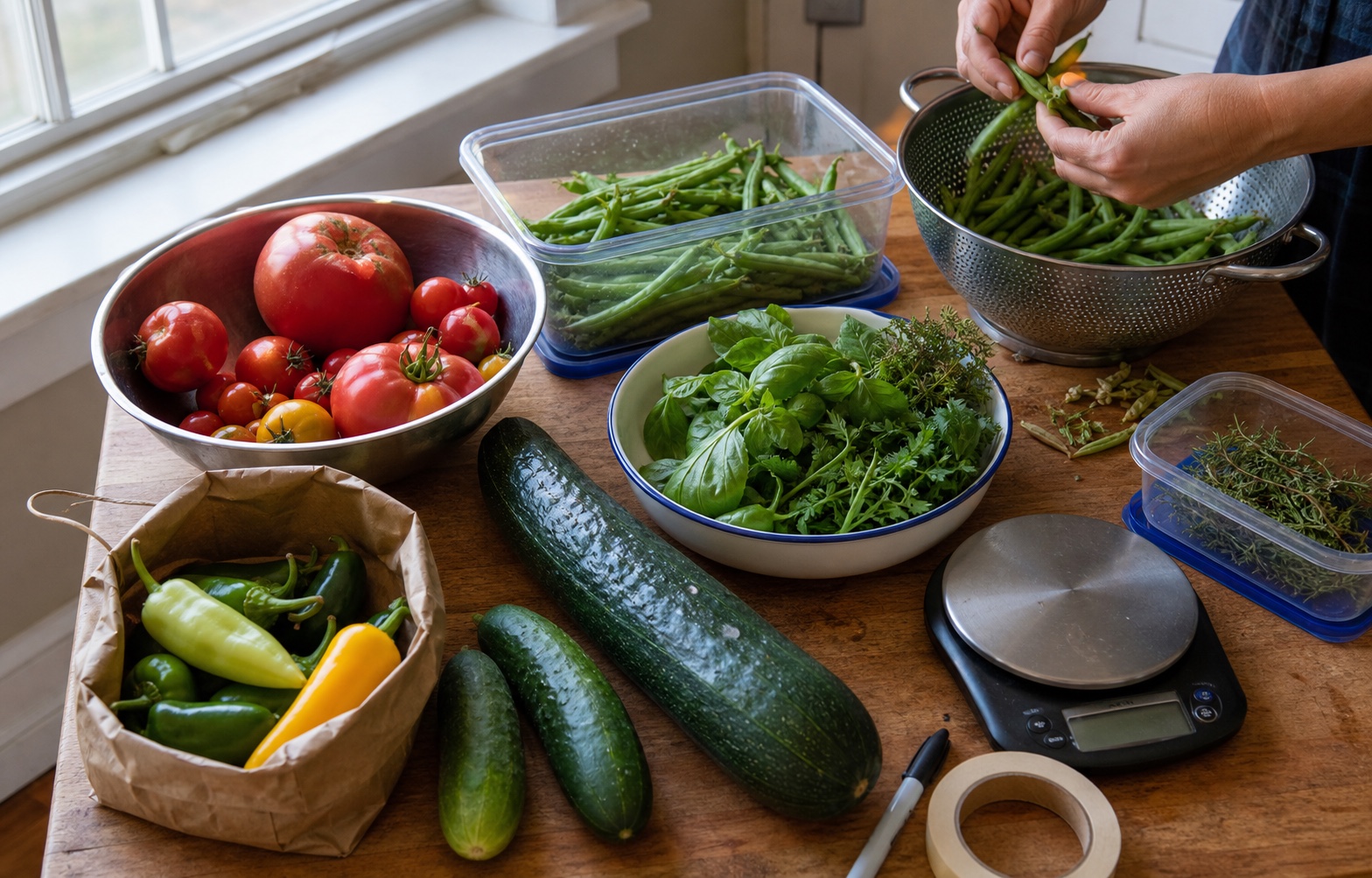
What to Do With Too Much Garden Produce: A 24-Hour Plan
A calm four-lane plan for moving an overflowing garden harvest from the counter into meals, short-term storage, tested preservation, or someone else's kitchen before it becomes waste.
Gardening
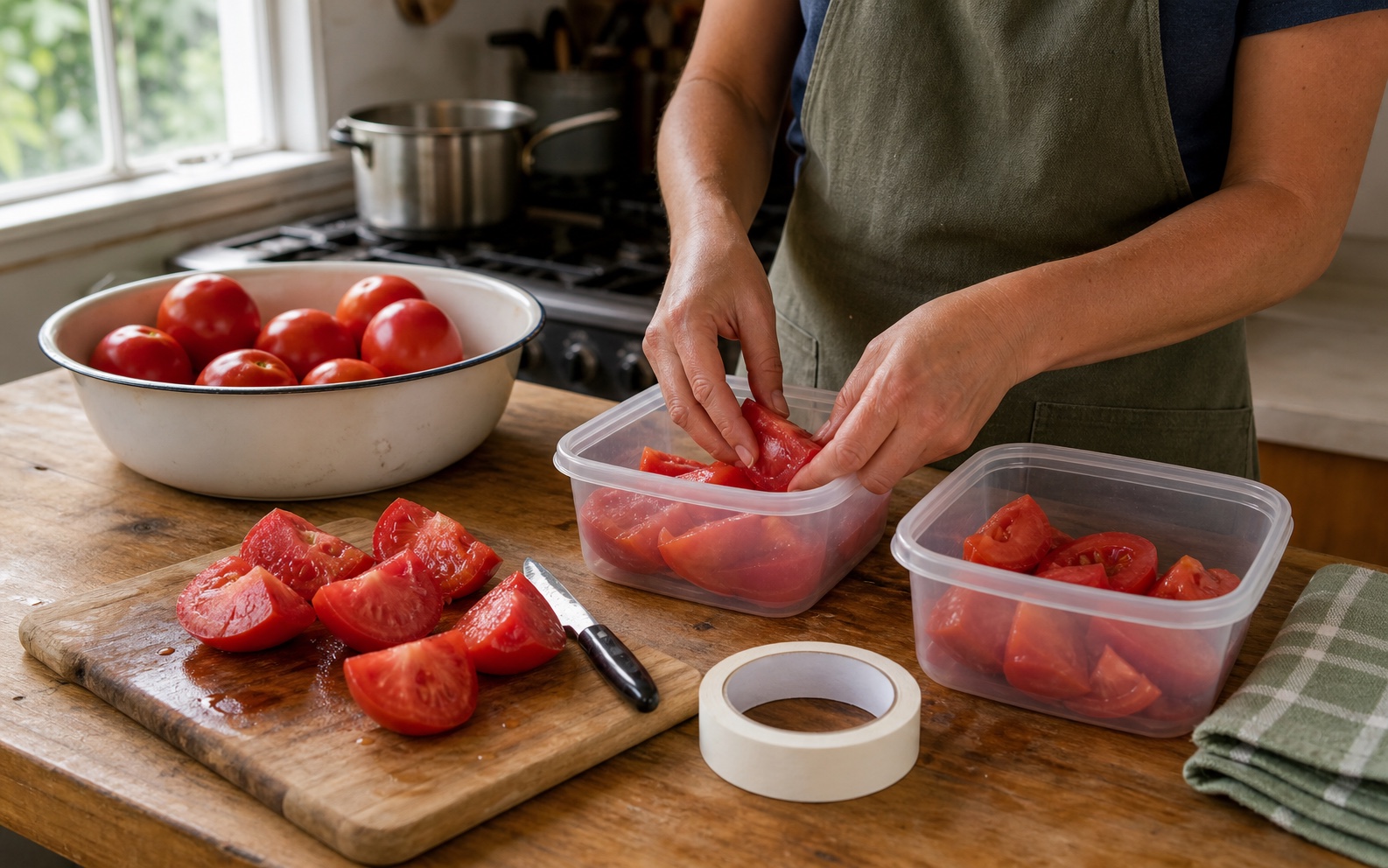
How to Freeze Tomatoes for Sauce Later: A Beginner Method
Freeze ripe tomatoes in meal-sized portions for future sauce without pretending they will thaw firm. This beginner method covers peeling, packing, headspace, labeling, thawing, and the difference between freezing and canning.
Gardening
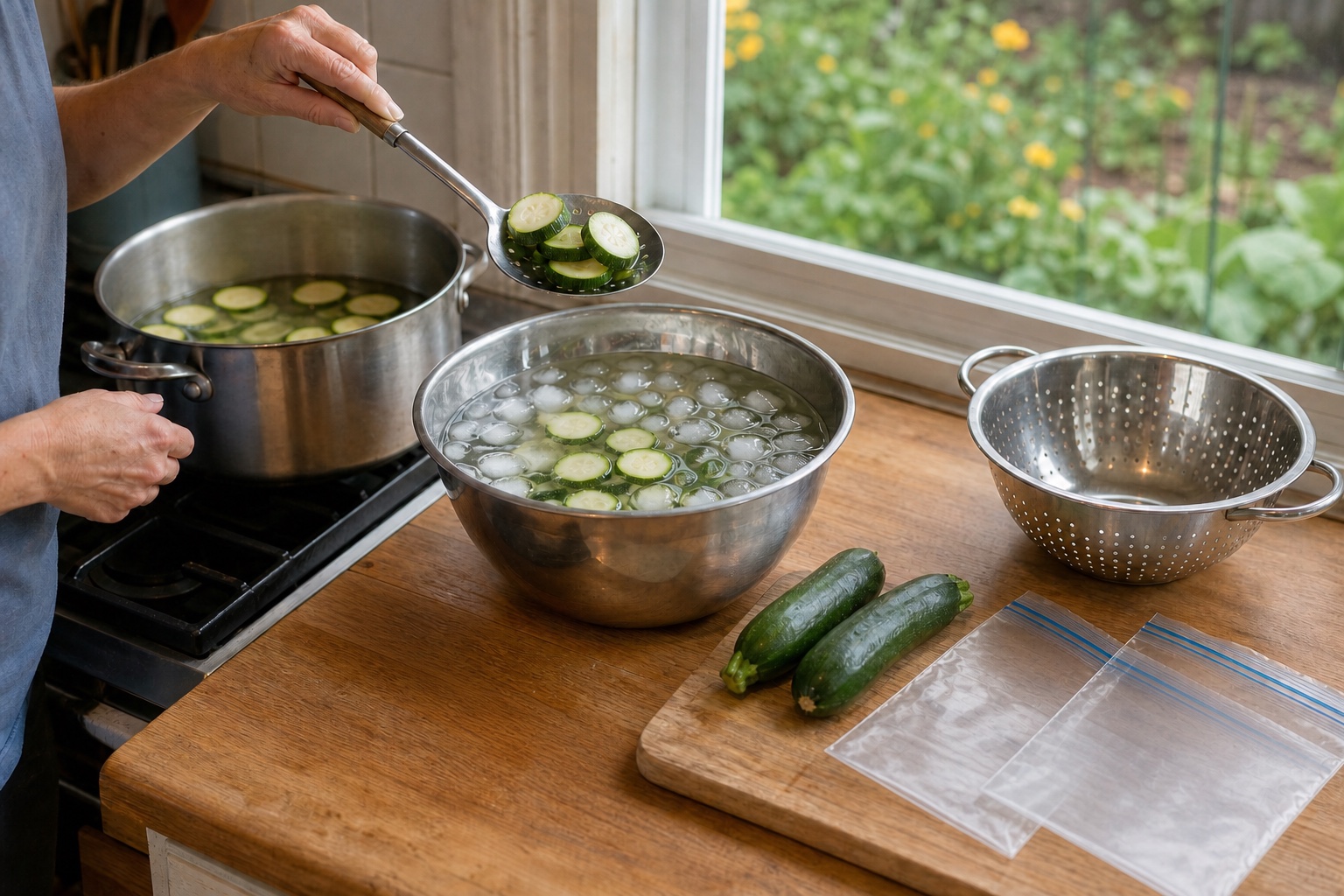
How to Freeze Zucchini Without Ending Up With a Watery Mess
Frozen zucchini will soften, but it does not have to become a forgotten bag of ice and mush. Choose slices or shreds by the meal, blanch correctly, drain well, and freeze useful portions.
Frequently asked questions
Can you freeze bell peppers without blanching them?
Yes. The National Center for Home Food Preservation says bell or sweet peppers can be frozen raw for uncooked or cooked uses. Select crisp, tender green or bright-red peppers, wash them, remove stems and seeds, cut as desired, package raw with no headspace, seal, and freeze. Other ripe bell-pepper colors can also be frozen when they are sound and handled using current research-based directions.
Is it better to freeze bell peppers raw or blanched?
Choose by future use. NCHFP describes raw, unheated peppers as suitable for uncooked or cooked foods and relatively crisper than the blanched option. For peppers intended for cooking, it also provides an optional blanching method: three minutes for halves or two minutes for strips and rings, followed by prompt cooling, draining, packaging with one-half inch headspace, sealing, and freezing. Neither method preserves the snap of a fresh pepper after a full thaw.
Do bell peppers need to be flash-frozen on a tray?
No. The tested NCHFP method allows prepared raw peppers to be packaged and frozen directly. A tray freeze is an optional convenience when you want loose pieces that are easier to pour from one package. If you use a tray, freeze a single layer promptly, transfer the frozen pieces into freezer-safe packaging without letting them warm significantly, remove excess air, seal, label, and return them to the freezer.
How should frozen bell peppers be used?
Portion peppers for meals you already cook, such as fajitas, omelets, soup, chili, casseroles, pizza, pasta sauce, or skillet meals. For many cooked dishes, the pieces can go into the pan frozen so thawing does not leave a puddle on the cutting board. Expect a softer texture than fresh pepper because freezing damages plant cells.
How long do frozen bell peppers last?
FoodSafety.gov explains that food kept continuously frozen at 0 degrees Fahrenheit or below remains safe indefinitely, while storage-time recommendations address quality. For best results, freeze peppers at peak quality, package them against air and moisture, keep the freezer at 0 degrees Fahrenheit or below, label the date and intended use, and use older packages first. Discard food affected by spoilage, contamination, or an unsafe temperature event.
Recommendations
Useful tools and resources for this decision
These are included only where they reduce repeated friction, clarify a next step, or help you avoid buying the wrong thing first.
Primary preservation method
National Center for Home Food Preservation pepper-freezing method
The direct research-based directions for freezing bell or sweet peppers raw or blanched.
Best for: Verifying preparation, blanching times, headspace, and packaging
View resourceUpdated Extension guide
Penn State Extension pepper-preservation guide
Current guidance covering raw and blanched freezing, hot-pepper handling, and the separate safety rules for canning and pickling.
Best for: Comparing freezing with other pepper-preservation methods
View resourceProduce safety source
FDA produce-handling guidance
Federal guidance for selecting sound produce, washing under running water, avoiding soap or produce wash, and keeping hands and tools clean.
Best for: Preparing homegrown, market, or store-bought peppers safely
View resourceFreezer safety source
USDA FSIS freezing and food-safety guide
Guidance on 0-degree freezer storage, rapid freezing, packaging quality, microorganisms, and safe handling after thawing.
Best for: Understanding what freezing does and does not do
View resourceOptional multi-use tool
Nordic Ware Naturals half-sheet pans, two-pack
Two plain rimmed aluminum half-sheet pans that can handle ordinary roasting and baking as well as optional single-layer freezing.
Best for: Households repeatedly tray-freezing loose garden produce and also needing durable everyday sheet pans
Measure your freezer shelf first. Use any clean rimmed tray that already fits; the NCHFP direct-pack method does not require tray freezing, and a two-pack is unnecessary for an occasional batch.
Check current priceRecommended next reads
Read next if it helps the decision
Move into the next guide only if it clarifies the next practical step.
Gardening
What to Do With Too Much Garden Produce: A 24-Hour Plan
A calm four-lane plan for moving an overflowing garden harvest from the counter into meals, short-term storage, tested preservation, or someone else's kitchen before it becomes waste.
Gardening
How to Freeze Tomatoes for Sauce Later: A Beginner Method
Freeze ripe tomatoes in meal-sized portions for future sauce without pretending they will thaw firm. This beginner method covers peeling, packing, headspace, labeling, thawing, and the difference between freezing and canning.
Gardening
How to Freeze Zucchini Without Ending Up With a Watery Mess
Frozen zucchini will soften, but it does not have to become a forgotten bag of ice and mush. Choose slices or shreds by the meal, blanch correctly, drain well, and freeze useful portions.
Garden gear support
Get the buy-first guide before the first garden collects too much gear.
Use the guide to decide which early garden purchases earn money now, which ones can be borrowed, and which ones can wait until the routine proves itself.
Best for: Beginners who keep seeing useful things online and need a disciplined way to decide what actually earns a place.
- A buy now, borrow, wait, or skip framework
- Starter category shortlists
- A three-question purchase test
Garden planning notes, restrained gear decisions, and the guide first.
After signup, the download will unlock right here so you can save or print it.
About the author
William Mock
Founder, writer, and beginner homesteader
William writes from the beginner side of rebuilding after a layoff: homestead plans, family systems, budgets, tools, and the decisions that make a home feel less fragile.
Read why this site existsRelated Guides
Keep building context
Gardening
What to Do With Too Much Garden Produce: A 24-Hour Plan
A calm four-lane plan for moving an overflowing garden harvest from the counter into meals, short-term storage, tested preservation, or someone else's kitchen before it becomes waste.
Gardening
How to Freeze Tomatoes for Sauce Later: A Beginner Method
Freeze ripe tomatoes in meal-sized portions for future sauce without pretending they will thaw firm. This beginner method covers peeling, packing, headspace, labeling, thawing, and the difference between freezing and canning.
Gardening
How to Freeze Zucchini Without Ending Up With a Watery Mess
Frozen zucchini will soften, but it does not have to become a forgotten bag of ice and mush. Choose slices or shreds by the meal, blanch correctly, drain well, and freeze useful portions.